 The Itinerary
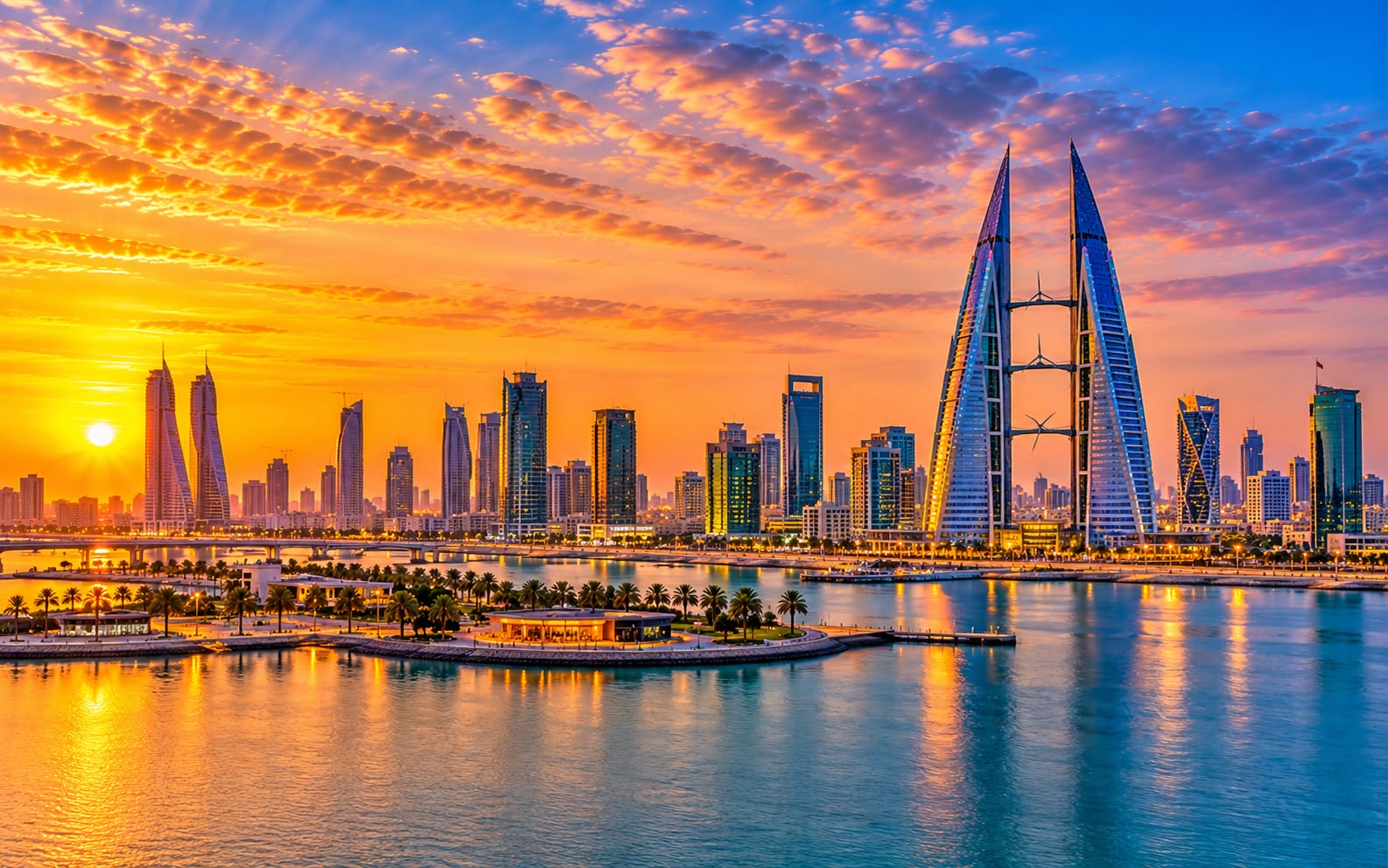
Bahrain in 4 days: Dilmun, pearls and the island long weekend
A fort built on four thousand years of occupied city, a UNESCO trail through the houses that pearl money built, tens of thousands of Bronze Age burial mounds in the suburbs, and a lone tree surviving in the desert with no water anyone can find.
- Middle East
- 4 days
- ≈ AED 2,250 / person
- A Gulf weekend with four thousand years under it
Before you go
Bahrain is the Gulf country that was somewhere long before oil. This was Dilmun — a trading civilisation the Sumerians wrote about as a paradise, running the sea route between Mesopotamia and the Indus for two thousand years before anyone drilled anything. You can stand on the layers: Qal’at al-Bahrain is a Portuguese fort sitting on top of a tell with four millennia of occupied city underneath it.
Then came pearls. Until Japanese cultured pearls collapsed the market in the 1930s, this was one of the great pearling centres of the world, and the Pearling Path in Muharraq is a UNESCO trail through the merchant houses, the shops and the oyster beds that paid for them.
It is also the easiest Gulf country to spend a weekend in. The island is 50km end to end, the causeway runs to Saudi Arabia, and it is noticeably more relaxed than its neighbours — alcohol is served, dress is easier, and the whole place is built around people coming for a few days.
Four days does it properly. Figure BHD 230 (≈ AED 2,246) per person excluding flights. Go November–March. Summer here passes 45°C with humidity off the Gulf, and nothing outdoors on this list is bearable in it.
Before you go: the 15-minute admin
Visas
- Most nationalities use the eVisa or get a visa on arrival at Bahrain International. Apply through the official government portal, not a reseller.
- GCC residents of certain professions enter on arrival — check the current list, which changes.
- The King Fahd Causeway to Saudi Arabia is 25km and open to road traffic, but needs the right Saudi visa. Do not assume a Bahrain visa lets you drive over.
Money
- Bahraini dinar, pegged to the dollar and one of the highest-value currencies in the world — one dinar is about two and a half dollars, so the numbers look small and are not.
- Cards work everywhere except the oldest souq stalls.
- Tipping is not obligatory; 10% is common in restaurants.
SIM and data
- Tourist SIMs at the airport from Batelco, stc or Zain, a few dinars for the week. Coverage is total — the country is small.
Getting around
- The airport is on Muharraq island, 15 minutes from central Manama by taxi.
- Taxis and ride-hailing are the practical way around. Buses exist but are slow.
- A hire car is worth it for day 4 only, for the Tree of Life and the south, where taxis are awkward to find for the return leg.
- Nothing is far. The longest drive on this itinerary is about 40 minutes.
Travelling with kids?
- Short drives, no altitude and air conditioning everywhere make this straightforward.
- The Lost Paradise of Dilmun waterpark in the south is the obvious reward day.
- The National Museum is well made and has enough objects — boats, burial finds, a reconstructed souq — to hold attention for an hour.
- Plan outdoor things for early morning or after four, even in winter.
Day by day
Day 1 — Manama: the gate, the souq, the mosque
- Afternoon — Land, taxi into Manama, check in.
- 16:00 — Bab Al Bahrain, the 1949 gateway that marks the entrance to the old quarter, and the Manama Souq behind it: gold in one lane, spices in another, and pearls — still sold here, still the real thing, and still the one souvenir worth buying properly.
- 18:00 — Al Fateh Grand Mosque, one of the largest in the world, with a fibreglass dome weighing 60 tonnes. Free guided tours run most days outside prayer times and are genuinely good; abayas are provided.
- 20:00 — Dinner in Adliya, specifically around Block 338 — a few blocks of converted houses, galleries and restaurants that is where Bahrain eats out.
Where to stay in Manama (three nights)
- Luxury: the seafront towers in the Diplomatic Area and Seef, most with pools and Gulf views.
- Mid-range: Juffair, dense with hotels and restaurants, 10 minutes from the centre.
- Value: Adliya, walkable to the best food in the country and cheaper than the waterfront.
Day 2 — Four thousand years in one afternoon
- 09:30 — Bahrain National Museum first, because it explains everything you will see afterwards: Dilmun seals, burial finds, pearling tools and a full-size reconstructed souq street.
- 12:30 — Lunch on the corniche.
- 14:00 — Qal’at al-Bahrain, the Bahrain Fort. The Portuguese fort on top is the photograph; the point is the tell underneath it — seven layers of city going back to about 2300 BC, which is why it is the UNESCO listing. The site museum by the car park is small and excellent.
- 17:00 — Stay for sunset at the fort. It faces north-west over the water and the walls go gold. This is the single best hour on the island.
Day 3 — Muharraq and the pearling trail
- 09:30 — Cross to Muharraq, the old capital, for the Pearling Path: a 3.5km route through seventeen buildings — merchant houses, a pearl dealer’s shop, the majlis where crews were hired — ending at the shore where the boats left for the oyster beds.
- 12:00 — Bu Maher Fort at the end of the trail, reached by a short boat ride, where the pearling fleet departed from.
- 13:30 — Lunch in Muharraq’s old lanes, then the Sheikh Isa bin Ali House, a restored 19th-century residence built around wind towers.
- 16:00 — Arad Fort, small, 15th century, and best in late light with the water behind it.
- 19:30 — Back to Adliya, or the Bahrain Bay waterfront for dinner.
Day 4 — The south, and home
- 09:00 — Hire car or driver for the day. Head south.
- 09:45 — The Dilmun Burial Mounds at A’ali — UNESCO-listed in 2019. Tens of thousands of Bronze Age tombs across the plateau, with a visitor centre at the main field. There is nowhere else like it.
- 11:30 — The Tree of Life: a mesquite of 400-odd years standing alone in flat desert with no visible water source. The explanation is probably a deep root into an aquifer; nobody has ever settled it conclusively. It is a tree in a desert, and it is strangely affecting.
- 13:00 — Bahrain International Circuit, which runs track experiences and tours outside race weeks. The Grand Prix itself is usually March or April — if you can travel then, build the trip around it and book everything months ahead.
- 16:00 — Back to Manama, last of the souq, then the airport. It is 15 minutes away, which is the other thing this country is good at.
Costs and practicalities
Best time to visit
November–March, which is the only part of the year the climate is on your side — the summer here is Gulf summer, over 45°C with humidity off the sea on top.
- November–March — 18–25°C, dry, and comfortable for walking the Muharraq pearling path or the Qal’at al-Bahrain site in daylight.
- April and October — hot but manageable, and quieter. The Formula One Grand Prix is in April and takes the island’s hotel stock with it.
- May–September — 40°C and above, with humidity that makes the shade no help. Everything that can be indoors is.
Ramadan changes the rhythm rather than closing the country: daytime eating in public is not done, hours shift, and the evenings become the best part of the day.
Travel tips
- The dinar is one of the world’s highest-value currencies — about 2.65 US dollars to one. Prices look small and are not; read them twice.
- Alcohol is legal in licensed hotels and restaurants, which is unusual in the region and is why the causeway is busy.
- The King Fahd Causeway to Saudi Arabia is heavily congested on Thursday evenings and Saturday nights. Avoid crossing then.
- Dress modestly in public — shoulders and knees covered away from hotel pools — and more so in Muharraq and the villages than in Manama’s malls.
- Friday is the weekend, with Saturday. Government offices and many shops close Friday morning.
- Taxis are metered in theory; Careem and Uber are simpler and remove the argument.
- Tap water is desalinated and safe, though most people drink bottled out of habit.
What this trip actually costs
Two people, 3 nights, mid-range comfort, flights excluded:
| Item | Cost |
|---|---|
| Hotel, 3 nights | BHD 180 (≈ AED 1,758) |
| Taxis, ride-hailing and one day’s car hire | BHD 70 (≈ AED 684) |
| Food and drink, 4 days | BHD 140 (≈ AED 1,367) |
| Museums, forts and the Pearling Path | BHD 40 (≈ AED 391) |
| Pearls, souq and incidentals | BHD 30 (≈ AED 293) |
| Total for two | BHD 460 (≈ AED 4,493) |
- Roughly BHD 230 (≈ AED 2,246) per person. Entry costs are low here by Gulf standards; accommodation is most of it.
- Weekends cost more. Thursday and Friday nights fill with visitors over the causeway and rates rise with them. A Sunday-to-Wednesday trip is materially cheaper.
- Race weekend is a different trip entirely — hotel rates multiply and book out months ahead.
- Hotel picks here are chosen on location, not on commission — always check prices and recent reviews before booking.
What to pack
- Light clothes and a layer for aggressive air conditioning, which is the actual temperature problem for most of a Gulf trip.
- Modest dress for the Grand Mosque — covered shoulders and knees. Abayas are lent at the door.
- Sun hat and real sunglasses. There is very little shade at the fort, the mounds or the tree.
- Shoes you can walk a dusty tell in.
FAQ
Is Bahrain worth four days, or is it a day trip? Four days is right if you want the Dilmun sites and the Pearling Path done properly. Two would get you Manama and the fort and miss the reason the island is interesting.
How does it compare to Qatar or Dubai? Smaller, older, cheaper and far less polished. There is no skyline competition here. What there is instead is four thousand years of continuous settlement, which neither neighbour can offer.
Can I combine it with Saudi Arabia? Yes — the causeway makes Dammam and Al Khobar an easy drive — but you need the Saudi visa sorted separately and in advance.
Is alcohol available? Yes, in licensed hotels and restaurants. Bahrain is the most relaxed of the Gulf states on this, which is part of why it fills up at weekends.
Prices and entry rules change, and what you need depends on your passport; last checked 8 October 2026, so confirm with the embassy or your airline before booking.


