 The Itinerary
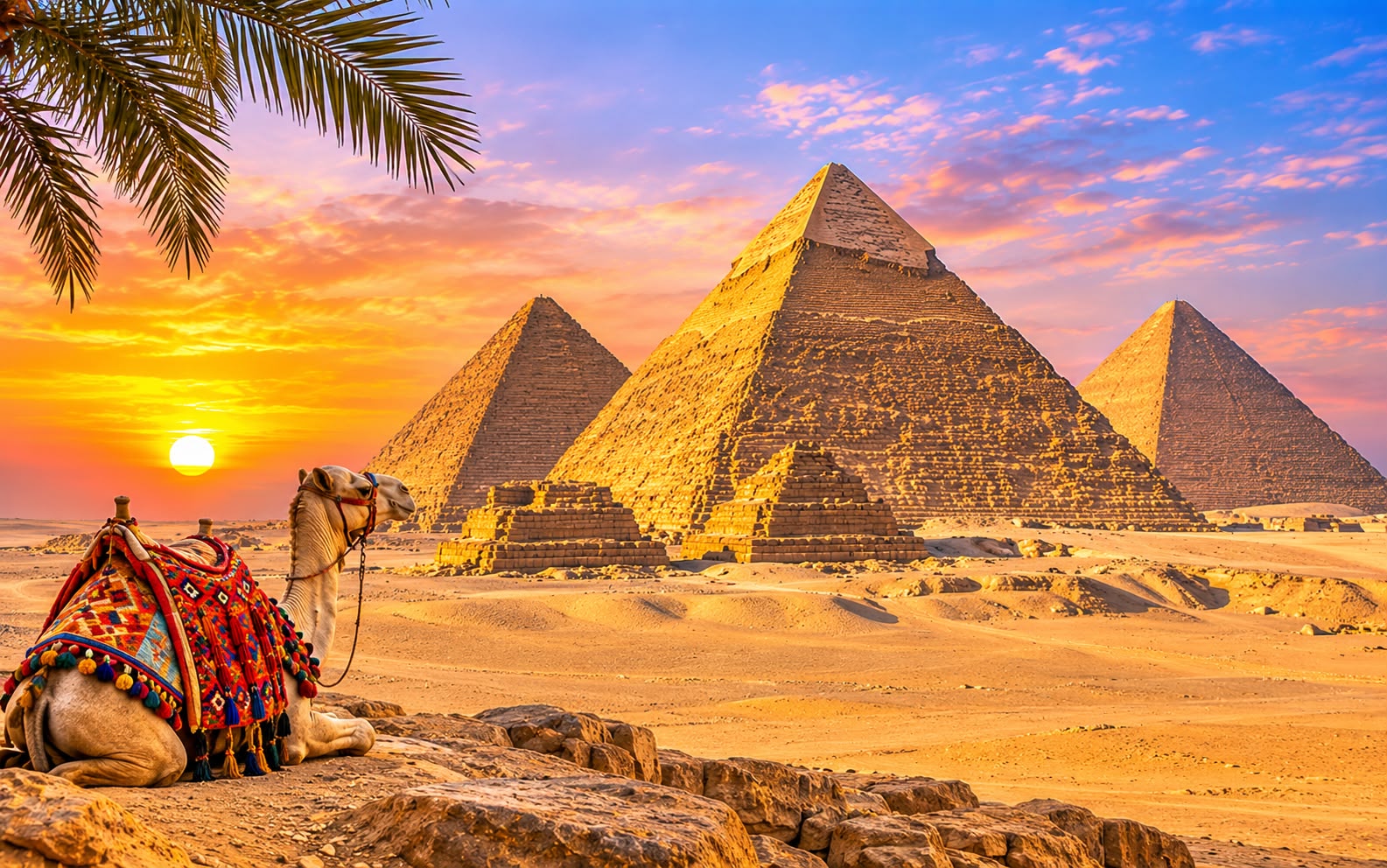
Dubai and Egypt in 9 days: the skyline, the pyramids and a Nile cruise
Three days in Dubai, then six working up the Nile from Cairo to Aswan with three nights on a boat. The flight that makes the pairing obvious, what a cruise fare does and does not include, and the one thing in Egypt that costs more in patience than money.
- Middle East
- 9 days
- ≈ AED 6,050 / person
- The newest skyline in the world and the oldest monuments in it, three hours apart
Before you go
Dubai is about three and a half hours from Cairo, and the contrast is the entire reason to put them together: the newest city on earth and the oldest monuments on it, in one week.
Three days in the UAE and six in Egypt, with three of those six on a Nile boat — which is the right way to do Upper Egypt, because the boat moves while you sleep and the temples are on the bank.
Dubai in 5 days and Egypt in 10 days are each half at length.
Figure USD 1,650 (≈ AED 6,060) per person. November to March.
Before you go: the admin
Two entries, both straightforward
- UAE: visa on arrival for a long list of nationalities, usually 30 or 90 days; a pre-arranged e-visa for the rest, normally sponsored by the airline or a hotel.
- Egypt: visa on arrival at the airport for many nationalities, or an e-visa online, which is a few dollars more and removes the queue.
- Take the e-visa. The arrivals hall at Cairo is where this trip loses its first hour otherwise, and the bank kiosk selling visa stamps has its own queue.
- Last checked: 2 November 2026.
The flight between them
- Dubai to Cairo is about three and a half hours, flown many times a day.
- Take an evening departure on your last Dubai day. It gets you into Cairo at night with the whole of the next day for the pyramids, and costs you nothing.
- Cairo to Luxor is about an hour. The sleeper train is the romantic alternative at around ten hours — book it well ahead, and take the flight if your nine days are tight.
What a Nile cruise fare includes, and what it does not
- Included: the cabin, all meals, and the boat itself.
- Not included: the shore excursions and the temple entry tickets, which are sold as a package on board or arranged independently; drinks, including bottled water; and tipping, which is a stated amount and effectively compulsory.
- Budget the excursion package separately. It is often close to a third of the fare again, and it is not optional if you came for the temples.
- Check which direction your boat sails. Luxor to Aswan is upstream and the common three-night route; Aswan to Luxor is four nights and the same temples in reverse.
Money, and baksheesh
- The UAE runs on cards. Almost nothing needs cash.
- Egypt runs on small notes. Baksheesh — a small tip for a small service — is the normal texture of the day, and having nothing small is the problem, not the amounts.
- You will be approached constantly at the pyramids and the temples. A firm, friendly “la shukran” and continuing to walk is the whole technique. Do not accept anything placed in your hand.
- Agree every price before anything happens — the camel, the caleche, the photograph, the guide.
Day by day
Day 1 — Land in Dubai
- Arrive and stay near a Metro station. Dubai is built for cars and the Metro is the one thing that lets you avoid one.
- Afternoon — Dubai Creek and the Al Fahidi district, the old wind-tower quarter, with an abra across the water for about a dirham. This is the city people miss.
- Evening — the Dubai Fountain at the foot of the Burj Khalifa, which runs every half hour after dark and is free.
Day 2 — The tall things, and the old things
- 09:00 — the Burj Khalifa, 828 m. Book a timed slot online days ahead; the “At the Top” level 124 is enough and the premium floors are not worth the multiple.
- 12:00 — the Dubai Mall aquarium, or the Museum of the Future, which is a genuinely good building and books out.
- 16:00 — the Gold and Spice Souks in Deira, reached by abra. Haggle; it is expected.
- 19:00 — dinner in Jumeirah, or at the Marina.
- It is 40°C and more from May to September. Everything outdoors moves to after dark in those months.
Day 3 — The desert, then fly to Cairo
- Morning — a desert safari, or Abu Dhabi for the Sheikh Zayed Grand Mosque, which is 90 minutes away, free to enter and the best building in the country. Modest dress, enforced; abayas are lent.
- Afternoon — back, and to the airport.
- Evening — fly to Cairo, arriving at night.
- Pre-book the Cairo airport transfer through your hotel. The arrivals hall is chaotic and the unofficial taxis are the usual problem.
Day 4 — Giza
- 08:00 — the pyramids at opening. Khufu’s is the last of the Seven Wonders standing, 4,500 years old and 139 m tall.
- Go in if you are not claustrophobic — a separate ticket, a steep bent-over climb, and an empty stone room at the end. It is a strange and worthwhile ten minutes.
- 11:00 — the panorama point for all nine pyramids in one frame, then the Sphinx, which is smaller than people expect and closer to the city than any photograph suggests.
- 15:00 — Saqqara, 40 minutes south: the Step Pyramid of Djoser, the oldest large stone building in the world, and far quieter than Giza.
- Agree the camel price in advance, in writing, including getting down. This is the single most common complaint at Giza.
Day 5 — The museum, then Luxor
- 09:00 — the Grand Egyptian Museum, beside the pyramids: the largest archaeological museum in the world, and the only place the complete Tutankhamun collection is shown together — over 5,000 objects.
- Allow three hours minimum. Four is better.
- 14:00 — Islamic Cairo, if there is time: the Citadel, the Mosque of Muhammad Ali, and Khan el-Khalili for the coffee houses rather than the souvenirs.
- Evening — fly to Luxor, about an hour.
Day 6 — Luxor, and aboard
- 06:30 — the Valley of the Kings before the heat. The standard ticket covers three tombs; Seti I and Tutankhamun are separate and Seti I is the one worth the surcharge.
- 09:30 — Hatshepsut’s temple, cut into the cliff in three colonnaded terraces, and the Colossi of Memnon on the way back.
- 14:00 — board the boat.
- 17:00 — Karnak, which is 200 acres and took 2,000 years to build. The Hypostyle Hall is 134 columns, the tallest 21 m, and is the single most overwhelming room in Egypt.
- A hot air balloon over the west bank at dawn is the optional extra here, and the one most people are glad they took.
Day 7 — Sailing, and Edfu
- Morning — on deck. This is the day the trip slows down — palm banks, feluccas, water buffalo, and nothing to do.
- Afternoon — Edfu, reached by caleche through the town: the best-preserved temple in Egypt, Ptolemaic, with its roof still on and the dedication texts still legible.
- Agree the caleche fare both ways before you get in.
- Evening — the lock at Esna, which the boat queues for, and small boats come alongside to sell galabeyas by throwing them up to the deck.
Day 8 — Kom Ombo, and Aswan
- Morning — Kom Ombo, a double temple on the riverbank dedicated to two gods at once, with the crocodile museum next to it.
- Afternoon — Aswan. Philae temple, moved stone by stone to a new island when the High Dam flooded the old one, reached by motorboat.
- Late afternoon — a felucca around Elephantine Island at sunset, which is the quietest hour of the whole nine days.
- Abu Simbel is a 3-hour drive each way, or a short flight. It is extraordinary and it is a long day — take it only if you can add a night.
Day 9 — Out
- Morning — the High Dam and the unfinished obelisk, still lying in the granite quarry where it cracked 3,500 years ago.
- Aswan flies to Cairo in about ninety minutes, and Cairo onwards from there.
- Allow four hours in total at Cairo if you are connecting. It is a slow airport and the terminals are not close together.
Costs and practicalities
Best time to visit
November to March, and it is not a close call.
- November to February — Egypt at 20–25°C in the day, which is the difference between walking Karnak and enduring it. Dubai is 24–28°C and perfect. The right months.
- December and January are peak for both — Dubai for the shopping festival and Egypt for the cool — so book early.
- March and April — still good, warming fast. The khamsin, a hot sand-laden wind, blows in Egypt around April and can close the pyramids for a day.
- May to September — Luxor and Aswan regularly exceed 45°C and Dubai exceeds 40°C with high humidity. This is not a heat you walk temples in. Prices collapse for a reason.
- Ramadan moves each year. Dubai is subdued in daylight and spectacular after dark; Egypt’s sites stay open on shorter hours. Check the dates.
Travel tips
- Take the Egyptian e-visa, not the airport stamp.
- Fly Dubai to Cairo in the evening and gain a full day.
- Book the Burj Khalifa and the Grand Egyptian Museum online.
- Budget the cruise excursion package separately — it is not in the fare.
- Carry small Egyptian notes constantly. The amounts are tiny; having nothing small is the problem.
- Agree every price before anything happens, including getting off the camel.
- Valley of the Kings at opening, and pay the Seti I surcharge.
- Modest dress at the Sheikh Zayed Grand Mosque and at Egypt’s mosques — long sleeves, covered hair for women, no shorts.
- Bottled water only in Egypt, and more of it than feels necessary.
- Do not drink alcohol in public in the UAE outside licensed venues, and do not be drunk in public at all.
What this trip actually costs
Two people, 8 nights, mid-range throughout, international flights excluded:
| Item | Cost |
|---|---|
| Nile cruise, 3 nights full board, two people | USD 900 (≈ AED 3,305) |
| Hotels in Dubai, Cairo and Luxor, 5 nights | USD 850 (≈ AED 3,122) |
| Food and drink outside the cruise, 9 days | USD 540 (≈ AED 1,983) |
| Flights: Dubai–Cairo, Cairo–Luxor, Aswan–Cairo | USD 420 (≈ AED 1,542) |
| Egyptian sites, guides and the cruise excursions | USD 380 (≈ AED 1,396) |
| Dubai attractions and transport | USD 210 (≈ AED 771) |
| Total for two | USD 3,300 (≈ AED 12,119) |
- Roughly USD 1,650 (≈ AED 6,060) per person for nine days.
- Three internal flights is what this shape costs. Swapping Cairo–Luxor for the sleeper train saves around USD 120 (≈ AED 441) and a hotel night, at the cost of ten hours.
- The Egyptian sites line is mostly foreigner pricing and it is unavoidable — the Valley of the Kings, Karnak, Philae, Abu Simbel if you take it, and the Grand Egyptian Museum.
- Tipping on the boat is a stated amount and is not in the fare. Budget it; the crew are on very little.
- Dubai is the cheaper half per day, which surprises people. The expensive part of Dubai is the hotel, and three nights limits it.
- Hotel picks here are chosen on location, not on commission — always check prices and recent reviews before booking.
What to pack
- Modest clothing for both countries — long sleeves and covered knees at mosques, and generally in Egypt outside the boat.
- A scarf, for mosques and for the dust.
- A hat, sunglasses and high-factor sunscreen. There is no shade at Giza, Karnak or the Valley of the Kings.
- Proper shoes. The tomb floors and temple ground are uneven.
- A warm layer. Desert nights and the boat’s top deck after dark are cold, and Cairo in January is cool.
- A torch for the tomb interiors, which are dim.
- Rehydration salts. Stomach upsets are common in Egypt.
- A Type G adapter for the UAE and Type C/F for Egypt, 230V in both.
Part of a bigger trip?
- Egypt in 10 days gives the Nile the time this one compresses.
- Dubai in 5 days is the UAE half at length.
- Jordan and Egypt in 12 days adds Petra and Wadi Rum.
- The UAE and Oman in 9 days heads down the peninsula instead.
- Dubai and the Maldives in 8 days swaps the temples for an atoll.
FAQ
Is three days enough for Dubai? Yes, and it is the right length on a trip like this. Three days covers the Burj Khalifa, the creek and the old quarter, the souks, and either a desert evening or the Grand Mosque in Abu Dhabi. Dubai’s hotel rates are the expensive part of this itinerary, and a longer stay buys variations on things you have already seen.
What does a Nile cruise actually include? The cabin, all meals and the boat. Not the shore excursions, not the temple tickets, not drinks — including bottled water — and not the crew tip, which is a stated figure and effectively compulsory. The excursion package is often close to a third of the fare again, so budget it as a separate line rather than being surprised on board.
Should I fly or take the sleeper train from Cairo to Luxor? Fly, on a nine-day trip. The flight is an hour against about ten on the train, and those hours are the difference between a full first day in Luxor and a half one. The sleeper is a good experience in its own right and saves a hotel night, so take it if you have twelve days rather than nine.
How do I handle the touts at the pyramids? Expect to be approached continuously, agree every price before anything happens, and never accept an object placed in your hand — a headscarf, a trinket, a camel’s reins — because that is how the negotiation starts. A friendly “la shukran” while continuing to walk works, and carrying small notes means the genuine small services are easy to settle.
When should I absolutely not go? May to September. Luxor and Aswan regularly pass 45°C and Dubai passes 40°C with Gulf humidity on top. Both are walking trips through unshaded sites, and the low season prices in those months exist because the heat is the problem, not a bargain.
Prices and entry rules change, and what you need depends on your passport; last checked 2 November 2026, so confirm with the embassy or your airline before booking.


