 The Itinerary
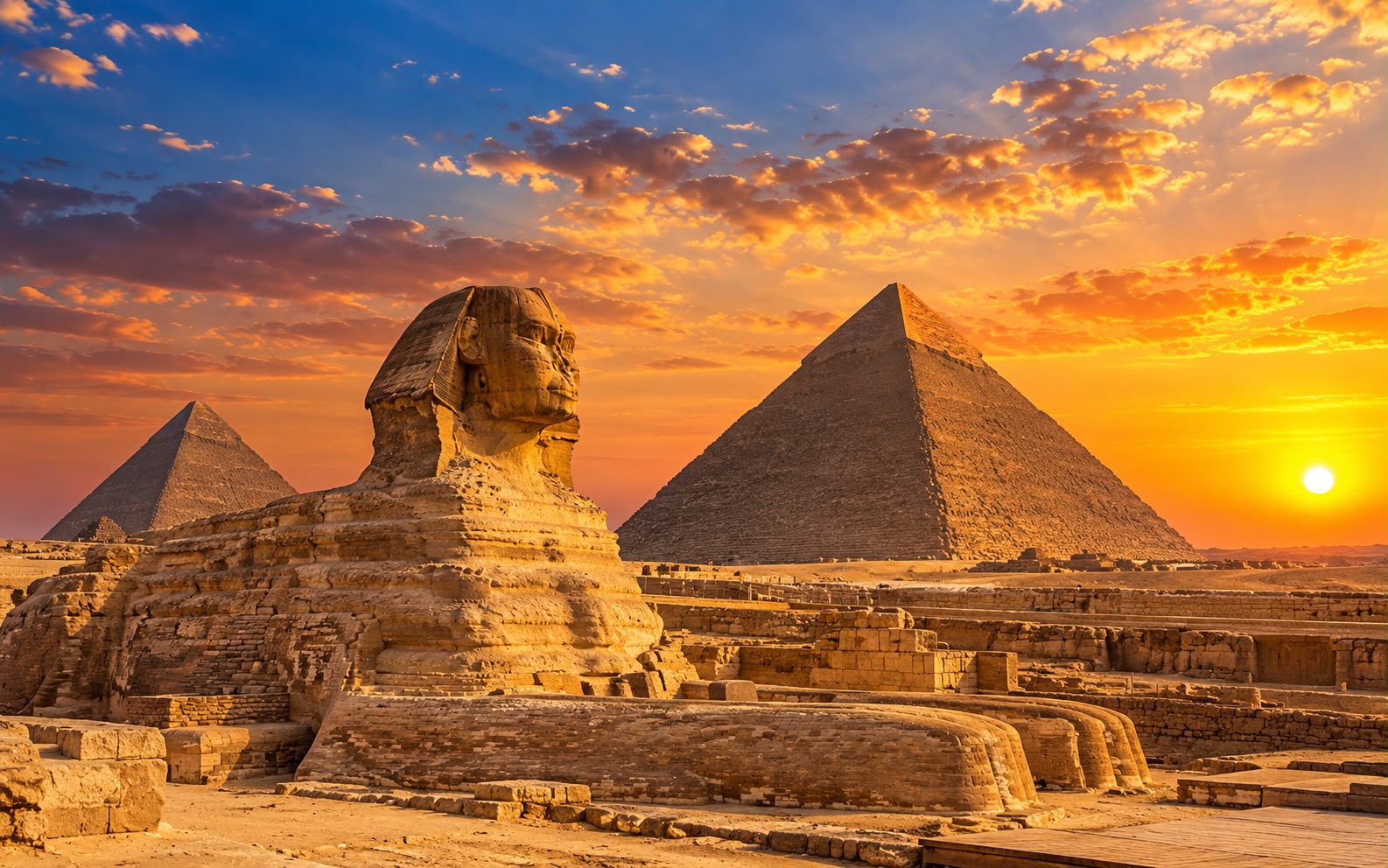
Egypt in 10 days: Cairo and the Nile
The oldest trip on earth, run like clockwork: the Pyramids at gate-opening, Tutankhamun's whole treasury in the new Grand Egyptian Museum, four nights floating Luxor to Aswan past temples that predate everything you've ever seen, and the sunrise colossi of Abu Simbel — with the baksheesh decoder, the card-only ticket update, and every classic hustle pre-empted.
- North Africa
- 10 days
- ≈ AED 6,600 / person
- First-time visitors
Before you go
Egypt is where “old” recalibrates. The pyramid you’ll stand under on Day 2 was already ancient when Rome was founded; Tutankhamun’s mask — now finally reunited with his full treasury in the Grand Egyptian Museum — is a teenager’s funeral gear from 3,300 years ago; and the Nile cruise between Luxor and Aswan floats you past temples the way other rivers pass warehouses.
It’s also a destination that rewards a briefing: Egypt runs on baksheesh (small tips, constantly), the famous sites have gone card-only, and the hustle around Giza is a performance with a script you can learn in two minutes. This guide hands you the script. Well-run, Egypt is not just magnificent — it’s easy, and for Gulf residents it’s a four-hour flight.
Go October–April (Luxor is 22–28°C and perfect; December–January is peak and books out). May–September cooks the south at 40–45°C — doable with dawn discipline, cheaper, sweatier. Prices are in US dollars (Egyptian-pound volatility makes EGP menus a moving target; sites price in EGP but the card-only rule spares you the exchange maths — current EGP figures below at ~50/USD).
Before you go: visa, cards and the baksheesh decoder
The visa, two ways
- E-visa (most Indians): US$25 single / US$60 multiple, on the official visa2egypt.gov.eg only — 5–7 working days, apply ~2 weeks out. Passport 6+ months.
- Visa on arrival, a shortcut worth checking: holders of a valid US, UK or Schengen visa, or a GCC residence permit can buy the $25 sticker at Cairo airport whatever passport they carry — bring exact USD cash for the bank counter before immigration. Without one of those, the e-visa above is the route.
Cards, cash and baksheesh
- The card-only update: Giza, GEM and most major sites now refuse cash at the ticket window — carry a Visa/Mastercard that works internationally plus a backup card. (Ironic twin: everything outside the ticket window runs on cash.)
- The baksheesh decoder — tipping is the operating system, not corruption: EGP 10–20 for toilets and small favours, EGP 50–100 for porters and unexpected kindnesses, US$5–7 pp/day for the cruise crew (envelope at the end), similar for your Egyptologist guide. Land in Egypt with a brick of small EGP notes (airport ATM, withdraw an odd amount like 950 to force small bills) and the whole country smiles.
The hustle, pre-empted
- The hustle script, pre-empted: “the pyramid entrance is closed today, my friend” (it isn’t — walk on), the free camel photo that costs $10 to end, the papyrus “museum” your taxi insists on. One phrase — “la shukran” (no thanks), smiling, while walking — solves 90%. It’s theatre, not threat; Egypt’s tourist police presence is heavy and genuine.
- Uber/Careem work in Cairo and beat every meter negotiation. Dress: shoulders/knees covered for mosques (scarves lent); women will find modest dress reduces attention everywhere.
Day by day
Day 1 — Land in Cairo, first Nile night
- Afternoon — Land CAI (~4 h from the Gulf). Uber to the hotel; absorb the traffic (it’s a spectator sport).
- 17:30 — Ease in gently: a felucca sail from the Corniche (~$15–20/boat/hour) as the sun drops behind the skyline — or straight into Khan el-Khalili’s lantern-lit lanes and a mint tea at El Fishawy, pouring since 1773.
- 20:00 — First koshary (the national carb-on-carb masterpiece, ~$2–3 at Abou Tarek) or grilled kofta downtown (~$8–15).
Where to stay in Cairo (3 nights now, 2 at the end)
- The icon: Marriott Mena House — the 1869 hunting lodge with the Great Pyramid filling your balcony; pyramid-view rooms are the single most worthwhile splurge in Egypt. ~$350–500.
- Luxury on the Nile: Kempinski Nile Hotel — 4.8/5 on TripAdvisor (~7,100 reviews), rooftop pool over the river, Garden City calm. ~$180–260.
- Value: Paradise Boutique Hotel — 4.7/5, downtown walkability at honest prices. ~$60–90.
Day 2 — The Pyramids, then Tutankhamun’s new palace
- 06:45 — At the Giza plateau gate for 07:00 opening (EGP 700, card-only): an hour of near-private pyramid time before the coaches. Walk the Khufu perimeter — the scale only works up close.
- 08:30 — Go inside Khafre’s pyramid (EGP ~280) — the smart-money interior: same crouched-passage experience as Khufu’s EGP 1,500 ticket at a fifth of the price (claustrophobes: skip both, zero shame).
- 09:30 — The panoramic viewpoint for the nine-pyramids photo. Camel protocol: agree the total price before touching the camel — EGP 400–500 for a short ride with photos is fair; “free” costs more.
- 10:30 — Down to the Sphinx (included) — smaller and stranger than expected, in the best way.
- 12:00 — Lunch with a pyramid view (9 Pyramids Lounge, on the plateau, ~$10–18).
- 14:00 — The Grand Egyptian Museum (EGP 1,590, timed slots, book online): the grand staircase of colossi, Khufu’s 4,500-year-old solar boat, and — the reason it took two decades — Tutankhamun’s complete treasury, all 5,000+ objects together for the first time since the tomb. Three hours minimum; the mask alone repays the airfare.
- 19:00 — Optional Sound & Light show back at the Sphinx (~$20; gloriously retro) or an early night — tomorrow digs deeper.
Day 3 — Saqqara, Dahshur and Islamic Cairo
- 08:00 — Private driver-guide day (~$60–90/car — hotels arrange; worth it here): Saqqara (EGP 600): the Step Pyramid — the first large stone building on earth — freshly-opened noble tombs with paint still bright, and the eerie Serapeum bull vaults.
- 11:00 — Dahshur: the Bent Pyramid (the prototype that changed its mind mid-build) and the Red Pyramid — climb inside this one; you’ll likely have it to yourselves.
- 13:00 — Village lunch under palms (~$8–12), photo stop at Memphis’s fallen colossus of Ramses II.
- 15:30 — Islamic Cairo: the Citadel and Muhammad Ali Mosque (alabaster domes, city panorama), then golden hour down Muizz Street — a thousand years of minarets — dissolving into Khan el-Khalili for souvenir combat (start at a third of the ask, smile throughout).
- 20:00 — Feteer (Egyptian layered pastry, sweet or cheese) for dinner (~$5–10). Pack for the south.
Day 4 — Fly to Luxor, board the boat, Karnak by afternoon
- 07:30 — CAI → Luxor (~1 h; ~$80–110 with bags). Transfer to your ship, settle in, lunch aboard.
- The cruise maths, honestly: the classic 4-night Luxor→Aswan on a solid 5★ boat (Mövenpick, Sonesta, Jaz class) runs ~US$500–750 pp including full board, the Egyptologist guide and the excursion programme — confirm entrance fees are bundled (most packages include the standard temples; the extra tombs below are always separate). Boutique sails (Oberoi Zahra-class, dahabiyas) run $1,200+ and earn it; sub-$400 boats explain themselves at dinner.
- 15:00 — Karnak: the largest religious complex ever built — the hypostyle hall’s 134 columns are the single most overwhelming room in Egypt. Two hours with the guide.
- 18:00 — Luxor Temple at dusk, lit gold as the lights come on — walk the sphinx avenue’s first stretch.
- 20:30 — Dinner aboard; sleep on the Nile.
Day 5 — The Valley of the Kings (and the balloon question)
- 05:15 — The hot-air balloon option (~$80–130, weather-permitting): dawn over the Theban hills, temples and green-desert seam below — one of the world’s great flights. The honesty: Luxor ballooning has had accidents over the years; regulation has tightened, flights cancel readily in wind — book reputable operators through your cruise and treat a cancellation as the system working.
- 07:30 — Valley of the Kings (EGP 750, 3 tombs included; photo pass extra): painted corridors as fresh as last week. Add-ons that matter: Tutankhamun’s tomb (EGP 700) — small, and he’s in it; Ramses V/VI (EGP 220) — the ceiling masterpiece and best value; Seti I (EGP 2,000) — the Sistine Chapel of Egypt, for the once-in-a-lifers (buffer line).
- 10:30 — Hatshepsut’s temple (EGP 440) rising out of the cliff amphitheatre, then the Colossi of Memnon photo stop.
- 13:00 — Sail. This is what you came for: sundeck, tea, the Nile’s green ribbon sliding past buffalo, minarets and 5,000 years of riverbank.
- 19:30 — Captain’s dinner; the ship locks through Esna to applause.
Day 6 — Edfu and Kom Ombo: the sailing day
- 08:00 — Edfu (EGP 550): the best-preserved temple in Egypt — complete roof, nesting falcons, Horus myths in wall-comic form. The horse-carriage ride from the dock is traditional and hustly: agree the round-trip price before boarding (~EGP 200–300 per carriage) and hold firm at the temple end.
- 10:30 — Sail all afternoon — the day the cruise justifies itself. Read on deck; wave at fishermen; accept the fourth hibiscus tea.
- 17:30 — Kom Ombo (EGP 450) at golden hour: the double temple to Sobek the crocodile god — with the mummified-crocodile museum as the kids’ highlight of the week.
- 20:30 — Galabeya party aboard (yes, you’ll wear one; no, resistance doesn’t work; the photos are forever).
Day 7 — Aswan: Philae and the felucca hour
- 08:30 — Dock in Aswan, the Nile at its most beautiful. Motorboat out to Philae (EGP 550) — the island temple of Isis, moved stone-by-stone above the dam waters; arrive by water as pilgrims did.
- 11:00 — The High Dam overlook (quick, Cold-War fascinating) and the Unfinished Obelisk if granite excites you.
- 16:00 — Felucca hour around Elephantine Island (~$15–25/boat) — lateen sails, black granite boulders, birdsong: the single most peaceful hour in Egypt. Optional Nubian village visit (painted houses, henna, crocodile photo-ops of dubious consent — go with the village-run boats).
- 19:00 — Sunset tea on the Old Cataract terrace (where Agatha Christie wrote Death on the Nile; the minimum spend is the ticket) — then last night aboard.
Day 8 — Abu Simbel, then back to Cairo
- 04:00 — Disembark into the pre-dawn convoy south (3 h each way by road, ~$50–70 pp shared van-with-guide; flights exist at ~$250+): Abu Simbel (EGP 820) — Ramses II’s four 20-metre colossi carved into the mountain, relocated block by block above Lake Nasser in the 1960s’ great UNESCO rescue. The interior sun-alignment halls justify every yawn.
- 13:00 — Back in Aswan: lunch, a last souq sweep (hibiscus, spices, Nubian baskets).
- 17:30 — Fly ASW → CAI (~$90–120); check in for the Cairo finale nights.
Day 9 — Cairo, round two
- 09:00 — Coptic Cairo: the Hanging Church, Ben Ezra synagogue and Roman towers — the city’s oldest quarter, quiet and moving.
- 11:30 — Your pick: the Egyptian Museum, Tahrir (EGP 550 — the atmospheric old halls; royal-mummy and star pieces have moved to GEM/NMEC, but the crowded cabinets have their own magic) or the National Museum of Egyptian Civilization (the royal mummies’ new home, in a hall of appropriate hush).
- 14:00 — Lunch, then last-day shopping with calibrated haggling: spices, brass, a cartouche if the kids won.
- 17:30 — Al-Azhar Park at sunset — Cairo’s green lung with Citadel views — then the farewell feast: stuffed pigeon (hamam mahshi) for the brave, grills and molokhia for everyone (~$10–20 pp).
Day 10 — Home from Cairo
- Morning — Uber to CAI, four hours home. Your camera roll now spans 4,600 years, and airport security will ask about the papyrus tube. Worth it.
Costs and practicalities
Best time to visit
October–April. Upper Egypt in summer is a genuine hazard rather than a discomfort — Luxor and Aswan regularly pass 40°C and the tombs hold the heat.
- October–November — the best of the year. Warm, clear, and the Nile at a comfortable temperature.
- December–February — peak season, 20–25°C in Luxor and chilly at night. Cairo can be cool and grey. Christmas and New Year are at a premium.
- March–April — warm and still manageable, with Sham el-Nessim after Coptic Easter emptying the cities into the parks.
- May–September — 40°C+ in Luxor and Aswan. The Red Sea resorts work year-round but the sea is bath-warm.
- The sun aligns on Ramesses II’s sanctuary at Abu Simbel on 22 February and 22 October, which fills the site both days.
Travel tips
- Tipping — baksheesh — is woven into everything and expected for small services. Carry a thick wad of small notes; it smooths the entire trip.
- Agree every price before the service, including camel rides, taxi fares and “free” help with a photograph.
- Photography tickets are separate at many sites, including inside the Valley of the Kings tombs. Buy them at the gate rather than arguing inside.
- Hire a licensed Egyptologist guide for a day or two, not for the whole trip. The difference in what you see at Karnak is enormous.
- Cover shoulders and knees at mosques and in Islamic Cairo, and women should expect more attention than is comfortable — a scarf helps.
- Drink bottled water only, and be wary of salad and ice outside good restaurants.
- Start at opening time at Giza, Karnak and the Valley of the Kings. By ten the coaches and the heat have both arrived.
What this trip actually costs
Two people, 9 nights (3 Cairo + 4 cruise + 2 Cairo), mid-range comfort, international flights excluded:
| Item | Cost |
|---|---|
| E-visas for two (or the $25 VoA if you qualify) | USD 50 (≈ AED 184) |
| Cairo hotels, 5 nights | USD 650 (≈ AED 2,387) |
| Nile cruise, 4 nights for two (full board + guided excursions) | USD 1,250 (≈ AED 4,591) |
| Internal flights CAI→LXR + ASW→CAI, two seats | USD 400 (≈ AED 1,469) |
| Abu Simbel road trip for two | USD 150 (≈ AED 551) |
| Entries paid separately: Giza + Khafre interior, GEM, Saqqara, Abu Simbel, Tutankhamun’s tomb | USD 190 (≈ AED 698) |
| Food beyond the boat (Cairo days, drinks) | USD 400 (≈ AED 1,469) |
| Baksheesh & tips — a real line in Egypt (crew, guide, everyone) | USD 150 (≈ AED 551) |
| Cairo transport: Ubers, airport runs | USD 120 (≈ AED 441) |
| eSIM, extras | USD 40 (≈ AED 147) |
| Buffer: Seti I’s tomb, the balloon, Sound & Light, papyrus gravity | USD 200 (≈ AED 735) |
| Total for two | USD 3,600 (≈ AED 13,221) |
- Roughly USD 1,800 (≈ AED 6,611) per person — Italy money for the oldest civilisation on earth, and the cruise is the lever: sub-$500 boats pull the trip toward USD 1,450 (≈ AED 5,325), an Oberoi sail or Mena House pyramid-view week pushes past USD 2,800 (≈ AED 10,283). The baksheesh line is not optional; budgeting it turns irritation into rhythm.
- Book in this order: e-visa (or confirm your VoA eligibility) → flights (CAI round trip) → the cruise (date-locked, everything else bends around it; confirm entrance-fee inclusions in writing) → Cairo hotels free-cancel → internal flights → GEM timed slot and Great-Pyramid-interior slot (if chosen) online → balloon and Abu Simbel through the boat → Khan el-Khalili requires no reservation, only resolve.
- Hotel and restaurant picks here are unsponsored — no affiliate links in this article. Chosen on location and current ratings; always check prices and recent reviews before booking.
What to pack
- Two working cards (ticket windows are card-only)
- a cash wallet organised by note size (the baksheesh armory).
- Sun kit at desert strength: hat, SPF50+, sunglasses, refillable bottle (buy big bottles, decant).
- Modest layers: linen trousers/long skirts, shoulder-cover for mosques; a scarf does triple duty. Warm layer for winter desert dawns (Abu Simbel at 5am is cold).
- Comfortable closed shoes — sand, tomb ramps and temple flagstones eat sandals by Day 3.
- A small torch/phone-light for tomb corridors; power bank for long guide days.
- Stomach kit + hand sanitiser; bottled water only, salads with judgement.
FAQ
E-visa or visa on arrival? If anyone in the family holds a valid US/UK/Schengen visa or a GCC residence permit, the $25 airport sticker (exact USD cash) is the fastest option in this book. Everyone else: the e-visa on visa2egypt.gov.eg (official site only — copycats charge triple), two weeks out.
Is Egypt safe? And the hassle — how bad, really? The tourist corridor (Cairo–Giza–Luxor–Aswan) is heavily policed and statistically kind; this route never approaches the areas advisories flag. The hassle is real but scripted — vendors, not threats — and collapses before a cheerful “la shukran”. Women travelling without men report the guide-and-driver structure of this exact itinerary as the comfortable format.
Which cruise boat class? The solid 5★ tier ($500–750 pp) is the sweet spot: proper cabins, pool deck, good Egyptologist guides. What $1,200+ buys is fewer cabins and finer food, not better temples. Two checks before paying: entrance fees included in writing, and a top-deck cabin away from the engine. Dahabiyas (sail-powered, 8–12 guests) are the romantic’s answer at luxury prices.
Is the balloon worth the risk? It’s the best aerial view in Egypt and the industry’s record, while improved, isn’t spotless — our line: book only through your cruise/reputable operators, fly only in calm weather, and treat cancellation as good news. Nervous flyers lose little: the Valley delivers from the ground.
Halal and vegetarian food? Halal is the default — this is the easiest halal destination on the site after Malaysia — and vegetarians eat like locals do half the week anyway: koshary (the national dish is vegan), taameya (fava falafel), molokhia, stuffed vine leaves, foul medames. The only navigation is hygiene, not ingredients: busy places, cooked food, bottled water.
Add the Red Sea or Jordan? Both natural extensions: Hurghada/El Gouna (4 h by road from Luxor) bolts 3–4 reef days onto this route and headlines our Egypt #2 shortlist; Jordan (Petra + Wadi Rum) is a 1.5-h flight and its own future guide — the ancient-world double bill of a lifetime.
Prices and entry rules change, and what you need depends on your passport; last checked 8 October 2026, so confirm with the embassy or your airline before booking.


