 The Itinerary
Dubai in 5 days: Downtown, Old Dubai, the desert and Abu Dhabi
Five days is enough for Dubai properly — which means the creek and the souks as well as the tower, a night in the desert, and a day trip to the Sheikh Zayed Grand Mosque. The metro that makes it cheap, the free beaches, and when the desert safari is worth it.
- Middle East
- 5 days
- ≈ AED 2,400 / person
- The modern city, the old one most visitors never find, and a day in Abu Dhabi
Before you go
Most Dubai itineraries are a list of the tallest, largest and most expensive. The city is more interesting than that, and five days is enough to see both halves of it.
Downtown and the Marina are the Dubai on the postcards. Deira and Bur Dubai, across the creek, are the city that existed before the oil — wind towers, gold and spice souks, and abra boats that cross the water for one dirham. The desert is forty minutes from the Burj Khalifa. Abu Dhabi is ninety minutes down the E11 and has the best building in the country.
Three days covers Downtown, Old Dubai and the desert; seven takes in the rest of the country, Sharjah and the east coast included.
Figure AED 2,400 per person. November to March, and that is not a preference — it is the difference between a pleasant trip and 45°C.
Before you go: the admin
Entry
- Many nationalities get a free visa on arrival — the GCC, UK, EU, US and around 60 others, for 30 or 90 days.
- Indian passport holders need a visa, but holders of a valid US visa or green card, or a UK or EU residence permit, can get a 14-day visa on arrival which is extendable once. Otherwise it is a pre-arranged e-visa, usually through the airline or a hotel.
- Six months’ passport validity.
Getting around
- The metro is excellent, cheap and air-conditioned, and it runs along the two lines you most want — Downtown, Marina, the airport. Get a Nol card at any station.
- Taxis are cheap and metered. Careem and Uber both work.
- Hire a car only for the Abu Dhabi day, if at all — parking Downtown is expensive and the traffic on Sheikh Zayed Road is heavy.
- Abu Dhabi is 90 minutes by road; the E100 bus from Ibn Battuta runs it for AED 25.
Money
- Dirhams, pegged to the dollar at about 3.67.
- Cards work everywhere, including taxis and the metro top-up machines.
- Carry a little cash for the abra, the souks and small cafés.
Two things that catch people out
- Alcohol is served in licensed hotels and bars, not shops you can walk into without a licence. Public drunkenness is an offence.
- Dress modestly away from the beach and hotels — shoulders and knees in malls and the old city. This is relaxed in practice and enforced in mosques.
Day by day
Day 1 — Downtown
- 15:00 — The Burj Khalifa. Book “At The Top” online and in advance — sunset slots cost roughly double and sell out weeks ahead. Level 124/125 is enough; 148 is a lot more money for a slightly higher window.
- 17:00 — Dubai Mall — 1,200 shops, an aquarium wall you can see without a ticket, and an ice rink.
- 18:00 — The Dubai Fountain below it, every half hour from six. It is free, and the view from the lake promenade is better than from the restaurants charging for it.
- 20:00 — Souk Al Bahar across the bridge for dinner facing the fountain.
Day 2 — Old Dubai
- This is the day most visitors skip and the one they remember.
- 09:00 — Al Fahidi (Bastakiya) — the restored wind-tower quarter, coral and gypsum houses, narrow lanes, and the Sheikh Mohammed Centre for Cultural Understanding, which runs a sit-down Emirati meal with questions encouraged. Book it.
- 11:30 — Dubai Museum in the Al Fahidi Fort (check current status; it has been under restoration), or Al Shindagha Museum along the creek, which is open and excellent on the pearling years.
- 13:00 — The abra across the creek — one dirham, two minutes, and the best value in the city.
- 14:00 — The Gold Souk and the Spice Souk in Deira. Haggle; the first price is not the price.
- 18:30 — Al Seef for the evening — a modern creekside development built to look old, which sounds terrible and works.
Day 3 — The desert
- 09:00 — The morning is free for the Marina, the JBR beach — which is public and free — or Palm Jumeirah and the View at The Palm.
- 15:00 — Forty minutes out, and worth doing once. An evening desert safari is the standard — dune bashing, camel ride, a camp with dinner and a show. Choose an operator in a conservation reserve (DDCR or Al Marmoom) rather than the cheapest on a roadside dune.
- If dune bashing does not appeal, book a quieter alternative — a dawn balloon over the reserve, a wildlife drive, or a camp stay without the convoy.
- 21:30 — Back in Dubai. Sleep early; tomorrow starts at seven.
Day 4 — Abu Dhabi
- 07:30 — Ninety minutes down the E11.
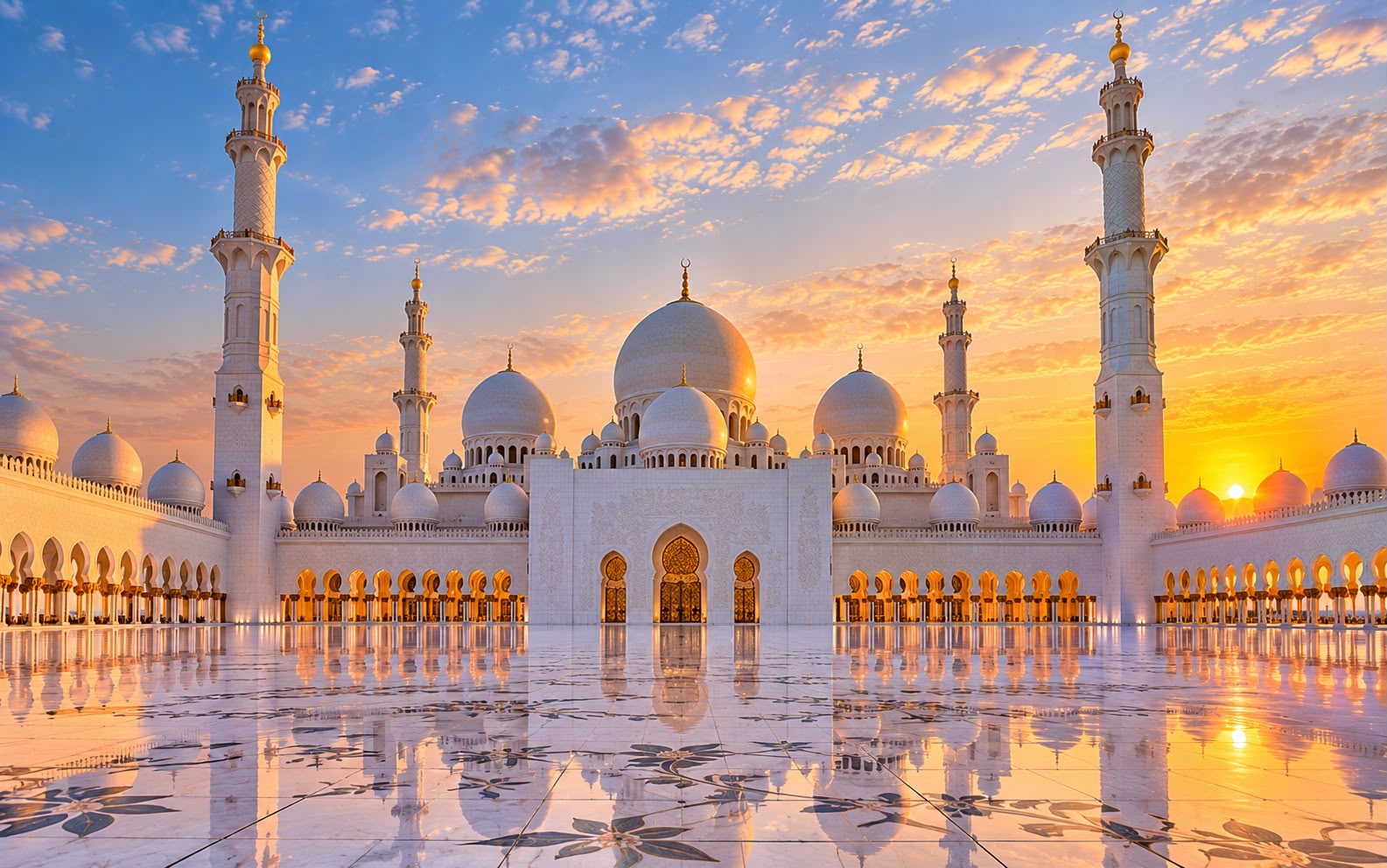
- 09:30 — Sheikh Zayed Grand Mosque — 82 domes, the largest hand-knotted carpet in the world, and it is free to enter. Dress code is enforced: ankles, wrists and hair covered for women, long trousers for men. Abayas are lent at the entrance, and the queue for them is the slow part.
- 12:00 — Qasr Al Watan, the presidential palace, which is open to visitors and is more impressive than it sounds — and the library under the dome is the best room in it.
- 15:00 — Louvre Abu Dhabi on Saadiyat — Jean Nouvel’s perforated dome makes a “rain of light”, and the collection is arranged chronologically across civilisations rather than by nation, which is the whole idea.
- Ferrari World or Yas Waterworld if you have children — swap either for the Louvre, not for the mosque.
- 19:00 — Back to Dubai in the evening.
Day 5 — Beach, brunch and out
- 09:00 — Kite Beach or JBR in the morning, both free and both with showers.
- 12:30 — A Friday or Saturday brunch if your dates land right — it is a Dubai institution and bookings go weeks ahead.
- 16:00 — Last shopping at Mall of the Emirates, or the Dubai Frame if you want one more view.
- Dubai airport is 15 minutes from Downtown on the metro, and the metro runs until midnight — later on Fridays.
Costs and practicalities
Best time to visit
November to March, and this matters more here than almost anywhere.
- November–March — 24–30°C, dry, and everything outdoors is pleasant. This is the season, and prices reflect it.
- December and January are peak: the highest hotel rates of the year, especially over New Year.
- April and October — shoulder months, 32–38°C, still manageable early and late in the day, and noticeably cheaper.
- May–September — 40–48°C with high humidity in August. The outdoor half of this itinerary does not work. Hotels are half price and the city moves indoors entirely.
Ramadan shifts the rhythm: many restaurants close during daylight, eating and drinking in public is not done, and the evenings are livelier than any other time of year. Hotel rates fall.
Travel tips
- Book the Burj Khalifa online, weeks ahead. Non-sunset slots are roughly half the price.
- The fountain show is free. You do not need a restaurant booking to see it.
- Use the metro and a Nol card. It is a fraction of taxi fares and faster at rush hour.
- The abra is one dirham. Tourist “creek tours” charge many times that for the same crossing.
- Pick a desert operator inside a conservation reserve.
- Dress for the Grand Mosque — it is strictly enforced and the queue for lent abayas is long.
- Haggle in the souks, politely, starting around half.
- Friday mornings are quiet, and many businesses open late.
What this trip actually costs
Two people, 4 nights, mid-range comfort, international flights excluded:
| Item | Cost |
|---|---|
| Hotels, 4 nights | AED 2,000 |
| Burj Khalifa, desert safari and attractions | AED 1,150 |
| Food and drink, 5 days | AED 1,050 |
| Metro, taxis and the Nol card | AED 400 |
| Abu Dhabi day — transport and entries | AED 200 |
| Total for two | AED 4,800 |
- Roughly AED 2,400 per person. Accommodation is the line that moves most — Dubai has genuinely good hotels at every price and the same itinerary works from a hostel or a suite.
- Alcohol is the hidden cost. A beer in a licensed bar is AED 40–60, and a brunch with drinks is AED 400 and up.
- December to early January runs well above this.
- Hotel picks here are chosen on location, not on commission — always check prices and recent reviews before booking.
What to pack
- Modest clothing for the old city and the mosque — covered shoulders and knees, and a scarf.
- A light layer for indoors. Malls and taxis are aggressively air-conditioned.
- Sun protection and a hat, even in winter.
- Comfortable shoes — Dubai Mall alone is a long walk.
- Swimwear for the beach and hotel pools.
- A Type G adapter — the UAE uses the UK three-pin.
FAQ
Is five days enough for Dubai? Yes, and it is enough to include Abu Dhabi and the desert. Three days covers the headline sights; five lets you see the old city properly.
Is Dubai expensive? It can be and does not have to be. The metro, the beaches, the fountain, the mosque and the souks are free or nearly so. Hotels, alcohol and attractions are where the money goes.
Do I need to cover up? In malls, the old city and government buildings, shoulders and knees. At hotel beaches and pools, normal swimwear is fine. At the Grand Mosque, strictly — ankles, wrists and hair for women.
Is the desert safari worth it? Once, yes — and pick an operator in a conservation reserve rather than the cheapest. If dune bashing does not appeal, the quieter wildlife drives and dawn balloons are better.
Can I visit during Ramadan? Yes, and it is a genuinely interesting time. Daytime eating and drinking in public is not done, many restaurants close until sunset, and the evenings are the liveliest of the year.
Prices and entry rules change, and what you need depends on your passport; last checked 4 November 2026, so confirm with the embassy or your airline before booking.


