 The Itinerary
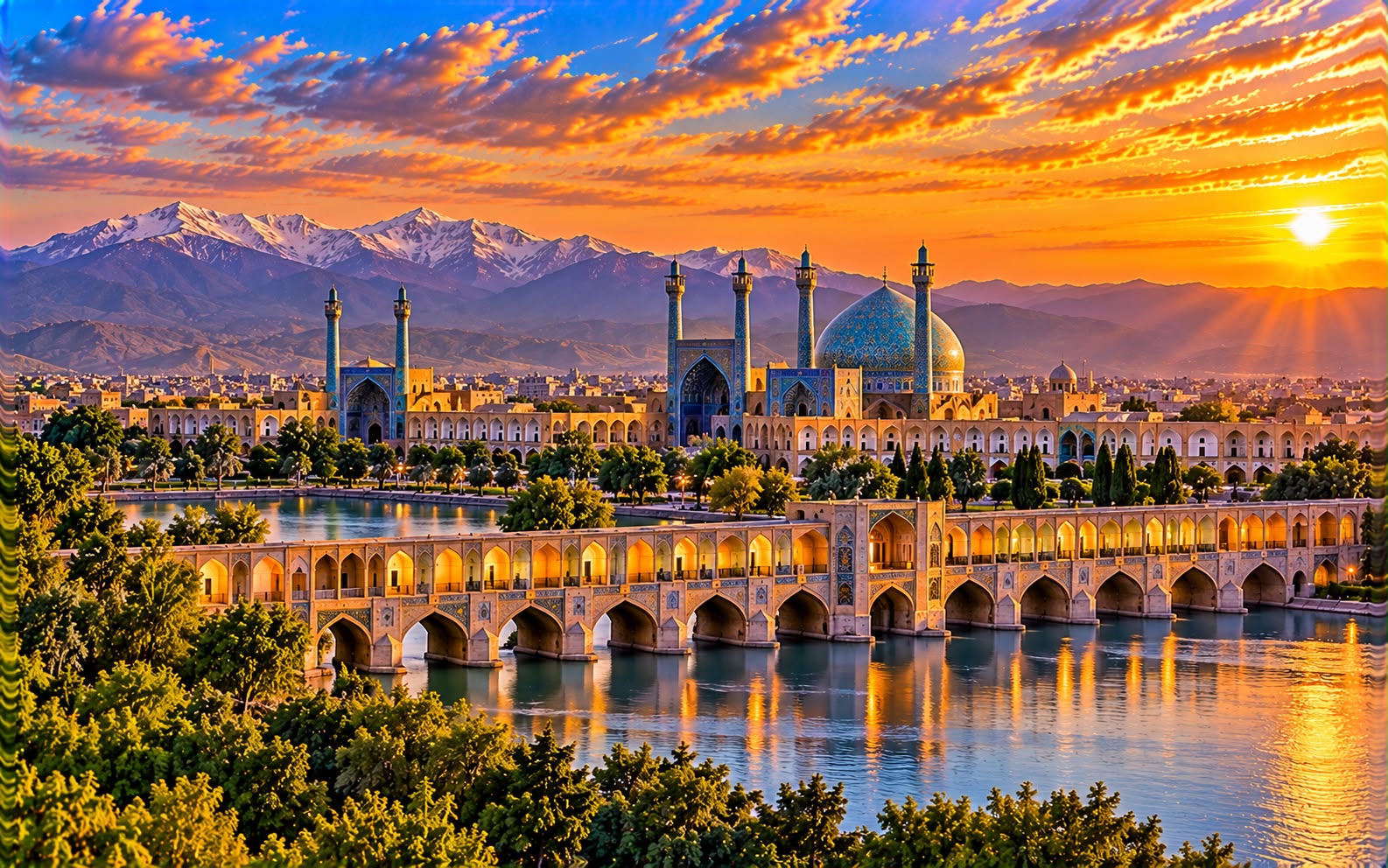
Iran in 10 days: Persepolis, Isfahan's square and the mudbrick city of Yazd
Twenty-six World Heritage sites, a square second in size only to Tiananmen, and the ceremonial capital Alexander burned — in a country where several governments warn their nationals of arbitrary arrest and where dual nationals face particular danger.
- Middle East
- 10 days
- ≈ AED 4,050 / person
- One of the great architectural traditions on earth — behind a serious detention risk
Before you go
Read this first
Several governments advise against all or all but essential travel to Iran, and the central reason is not crime or conflict. It is this:
- Arbitrary arrest and detention of foreign nationals. Visitors have been detained without credible charge, held for long periods, and used as leverage in disputes between states. The UK, US, Canada, Australia and others have issued explicit warnings about this.
- Dual nationals are at particular risk. Iran does not recognise dual nationality. If you hold Iranian citizenship — including by descent, even if you have never held an Iranian passport — you may be treated solely as an Iranian citizen, denied consular access entirely, and prevented from leaving.
- Several countries have no embassy in Iran, so consular assistance may be impossible.
- Border regions with Afghanistan, Pakistan and Iraq carry separate and stronger warnings.
- Regional escalation has repeatedly closed airspace at short notice and stranded travellers.
If you hold Iranian heritage, take specialist advice before even considering this. It is the single most consequential thing on this page.
This guide is not an encouragement to go. It exists because Iran holds one of the world’s great architectural and literary traditions, because people research it for years, and because a page that states the risk plainly is more useful than one that does not mention it.
Check your own government’s current advice first.
What is there is extraordinary and under-visited. Iran has twenty-six UNESCO World Heritage sites.
Naqsh-e Jahan Square in Isfahan is one of the largest public squares in the world, laid out in 1598 by Shah Abbas with the Shah Mosque, the Sheikh Lotfollah Mosque and the Ali Qapu palace around it — and the tilework on the Lotfollah dome shifts from cream to pink as the day moves.
Persepolis was the ceremonial capital of the Achaemenid empire, begun by Darius I around 515 BC, and burned by Alexander in 330 BC. The Apadana staircase still carries reliefs of delegations from twenty-three subject nations bringing tribute, each in their own dress.
Yazd is a desert city of mudbrick, wind-catchers and underground qanats, continuously inhabited for thousands of years and the centre of Zoroastrianism in Iran — the Atash Behram holds a fire said to have burned since 470 AD.
Ten days. Figure USD 1,100 (≈ AED 4,040) per person excluding flights. Go April–May or October–November; summer in Yazd exceeds 40°C.
Before you go: the 15-minute admin
Visas, and the guide requirement
- Most nationalities need a visa in advance, applied for through the e-visa system with an authorisation code, then collected at an embassy or on arrival.
- Citizens of the United States, the United Kingdom and Canada cannot travel independently. They must be on an organised tour with a government-approved guide accompanying them at all times, and must have an approved itinerary. This is not negotiable.
- An Israeli stamp in your passport means refusal.
- Journalists and researchers need separate permissions and should not enter on a tourist visa.
Money, which sanctions have broken
- No international bank cards work. Visa, Mastercard and Amex do not function anywhere in Iran. Bring every rial you will spend, in cash, as euros or dollars, and change locally.
- Tourist debit cards can be bought on arrival and loaded with cash, which many visitors now use instead of carrying bundles.
- The rial and the toman are both used in speech — one toman is ten rials — and prices are usually quoted in toman. Ask which.
- The exchange rate has moved enormously and official and open market rates differ. Any figure in an older guide is wrong.
Dress and conduct
- Hijab is compulsory for women, including foreign visitors: hair covered, loose clothing to mid-thigh, arms and legs covered. Men wear long trousers.
- Enforcement has varied and the law has not changed. Follow your guide’s advice on the day.
- Alcohol is illegal. So are unmarried couples sharing a room in theory, though hotels apply this unevenly to foreigners.
- Do not photograph military sites, government buildings, airports or protests. Do not photograph people without asking.
- Do not discuss politics with people who could be endangered by it. This matters far more than your curiosity.
Internet
- Most Western platforms are blocked — Facebook, Twitter/X, YouTube, Telegram at times, and others. A VPN is near-universal among Iranians and visitors.
- Internet shutdowns happen during unrest, sometimes nationally.
Day by day
Day 1 — Tehran
- Bring all the cash you need in euros or dollars. Foreign cards do not work anywhere in Iran — no ATMs, no payments — and a tourist debit card loaded on arrival is the usual workaround.
- 10:00 — The National Museum of Iran, which is where to start, and gives you the four thousand years the rest of the trip is built on.
- 13:00 — The Golestan Palace, UNESCO-listed, with its mirrored halls. Each building inside is a separate ticket; buy them at the gate for the two or three you actually want.
- 16:00 — The Grand Bazaar, which is ten kilometres of corridor and closes on Fridays.
- 19:00 — Tabiat Bridge in the evening, which is where Tehran walks.
- Headscarves are required for women in public. Enforcement varies and the situation has been volatile; take current advice rather than last year’s.
Day 2 — The jewels, and north Tehran
- 09:00 — The Treasury of National Jewels, held in the Central Bank vault — the Darya-ye Noor diamond, the Peacock Throne, and a globe made of 51,000 gemstones. It opens only a few afternoons a week for about two hours — check the days before you plan this morning.
- 13:00 — The Carpet Museum or the Reza Abbasi, both small and both excellent.
- 16:00 — Darband or Darakeh, the mountain paths above the city where Tehranis walk up past teahouses on the stream.
- 20:00 — Dinner in Tajrish, and the bazaar there is better than the Grand Bazaar for food.
Day 3 — Kashan
- 08:00 — Three hours south.
- 11:00 — The merchant houses — Tabatabaei, Borujerdi, Abbasian — courtyard mansions with wind-catchers and plaster carving, built by nineteenth-century carpet traders.
- 14:00 — Fin Garden, UNESCO-listed, one of the nine Persian gardens on the list, and the place Amir Kabir was murdered in 1852.
- 16:30 — Sialk, a ziggurat and settlement mound occupied from around 6000 BC.
- 18:00 — The Sultan Amir Ahmad bathhouse roof at sunset, which is a landscape of domes and light-wells.
Day 4 — To Isfahan, and the square
- 08:30 — Three hours south, with the Abyaneh village detour if you want the red mud-brick and the headscarves that predate the revolution.
- 14:00 — Naqsh-e Jahan Square at several times of day. The scale only registers once you have crossed it.
- 16:00 — The Sheikh Lotfollah for the tilework, which was the royal family’s private mosque and has no minaret and no courtyard.
- 18:00 — Ali Qapu’s music room with its acoustic niches, and the terrace over the square at dusk.
- 20:00 — The square at night, when families picnic on the grass and it becomes the town’s living room.
Day 5 — Isfahan
- 08:00 — The Shah Mosque for the acoustics under the dome — stand on the black stone at the centre and clap once.
- 10:30 — The Masjed-e Jameh, separately UNESCO-listed, which is twelve centuries of Iranian architecture in one building — you can read the styles change as you walk through it.
- 14:00 — The Armenian quarter of Jolfa and the Vank Cathedral, frescoed inside like a mosque and Christian underneath.
- 17:30 — The Si-o-se-pol and Khaju bridges over the Zayandeh Rud, where Isfahan walks in the evening and men sing under the arches. The river is often dry — the singing happens regardless.
Day 6 — To Yazd
- 08:00 — Four to five hours across the desert, with the Nain Jameh Mosque on the way.
- 14:00 — The old city, UNESCO-listed: unbroken mudbrick, badgirs — wind-catchers that cool houses without power — and lanes roofed against the sun.
- 17:00 — The Amir Chakhmaq complex, which is lit after dark and is the photograph of Yazd.
- 19:00 — A rooftop for dinner, looking over the wind-catchers.
Day 7 — Zoroastrian Yazd
- 08:00 — The Towers of Silence outside the city where the dead were once exposed — go early; there is no shade on the climb.
- 10:30 — The Atash Behram, where a fire has reportedly burned since the fifth century.
- 12:00 — The Jameh Mosque with the tallest minarets in Iran.
- 15:00 — A qanat, the underground channels that made desert settlement possible and are themselves UNESCO-listed — the water museum explains the system.
- 17:00 — The Dowlat Abad garden and its 33-metre wind-catcher, the tallest in the world.
Day 8 — To Shiraz, via Pasargadae
- 07:00 — Six hours south.
- 11:00 — Pasargadae, the tomb of Cyrus, austere and alone on a plain — six stone steps and nothing else, and it is more affecting than Persepolis.
- 15:00 — Naqsh-e Rostam holds the rock-cut tombs of Darius and Xerxes, cut into the cliff above the Sassanian reliefs.
- 18:00 — Into Shiraz.
- 20:00 — The tombs of Hafez and Saadi, which are not tourist sites but places Iranians go in the evening to read poetry aloud. If you see one thing in Shiraz, see Hafez at night.
Day 9 — Persepolis
- 07:30 — Persepolis, an hour out, and go at opening — there is no shade on the terrace and by eleven it is punishing.
- 08:30 — The Gate of All Nations, the Apadana reliefs of twenty-three tribute delegations, and the burned column drums — Alexander’s fire is still legible on the stone.
- 12:00 — The tombs above the site for the whole terrace from height.
- 16:00 — Back in Shiraz, and the Vakil Bazaar in the late afternoon.
- 18:00 — The Eram Garden, which is the ninth of the Persian gardens.
Day 10 — Nasir al-Mulk, and out
- 07:00 — The Nasir al-Mulk Mosque, whose stained glass throws the whole floor into colour for about an hour after sunrise. That hour is the entire reason to go — by nine the light has moved off the carpets.
- 09:30 — The Shah Cheragh shrine, which requires a guide for non-Muslims and provides one free at the gate.
- 12:00 — A last walk in the bazaar, and Shirazi marquetry is the thing to buy.
- Fly out via Tehran or direct from Shiraz — and you will have no working card at the airport, so keep cash back for the departure tax and the taxi.
Costs and practicalities
Best time to visit
April–May and October–November. Iran’s summer is extreme — over 40°C in Yazd and Isfahan — and its winter brings snow to the mountains and genuine cold to Tabriz.
- April–May — the best of the year. Nowruz, the Persian New Year from 21 March, runs for two weeks, when the whole country is travelling, sites are packed and transport sells out. Immediately after it is ideal.
- June–August — 40°C+ in the desert cities. The Alborz and the Caspian coast are the escape.
- October–November — the second best window: clear light, the pomegranate and saffron harvests, and comfortable temperatures.
- December–February — cold, with snow in Tabriz and on the passes. Isfahan and Shiraz are crisp and empty.
Ramadan changes everything — daytime eating is restricted and many restaurants close until dusk.
Travel tips
- Most nationalities need a guide or an authorised tour — US, UK and Canadian passport holders in particular cannot travel independently. Others can, with a visa arranged through an agency.
- No Western card works. No Visa, no Mastercard, no ATM access. Bring the entire budget in cash — euros change best — and consider a local prepaid tourist card.
- Hijab is a legal requirement for women in public, including foreigners: headscarf, long sleeves, and a coat or tunic covering the hips. Enforcement has fluctuated; follow current local practice.
- Prices are quoted in both rials and tomans — one toman is ten rials. Always confirm which; this is the single most common confusion.
- An Israeli stamp means refusal of entry.
- Taarof is the elaborate politeness system — a shopkeeper may refuse payment twice before accepting. Insist gently; it is a ritual, not an offer.
- Do not photograph military, government buildings or anyone in uniform, and ask before photographing women.
What this trip would cost
Two people, 9 nights, mid-range comfort, flights excluded:
| Item | Cost |
|---|---|
| Hotels, 9 nights | USD 900 (≈ AED 3,305) |
| Guide and driver, or tour supplement | USD 800 (≈ AED 2,938) |
| Domestic flights and transfers | USD 300 (≈ AED 1,102) |
| Site entries and museums | USD 200 (≈ AED 735) |
| Total for two | USD 2,200 (≈ AED 8,080) |
Food is not a separate line. Restaurant meals are very cheap at the current exchange rate and many of the traditional-house hotels are half board, so it disappears into the figures above.
- Roughly USD 1,100 (≈ AED 4,040) per person. Iran is inexpensive on the ground because of the exchange rate; the guide requirement is what adds cost for some nationalities.
- Carry everything in cash. No card you own will work.
- Traditional houses converted into hotels in Kashan, Isfahan and Yazd are the thing to book and are not expensive.
- Hotel picks here are chosen on location, not on commission — always check prices and recent reviews before booking.
What to pack
- All your money, in euros or dollars, in cash.
- A headscarf and loose clothing for women; long trousers for men.
- A VPN installed before you arrive, because you cannot download one there.
- Sun protection — the desert cities are brutal in daylight.
- Modest, comfortable shoes for mosques, which you enter barefoot.
FAQ
Is it safe to travel to Iran? Ordinary crime is low and Iranian hospitality is genuinely extraordinary. The risk is arbitrary detention by the state, which several governments warn about explicitly. That is a different kind of risk from the one most travel advice describes, and it should be weighed on its own terms.
I have Iranian heritage. Does that change things? Substantially. Iran does not recognise dual nationality and may treat you solely as an Iranian citizen — no consular access, and potentially no exit. Take specialist advice before going anywhere near this.
Can Americans, Britons and Canadians visit? Only on an approved organised tour with a guide present throughout. Independent travel is not permitted for these nationalities.
Will my cards work? No. Sanctions mean no international card functions anywhere in Iran. Bring cash, or load a tourist debit card on arrival.
What language do they speak? Persian (Farsi). English is spoken by younger people in the cities and much less elsewhere; a guide handles the rest.
Prices and entry rules change, and what you need depends on your passport; last checked 29 October 2026, so confirm with the embassy or your airline before booking.


