 The Itinerary
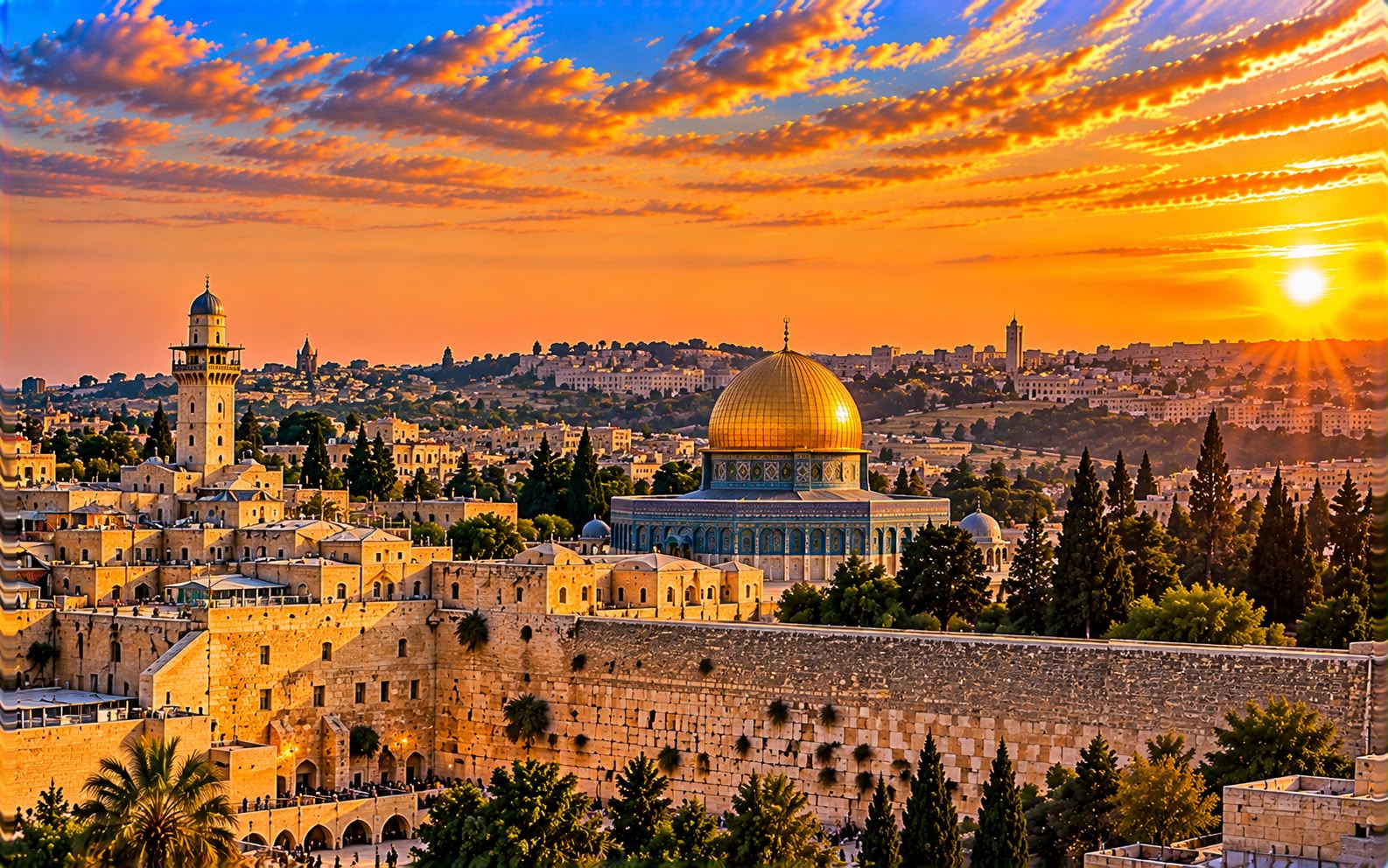
Palestine in 6 days: Bethlehem, Hebron and the terraces of Battir
The church built over the cave where Jesus is said to have been born, agricultural terraces farmed the same way for two thousand years, and a city with ten thousand years of settlement — across a territory where movement is controlled and advice varies sharply by area.
- Middle East
- 6 days
- ≈ AED 2,750 / person
- Three UNESCO sites, and the oldest continuously inhabited city on earth
Before you go
Read this first
Travel advice for the Palestinian territories is area-specific and changes quickly, and the two territories are entirely different cases.
- Gaza. Every government advises against all travel. It is not accessible to visitors, and the devastation and humanitarian crisis since 2023 are of a scale that makes any discussion of tourism inappropriate. This guide does not cover Gaza and no itinerary to it exists.
- The West Bank. Advice varies by area and by government. Many advise against travel to parts of it while treating Bethlehem, Jericho and Ramallah differently. Hebron, the area around Nablus, the Jordan Valley and the vicinity of settlements and checkpoints are more frequently named.
- The situation since October 2023 has included sharply increased settler violence, military operations in West Bank cities and refugee camps, mass detentions and severe movement restrictions. Conditions can change within hours.
- Checkpoints and closures can trap you somewhere unexpectedly. Allow far more time than distance suggests and never plan a tight onward connection.
- Insurance very often excludes the West Bank entirely. Read the wording, not the summary.
Read your own government’s current advice, area by area, close to the date. This page cannot substitute for it and is not a safety assessment.
Why this page exists. The West Bank holds three UNESCO World Heritage sites and the oldest continuously inhabited city on earth, and a great many people visit Bethlehem every year — usually on a half-day from Jerusalem that shows them a church and a wall and nothing else. A guide that treats it as a place with its own economy, food and people is more honest than that.
The Church of the Nativity in Bethlehem stands over the cave traditionally identified as the birthplace of Jesus. The present basilica is substantially sixth-century Justinianic, making it one of the oldest churches in the world still in daily use, and it was UNESCO-listed in 2012 — the first site inscribed for Palestine.
Battir, a few kilometres away, is listed for something quite different: agricultural terraces irrigated by a Roman-era system of channels and a rota that families still operate between them, essentially unchanged for two thousand years.
Hebron’s old town is the third, listed in 2017. The Ibrahimi Mosque / Cave of the Patriarchs is built over the tomb Jews, Muslims and Christians all identify as Abraham’s, and since 1994 it has been physically divided between a mosque and a synagogue, with separate entrances and checkpoints.
Jericho claims to be the oldest continuously inhabited city in the world, with settlement at Tell es-Sultan going back ten thousand years, and sits 250 metres below sea level.
Six days. Figure ILS 2,400 (≈ AED 2,765) per person excluding flights. Go March–May or September–November.
Before you go: the 15-minute admin
Getting in, and what it means
- There is no Palestinian international airport. Visitors arrive through Ben Gurion airport in Israel, or overland from Jordan via the Allenby/King Hussein Bridge, which is the crossing most used for the West Bank.
- Entry is controlled by Israel in both cases, and questioning can be lengthy. Saying you intend to visit the West Bank may extend it. Be truthful; being caught in a lie is worse.
- Allenby has its own rules and hours and is the only crossing some travellers may use.
- Israel issues a paper entry card rather than stamping passports. Keep it.
Movement inside the West Bank
- Area A is under Palestinian Authority administration and includes Bethlehem, Ramallah, Jericho, Nablus and most of Hebron’s Palestinian areas. Israeli citizens are prohibited by Israeli law from entering, and red signs say so.
- Area C is under full Israeli control and covers most of the countryside, the settlements and the main roads.
- Most Israeli hire cars are not insured for Area A, and the rental agreement will usually prohibit it. Check before you drive anywhere; the standard solution is a Palestinian taxi or driver.
- Checkpoints may be quick or may take hours, and can close entirely. Carry your passport at all times.
Money
- The Israeli shekel (ILS) is what the West Bank runs on, with Jordanian dinars also circulating in places.
- Cards work in Bethlehem and Ramallah; carry cash elsewhere.
- Costs are lower than in Israel for food and accommodation, and noticeably so.
Conduct
- Dress modestly, particularly in Hebron and Nablus and at religious sites. Women need a headscarf at the Ibrahimi Mosque; robes are lent.
- Do not photograph soldiers, settlers, checkpoints or military installations.
- Ask before photographing people, always.
- Stay with a local guide in Hebron. It is not a place to wander into unbriefed, and the two competing guided narratives there are themselves part of understanding it.
Day by day
Day 1 — Bethlehem
- You enter through Israel, and movement between cities runs through checkpoints that can close without notice. Build slack into every transfer.
- 13:00 — The separation wall through the town, and Banksy’s Walled Off Hotel beside it, which functions as a museum of the conflict and is more thoughtful than its publicity suggests.
- 16:00 — Aida and Dheisheh refugee camps, visited only with someone from the community, and not treated as a sight.
- 18:30 — Manger Square in the evening, when the day visitors have gone and the town belongs to itself again.
- Stay in Bethlehem rather than day-tripping from Jerusalem. It is the difference between seeing the town and passing through it.
Day 2 — The Church of the Nativity
- 07:30 — The Church of the Nativity, and the Grotto beneath it with the silver star. Go early; the queue for the grotto can run for hours and pilgrimage groups dominate the middle of the day.
- The Door of Humility is 1.2m high and you bend to get in, which was the point of lowering it.
- 10:00 — The Milk Grotto and St Catherine’s, from where the midnight mass is broadcast.
- 13:00 — The old market and the olive-wood workshops, which are a real local industry rather than a stall trade.
- 16:00 — The Shepherds’ Fields at Beit Sahour, fifteen minutes out.
- 19:00 — Dinner on Star Street.
Day 3 — Battir and the terraces
- 08:30 — Battir, twenty minutes away: UNESCO-listed terraces watered by a Roman-era channel system, with the eight extended families of the village still taking the spring water in a rotation measured in days.
- 10:00 — Walk the terraces with a village guide. It is the quietest and best thing on this itinerary.
- 12:00 — The old Jerusalem–Jaffa railway runs along the valley floor below; the village famously saved its terraces in the 1949 armistice by agreeing to protect the line.
- 14:00 — Lunch in the village, which the guides arrange with a family.
- 17:00 — Back to Bethlehem, and the terraces at Walaja on the way if there is light.
Day 4 — Jericho and the Jordan Valley
- 08:00 — An hour down, and 1,200m of descent — Jericho is 258m below sea level and is hot when Bethlehem is cool.
- 09:30 — Tell es-Sultan, UNESCO-listed in 2023 — ten thousand years of settlement in one mound, including a neolithic tower from around 8000 BC that is among the oldest stone structures anywhere.
- 11:30 — The Mount of Temptation monastery, clinging to a cliff above the city, reached by cable car.
- 14:00 — Hisham’s Palace, an Umayyad winter estate with the Tree of Life mosaic, one of the finest in the Islamic world — it is now under a permanent roof and visible year-round.
- 16:30 — The Dead Sea shore is nearby, at the lowest point on earth.
- 18:30 — Back up to Bethlehem.
Day 5 — Ramallah and Nablus
- 08:00 — Ramallah is the administrative and cultural centre — the Yasser Arafat Museum, the Palestinian Museum at Birzeit, a restaurant and café scene, and a normality that surprises visitors who expected otherwise.
- 12:00 — North to Nablus, an hour, through the hills.
- 13:30 — Nablus for the old city and the soap factories that have made olive-oil soap here for centuries, where the soap is still stacked in cones to cure.
- 15:00 — Kunafa, which Nablus claims and which is worth the detour on its own — eaten hot, in a plastic chair, from a tray the size of a table.
- 16:30 — Sebastia nearby, with Roman and Herodian remains on a hillside.
- 19:00 — Back to Ramallah or Bethlehem, and the checkpoint queue at the end of the day is the long one.
Day 6 — Hebron, and out
- 08:30 — Hebron with a guide. Not without one.
- 10:00 — The Ibrahimi Mosque / Cave of the Patriarchs is divided between a mosque and a synagogue after the 1994 massacre, with separate entrances and metal detectors. You can enter both, separately, and that walk round is the point.
- 12:00 — The old souk beneath the settlement is covered with wire mesh to catch what is thrown down into it, which tells you most of what you need to know about the arrangement.
- 13:30 — Shuhada Street, once the main commercial street, is closed to Palestinians.
- Two organisations run tours with opposite perspectives. Taking both, if you have the stomach for it, is the most honest way to see the place.
- 16:00 — Travel back to Jerusalem or Allenby. Allow hours, not minutes.
Costs and practicalities
Best time to visit
March–May and September–November. The West Bank is hot and dry in summer and can be cold and wet in winter, particularly at altitude around Bethlehem and Hebron.
- March–May — the best of the year. Wildflowers across the Battir terraces, comfortable walking, and the almond blossom in February giving way to spring.
- June–August — 30–35°C in the hills and far hotter in Jericho, which sits 258m below sea level and is one of the hottest inhabited places in the region.
- September–November — warm, clear, and the olive harvest from mid-October to November, which is the most important season in the Palestinian agricultural year and when volunteer harvest programmes run.
- December–February — cold and wet in the hills, with occasional snow in Bethlehem and Hebron. Christmas in Bethlehem is the obvious draw and the town is full.
Jericho and the Jordan Valley are warm when the hills are cold, which makes them the winter destination.
Travel tips
- Check current advice carefully and by area. The position in the West Bank varies sharply between cities, and changes quickly.
- Movement is controlled by checkpoints and journey times are unpredictable. Carry your passport at all times and allow far more time than the distance suggests.
- The shekel is the currency in practice, and Jordanian dinars circulate in places. Cards work in Ramallah and Bethlehem hotels; carry cash elsewhere.
- Dress modestly. Hebron and the smaller towns are conservative; shoulders and knees covered for everyone, and a scarf for women at religious sites.
- Hire a Palestinian guide. They know which routes are open that morning, which is a question with a different answer each day.
- Hire cars with Israeli plates cannot enter Area A, and Palestinian-plated cars cannot enter Israel. Plan transport accordingly.
- Ask before photographing people, soldiers or checkpoints. The last two are a serious matter.
What this trip would cost
Two people, 5 nights, mid-range comfort, flights excluded:
| Item | Cost |
|---|---|
| Guesthouses, 5 nights | ILS 2,000 (≈ AED 2,304) |
| Driver and local guides, 5 days | ILS 2,000 (≈ AED 2,304) |
| Site entries, museums, cable car | ILS 400 (≈ AED 461) |
| Food and drink, 6 days | ILS 400 (≈ AED 461) |
| Total for two | ILS 4,800 (≈ AED 5,530) |
- Roughly ILS 2,400 (≈ AED 2,765) per person, which is considerably cheaper than Israel for the same standard.
- A Palestinian driver and local guides are the right call — practically, because hire cars generally cannot enter Area A, and because the money stays in the economy you came to see.
- Community tourism organisations in Bethlehem, Battir and Hebron arrange guides and homestays directly.
- Allow a contingency day. Closures happen and plans move.
- Hotel picks here are chosen on location, not on commission — always check prices and recent reviews before booking.
What to pack
- Modest clothing, and a headscarf for women at the Ibrahimi Mosque and in Hebron and Nablus.
- Your passport and entry card, on you at all times.
- Cash in shekels for the smaller towns.
- Comfortable shoes for the Battir terraces and Hebron’s old city.
- Patience for the checkpoints, which is the main requirement.
FAQ
Can I visit Gaza? No. Every government advises against all travel, it is not accessible to visitors, and the humanitarian situation makes the question moot. This guide does not cover it.
Is the West Bank safe to visit? Advice is area-specific and changes quickly, and conditions since October 2023 have been markedly worse — settler violence, military operations and closures. Bethlehem, Jericho and Ramallah are generally treated differently from Hebron, Nablus and the Jordan Valley. Read your government’s advice area by area, close to the date.
Can I drive a hire car there? Usually not into Area A — most Israeli rental agreements prohibit it and insurance will not cover it. Use a Palestinian taxi or driver.
Can I combine it with Israel? Geographically, easily — Bethlehem is a few kilometres from Jerusalem. Practically, the checkpoints and the entry questioning are the friction, and you should build in far more time than the distances suggest.
What language do they speak? Arabic. English is widely spoken in Bethlehem and Ramallah and in the tourism trade generally.
Prices and entry rules change, and what you need depends on your passport; last checked 29 October 2026, so confirm with the embassy or your airline before booking.


