 The Itinerary
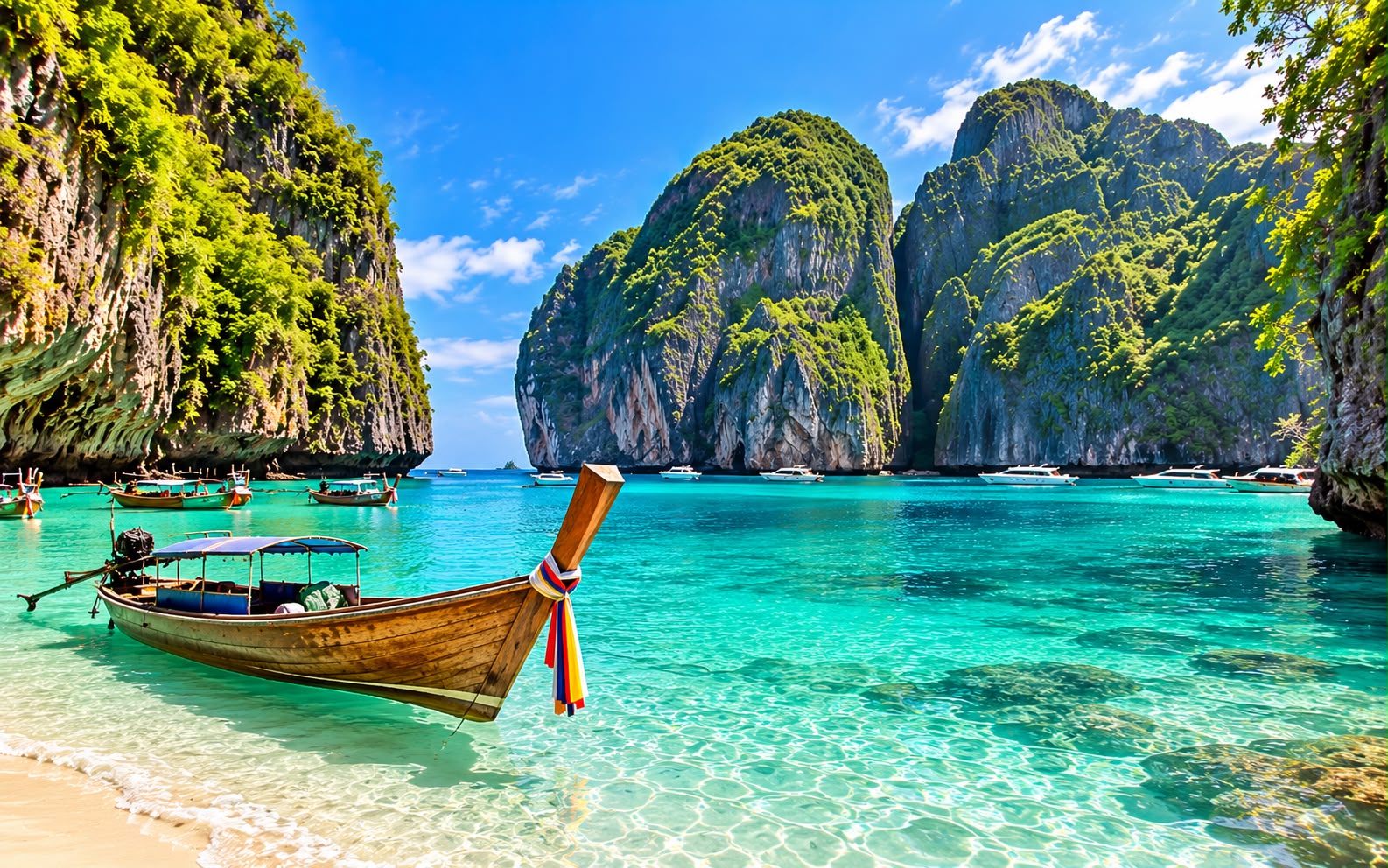
Phuket in 4 days: the beaches, Phi Phi and the old town
Which beach to stay on and why not Patong, the Phi Phi trip done by longtail rather than speedboat, and the Sino-Portuguese old town almost nobody visits. Plus the monsoon rule that drowns people every year.
- Southeast Asia
- 4 days
- ≈ AED 1,300 / person
- Four days that get the beach right and the day trip in the right boat
Before you go
Phuket is Thailand’s biggest island and its most misunderstood. The reputation comes from Patong, which is one beach out of twenty and is the one most visitors should avoid.
Four days: two on a beach that is not Patong, one on the water at Phi Phi or the Phang Nga bays, and one in Phuket Old Town, which is Sino-Portuguese, genuinely beautiful and almost entirely ignored.
One safety note that belongs at the top. During the monsoon, roughly May to October, red flags on the west-coast beaches mean do not swim. Rip currents kill several people here every year, many of them tourists who went in past a red flag on a calm-looking day.
Part of a Thailand trip? See Thailand in 7 days.
Figure the budget below. November to April.
Before you go: the short version
Entry and arrival
- Many nationalities enter visa-free for 30 or 60 days, and everyone completes the Thailand Digital Arrival Card online. It is free.
- Phuket International (HKT) is in the north. The airport is 45–60 minutes from the southern beaches — the island is bigger than people expect.
- Airport taxi is THB 800–1,000; the Smart Bus to Karon and Kata is THB 170.
Which beach
- Kata and Karon — the sensible default. Proper beaches, restaurants, not overwhelming.
- Patong — nightlife, Bangla Road, and loud. Stay here only if that is the point.
- Kamala and Surin — quieter, smarter, more expensive.
- Nai Harn and Rawai in the far south — the locals’ choice, and the best swimming.
- Mai Khao in the north — long, empty, and near the airport.
Getting around
- There is no useful public transport between beaches. This is the island’s great frustration.
- Grab works but drivers are sometimes blocked by local taxi associations. Tuk-tuks are expensive and fixed-price — agree before getting in, and expect THB 400–600 between beaches.
- Renting a scooter is cheap and is how most people get around. You need the correct licence or your insurance is void, and Phuket’s roads are genuinely dangerous — the hills between beaches are steep and the accident rate is high.
Day by day
Day 1 — Arrive, and the southern beaches
- 14:00 — Settle at Kata or Karon. Both face west, both get the sunset.
- 16:00 — The beach, and check the flags. Red means out of the water — see the note above.
- 18:00 — Kata Noi next door, which is smaller and quieter, or the Kata viewpoint on the road south for the three bays at once.
- 20:00 — Dinner on the beach road, and the seafood is chosen from ice and priced by weight.
Day 2 — Phi Phi, or Phang Nga
Pick one. They are opposite directions and both full days.
Phi Phi
- 07:30 — Two hours by ferry from Rassada pier, or 45 minutes by speedboat.
- Maya Bay under the current rules — timed entry, no swimming in the bay, boats capped. It was closed for four years to let the reef recover and the restrictions are the reason it is worth seeing.
- Pileh Lagoon, Viking Cave and Bamboo Island.
- Take the longtail option over the speedboat if offered. Slower, quieter, and roughly half the price — the speedboats run six stops in a day and you spend it being thrown about.
- 17:00 — Back to Phuket.
Or Phang Nga Bay
- 08:00 — An hour north, then by boat into limestone karsts rising straight out of shallow green water.
- James Bond Island is the famous one and is a ten-minute photo stop on a crowded beach — manage expectations.
- The sea caves and the hongs — collapsed cave lagoons entered by canoe at the right tide — are the real reason to come, and the canoe trips are the good version of this day.
- Koh Panyee, the Muslim fishing village built on stilts with a floating football pitch.
Day 3 — Phuket Old Town
Walking order: Thalang Road → Soi Romanee (on it) → Dibuk Road (5 min) → Phang Nga Road → the Sunday walking street. About 2km, flat, and almost entirely shaded by shophouse arcades.
- 09:00 — Phuket Old Town, which almost nobody staying on the beaches visits and which is the most interesting place on the island.
- Sino-Portuguese shophouses in pastel, built by Hokkien Chinese tin merchants in the nineteenth century — arcaded fronts, carved doors, and tiled floors.
- 11:00 — Soi Romanee, the prettiest lane, which was the red-light street a century ago and is now cafés.
- 12:30 — Lunch, and Hokkien mee and o-aew are the local dishes — the food here is Chinese-Thai and distinct from the rest of the country.
- 14:00 — The Thai Hua Museum, a former Chinese school, which explains the tin-mining history that built all of this.
- 16:00 — Jui Tui and Put Jaw shrines, which are the centre of the Vegetarian Festival in September or October — nine days of processions and some genuinely extreme body piercing.
- 18:00 — The Sunday walking street on Thalang Road if your dates land on one.
Day 4 — The south, and the Big Buddha
- 08:00 — The Big Buddha on Nakkerd Hill — 45 metres of white Burmese marble, visible from half the island, and free to enter though donations build it.
- Shoulders and knees covered, and sarongs are lent at the top.
- 10:30 — Wat Chalong, the island’s most important temple.
- 12:00 — Rawai and Nai Harn in the far south — the locals’ beaches, with the seafood market at Rawai where you buy from the stalls and the restaurants opposite cook it.
- 15:00 — Promthep Cape, the southernmost point, which is the sunset spot — go early for a place at the rail.
- Or a half-day at Koh Yao Noi, a quiet island 30 minutes by boat that most visitors never hear about.
Costs and practicalities
Getting around, and what it costs
| Airport taxi to Kata | THB 800–1,000 |
| Smart Bus to Karon/Kata | THB 170 |
| Tuk-tuk between beaches | THB 400–600 |
| Scooter hire, per day | THB 250–350 |
| Phi Phi ferry return | THB 1,000–1,400 |
| Phi Phi speedboat day tour | THB 2,500–3,500 |
| Phang Nga canoe day tour | THB 2,000–3,000 |
| Big Buddha | free |
- Transport is the island’s hidden cost. Tuk-tuk fares between beaches add up fast, which is why so many visitors end up on scooters.
Best time to visit
- November to April — the dry season, calm seas, and the best of it is December to March.
- May to October — the southwest monsoon. Rain comes in bursts rather than all day, but the west-coast surf is dangerous and the red flags are serious. Prices halve.
- The Vegetarian Festival falls in September or October and is extraordinary.
- High season is December and January, when Patong and Kata are genuinely full.
Travel tips
- Red flag means do not swim. People drown here every year ignoring this.
- Do not stay in Patong unless nightlife is the purpose.
- Longtail over speedboat for Phi Phi.
- Visit the Old Town. It is the best half-day on the island and almost nobody does it.
- Do not ride a scooter without the correct licence.
- Jet-ski and motorbike rental scams are a known problem — photograph the vehicle thoroughly before you take it.
What this trip actually costs
Two people, 3 nights, mid-range comfort, excluding flights to Phuket:
| Item | Cost |
|---|---|
| Hotel, 3 nights at Kata or Karon | THB 9,000 (≈ AED 985) |
| Food and drink, 4 days | THB 6,000 (≈ AED 657) |
| Phi Phi or Phang Nga day trip, two people | THB 5,000 (≈ AED 547) |
| Transport, airport and around the island | THB 3,000 (≈ AED 328) |
| Entries, incidentals | THB 1,000 (≈ AED 109) |
| Total for two | THB 24,000 (≈ AED 2,626) |
- The day trip and the transport are the two real costs. The beaches, the Big Buddha and the Old Town are free or nearly.
- Low season takes about 40% off the hotel line.
- Hotel picks here are chosen on location, not on commission — always check prices and recent reviews before booking.
What to pack
- Reef-safe sunscreen. Some Thai marine parks have banned the usual kind.
- Something covering shoulders and knees for the Big Buddha and the temples.
- A dry bag for the boat days.
- A Type A/B/C adapter, 220V.
Part of a bigger trip?
- Thailand in 7 days pairs Bangkok with the south.
- Thailand’s islands in 8 days runs Phuket, Phi Phi, Railay and Lanta.
- Bangkok in 3 days is 90 minutes by air.
FAQ
Which Phuket beach should I stay on? Kata or Karon for a first visit. Nai Harn or Rawai if you want the locals’ choice. Kamala or Surin for quiet and smart. Patong only if you want Bangla Road.
Is Phi Phi worth the day trip? Yes, on a longtail rather than a speedboat. Maya Bay now has timed entry and no swimming, which is why there is still a reef to see.
Is it safe to swim in low season? Only where the flags allow. Red flags on the west coast mean dangerous rip currents, and ignoring them kills several people every year.
Do I need a scooter? It is the cheapest way around and the most dangerous. If you do not hold the correct licence, your insurance will not cover a crash — and Phuket’s roads are steep and busy.
Is the Old Town really worth a day? Half a day, and it is the most distinctive thing on the island — Sino-Portuguese shophouses, Hokkien food, and almost none of the beach crowd.
Prices and entry rules change, and what you need depends on your passport; last checked 29 October 2026, so confirm with the embassy or your airline before booking.


