 The Itinerary
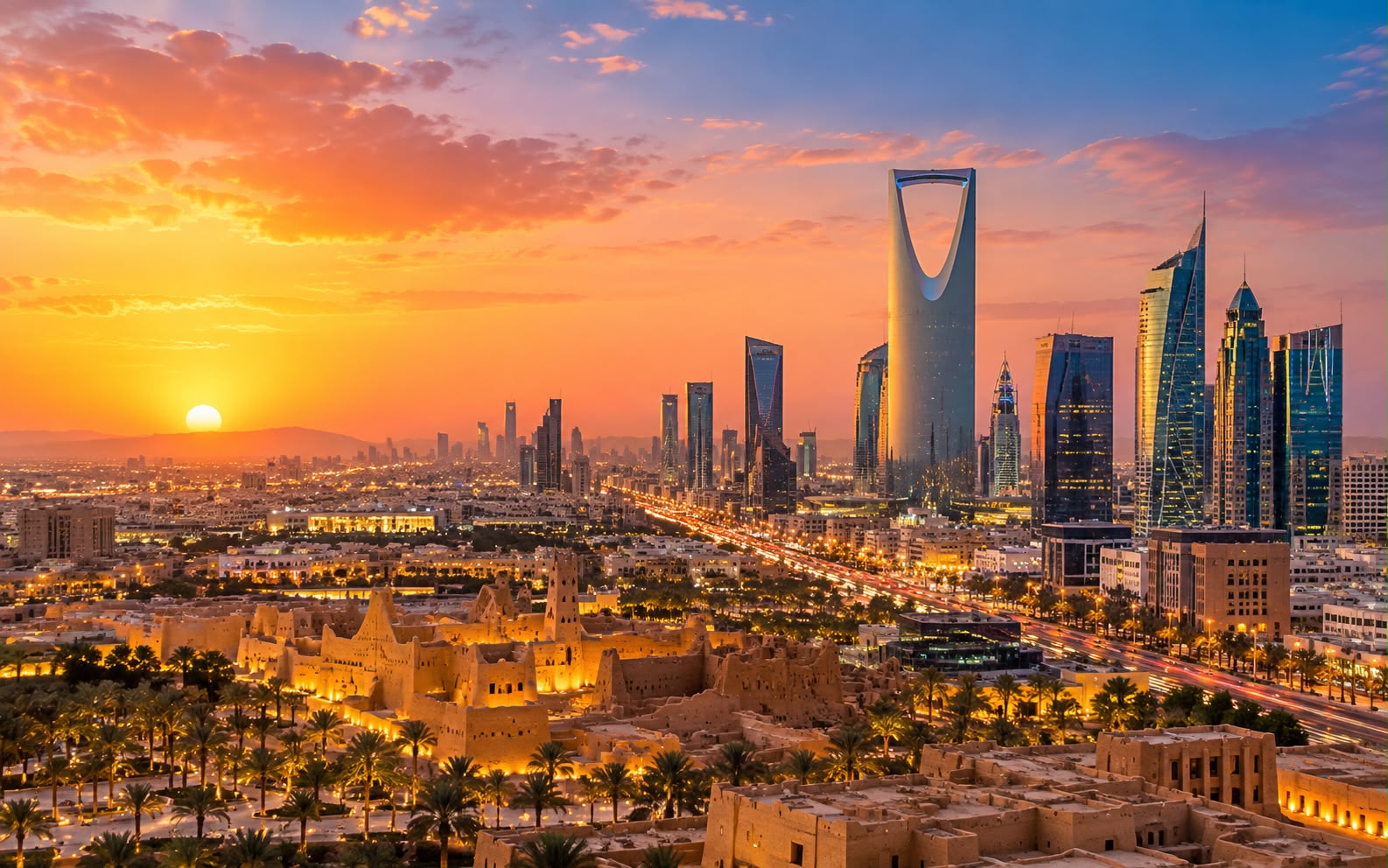
Saudi Arabia in 7 days: Riyadh and AlUla
The trip next door that nobody's done yet: Nabataean tombs to rival Petra with a hundredth of the crowd, a cliff edge that ends the world outside Riyadh, and mud-brick palaces reborn as the Kingdom's showpiece — with the one-year multiple-entry eVisa decoded and the winter-only flight hack that lands you home from the desert direct.
- Middle East
- 7 days
- ≈ AED 5,200 / person
- History + desert
Before you go
For decades, the biggest country in the Gulf was the one you couldn’t see. Then Saudi Arabia opened the doors, spent astonishing money on its heritage, and quietly became the most interesting new destination on Earth — with a one-year, multiple-entry eVisa waiting at the end of a web form for most of the world, and a short hop from anywhere in the Gulf.
This trip pairs the two showpieces. Riyadh: a capital mid-transformation, where the mud-brick birthplace of the Saudi state has been rebuilt into an open-air museum quarter and a sandstone cliff an hour away drops off the edge of the world. AlUla: the oasis valley where the Nabataeans — Petra’s people — carved 111 monumental tombs into golden outcrops at Hegra, Saudi’s first UNESCO site, standing in silence Petra hasn’t known for fifty years.
Costs are in Saudi riyals. Figure SAR 5,300 (≈ AED 5,190) per person excluding international flights. This is an October–March trip: AlUla in summer is a 45°C furnace, and in winter it’s the Gulf’s best-weather escape, with Riyadh Season’s carnival running the same months.
Before you go: the admin
The eVisa is the whole story
- The eVisa is the whole story: citizens of some 60 countries — most of Europe, the UK, the US, Japan, Australia and more — apply directly at visa.visitsaudi.com: SAR 535 all-in (includes mandatory insurance), approval usually 24–48 hours, often minutes, and you get a one-year, multiple-entry visa with 90-day stays. One form covers this trip and every weekend return.
- Not on that list? Two routes open the same eVisa to any nationality: residence in a GCC country valid 3+ months, or a valid US, UK or Schengen visa that has been used at least once. A visa-on-arrival lane (~SAR 480) exists for both categories, though the online route is saner.
- The tourist eVisa also permits Umrah (outside Hajj season). Makkah remains closed to non-Muslims; mixed groups plan around it.
Booking with the calendar
- Book with the calendar: a seasonal Dubai–AlUla non-stop (3× weekly — Sun/Tue/Thu, late October to late March) makes a perfect open-jaw if you route through the Gulf: fly into Riyadh, home direct from AlUla. Outside that window, and from everywhere else, you connect back through Riyadh or Jeddah.
- Domestic leg Riyadh → AlUla: Saudia and flynas, ~1 h 50, SAR 250–550 — book early; AlUla’s winter flights fill with Riyadh weekenders.
The culture brief (honest, and mostly good news)
- Dress: modest, not costumed — no abaya required for visitors. Shoulders and knees covered does it; loose linen is your friend anyway. At mosques and heritage sites, scarves for women are respectful.
- Alcohol: none, anywhere, full stop. The Kingdom’s evening currency is instead saffron coffee, mint lemonade and some of the Gulf’s best karak. Our usual wine notes take this guide off.
- Prayer times: shops pull shutters for ~20–30 min at prayer (restaurants mostly keep serving seated guests). The Athan app or Google prayer times turns this from surprise into rhythm. Friday before ~1pm is the quiet zone; plan museums after.
- Getting around: Uber/Careem run everything in Riyadh (cheap, plentiful), and the gleaming new Riyadh Metro costs SAR 4 a ride. Women travel, drive and dine solo freely — the transformation is real, and visitors describe feeling conspicuously safe.
- Manners: photograph people only with permission (especially women), skip government buildings, keep PDA minimal. Hospitality will find you — accept the coffee.
Day by day
Day 1 — Riyadh: arrival and the Sky Bridge
- Morning flight in (~2 h from the Gulf). Land, grab an eSIM, Careem to Olaya — Riyadh’s glass-tower spine.
- 13:00 — Lunch the local way: a mandi or mathbi house (fragrant rice + smoked chicken, SAR 30–45) or the food halls at Via Riyadh/Centria if you want polish.
- 16:30 — Kingdom Centre Sky Bridge (~SAR 65): the bottle-opener tower’s 300-metre bridge, with the whole city grid going gold at sunset.
- 19:30 — Boulevard City / Riyadh Season (in season, roughly late Oct–Mar): the Gulf’s biggest entertainment sprawl — fountains, concerts, restaurant rows. Entry tickets vary by zone (~SAR 30–100); it’s Riyadh’s living room in winter.
Where to stay in Riyadh (three nights)
- Luxury: The Ritz-Carlton Riyadh — 4.6/5 on TripAdvisor (~1,100 reviews): a palace that happens to take bookings, gardens included. ~SAR 1,600+.
- Mid-range: Hyatt Regency Riyadh Olaya — 4.5/5 (~790 reviews), walkable to Kingdom Centre. ~SAR 550–750.
- Value: Holiday Inn Al Qasr — 4.6/5 (~1,360 reviews), dependable comfort at ~SAR 350–450.
Day 2 — Old Riyadh and the reborn Diriyah
- 09:30 — The National Museum (Murabba): the Kingdom’s story from meteorites to unification, genuinely world-class and near-free. Pair with Masmak Fortress (the 1902 raid that started the state; look for the spearhead in the door) and haggle practice in Souq Al Zal — carpets, oud, daggers.
- 13:00 — Najdi lunch at Al Mamlaka-style heritage restaurants (jareesh, kabsa; SAR 40–70).
- 16:00 — Diriyah: book the Diriyah Pass (SAR 50–100, kids under 12 free — and the fee comes back as dining credit) at diriyah.sa. Wander At-Turaif, the UNESCO mud-brick capital of the first Saudi state — lamplit ochre palaces, museums in the walls, the Wadi Hanifah palms below. Golden hour here is the photo of the Riyadh leg.
- 19:30 — Dinner on Bujairi Terrace facing the floodlit citadel — your pass money back on the table (SAR 150–250 pp at the good tables; booking ahead essential in season).
Day 3 — The Edge of the World
- 08:00 — Full-day 4x4 to Jabal Fihrayn — the Edge of the World (group tours from ~SAR 160–200, small-group ~SAR 250–350, ~6 h): the Tuwaiq escarpment snaps off into a 300-metre void over an ancient seabed, camel caravan trails threading the plain below. You walk (carefully) to fins of rock jutting over nothing. No barriers, no ticket booth — just supervise kids like a hawk and wear grippy shoes. Access is by tour/4x4 only; saloon-car self-drives get turned back at the graded track.
- 16:30 — Recovery: hammam hour or the pool.
- 20:00 — Last Riyadh night: Souq Al Zal by lamplight or Boulevard round two. Pack for the desert.
Day 4 — Fly to AlUla: old town and the Elephant
- 09:00 — Riyadh → AlUla (1 h 50). The airport is 30 min from town; hire a car at arrivals (~SAR 180–230/day — AlUla’s sites sprawl and taxis are scarce; driving here is easy and the roads are cinematic).
- 13:00 — Check in; lunch in the AlJadidah arts district (SAR 40–80 — date-syrup everything).
- 16:00 — AlUla Old Town (free, guided walks optional): 900 mud-brick houses stacked against the oasis for eight centuries, abandoned in the 1980s, now half-restored into lantern-lit lanes of craft shops and cafés. Climb to Harrat viewpoint road for the oasis-in-a-canyon overview.
- 18:00 — Elephant Rock (Jabal AlFil) — free: a three-storey sandstone elephant standing in a natural amphitheatre of dunes, ringed by sunken fire-pit cafés. Sunset here, karak in hand, is AlUla’s signature evening.
Where to stay in AlUla (three nights) — and the honesty first: AlUla hotels are the trip’s shock. December–February nightly averages run four figures in riyals; October/November and midweek dates cost half.
- Luxury: Banyan Tree AlUla — 4.9/5 (~470 reviews), tented villas folded into the Ashar Valley rocks. SAR 3,500+.
- Boutique splurge: Our Habitas AlUla — 4.7/5 (~570 reviews, the valley’s #1 “Best Value”), infinity pool facing the canyon, e-bikes between villas. SAR 2,200+.
- Value: Cloud7 Residence AlUla — 4.3/5 (~50 reviews), modern apartments on the town’s edge from ~SAR 700–950 — or the town’s guesthouse/apartment scene from ~SAR 400 midweek.
Day 5 — Hegra: the other Petra
- 08:30 — Hegra (book the official tour at experiencealula.com — from SAR 95 including entry, coach and a rawi storyteller-guide, 2–3 h from Winter Park; vintage Land Rover and private versions cost more): 111 Nabataean tombs carved into golden outcrops across an open plain — the monumental Tomb of Lihyan son of Kusa, alone on its rock island, is the Kingdom’s Treasury moment. You’ll share it with dozens of people, not thousands. Morning light, fewer buses.
- 13:00 — Lunch back in town; siesta like a local (everything pauses 13:00–16:00 anyway).
- 16:00 — Dadan & Jabal Ikmah (from SAR 60 guided): the cliff-tomb capital of the kingdoms that predate the Nabataeans, then the canyon dubbed Saudi’s “open library” — hundreds of inscriptions in scripts up to 2,500 years old, UNESCO-listed in their own right.
- 19:30 — Dinner in Old Town’s lanes (SAR 60–120 pp) — try the AlUla speciality: dates every way, citrus from the oasis, saleeg under the lanterns.
Day 6 — Canyon morning, stars at night
- 08:00 — Pick one: the Harrat Uwayrid viewpoint hike above the black lava plateau, a hot-air balloon over Hegra at dawn (the splurge: ~SAR 900–1,200 pp, winter mornings, books out), or simply the pool at the resort you’re paying for.
- 13:00 — AlJadidah’s cafés and design shops; buy dates by the box (Barni dates are the local pride, SAR 20–40/kg vs triple at the airport).
- 17:00 — Golden-hour drive through the Ashar Valley (camels, canyon walls, the mirrored Maraya concert hall — the world’s largest mirrored building, startling in the rock).
- 20:00 — Gharameel stargazing (~SAR 200–300 pp): 4x4s out past the light pollution to a plain of black rock pinnacles under a Milky Way the Gulf’s cities forgot existed. Blankets, fires, dates, tea — the trip’s quiet finale.
Day 7 — Home from the desert
- Winter magic: the flydubai direct AlUla → Dubai (Sun/Tue/Thu, late Oct–late Mar) gets you home in ~2½ hours, no backtrack. Other dates: hop via Riyadh or Jeddah. Either way — window seat over the harrat lava fields.
Costs and practicalities
Best time to visit
October–March. Saudi summers are extreme — AlUla and Riyadh pass 45°C — and the whole tourism calendar is built around the cooler half.
- October–March — the only comfortable window. AlUla, Diriyah and the Edge of the World are all best in it, and nights in the AlUla desert are genuinely cold, close to freezing in January.
- December–February — the coolest and the busiest, with Winter at Tantora and the AlUla festival season running through it.
- April and October — hot but manageable at the shoulders.
- May–September — 45°C+ inland. The exception is Asir and Abha in the southwest, which sit at 2,200m, catch the monsoon and are green and cool in summer — the opposite of the rest of the country.
Ramadan and the Hajj season both reshape travel across the whole kingdom.
Travel tips
- Mecca and Medina are closed to non-Muslims. The restriction is enforced and the roads are signposted.
- The e-visa is quick and covers most nationalities, which is a recent and substantial change.
- Dress codes have relaxed but modesty is still expected. Women no longer need an abaya and do not need to cover their hair, but shoulders, knees and midriffs covered for everyone.
- Alcohol is entirely prohibited and the penalties are serious. There is no hotel exception.
- Friday is the weekend, with Saturday, and Friday midday prayers close almost everything for an hour or two.
- Self-driving is easy and the roads are excellent; Uber and Careem work in the cities.
- Ask before photographing people, especially women, and avoid military and government buildings entirely.
What this trip actually costs
Two people, 6 nights, mid-range with the full site list, excluding international flights (Gulf–Riyadh returns commonly US$190–330; the AlUla open-jaw prices similarly in winter):
| Item | Cost |
|---|---|
| Riyadh hotel, 3 nights | SAR 1,800 (≈ AED 1,763) |
| AlUla hotel, 3 nights | SAR 2,700 (≈ AED 2,644) |
| Flight Riyadh→AlUla | SAR 800 (≈ AED 783) |
| Careem/metro around Riyadh | SAR 550 (≈ AED 539) |
| Edge of the World 4x4 tour | SAR 500 (≈ AED 490) |
| Diriyah passes (returned as dining credit) | SAR 200 (≈ AED 196) |
| Sky Bridge + National Museum + Masmak | SAR 200 (≈ AED 196) |
| AlUla tours: Hegra, Dadan & Jabal Ikmah, stargazing | SAR 810 (≈ AED 793) |
| AlUla car hire, 3 days + fuel | SAR 700 (≈ AED 686) |
| Food, 7 days | SAR 1,800 (≈ AED 1,763) |
| eSIM | SAR 100 (≈ AED 97.93) |
| Buffer: karak, dates, balloon fund | SAR 440 (≈ AED 431) |
| Total for two | SAR 10,600 (≈ AED 10,381) |
- SAR 5,300 (≈ AED 5,190) per person ≈ US$1,410 — with the visa amortising over a full year of re-entries. The honest lever is AlUla lodging: midweek + November dates hold this budget; Habitas/Banyan Tree upgrades add SAR 4,000–9,000 to the total and are, we report reluctantly, magnificent.
- Book in this order: eVisa (SAR 535, days) → open-jaw flights in to Riyadh, home from AlUla (winter direct is 3×/week — anchor dates to it) → Riyadh→AlUla domestic → AlUla hotel (the scarce item) → Hegra tour slot at experiencealula.com → Diriyah pass + Bujairi table → Edge of the World tour → balloon/stargazing on the ground.
- Hotel and restaurant picks are unsponsored — no affiliate links in this article. Chosen on location and current TripAdvisor ratings; check recent reviews and prices before booking.
What to pack
- Layers: winter desert = 25°C days, 8°C nights — the stargazing fleece is not optional.
- Modest daywear (linen trousers, sleeves), scarf in the daypack, one nicer outfit for Bujairi.
- Grippy closed shoes for the Edge (sand-polished rock + 300 m drops), sandals for town.
- Sunscreen, lip balm, refillable bottle — desert air drinks you quietly.
- Power bank for tour days; Saudi uses Type G (UK-style) sockets.
- Your driving licence (most are accepted for rentals here) + passport copies.
FAQ
Is it actually open and easy? Any minders or restrictions? Open, easy, and eager. Tourists move freely — no guides required, no chaperones, women travel and drive solo, and the tourist eVisa’s one-year validity is built for repeat weekends. The genuine restrictions: Makkah is for Muslims only (Madinah city welcomes all visitors, with the Prophet’s Mosque core reserved for Muslims), alcohol is fully illegal, and drones need permits. That’s the list.
Halal and vegetarian food? The site’s usual FAQ, inverted: everything is halal by law — zero checking, ever. It’s vegetarians who need the plan: Najdi cuisine is meat-forward, so lean on the enormous Indian restaurant scene (Riyadh and even AlUla have plenty, courtesy of a huge desi community), Lebanese mezze (fattoush, moutabal, falafel), and hotel breakfasts. You will not go hungry; you may eat a lot of paneer.
Is Hegra really comparable to Petra? Different flavour, same civilisation. Petra is bigger, carved into canyon walls, and heaving; Hegra is tombs standing on an open desert plain, restored obsessively, and nearly empty — you photograph the Lonely Castle with nobody in frame. If Petra is a stadium concert, Hegra is the soundcheck — same band, front-row seat.
When exactly should we go? Late October to early March. AlUla’s events season (Winter at Tantora music, festivals) and Riyadh Season both run then, the flydubai direct flies then, and daytime temps sit at 22–28°C. April is the shoulder gamble; May–September is genuinely punishing in AlUla.
Can we combine this with Umrah? Yes — the tourist eVisa permits Umrah outside Hajj season, and AlUla sits in Madinah province (the holy city is ~3.5 h by road or a short hop, with direct AlUla–Jeddah flights too). Plenty of visitors run exactly that loop. Plan Makkah logistics separately given entry rules for non-Muslim companions.
What’s Saudi guide #2? Jeddah + the Red Sea: Al-Balad’s coral-house old town, the corniche, diving that rivals Egypt without the crowds — and the door to Taif’s rose farms. On the list.
Prices and entry rules change, and what you need depends on your passport; last checked 8 October 2026, so confirm with the embassy or your airline before booking.


