 The Itinerary
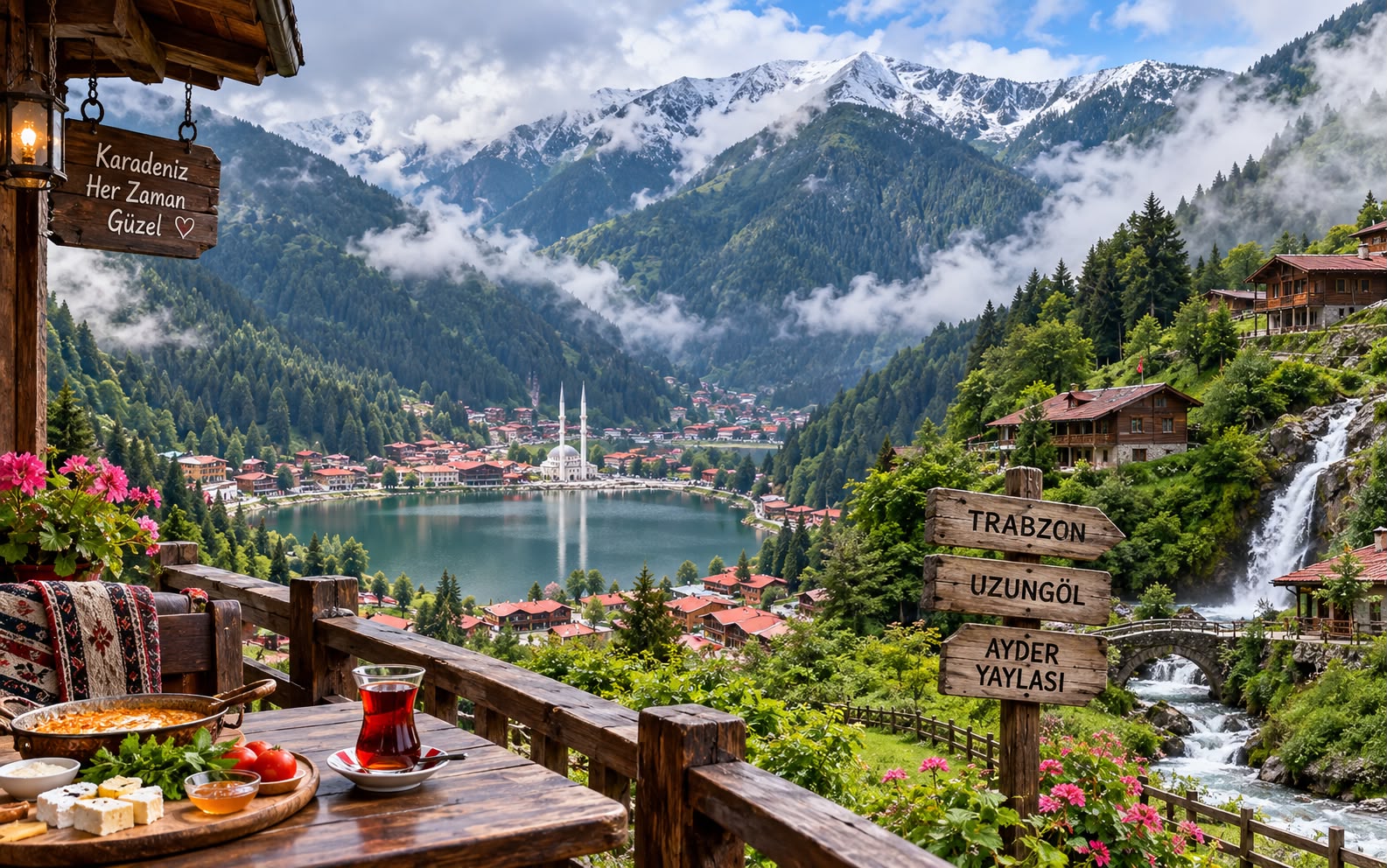
Turkey's Black Sea: Trabzon, Uzungol and the Ayder highlands
The green Turkey — a cliff-hung monastery, a mosque mirrored in a mountain lake, tea gardens in the mist and hot springs above the clouds — one week, direct flights from the Gulf.
- Middle East
- 7 days
- ≈ AED 2,450 / person
- Second-time visitors
Before you go
There are two Turkeys. The one on postcards is dry, golden and ancient. The other one is this: the Black Sea coast, where tea terraces climb into permanent mist, wooden villages sit above the clouds, and a Byzantine monastery hangs off a cliff face 300 metres over a forest. Gulf travellers discovered it years ago — direct flights link Dubai and Abu Dhabi to Trabzon in ~3.5 hours — while most English-language guides still haven’t. This is the second Turkey trip, and for mountain people it’s the better one.
Go May–September. The high plateaus (Ayder and above) properly open in June; October is beautiful and moody; winter closes the mountain roads and turns Uzungol into a snow globe reachable but limited. And be told honestly: this coast gets rain 200+ days a year — the mist is not bad luck, it’s the scenery working.
As with our first Turkey guide, prices are in EUR — lira figures inflate too fast to print — with lira noted where tickets are still set in it.
Before you go: the short version of the admin
Visas, money and the scam list are identical to our 11-day Turkey guide, where they’re covered in depth (short form: many passports visa-free; others need the conditional e-visa — Indian passports among them — which requires a valid US/UK/Schengen/Ireland visa, residence in a third country not being enough on its own, or the sticker visa, 3+ weeks early). Route-specific notes:
Flying in, and the car
- Fly direct: flydubai (Dubai) and Air Arabia (Abu Dhabi/ Sharjah) serve Trabzon nonstop seasonally-to-year-round; from everywhere else it’s a cheap 2-hour hop from Istanbul (Turkish Airlines, AJet, Pegasus — many daily).
- Rent a car. This is the one route where we say it plainly: the sights are spread along valleys, dolmuş minibuses are slow and tour buses rigid. Roads to every stop in this guide are paved; you need nothing special until the optional jeep plateaus. ~€40–70/day plus fuel. Alternative: a private driver (~€80–120/day) or the cheap group day tours from Trabzon’s Meydan if you’d rather not drive mountain switchbacks.
Cash, and halal travel
- Cash note: more cash-reliant than western Turkey — village restaurants, trout farms and plateau bungalows often prefer lira notes.
- Halal travellers relax entirely: this is conservative, pork-free, alcohol-light Turkey; everything is halal by default, and the region is extremely used to Gulf families.
Travelling with kids?
- One of Turkey’s easiest family routes: short drives, lakes, waterfalls, cable cars, hot springs — and locals who spoil children on sight.
- Uzungol’s lake loop is flat and stroller-perfect; Sumela’s final path is stepped and railed — manageable, but a carrier beats a stroller.
- The one judgement call: the optional jeep tracks to the high plateaus are bumpy — skip with infants, brilliant with school-age kids.
Day by day
Day 1 — Land in Trabzon, city and sunset
- 13:00 — Land at Trabzon (TZX), collect the car (the airport is 10 minutes from the centre), check in.
- 15:00 — Trabzon Hagia Sophia (free outside prayer times) — a 13th-century Byzantine church by the sea, frescoes and lawn.
- 16:30 — Meydan Square — the city’s tea-drinking heart; buy roasted hazelnuts (this coast grows most of the world’s) and watch the backgammon.
- 18:00 — Boztepe cable car or drive (~10:00–23:00; cable car ~150 TL return) — the whole city and the Black Sea from the hilltop tea gardens at sunset.
- 20:00 — Dinner: Akçaabat köfte — the region’s famous grilled meatballs; the originals are in Akçaabat town 15 minutes west, worth the drive (~€8–12/person).
Where to stay in Trabzon (nights 1, 2 and 6)
- Upscale: Radisson Blu Trabzon — sea views, spa, the business-hotel comfort pick.
- Mid-range: Zorlu Grand — the old-school grande dame right on Meydan; location unbeatable.
- Budget: Nur Hotel — clean, central, cheap; Trabzon’s hotels are functional rather than romantic, which is fine — the romance is up the valleys.
Day 2 — Sumela: the monastery on the cliff
- 8:15 — Drive to Sumela Monastery (~45 km, 50 min into the Altındere valley).
- 9:00 — Park at the lower lot, shuttle up (small fee, cash), then the forest path to the entrance (€20; ~8:00–17:00, ticket office closes 16:30). Be early: the frescoed chapel and cliff-hung courtyards are a different place before the tour groups land at ~10:30. The setting — a white facade grown out of a sheer rock face over pine forest — is worth the whole flight. 2–3 hours.
- 12:30 — Lunch in the valley — riverside trout farms grill what they raise (~€6–9).
- 14:00 — Hamsiköy village (20 min) — famous across Turkey for one thing: sütlaç, caramelised rice pudding. Order it with hazelnuts, argue later about whether pudding justifies a village’s fame (it does).
- 15:30 — Optional: continue up to the Zigana pass viewpoint, or head back for the Atatürk Pavilion (small fee) — a white chalet in gardens above Trabzon.
- 19:30 — Dinner in the city; try Black Sea pide — the butter-and-cheese boat this coast does better than anywhere.
Day 3 — Up the valley to Uzungol
- 9:30 — Drive east along the coast, then up the Solaklı valley (~95 km, ~2 h) — the road narrows, tea terraces stack the slopes, minarets appear out of the mist.
- 11:30 — Uzungöl — the lake with the mosque on its shore and green walls of mountain on every side: the Black Sea’s postcard. Check in, then the flat lake loop walk (~40 min, free, stroller-friendly).
- 13:30 — Trout lunch at a lakeside farm restaurant.
- 15:00 — Drive or taxi to the upper viewpoints above the village for the full lake-and-mosque frame, or rent bikes; kids fish, adults drink tea.
- Evening — This is why you overnight instead of day-tripping: the coaches leave at five, the mist rolls down, the mosque lights come on and the lake goes mirror-still. Dinner slow, sleep early.
Where to stay in Uzungol (one night)
- Lakefront hotels vs hillside bungalows is the choice; the long-established lakeside houses (Inan Kardesler and its neighbours) and the newer bungalow terraces above the village both book out on summer weekends — reserve ahead and pick by current reviews. Expect €50–90 for a double with breakfast.
Day 4 — Mist photos, then over to Ayder
- 7:00 — The famous shot: morning mist lifting off the lake — photographers’ Uzungöl exists between 6:30 and 8:30. Then breakfast.
- 10:00 — Drive to Ayder plateau (~2 h): back down the valley, east along the coast into Rize province, then up the Fırtına valley — stop at the humpbacked Ottoman stone bridges over the rushing green river, and Çamlıhemşin’s riverside cafés.
- 13:00 — Lunch in Çamlıhemşin or on arrival in Ayder.
- 14:30 — Ayder (1,350 m): a plateau of wooden chalets and waterfalls under the Kaçkar peaks. Walk the meadows to the Gelintülü waterfall, ride the zipline if it’s running.
- 17:00 — The Ayder hot springs (kaplıca; modest fee, separate men’s/women’s sections) — thermal baths the region has used for centuries; the correct end to a driving day.
- 19:30 — Dinner at your lodge: muhlama — the Black Sea’s molten cheese-and-cornmeal fondue — with honey from the meadows you walked.
Where to stay in Ayder (two nights)
- Wooden bungalow lodges and small chalet hotels are the entire market (€60–100 doubles with breakfast in season). Book early for July–August — Gulf-holiday demand is real — and choose a balcony facing the falls; the view is the product.
Day 5 — Above the clouds: the high plateaus
The day this trip was built for. From Ayder, local jeeps and your own courage go higher.
- 8:30 — Jeep or guided 4x4 up to the Pokut and Sal plateaus (~€25–40/person with local drivers; rough track, ridiculous reward): hamlets of weathered wooden houses on a ridge above the cloud line — the sea of clouds below your feet on the right mornings is the single best photograph on Turkey’s Black Sea.
- 12:30 — Plateau lunch in a village house — eggs, honey, cheese, bread, all from within sight.
- 14:30 — Back down; afternoon at leisure — the Huser plateau viewpoint as an alternative or add-on, a Fırtına valley walk, or nothing at all in a hammock, which is also correct.
- 17:00 — Second visit to the hot springs (you will want it), or tea on the balcony as the evening mist performs.
- 19:30 — Last highland dinner. If the clouds never lifted today — that happens here — you got the mist version, which the locals will tell you is the true one.
Day 6 — Down through the tea country, back to Trabzon
- 9:30 — Descend to the coast and stop in Rize, Turkey’s tea capital: the Ziraat botanical tea garden above town (free; tea for pennies with the whole coast below), and a factory-shop stop to carry home the çay you’ve been drinking all week.
- 12:30 — Coast road west; lunch of hamsi (Black Sea anchovies, the regional obsession — best November–February, good always) or Akçaabat köfte round two.
- 15:00 — Back in Trabzon; the bazaar streets below Meydan for souvenirs — Trabzon’s braided hasır gold bracelets, tea, hazelnut everything.
- 19:00 — Farewell dinner; Boztepe again if the sunset invites.
Day 7 — Fly home
- Morning — Vakfıkebir bread and honey breakfast, drop the car, fly — Gulf travellers are home by evening on the direct; everyone else connects through Istanbul.
Costs and practicalities
Best time to visit
May–September, and the Black Sea coast is the wettest region in Turkey — this is a route where the weather genuinely dictates what you see.
- May–June — the best of the year. The Kaçkar foothills green, the tea terraces at their most vivid, and the yayla roads opening.
- July–August — warmest, and the yayla season: the high pastures above Ayder and Pokut are occupied, the mist comes and goes, and the festivals run. Also the busiest with domestic tourism.
- September–October — autumn colour in the Fırtına valley and the clearest air of the year.
- November–April — wet, cold, and the high yayla roads are closed by snow. Sumela monastery stays open but the mountain roads above Çamlıhemşin do not.
Mist is the defining condition — the Pontic Alps catch the sea air and cloud in most afternoons, which is why the region looks the way it does.
Travel tips
- Expect rain in any month. Rize is the wettest province in Turkey at over 2,000mm a year. Waterproofs matter more than sunscreen here.
- A 4x4 or a local driver is needed for the yaylas. The roads to Pokut, Sal and Elevit are steep, narrow and unpaved.
- Sumela Monastery has had long closures for rockfall stabilisation and access to parts of it is restricted. Check before planning a day around it.
- This is the tea region and the hospitality is relentless. Çay is offered constantly and refusing is awkward.
- Hamsi — Black Sea anchovy — is the local obsession and appears in everything including bread and dessert. The season is roughly November to March.
- Cards work in Trabzon and Rize; carry lira for the villages and the yayla guesthouses.
- Laz and Hemşin are distinct cultures and languages here, not dialects of Turkish — worth knowing before assuming.
What this trip actually costs
Two people, 6 nights, mid-range comfort, international flights excluded:
| Item | Cost |
|---|---|
| Hotels, 6 nights (3 Trabzon + 1 Uzungol + 2 Ayder) | EUR 400 (≈ AED 1,638) |
| Rental car, 6 days + fuel | EUR 360 (≈ AED 1,474) |
| Sumela, cable car, hot springs, jeep plateau tour, 2 pax | EUR 100 (≈ AED 409) |
| Food and drink, 7 days | EUR 250 (≈ AED 1,024) |
| eSIM, shuttles, extras | EUR 90 (≈ AED 369) |
| Total for two | EUR 1,200 (≈ AED 4,913) |
- Roughly EUR 600 (≈ AED 2,457) per person — the cheapest week in Turkey and one of the cheapest anywhere in this format; swapping the car for group tours cuts further, and there is almost nothing here to overspend on, which is part of the charm.
- Book in this order: flights (the non-stops sell out around Eid and summer) → visa if needed (Indians: 3+ weeks) → July–August lodging in Uzungol and Ayder → the car → everything else on arrival.
- Hotel and restaurant picks here are unsponsored — no affiliate links in this article. Chosen on location and current ratings; always check prices and recent reviews before booking.
What to pack
- A rain shell each and one umbrella — 200+ rain days a year is a promise, not a risk; the drizzle is soft and the gear makes it irrelevant.
- Layers: coast at 26°C, plateaus at 14°C the same afternoon.
- Shoes with grip for wet stone paths (Sumela, waterfalls, bridges).
- Swim/modesty wear per your preference for the segregated hot springs.
- Motion-sickness tablets for valley switchbacks if you’re prone.
- An empty corner for tea, hazelnuts and honey — heavier than you plan, always.
FAQ
How does this compare with Cappadocia and the classic route? Different planet: that Turkey is dry stone and ancient empires; this one is green, wet, alive and Ottoman-village flavoured. Do the classic route first (our 11-day guide); come here when you want mountains and mist instead of minarets and marble.
Is the mist/rain going to ruin the photos? It is the photos. Uzungol at dawn and Pokut above the clouds exist because of the humidity. Build flexibility (two Ayder nights, Uzungol overnight rather than day trip — exactly as this route does) and you’ll catch the clear windows.
Do I really need the car? Need, no — Trabzon’s Meydan runs cheap daily group tours to every stop in this guide. But the route’s magic is stopping at the unnamed viewpoint, the trout farm, the stone bridge — and tours don’t stop. If you drive anywhere in Turkey, drive here: traffic is light and roads are good.
Is it suitable for a honeymoon / older parents / kids? All three, unusually: it’s Turkey’s favourite honeymoon region (bungalow balconies, waterfalls), drives are short and paved for older travellers, and kids get lakes, cable cars and zip lines. The only fitness test is optional (plateau walks).
When exactly is peak season? July–August, driven by Gulf and domestic holidays — book those months well ahead and expect Uzungol lively. June and September give the same green with half the people; May and October are moody, cheaper and still worth it.
Prices and entry rules change, and what you need depends on your passport; last checked 8 October 2026, so confirm with the embassy or your airline before booking.


