 The Itinerary
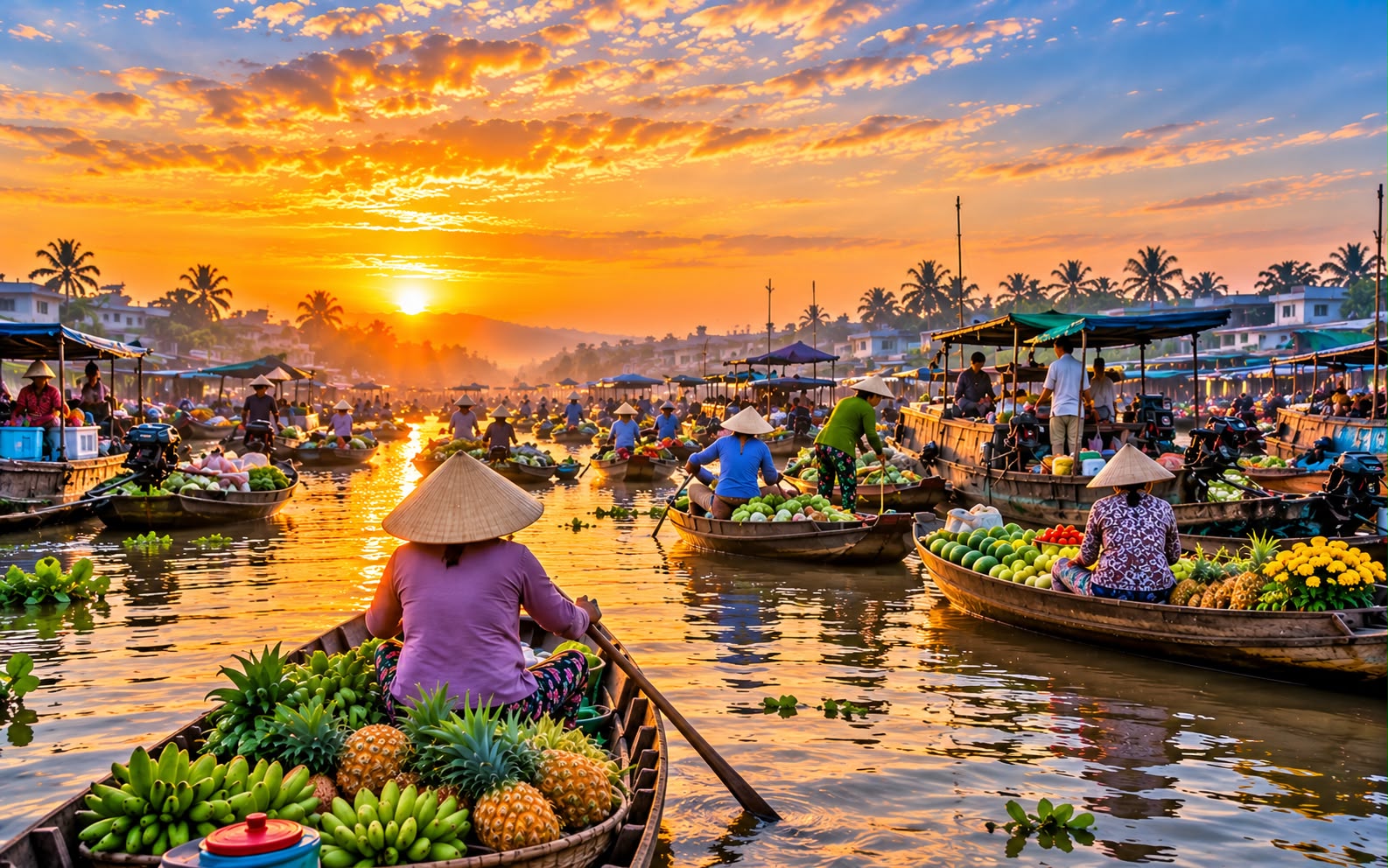
Southern Vietnam in 6 days: Ho Chi Minh City, the Mekong Delta and Phu Quoc
Six days in southern Vietnam: the war museums and tunnels around Saigon, two days in the Mekong Delta, and two on Phu Quoc. No internal flight north, no overnight bus, and the delta base that is worth the extra hour.
- Southeast Asia
- 6 days
- ≈ AED 1,700 / person
- The south on its own, with a beach at the end instead of a flight north
Before you go
Most Vietnam itineraries run north to south and treat Saigon as the exit. This one stays in the south, which has its own weather, its own food and the delta — and finishes on an island.
Ho Chi Minh City for the war history, which is the reason most visitors come and is presented here from the Vietnamese side. The Mekong Delta, where the river finally breaks into nine mouths and the roads give way to water. Phu Quoc, 45 minutes by air off the Cambodian coast, for two days of not moving.
Seven days covers the north instead; fourteen does the whole country.
Figure VND 12,000,000 (≈ AED 1,721) per person. December to April is the southern dry season.
Before you go: the admin
Entry
- E-visa for most nationalities, 90 days, applied for online about a week ahead, US$25 single entry.
- Print it. Airlines have refused boarding over an unreadable phone copy.
- Six months’ validity and a blank page.
Getting around
- Saigon to the delta is two to three hours by road depending on where you base.
- Saigon or Can Tho to Phu Quoc is a 45–60 minute flight. Book it with the trip; fares rise sharply close in.
- Grab works throughout the city and on Phu Quoc.
- A hired car with driver for the delta days is the practical option — around VND 1,500,000 a day.
Money
- Dong, with a lot of zeroes. 100,000 is about four dollars, and 10,000 and 100,000 notes look alike — count them.
- ATMs cap withdrawals at two or three million and charge per transaction.
Crossing the road
- Walk slowly and predictably into the traffic and do not stop. The scooters flow around you. Hesitating is what causes accidents.
Day by day
Day 1 — Ho Chi Minh City
- 08:00 — A bowl of pho for breakfast — it is a breakfast food here, not a dinner, and the places that are full at eight in the morning are the ones to join.
- 09:00 — The War Remnants Museum. Presented from the Vietnamese side, which is the point, and it is harrowing — particularly the Agent Orange rooms. Go early in the day and plan nothing demanding after.
- 12:00 — The Reunification Palace, left exactly as it was on 30 April 1975, with the tanks outside the gates and the war-room maps still on the wall.
- 15:00 — The Central Post Office, by Gustave Eiffel’s firm, and Notre-Dame beside it — the cathedral has been under restoration for years, so expect scaffolding.
- 17:00 — Ben Thanh Market, and the street-food stalls that set up around it once it closes.
- 20:00 — Bui Vien for the backpacker noise, or Thao Dien for the quieter version across the river.
Day 2 — Cu Chi, and the rooftops
- 07:30 — The Cu Chi Tunnels, 90 minutes out. 250km of hand-dug tunnel on three levels, with a widened section for visitors that is still a genuine squeeze — and there are exits every 20m for the people who change their mind.
- The firing range at the end is optional and loud. You hear it from the whole site.
- 13:00 — Back for lunch in District 1.
- 15:00 — The Jade Emperor Pagoda, dim, smoky and full of carved wooden figures, which is the best temple in the city.
- 17:30 — A rooftop bar on Nguyen Hue, or the Bitexco Skydeck, for the river and the scale of the place.
- Sleep in Saigon; the delta starts early.
Day 3 — Into the Mekong Delta
- 07:00 — Base at Ben Tre or Can Tho, not My Tho. My Tho is the coach-party day trip; Can Tho is three hours out and worth the extra hour because it has the real floating market.
- 10:30 — Vinh Trang pagoda on the way, and the fruit orchards around it.
- 13:00 — Sampans through the coconut channels at Ben Tre — narrow water under palm, paddled rather than motored, which is the one that stays with people.
- 15:30 — Coconut candy workshops, brick kilns and rice-paper making, which sound like tourist stops and are working businesses.
- 18:00 — Into Can Tho, or a homestay night if you want it — basic, and the best way to see how the delta actually lives.
Day 4 — Cai Rang, then the island
- 05:30 — Cai Rang floating market. Go at six in the morning, when it is a working wholesale market. By nine it is mostly tourist boats and the trade is done. Vendors advertise what they sell by hanging a sample from a pole above the boat.
- 08:00 — Breakfast on the water — noodle boats pull alongside and cook to order.
- 10:00 — Back to Can Tho, and the Binh Thuy ancient house if you have an hour.
- 14:00 — Fly to Phu Quoc from Can Tho, 45 minutes, or back via Saigon if the schedule is better.
- 17:30 — Long Beach (Bai Truong) for the sunset, which faces exactly the right way.
- 19:30 — The night market in Duong Dong for grilled seafood, priced by the kilo and chosen from the tank.
Day 5 — Phu Quoc
- 08:30 — The An Thoi islands by boat for snorkelling, which is the best water on the island.
- Or the cable car to Hon Thom, which at nearly 8km is one of the longest sea crossings of its kind in the world and takes fifteen minutes each way over fishing villages.
- 13:00 — Sao Beach in the south for white sand and clear water — the one the photographs are of.
- 16:00 — A fish sauce factory. Phu Quoc’s is protected by origin and is the island’s oldest industry. The smell is considerable and the vats are the size of rooms.
- 18:00 — Sunset at Ganh Dau on the northwest tip, with Cambodia visible across the water on a clear evening.
Day 6 — The north, then home
- 08:00 — Phu Quoc National Park, which covers the northern half of the island and is largely undeveloped — pepper farms, empty red-dirt roads and the odd beach with nobody on it.
- 11:00 — Ong Lang or Vung Bau for a last swim, both quieter than Long Beach.
- 14:00 — Fly home from Phu Quoc, which has international connections, or back via Saigon if your route needs it.
- The island airport is small and 15 minutes from most hotels, so this is a civilised departure day.
Costs and practicalities
Best time to visit
The south has one wet season and one dry, which makes it simpler than the rest of the country.
- December–April — the dry season. Hot, 30–34°C, low rain, and Phu Quoc’s sea at its calmest. The right months.
- November and May — shoulder, mostly fine, and cheaper.
- June–October — the rainy season. Afternoon downpours rather than all-day rain, the delta at its fullest and greenest, and prices well down. Phu Quoc’s sea gets rough and boat trips are cancelled more often.
- Tet, the lunar new year, falls in late January or February and closes the country for a week. Check the date before booking.
Travel tips
- Cai Rang at six in the morning, not later. By nine the trade is over.
- Base at Can Tho rather than My Tho if you want the real delta.
- Book the Phu Quoc flight with the trip.
- Print your e-visa.
- Count the zeroes on every note.
- Cross the road by walking slowly and not stopping.
- The War Remnants Museum is genuinely distressing. Go in the morning and leave the afternoon light.
- Repellent in daylight; dengue’s mosquito is a day biter.
What this trip actually costs
Two people, 5 nights, mid-range comfort, international flights excluded:
| Item | Cost |
|---|---|
| Hotels and a delta homestay, 5 nights | VND 9,000,000 (≈ AED 1,291) |
| Flights to Phu Quoc, two people | VND 6,000,000 (≈ AED 860) |
| Food and drink, 6 days | VND 4,500,000 (≈ AED 645) |
| Cu Chi, delta boats, guides and entries | VND 3,500,000 (≈ AED 502) |
| Car with driver, Grab and transfers | VND 1,000,000 (≈ AED 143) |
| Total for two | VND 24,000,000 (≈ AED 3,441) |
- Roughly VND 12,000,000 (≈ AED 1,721) per person for six days.
- The Phu Quoc flight is the biggest single line and is what makes the beach half possible without a long drive.
- The delta is very cheap; a homestay with meals costs a fraction of a city hotel.
- Hotel picks here are chosen on location, not on commission — always check prices and recent reviews before booking.
What to pack
- A dry bag for the sampans and the island boats.
- Light, covering clothes — the delta sun is fierce and the pagodas want shoulders covered.
- Strong repellent, applied in daylight.
- Reef-safe sun cream and swimwear.
- Small notes in dong, counted.
- A Type A/C adapter.
FAQ
Is six days enough for southern Vietnam? Yes, for the city, the delta and one island. It is not enough to add Hoi An or Hanoi, which are flights away.
My Tho, Ben Tre or Can Tho for the delta? Can Tho if you want the real floating market and have the extra hour. Ben Tre for coconut channels closer to the city. My Tho is the one the day-trip coaches use.
Is the floating market still authentic? Cai Rang is a working wholesale market, and it is genuinely busy at six in the morning. By nine it is mostly tourist boats — the timing is the whole difference.
Is Phu Quoc better than the Thai islands? Different. It is less developed in the north, the sea is calmer in winter, and it is far quieter. The beaches are good rather than spectacular.
Is the War Remnants Museum too much for children? For younger ones, probably. It is explicit about what happened to people, and the Agent Orange section in particular is distressing.
Prices and entry rules change, and what you need depends on your passport; last checked 29 October 2026, so confirm with the embassy or your airline before booking.


