 The Itinerary
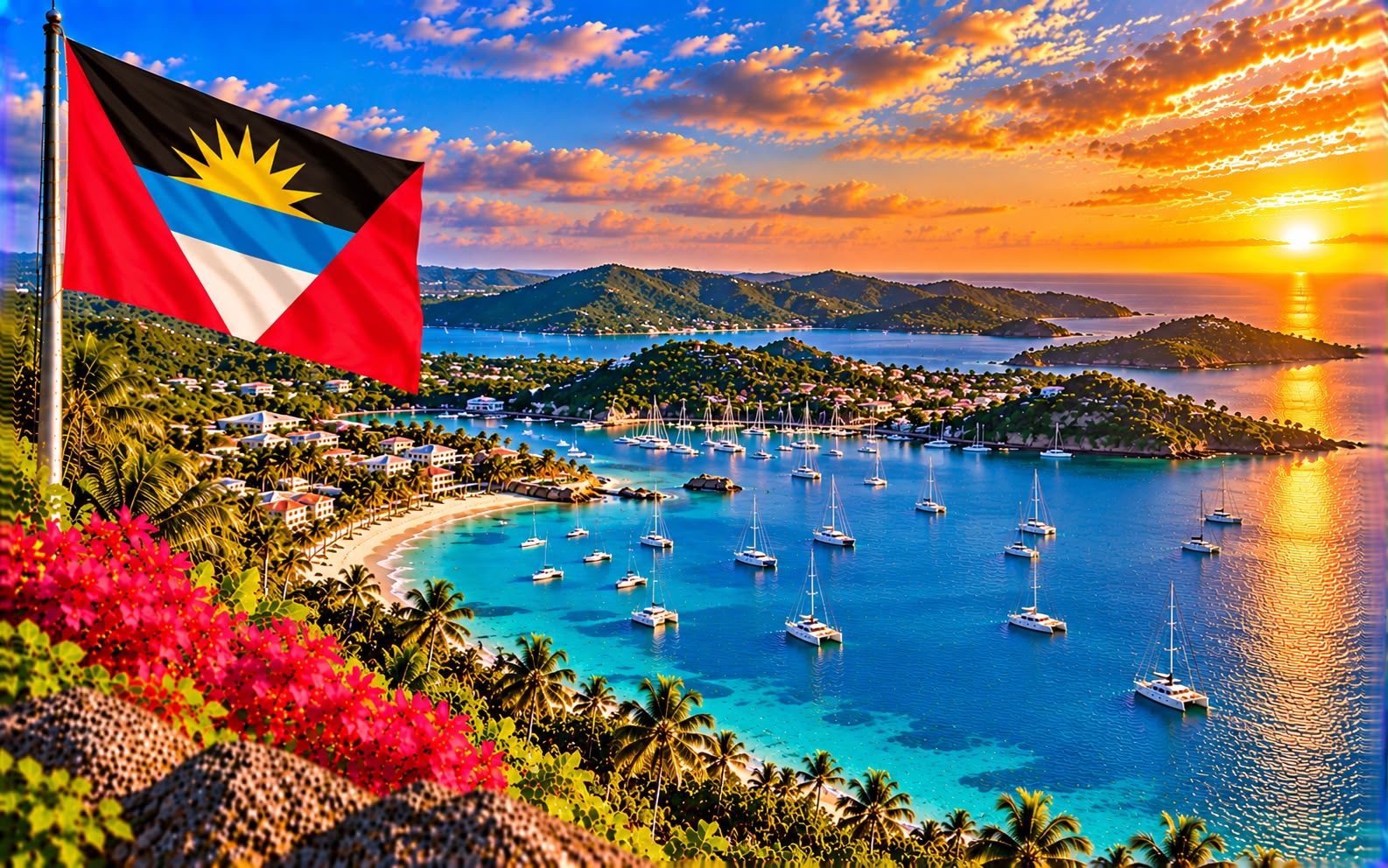
Antigua and Barbuda in 7 days: Nelson's Dockyard, Shirley Heights and pink sand
The only working Georgian dockyard left anywhere, a Sunday-night hilltop party that has run for decades, and a sister island with seventeen miles of pink sand and almost nobody on it.
- The Caribbean
- 7 days
- ≈ AED 2,850 / person
- A Georgian naval dockyard still in use, and a frigate bird colony of five thousand
Before you go
Antigua advertises 365 beaches, one for every day of the year. The number is tourist-board arithmetic and the beaches are real — the island is low, dry and deeply indented, so the coast is almost entirely bays.
But the thing that makes it worth more than a week on the sand is Nelson’s Dockyard. English Harbour is a natural hurricane hole, and the Royal Navy built a dockyard inside it in the eighteenth century to careen and repair ships without sending them home. Nelson was based here from 1784 to 1787 and hated it. The dockyard was restored rather than ruined, is on the UNESCO list, and is still a working marina — which makes it the only Georgian naval dockyard anywhere still doing the job it was built for.
Above it, Shirley Heights was the gun battery guarding the approach. On Sunday evenings it becomes the island’s institution: steel band, then brass, barbecue, and the sun going down over the two harbours with Montserrat and Guadeloupe on the horizon.
Barbuda, thirty miles north, is the opposite of everything: flat, scrubby, barely inhabited, with seventeen miles of pink sand on its west side and a frigate bird colony of several thousand in the lagoon. Hurricane Irma destroyed almost every building on it in 2017 and the island was evacuated entirely; it has been rebuilding since.
Seven days. Figure XCD 2,100 (≈ AED 2,856) per person excluding flights. Go December–April; Sailing Week is late April.
Before you go: the 15-minute admin
Getting to Barbuda, which needs planning
- Barbuda is a day trip in theory and better as an overnight.
- The ferry takes around 90 minutes from St John’s and does not run every day. Check the current schedule — it has changed repeatedly since 2017.
- Small aircraft take fifteen minutes and cost considerably more.
- Accommodation on Barbuda is limited and some of it is still being rebuilt. Book before you go rather than on arrival.
- Take cash. There is very little on the island and card acceptance is minimal.
Visas and money
- Many nationalities enter visa-free for short stays. Check your own case officially.
- The East Caribbean dollar (XCD), pegged to the US dollar at 2.70. US dollars are accepted, usually at 2.60–2.65.
- Cards work in St John’s, English Harbour and the resorts. Carry cash elsewhere and on Barbuda.
Getting around
- Hire a car at around US$50 a day, driving on the left, with a local permit issued on your licence.
- Roads are narrow with deep drainage gullies at the edge — stay central and slow.
- Buses run from St John’s to the main villages for a few dollars but stop early and do not serve the resorts well.
- Taxis are unmetered with published rates. Agree first.
Hurricanes
- Season is June to November. Antigua is in the belt and Barbuda was hit directly by Irma in 2017, which destroyed essentially all of its housing.
- Antigua’s infrastructure recovered quickly; Barbuda’s rebuild is ongoing. Check what is open before planning nights there.
Travelling with kids?
- The beaches are calm, shallow and everywhere.
- Shirley Heights on a Sunday is family-friendly early and becomes a party later.
- Stingray City and the dockyard both work well.
- Devil’s Bridge has no railings and the blowholes are genuinely dangerous in swell.
Day by day
Day 1 — St John’s
- Afternoon — Arrive, twenty minutes to town or the coast.
- 16:00 — St John’s: the twin-towered Cathedral of St John the Divine, Redcliffe Quay — restored warehouses where enslaved people were once held before auction — and the Museum of Antigua and Barbuda in the old courthouse.
- 18:00 — The public market if it is a Friday or Saturday morning, otherwise the waterfront.
Where to stay (five nights Antigua, one or two Barbuda)
- Mid-range: English Harbour and Falmouth for the dockyard and the sailing, or Jolly Harbour on the west coast for beaches.
Day 2 — Nelson’s Dockyard and Shirley Heights
- 09:30 — Nelson’s Dockyard National Park. The Georgian buildings — the Copper and Lumber Store, the sail loft pillars, the Admiral’s House — are restored and in use, with yachts alongside. The museum explains both the naval story and the enslaved labour that built and ran it, which many such places do not.
- 12:00 — Galleon Beach across the water, and lunch at Pigeon Point.
- 15:00 — Fort Berkeley, a twenty-minute walk out along the harbour mouth, which is where the chain and the guns closed the entrance.
- 16:30 — Shirley Heights. On a Sunday arrive by four for a table; the steel band starts around four, brass takes over at seven, and the sunset over English and Falmouth harbours is the reason everyone is there. It also runs on Thursdays.
Day 3 — The east: Devil’s Bridge and Betty’s Hope
- 09:00 — Betty’s Hope, a sugar estate from 1650 with its twin windmill towers restored and a small museum. It is the clearest explanation on the island of what the economy was and who it was built on.
- 11:00 — Devil’s Bridge at Indian Town Point — a natural limestone arch cut by the Atlantic, with blowholes firing through it in swell. There are no barriers and the rock is slippery. Stay well back.
- 13:00 — Long Bay or Half Moon Bay, the latter a perfect crescent on the Atlantic side and one of the best beaches in the Caribbean.
- 16:00 — Stingray City in the shallows off Seatons if you want it — the rays are wild but habituated, and the operators brief properly.
Day 4 — Barbuda
- Early — Ferry or flight to Barbuda.
- The Frigate Bird Sanctuary in Codrington Lagoon, reached by small boat through the mangroves. Several thousand magnificent frigate birds nest here, the males inflating scarlet throat pouches the size of footballs in the breeding season — best from September to April. It is one of the largest colonies anywhere.
- The pink sand on the west coast runs for seventeen miles, the colour from crushed coral and shell, and you will have most of it to yourself.
- Darby Cave, a sinkhole in the limestone with its own patch of forest growing inside, and the Highland House ruins.
- Stay the night if you can. Barbuda after the day boats leave is the quietest place in the eastern Caribbean.
Day 5 — Back, and the west coast
- Morning — Back to Antigua.
- Afternoon — The west coast beaches: Ffryes, Darkwood, Valley Church — all calm, pale and facing the sunset.
- 16:00 — Fig Tree Drive through the rainforest remnant in the south-west, with fruit stalls along it, and Wallings Nature Reserve for a short walk.
Day 6 — Sailing, or the north
Either — on the water:
- A day sail is the right way to see this coast — out to Green Island or Cades Reef with snorkelling and lunch. Antigua is one of the Caribbean’s main yachting centres and the charter fleet is large.
Or — the north-west:
- Dickenson Bay and Runaway Bay, the busier beaches, and Fort James guarding St John’s harbour.
- Great Bird Island by boat for the red-billed tropicbirds and the Antiguan racer — once the rarest snake in the world, brought back from about fifty animals on offshore islets.
Day 7 — Fly out
- Morning — Last swim, and Redcliffe Quay for souvenirs.
- Afternoon — The airport is central and close to everything.
Costs and practicalities
Best time to visit
December–April is the dry, cooler high season and the reason the island has a winter sailing economy. The flip side is price: rates roughly double between December and March.
- December–April — dry, breezy, and busiest. Sailing Week falls at the end of April and fills every bed in the south of the island.
- May–June — warm, quieter, and still largely dry. The best value of the year.
- July–August — hot and humid, with Carnival from late July into the first Tuesday of August, which is the island’s own party rather than a tourist one.
- August–October — the heart of hurricane season. September and October see the most activity and some hotels close entirely.
Barbuda runs on the same calendar but with far less infrastructure, and the ferry is weather-dependent.
Travel tips
- You need a local driving permit. It is issued on the spot against your home licence for a fee, and the hire company handles it.
- Driving is on the left, on narrow roads, with speed bumps that are not always painted.
- Every beach is public by law — all 365 of them. Hotels cannot close one, whatever the signage suggests.
- The East Caribbean dollar is pegged to the US dollar at about 2.70, and US dollars are accepted everywhere, usually at a rounder and worse rate.
- A service charge is often already on the bill. Check before adding a tip on top.
- The Barbuda ferry is weather-dependent and slow. Flying is fifteen minutes and removes the risk of being stuck.
- Mosquitoes and sandflies are worst at dusk on the Atlantic side; the breezier south coast is better.
What this trip actually costs
Two people, 6 nights, mid-range comfort, flights excluded:
| Item | Cost |
|---|---|
| Guesthouses and apartments, 6 nights | XCD 2,200 (≈ AED 2,992) |
| Car hire, 5 days, fuel and permit | XCD 750 (≈ AED 1,020) |
| Barbuda ferry and lagoon boat, two | XCD 650 (≈ AED 884) |
| Dockyard, day sail, Stingray City | XCD 400 (≈ AED 544) |
| Food and drink, 7 days | XCD 200 (≈ AED 272) |
| Total for two | XCD 4,200 (≈ AED 5,713) |
- Roughly XCD 2,100 (≈ AED 2,856) per person — about US$780 — outside the resorts. Antigua’s all-inclusives are a different budget and are most of what is marketed.
- Barbuda is the expensive day because of the crossing, and is worth it.
- Shirley Heights costs a small entry fee and the barbecue is cheap.
- Self-catering apartments around English Harbour and Jolly Harbour are far better value than hotels.
- Hotel picks here are chosen on location, not on commission — always check prices and recent reviews before booking.
What to pack
- Reef-safe sun cream and a rash vest.
- Water shoes for the reef flats and Devil’s Bridge.
- Binoculars for the frigate bird colony.
- Cash in EC for Barbuda, which has very little banking.
- Something smart-casual for Shirley Heights and the dockyard restaurants.
- A hat — the island is dry and there is little shade.
FAQ
Are there really 365 beaches? It is a tourist-board number rather than a survey. The island is small and almost entirely bays, so the spirit of it is accurate.
Is Barbuda worth the trip? Yes, for the frigate birds and seventeen miles of empty pink sand. Check the ferry schedule and what has reopened since Irma before committing to nights there.
What is Shirley Heights actually like? Busy and genuinely good. Sunday is the big one — steel band from about four, brass later, barbecue, and the best view on the island. Get there early for a table.
Is this a sailing destination? Very much — English and Falmouth Harbours are among the Caribbean’s main yachting centres, and Sailing Week in late April is one of the hemisphere’s major regattas.
What language do they speak? English, with an Antiguan creole in everyday speech.
Prices and entry rules change, and what you need depends on your passport; last checked 8 October 2026, so confirm with the embassy or your airline before booking.


