 The Itinerary
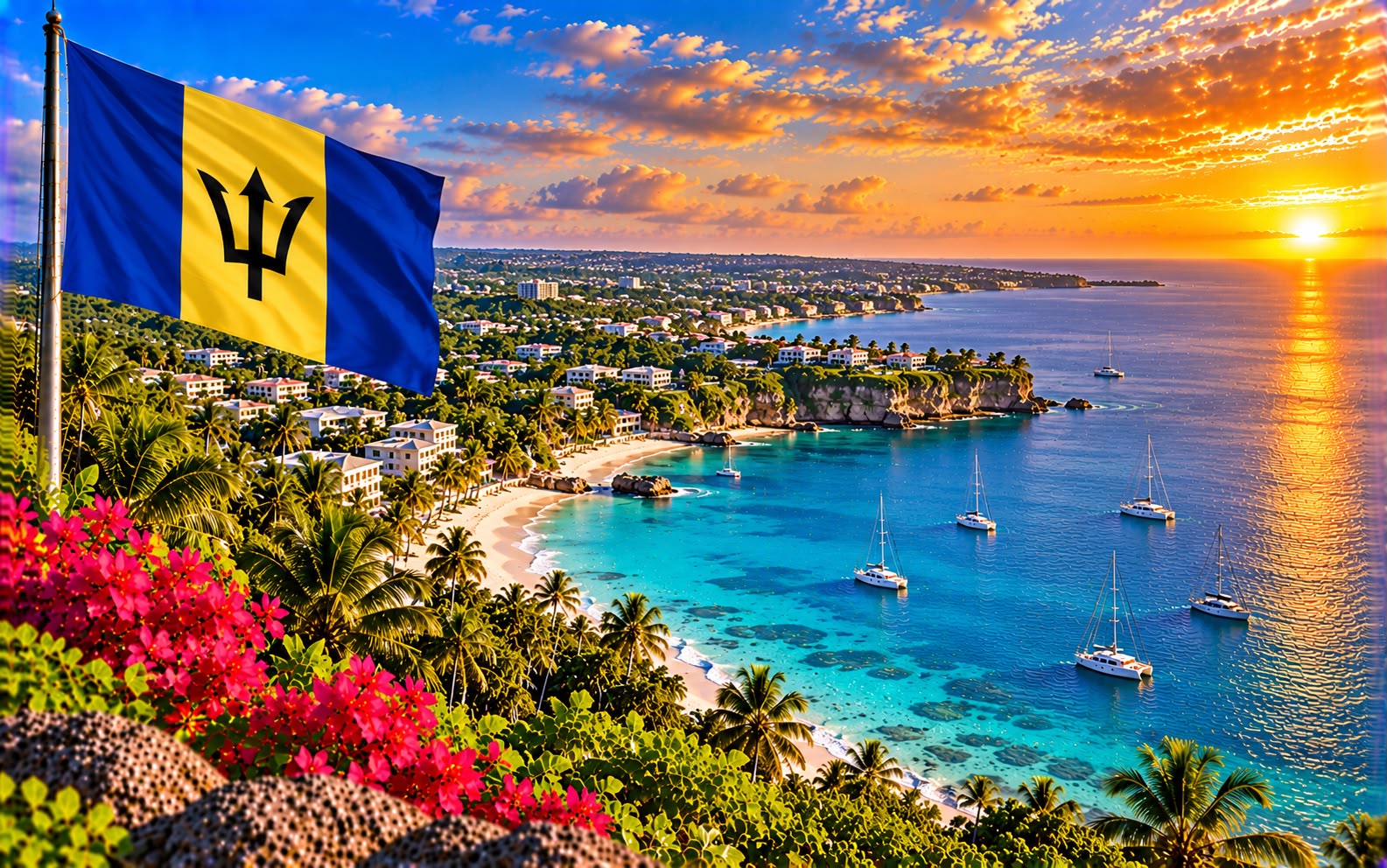
Barbados in 7 days: Bathsheba's surf, the Garrison and the oldest rum
A flat coral island with a calm Caribbean side and a wild Atlantic one, a UNESCO garrison town where Washington once stayed, and distilleries with a claim to the oldest commercial rum anywhere.
- The Caribbean
- 7 days
- ≈ AED 5,150 / person
- Two coasts that behave like different islands, and rum made since 1703
Before you go
Barbados sits outside the main arc of the Lesser Antilles, a hundred miles east into the Atlantic, and it is geologically different for it — coral limestone rather than volcano, so it is flat, pale and riddled with caves instead of being steep and green.
The practical effect is two coasts that function as different holidays. The west, facing the Caribbean, is flat calm, pale sand and the expensive hotels — the “Platinum Coast”. The east, facing the Atlantic with nothing between it and Africa, is surf, cliffs, boulders and almost nobody. Bathsheba on that side has a reef break called the Soup Bowl that is among the best waves in the region.
Bridgetown and its Garrison are on the UNESCO list — a British colonial garrison town laid out around a savannah, with the oldest surviving Jewish synagogue in the western hemisphere (1654) and the building where George Washington stayed in 1751, the only place outside the present United States he ever went.
And the rum. Mount Gay holds a deed from 1703 and claims to be the oldest commercial rum distillery in the world; St Nicholas Abbey is a Jacobean great house from the 1650s that makes its own.
Seven days. Figure BBD 2,800 (≈ AED 5,142) per person excluding flights. Go December–May; Crop Over runs July into early August.
Before you go: the 15-minute admin
Which coast, and what it costs
- The west coast is the expensive one — Holetown, Paynes Bay, Speightstown — with calm water and the resorts.
- The south coast — Hastings, Worthing, St Lawrence Gap — is cheaper, livelier, with more surf and most of the restaurants.
- The east coast has almost no accommodation and is where you go for the day.
- This itinerary bases on the south, which is the best value and half an hour from either end of the island.
Visas and money
- Many nationalities enter visa-free for short stays. Check your own case officially.
- The Barbados dollar (BBD), pegged to the US dollar at 2:1, so the arithmetic is trivial. US dollars are accepted everywhere, usually at exactly 2:1, and change comes in Barbados dollars.
- Cards work almost everywhere. Carry cash for buses, fish fries and rum shops.
- A 10% service charge plus VAT is normally added to restaurant bills.
Getting around
- The bus network is genuinely good — blue government buses, yellow minibuses and white ZR vans, all a flat fare, all going through Bridgetown. It is the cheapest way to see the island and the ZRs are an experience.
- Hire a car at around US$60 a day if you want the east and the interior, driving on the left, with a local permit.
- Roads are narrow and signposting is poor away from the highways — the island is small enough that getting lost costs twenty minutes.
- Taxis are unmetered. Agree the fare first.
Travelling with kids?
- The west and south beaches are calm, shallow and safe.
- Bathsheba is not for swimming — strong currents and rocks.
- Harrison’s Cave is a tram ride through a limestone cavern and is reliably a hit.
- Turtle snorkelling off the west coast works for confident swimmers.
Day by day
Day 1 — Bridgetown and the Garrison
- Afternoon — Arrive at Grantley Adams, twenty minutes from the south coast.
- 16:00 — Bridgetown: National Heroes Square, the Parliament Buildings, and the Nidhe Israel Synagogue — built 1654 by Sephardic Jews from Brazil who brought sugar technology with them, and one of the oldest in the hemisphere, with its mikveh excavated beside it.
- 17:30 — The Garrison Savannah, the parade ground turned racecourse, with George Washington House on its edge — he stayed two months in 1751, the only time he left North America.
Where to stay (six nights, south coast)
- Mid-range: Worthing and Hastings, on the bus route, walkable to beaches and restaurants.
- Lively: St Lawrence Gap, which is where the bars are.
Day 2 — The west coast and the turtles
- 09:00 — North up the Platinum Coast.
- 10:00 — Snorkelling with hawksbill and green turtles off Paynes Bay, which is genuinely reliable — the turtles are habituated to the boats. Choose an operator that does not feed them, and do not touch.
- 13:00 — Holetown, where the English landed in 1627, and lunch.
- 15:00 — Speightstown, the old sugar port in the north, which is far less polished and much more interesting.
- 17:30 — Sunset on the west coast, which is the side the sun sets on.
Day 3 — The east: Bathsheba and the Scotland District
- 09:00 — Across the island to the Atlantic side, about forty minutes.
- 10:00 — Bathsheba. Enormous mushroom-shaped coral boulders on a beach the Atlantic pounds, and the Soup Bowl reef break offshore — a right-hander that holds a serious wave and draws pros in winter. Do not swim; the currents are dangerous. The rock pools at low tide are safe and are what locals use.
- 12:30 — Lunch at one of the handful of places in the village.
- 14:00 — The Scotland District behind it, the one part of the island where the coral cap has eroded and the land beneath is exposed — hills, gullies and a completely different landscape.
- 15:30 — Andromeda Botanic Gardens above Bathsheba, or Hunte’s Gardens, a gully planted into a theatrical jungle by the man who usually greets you himself.
Day 4 — Caves, and the north
- 09:00 — Harrison’s Cave, an active limestone cavern with streams and pools, toured by electric tram. It is the island’s most visited attraction and still good.
- 12:00 — St Nicholas Abbey, one of only three Jacobean mansions left in the Americas, built around 1658 — with a working steam mill, a rum distillery, and a 1930s home movie of the plantation that is worth sitting through.
- 15:00 — Animal Flower Cave at the island’s northern tip, a sea cave in the cliff with pools you can get into and the Atlantic crashing at the mouth.
- 17:00 — Cherry Tree Hill on the way back, an avenue of mahogany with the whole east coast below it.
Day 5 — Rum, and Oistins
- 10:00 — Mount Gay Visitor Experience. The deed is from 1703 and the claim to the world’s oldest commercial rum rests on it. The tour is short, the tasting is not.
- 13:00 — Rum shops — there are something like 1,500 on the island, which is one for every two hundred people. They are the island’s social institution: a counter, a bottle, dominoes.
- 16:00 — Beach afternoon at Miami Beach (Enterprise) or Crane Beach, which is pink-tinged and has surf.
- 19:00 — If it is a Friday, Oistins Fish Fry — the whole south coast goes, the fish is grilled in front of you, and there is a sound system. It runs other nights and Friday is the one.
Day 6 — The sea, or the south-east
Either — on the water:
- A catamaran day down the west coast with turtle and wreck snorkelling and lunch, which is how most visitors spend a day and is genuinely good value.
- Or surf — lessons at Freights Bay on the south coast, which is a gentle long left and the right place to learn.
Or — the south-east:
- Bottom Bay and Foul Bay, cliff-backed and usually empty, and Codrington College, a 1740s theological college with an avenue of cabbage palms.
Day 7 — Fly out
- Morning — Last swim, and Chattel House Village or the Bridgetown market for souvenirs.
- Afternoon — The airport is fifteen minutes from the south coast.
Costs and practicalities
Best time to visit
December–May is the dry season and the high one. Barbados sits further east than the rest of the Caribbean chain, which puts it slightly outside the usual hurricane track — but not outside the season.
- December–April — dry, breezy, peak rates. Crop Over builds through July and ends with Grand Kadooment on the first Monday in August, which is the island’s real festival rather than a staged one.
- May–June — the rains begin as short afternoon showers; good value and still mostly sunny.
- July–October — hot, humid, wettest. September and October carry the most storm risk.
- November — the rains ease and prices have not yet risen.
The two coasts are different seas. The Caribbean west is calm and good for swimming; the Atlantic east at Bathsheba is for surfing and looking at, not for casual swimming.
Travel tips
- Driving is on the left and the roads are narrow, winding and poorly signed inland. A local permit is issued with the hire.
- Every beach is public, including the ones in front of the west-coast hotels. Access paths exist and are marked.
- The Barbados dollar is pegged at 2:1 to the US dollar and both circulate. You will get change in Bajan.
- The ZR vans are the local bus network — cheap, crowded, loud and an experience. The blue government buses are calmer and take exact change.
- A 10% service charge is usually on the bill, plus VAT. Check before tipping on top.
- Do not wear camouflage. Camouflage clothing is illegal for civilians here, including on children, and it is enforced.
- Bathsheba’s currents are dangerous. The rock pools are safe at low tide; the open water is not.
What this trip actually costs
Two people, 6 nights, mid-range comfort, flights excluded:
| Item | Cost |
|---|---|
| South coast apartments, 6 nights | BBD 2,400 (≈ AED 4,407) |
| Car hire, 3 days, plus buses | BBD 700 (≈ AED 1,285) |
| Catamaran day, turtles, caves, Abbey | BBD 1,400 (≈ AED 2,571) |
| Food, drink and the fish fry, 7 days | BBD 1,100 (≈ AED 2,020) |
| Total for two | BBD 5,600 (≈ AED 10,283) |
- Roughly BBD 2,800 (≈ AED 5,142) per person — about US$1,400 — on the south coast. The west coast resorts are several times this, which is the single decision that sets the budget.
- The buses cost a flat fare of a couple of dollars and reach everywhere. Hiring a car for three days rather than seven is the easy saving.
- Oistins on a Friday is the cheapest good meal on the island.
- Barbados is one of the more expensive Caribbean islands for food — almost everything is imported.
- Hotel picks here are chosen on location, not on commission — always check prices and recent reviews before booking.
What to pack
- Reef-safe sun cream and a rash vest for the turtle snorkelling.
- Water shoes for Bathsheba’s rock pools, which are sharp.
- Something smart-casual — the west coast dresses for dinner and some places require it.
- Cash in small notes for buses and rum shops.
- A light layer for the Atlantic side, which is windy year-round.
FAQ
Which coast should I stay on? South for value, restaurants and buses; west for calm water and luxury. The east has the best scenery and almost nowhere to stay — go for the day.
Can I swim at Bathsheba? No. The currents and rocks are genuinely dangerous. The tidal rock pools at low tide are safe and are what people actually use.
Is Mount Gay really the oldest rum? It holds a 1703 deed, which is the oldest surviving document of its kind, and the claim rests on that. Several distilleries dispute the framing. The rum is good either way.
Do I need a car? Not for the south and west — the buses are excellent. For the east coast and the interior, a car for two or three days is worth it.
What language do they speak? English, with Bajan dialect in everyday speech. No difficulty.
Prices and entry rules change, and what you need depends on your passport; last checked 8 October 2026, so confirm with the embassy or your airline before booking.


