 The Itinerary
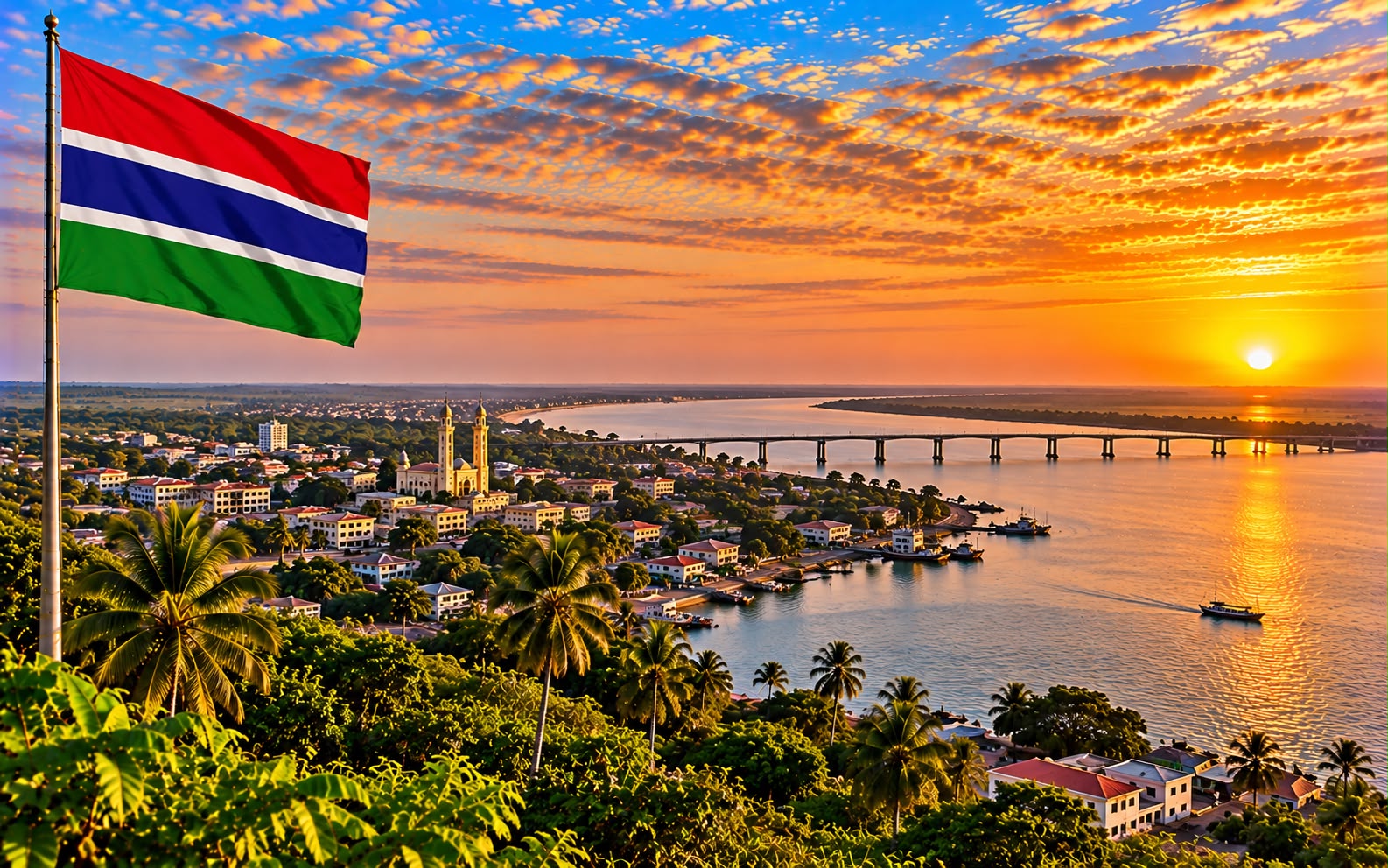
Gambia in 7 days: the river, Kunta Kinteh Island and 500 bird species
A country that is essentially a river with banks, holding more than five hundred bird species, the island captives were shipped from, chimpanzees released onto river islands, and stone circles raised over a thousand years ago.
- West Africa
- 7 days
- ≈ AED 2,700 / person
- Mainland Africa's smallest country, and one of its best places to watch birds
Before you go
The Gambia is the smallest country on mainland Africa, and its shape is the single fact that explains it: a strip following the River Gambia inland for 450 kilometres, nowhere more than about fifty kilometres wide, surrounded on three sides by Senegal.
So the river is the country, and the trip is the river.
More than five hundred bird species have been recorded in an area smaller than Yorkshire — the result of Sahel, savanna, mangrove and coastal habitats stacked within a short drive of each other. You do not need to be a birder to be impressed; you need about an hour at Kotu Creek.
Kunta Kinteh Island — James Island until 2011 — sits in the river where the Atlantic trade was run from, and is on the UNESCO list together with the villages and forts around it. Juffureh nearby is the village Alex Haley traced his family to in Roots, which is why this stretch of river is visited by African-Americans in a way no other part of West Africa is.
Upriver, the Wassu stone circles are part of the Senegambian megalith complex — over a thousand circles across the two countries, raised between roughly the third and sixteenth centuries, and also UNESCO-listed. On the Baboon Islands in the River Gambia National Park, chimpanzees orphaned by the pet trade have been released over fifty years and now breed wild.
Seven days. Figure USD 740 (≈ AED 2,718) per person excluding flights. Go November–February, dry and comparatively cool, which is also peak bird season.
Before you go: the 15-minute admin
Bumsters, and how to deal with them
- The tourist strip at Kololi and Kotu has a long- standing problem with “bumsters” — young men who attach themselves to visitors offering friendship, guiding, or company, and expect money, gifts or more.
- It is persistent rather than dangerous, and it is the single most-cited annoyance of a Gambian holiday.
- What works: a firm, friendly, unambiguous no, without stopping to negotiate. Do not accept an unsolicited “free” tour, a gift or a guided walk, because the bill arrives later.
- Hire guides through your hotel or a registered association — official guides wear badges and the bird guides in particular are excellent and worth every dalasi.
- Away from the tourist strip, this essentially does not happen.
Visas and health
- Many nationalities, including most Commonwealth citizens and EU passport holders, enter visa-free for short stays; others need a visa in advance. Check your own case officially.
- Yellow fever certificate is required if arriving from an endemic country, which includes most regional connections.
- Malaria is present year-round and rises in the wet season. Prophylaxis is standard advice; take it early.
Money
- The dalasi (GMD). Bring euros, pounds or dollars in cash to change — rates at the bureaux on the coast are better than at the airport.
- Cards work at the larger coastal hotels and essentially nowhere upriver. Carry cash for anything beyond Serekunda.
- Costs are low. This is a cheap country once you are in it.
Getting around
- Hire a car with a driver. Around $80–100 a day. The coastal roads are fine; the upriver road to Janjanbureh is long and tiring, and a driver who knows the ferries saves hours.
- The river itself is the better way to travel if you have the budget — boats run multi-day trips upstream and it is a different country from the water.
- Ferries cross the river at Banjul–Barra and at Janjanbureh. The Banjul crossing can involve a long wait; the Senegambia bridge at Farafenni has made the upriver route much easier.
- Distances look small and take longer than you expect. Banjul to Janjanbureh is around 300 kilometres and most of a day.
SIM and data
- Africell, QCell and Gamtel sell cheap SIMs. Coverage follows the river and the coast.
Travelling with kids?
- The coast is a genuine, easy beach holiday with warm water and good hotels.
- Abuko and Makasutu are short, shaded and full of monkeys, which works well.
- The upriver leg is a long drive and worth thinking about twice.
- Malaria precautions matter, and the sun is stronger than it feels in the sea breeze.
Day by day
Day 1 — The coast
- Afternoon — Arrive at Banjul International, 20 minutes from the coastal hotels.
- 16:00 — Settle in at Kotu or Kololi, and walk the beach. The Atlantic here is warm, wide and backed by palms.
- 17:30 — Kotu Creek, a five-minute walk from the hotels, where the bridge over the creek is one of the easiest good birdwatching spots in Africa — kingfishers, herons, hamerkop, weavers and bee-eaters, all before dinner.
Where to stay on the coast (four nights across the trip)
- Mid-range: Kotu or Cape Point, quieter than Kololi and closer to the creek.
- Lively: the Senegambia strip at Kololi, which is where the package tourism is.
Day 2 — Banjul, Abuko and Tanji
- 08:00 — Banjul: Arch 22 for the view over the city, the National Museum, and Albert Market, which is the real thing rather than a craft market.
- 11:00 — Abuko Nature Reserve, the country’s first protected area — gallery forest with a photo hide over a pool, red colobus, green vervets, crocodiles and around three hundred recorded bird species in a very small space.
- 14:00 — Lunch, then south to Tanji.
- 16:00 — Tanji fishing village as the pirogues land — one of the best hours in the country, all colour and noise and smoked fish — and the Tanji Bird Reserve next to it for terns and waders on the lagoon.
Day 3 — Makasutu and Lamin
- 08:00 — Makasutu Culture Forest, half an hour inland: a private reserve of mangrove, palm forest and savanna, where you go by dugout canoe through the mangrove channels at the start of the day.
- 11:00 — The forest walk — baboons, monkeys, and the palm wine tappers who climb the trunks.
- 14:00 — Lamin Lodge for lunch over the mangroves, a ramshackle wooden structure on stilts that is better than it sounds, and more birds.
- 16:00 — Back to the coast, or a Senegambia beach afternoon.
Day 4 — Juffureh and Kunta Kinteh Island
- 07:30 — North across the river by ferry from Banjul to Barra, then upriver by road.
- 10:00 — Juffureh and Albreda: the village Alex Haley identified as his ancestor’s, the Slavery Museum, and the old Portuguese and British trading posts on the bank.
- 12:00 — By boat to Kunta Kinteh Island. The fort is half-eroded — the island has lost most of its area to the river — and what is left is a ruin in the current with baobabs on it. It was a holding point in the Atlantic trade and it is on the UNESCO list with the sites around it.
- 15:00 — Back across, and to the coast.
- A note on going with a guide: the villages receive a lot of visitors and the encounter can feel scripted. A good guide and a willingness to sit and talk changes that completely.
Day 5 — Upriver to Janjanbureh
- 07:00 — The long drive east, around 300 kilometres, via the Senegambia bridge at Farafenni. Most of a day with stops.
- 13:00 — Wassu stone circles: eleven circles of laterite pillars, raised somewhere between the third and sixteenth centuries, part of the Senegambian megalith complex that runs over a thousand circles across the two countries and is UNESCO-listed. Nobody is certain who built them.
- 16:00 — Janjanbureh (Georgetown) on its island — a decayed colonial administrative town with a slow pace and a good deal of atmosphere.
Where to stay at Janjanbureh (one night)
- Simple: the river camps on the banks. Basic, and the river at dawn is the reason.
Day 6 — The Baboon Islands, and back west
- 06:30 — Out by boat into the River Gambia National Park and the Baboon Islands. The Chimpanzee Rehabilitation Project has released orphaned chimpanzees onto these islands since 1979, and they now breed and live wild there.
- You do not land. The chimpanzees are wild and the islands are closed; viewing is from the boat, at a distance, and is the right way to do it. Hippos and crocodiles are also in this stretch.
- 10:00 — Start the drive back west.
- 17:00 — The coast.
Day 7 — Last morning, and out
- Morning — A final hour at Kotu Creek or the Bijilo Forest Park — monkeys and parrots, five minutes from the hotels — and the craft market at Bakau.
- Afternoon — Airport.
Costs and practicalities
Best time to visit
November–February, the cool dry season, which is also the peak of the birding year.
- November–February — dry, 24–30°C, with cool nights. This is the best birdwatching window anywhere in West Africa, with Palearctic migrants on top of the residents — over 500 species recorded in a country the size of Yorkshire.
- March–May — hot and dry, building towards 40°C inland. The river upcountry is low.
- June–October — the rains, humid and green. Many lodges close and the upriver roads become difficult.
- The harmattan in December and January brings Saharan dust that hazes the light and drops the night temperature.
The river is the country, and a trip upstream to Janjanbureh works best in the dry months when the tracks hold.
Travel tips
- Official guides wear badges. The semi-official guide system is well established; agreeing a day rate with a badged guide is far better than being approached repeatedly on the beach.
- “Bumsters” on the resort beaches are persistent rather than dangerous. A firm, friendly no works; engaging does not.
- Bring euros or pounds in cash. The dalasi is not available abroad, ATMs are limited to the coastal strip, and cards work at a handful of hotels.
- The country is Muslim and conservative outside the resorts. Cover up away from the beach, and considerably more upriver.
- Malaria prophylaxis is essential and the risk is highest in the wet season.
- The Banjul ferry is slow and chaotic; the Senegambia bridge at Farafenni is the better crossing if you are driving.
- Buy a river trip through a lodge rather than at the jetty. Pirogue safety standards vary a great deal.
What this trip actually costs
Two people, 6 nights, mid-range comfort, flights excluded:
| Item | Cost |
|---|---|
| Hotels and river camp, 6 nights | USD 480 (≈ AED 1,763) |
| Car with driver, 5 days | USD 450 (≈ AED 1,653) |
| Boats, park fees and bird guides | USD 300 (≈ AED 1,102) |
| Food and drink, 7 days | USD 250 (≈ AED 918) |
| Total for two | USD 1,480 (≈ AED 5,435) |
- Roughly USD 740 (≈ AED 2,718) per person, which makes The Gambia one of the cheapest places in this part of Africa.
- A registered bird guide costs very little and transforms the trip. Hire one for a full day at least.
- The upriver leg is the expensive and tiring part. If you would rather not, two extra days on the coast and at Makasutu is a perfectly good week.
- Package deals from Europe in winter can undercut independent booking substantially, because the charter flights are the real cost.
- Hotel picks here are chosen on location, not on commission — always check prices and recent reviews before booking.
What to pack
- Binoculars, even if you do not consider yourself a birdwatcher. You will change your mind at Kotu Creek.
- Malaria prophylaxis and repellent.
- Light, modest clothing for the villages, and swimwear for the coast.
- Cash to change, in euros, pounds or dollars.
- A hat and high-factor sun cream — the sea breeze hides how strong the sun is.
- A torch for the upriver camps.
FAQ
Is The Gambia safe? Yes, ordinarily. The bumster nuisance on the tourist strip is the main complaint and is a nuisance rather than a danger. Normal precautions apply as anywhere.
Do I need to be a birdwatcher to enjoy it? No, but you may become one. Over five hundred species in a country this small means the birds are simply there, in front of you, without any effort.
Can I see the chimpanzees up close? No, and that is deliberate. The Baboon Islands are closed to landing; the chimpanzees there are wild and viewing is from a boat at a distance.
Should I combine it with Senegal? It is natural — The Gambia is surrounded by it, and Casamance to the south and Saloum to the north are both close. Border crossings are straightforward.
What language do they speak? English is the official language, which makes this one of the easiest West African countries for an English speaker. Mandinka, Wolof and Fula are the main first languages.
Prices and entry rules change, and what you need depends on your passport; last checked 8 October 2026, so confirm with the embassy or your airline before booking.


