 The Itinerary
West Africa in 12 days: Ghana's forts, Togo's hills and the Vodun coast of Benin
Castles on a surf beach that a million people were shipped from, an Ashanti kingdom that fought the British to a standstill, a lake town of twenty thousand on stilts, and the birthplace of a religion that crossed the Atlantic and came back.
- West Africa
- 12 days
- ≈ AED 6,450 / person
- The three countries the transatlantic slave trade ran through, and the religion that survived it
Before you go
Before you go: the admin
Three countries, two visa systems
- Ghana requires a visa for most nationalities, applied for in advance; the e-visa system has been intermittent, so allow time and work through the embassy or an operator.
- Togo issues an e-visa and also a visa on arrival at Lomé.
- Benin’s e-visa is the smoothest of the three and is generally issued in a day or two.
- A yellow fever certificate is mandatory for all three and is checked at every airport and land border.
- Check each separately. The three differ more than neighbouring countries usually do.
The borders
- Ghana to Togo at Aflao and Togo to Benin at Hillacondji are both coastal road crossings and both are busy, informal and slow. Allow two hours each and expect to be asked for small payments that are not official. A good driver handles this.
- Have small CFA franc notes and your yellow fever card to hand, and keep passports with you rather than in a bag in the boot.
Flights and driving
- Fly into Accra and out of Cotonou, which avoids a long backtrack.
- A driver is the right answer, not self-drive. The roads are variable, the borders are a skill, and a Ghanaian or Beninese driver who knows the crossings saves hours.
- Distances look small and take long. Accra to Kumasi is 250km and five hours.
Money
- Ghana uses the cedi; Togo and Benin both use the West African CFA franc, which is pegged to the euro — so euros change cleanly in two of the three and dollars do not.
- Bring euros in cash. ATMs work in Accra, Lomé and Cotonou and are unreliable elsewhere.
- Mobile money runs everyday Ghana; cards work at a handful of hotels.
One gentle brief
- This route goes through sites of the transatlantic slave trade. Cape Coast, Elmina and Ouidah are not sightseeing stops, and the guides at all three take them seriously. So should you.
- Vodun is a practised religion in Benin and Togo, not folklore and not the Hollywood version. It is the origin of Haitian Vodou, Cuban Santería and Brazilian Candomblé, which travelled with the people shipped from this coast.
- Ask before photographing ceremonies, shrines, priests or people, every time. Expect the answer to be sometimes no and sometimes a fee.
Day by day
Day 1 — Accra
- Arrive and take it gently.
- Yellow fever vaccination is mandatory for Ghana, Togo and Benin, and the certificate is checked.
- 11:00 — The Kwame Nkrumah Memorial Park, for the man who led the first sub-Saharan colony to independence in 1957.
- 14:00 — Jamestown — the old fishing quarter below the lighthouse, best with a local guide from the community. The boat beach below it is a working one; ask before photographing.
- 17:00 — Makola Market and the Arts Centre for kente and adinkra. Prices at the Arts Centre are for tourists; haggle hard or buy inland.
- 19:30 — Dinner in Osu, which is where the city eats out.
Day 2 — To Cape Coast, and the castles
- 07:30 — Three hours west along the coast.
- 11:00 — Elmina Castle was built by the Portuguese in 1482 and is the oldest European building south of the Sahara.
- 14:00 — Cape Coast Castle is the larger. Both held people in dungeons beneath the floor before shipping, and the guides take you into them and then to the Door of No Return. It is a very hard hour and it is the reason to come.
- Photography inside the dungeons is restricted at both and the rule is right.
- Stay in Cape Coast rather than day-tripping. The castles deserve the evening afterwards — plan nothing for it.
Day 3 — Kakum, then inland
- 07:00 — Kakum National Park nearby has a canopy walkway 30m up in rainforest, which is the lighter half of the day. Go at opening — it is seven linked bridges and the queue builds fast.
- 10:30 — The forest floor trail below, which most people skip and where the birds actually are.
- 13:00 — Four hours inland to Kumasi.
- 17:30 — Into Kumasi, the Ashanti capital.
- An Akwasidae festival falls every six weeks on the Ashanti calendar, when the Asantehene receives in state. Check the dates; it is the single best thing to time a trip around.
Day 4 — Kumasi
- 09:00 — The Manhyia Palace Museum for that history told from the Ashanti side — the kingdom that defeated British forces repeatedly through the nineteenth century and whose Asantehene still reigns.
- 12:00 — Kejetia Market is one of the largest in West Africa — tens of thousands of stalls, and genuinely overwhelming. Go with someone who knows it.
- 15:00 — The military museum in the old fort, for the other side of the same wars.
- 18:00 — The lorry park and the street food around Adum in the evening.
Day 5 — The craft villages
- 08:30 — The craft villages: Bonwire for kente weaving, Ntonso for adinkra stamping, Ahwiaa for woodcarving. Buy from the makers.
- A full kente cloth takes weeks on a narrow loom and the price reflects it; the strips are the affordable version.
- 13:00 — Ntonso, where you stamp your own adinkra with the carved calabash blocks and the bark dye.
- 16:00 — Lake Bosumtwi, a meteorite crater lake 30km out and sacred to the Ashanti, for the late afternoon.
- 19:00 — Back in Kumasi, and an early start tomorrow.
Day 6 — To Lomé
- 06:00 — A long day east, crossing at Aflao. The border post is effectively in the middle of Lomé’s suburbs.
- Benin and Togo e-visas should be arranged before travel; the Ghana–Togo crossing is slow and busy.
- 15:00 — Lomé is a small, walkable capital with a beach road and the Grand Marché with its Nana Benz — the women who built fortunes trading Dutch wax print and are still a force.
- 17:30 — The Akodessewa fetish market is the largest traditional-medicine supply market in the world: skulls, hides and dried animals, sold to practitioners rather than tourists. Photography is a paid permission and it is a working market, not a curiosity.
- 19:30 — The beach road for grilled fish.
Day 7 — Togoville, or the hills
- 08:00 — Togoville across Lake Togo by pirogue — where the German protectorate treaty was signed in 1884, with a basilica and Vodun shrines side by side.
- Or go north to Kpalimé for the hills, the waterfalls and the butterfly forest, which is Togo’s green half — two hours each way, so it is one or the other.
- 13:00 — Lunch at the lake or in Kpalimé.
- 16:00 — Back toward Lomé.
- Koutammakou, the Batammariba landscape of fortified tower-houses, is UNESCO-listed and is ten hours north — it is a separate trip rather than a detour.
Day 8 — Into Benin: Ouidah
- 08:00 — Cross at Hillacondji and continue to Ouidah.
- 12:00 — The Route des Esclaves is a 4km road from the slave auction square to the beach, with memorials at each stage and the Door of No Return at the end. Walking it is the point — take it on foot, slowly, rather than driving between the monuments.
- 15:00 — The Temple of Pythons, opposite the Catholic basilica — which is the Beninese religious settlement in one street.
- 16:30 — The Sacred Forest of Kpasse and the Portuguese fort museum.
- The Vodun Festival on 10 January is a national holiday centred here and is the single best date in the Beninese year. Ouidah books out months ahead for it.
Day 9 — Ganvié
- 08:00 — A pirogue out onto Lake Nokoué from Abomey-Calavi.
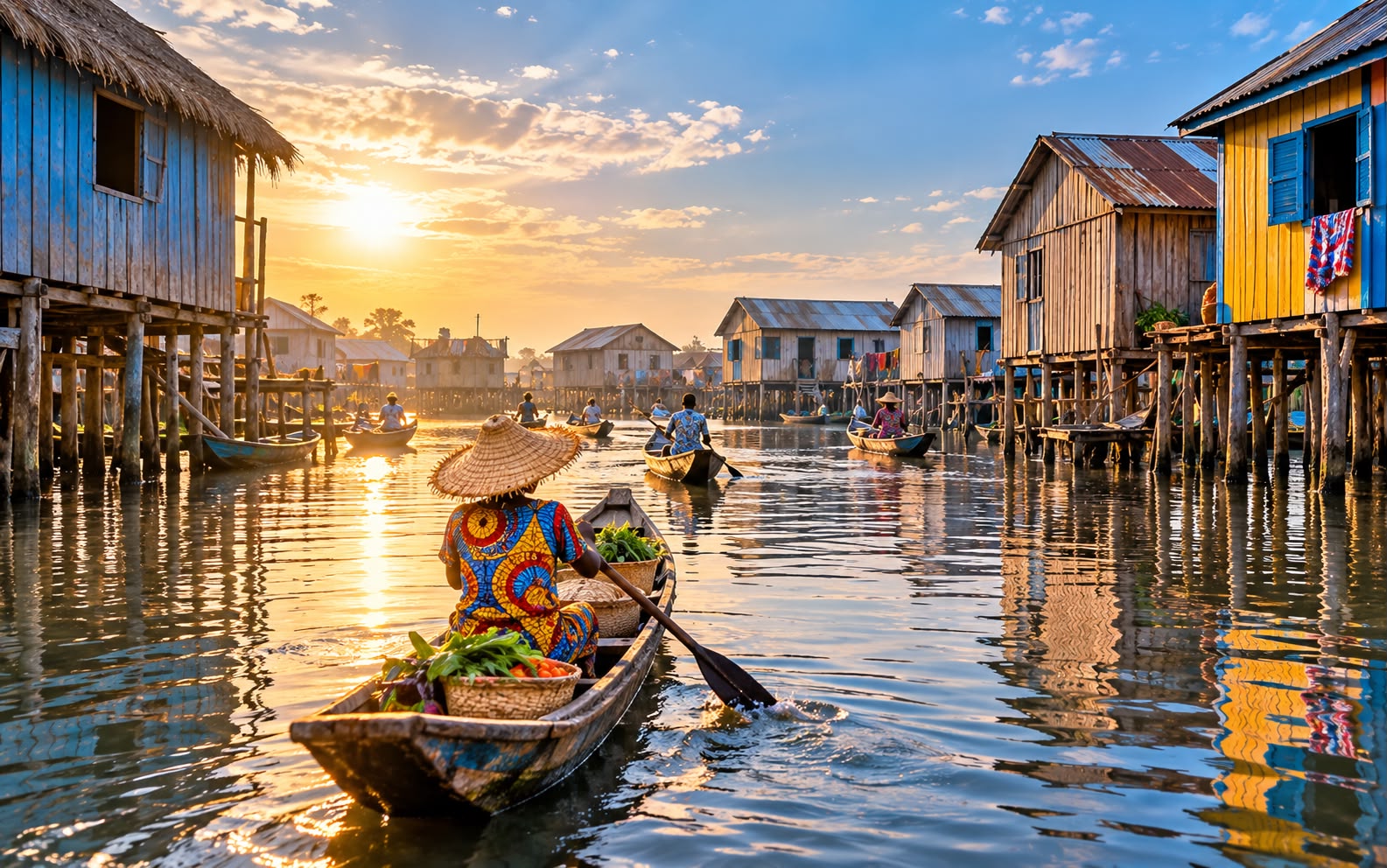
- Ganvié is a town of around 20,000 people built on stilts, founded by the Tofinu in the seventeenth century to escape Dahomey slave raiders — who were forbidden by their religion from entering water. The architecture is an escape strategy that worked.
- 10:00 — Everything happens from canoes, including the market, which is at its busiest first thing.
- Go with a guide from the village and ask before photographing anyone, which matters here more than most places.
- 14:00 — Back to the mainland, and on toward Abomey or Cotonou.
Day 10 — Abomey
- 08:00 — Two hours north.
- 10:00 — The Royal Palaces of Abomey are UNESCO-listed — twelve palaces of the Kingdom of Dahomey, whose wealth came from selling captives to the European traders at Ouidah. The museum does not soften it.
- This is the other end of the road you walked at Ouidah, and doing them in this order is the argument for the route.
- 12:00 — The bas-reliefs in the Hall of Jewels are the artefact to see.
- 14:00 — The Dahomey Amazons — the all-female regiment that fought the French into the 1890s — are part of the story told here.
- 17:00 — South to Porto-Novo or Cotonou.
Day 11 — Porto-Novo and Cotonou
- 09:00 — Porto-Novo, the official capital, with its Afro-Brazilian architecture built by returnees — people who went back across the Atlantic after emancipation in Brazil and brought the style with them.
- 11:00 — The Da Silva Museum tells that return story, which is the one most visitors have never heard.
- 14:00 — Cotonou’s Dantokpa market, the largest in West Africa, which runs to the lagoon and takes hours.
- 17:00 — The Fondation Zinsou for contemporary African art, which is free and excellent.
- 19:00 — The beach road for the last evening — the Atlantic here has a vicious undertow and is not for swimming.
Day 12 — Fly out of Cotonou
- 09:00 — Spend the CFA. It is not usable outside the zone.
- Buy bronze, bogolan and wax print at Dantokpa rather than the airport.
- Cardinal Bernardin Gantin airport is ten minutes from the centre and small; two hours is enough.
Costs and practicalities
Best time to visit
November–February is the dry season and the only comfortable window on this coast.
- November–February — dry, and the best months. The harmattan in December and January blows Saharan dust down, which hazes the light and drops both the humidity and the night temperature.
- 10 January — the Vodun Festival at Ouidah, a national holiday and the most remarkable day on this route. Accommodation is taken months ahead.
- March–May — hot and increasingly humid before the main rains.
- April–July — the main wet season on the coast, with June the heaviest. Roads soften and the humidity is hard going.
- August — a short dry break, and the Homowo festivals in the Accra area.
- September–October — the second, lighter rains.
Akwasidae falls every six weeks on the Ashanti calendar and is worth checking against your dates for Kumasi.
Travel tips
- Hire a driver, not a car. The borders at Aflao and Hillacondji are a skill, and a driver who knows them turns two hours into one.
- Carry small CFA notes at the crossings and keep passports and your yellow fever card with you, not in the boot.
- Bring euros, not dollars. The CFA franc is pegged to the euro and changes cleanly; dollars do not.
- The castle dungeons and the Route des Esclaves are places of mourning. Photography is restricted in the dungeons, guides set the tone, and following it matters.
- Vodun is a living religion. Ask before photographing shrines, priests or ceremonies, accept a refusal, and expect a fee where permission is given.
- Use the left hand for nothing — eating, giving, receiving — which matters more inland than on the coast.
- A yellow fever certificate is mandatory and checked, and malaria prophylaxis is essential year-round across all three.
What this trip actually costs
Two people, 11 nights, mid-range comfort, international flights excluded:
| Item | Cost |
|---|---|
| Driver, vehicle and fuel, 12 days | USD 1,100 (≈ AED 4,040) |
| Hotels, 11 nights | USD 990 (≈ AED 3,636) |
| Guides, museums and site entries | USD 600 (≈ AED 2,204) |
| Food and drink, 12 days | USD 450 (≈ AED 1,653) |
| Border fees, pirogues and local transport | USD 360 (≈ AED 1,322) |
| Total for two | USD 3,500 (≈ AED 12,854) |
- Roughly USD 1,750 (≈ AED 6,427) per person, which makes this one of the best-value routes on the site.
- The driver is the largest line and the one not to economise on. It is what makes three countries in twelve days possible.
- Ghana is the dearest of the three; Togo and Benin are noticeably cheaper.
- Hotel picks here are chosen on location, not on commission — always check prices and recent reviews before booking.
What to pack
- Euros in cash, in good condition, and small CFA notes for the borders.
- A yellow fever certificate, which you will show repeatedly.
- Malaria prophylaxis — this is a high-transmission region year-round.
- Light long sleeves and trousers, and modest dress for the shrines and the castles.
- A hat and serious sun protection, plus dust protection in harmattan season.
- A head torch and a power bank. Power cuts are routine in all three.
- Hand sanitiser and rehydration salts.
FAQ
Is this a difficult trip? Logistically yes, emotionally yes, dangerously no. The borders are slow, the heat is real, and the castles and the Route des Esclaves are hard hours. None of it is unsafe with a good driver.
Why these three countries together? Because the transatlantic slave trade ran through all three, and because Vodun — which crossed the Atlantic from this coast and became Vodou, Santería and Candomblé — is still practised here. It is one story with three modern borders through it.
Can I do it without a driver? You could, and the border crossings and the Accra–Kumasi–Lomé legs would eat the trip. A driver costs little and changes everything.
What about Koutammakou or the north? Northern Togo and Benin — Koutammakou, Pendjari National Park — are ten hours from the coast and carry their own travel advice. They are a separate route.
What language will I need? English in Ghana, French in Togo and Benin. Ewe and Fon are the first languages along this coast, and a greeting in either is warmly received.
Prices and entry rules change, and what you need depends on your passport; last checked 29 October 2026, so confirm with the embassy or your airline before booking.


