 The Itinerary
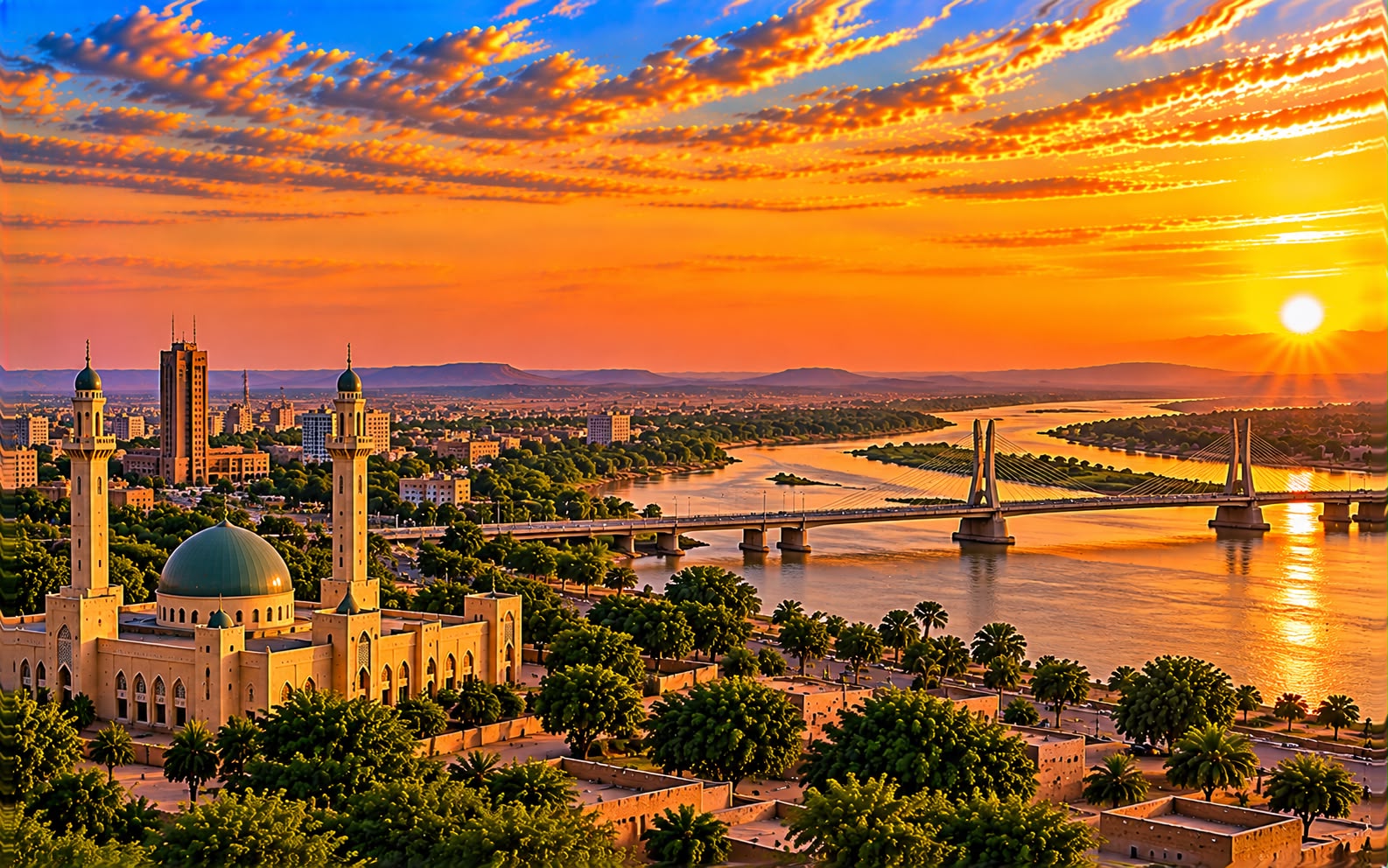
Niger in 8 days: Agadez, the last wild giraffes of West Africa and the Aïr
A Tuareg caravan city with a mosque of earth and palm wood at its centre, a herd of pale giraffes that live among farmers rather than in a park and exist nowhere else, and a desert massif the size of Switzerland — in a country under military rule where most of the map carries a warning.
- West Africa
- 8 days
- ≈ AED 5,150 / person
- A mud minaret twenty-seven metres tall, and the only wild giraffes left in West Africa
Before you go
Read this first
Most governments advise against all travel to most of Niger, and against all but essential travel to Niamey. Several have drawn down their embassies substantially.
- The military has governed since the coup of July 2023, which removed President Bazoum. He was detained and, at the time of writing, has not been released.
- French and American forces have withdrawn and Russian personnel have arrived. The security arrangements of a few years ago are gone.
- Armed groups operate across the west (Tillabéri, the three-borders area), the south-east (Diffa, Boko Haram and ISWAP) and the north.
- Kidnapping of Westerners is a specific and repeated risk, and foreigners have been taken from Niamey itself.
- Borders have been closed and reopened repeatedly since the coup, and regional airspace has closed at short notice.
- Fuel, power and cash shortages have followed sanctions and their partial lifting.
This guide does not tell you to go. The Kouré giraffe reserve, an hour from the capital, is the one thing a visitor to Niamey has reliably been able to do — and even that has had periods when it was not advised. Check your own government’s advice, which reflects this week rather than this year.
Niger’s draw is three things, and one of them is unique on earth.
The giraffes at Kouré are the last wild herd in West Africa — the Niger subspecies, paler than the eastern ones, down to fewer than fifty animals in the 1990s and now past six hundred. They live on unprotected farmland, among villages, without fences, which is the remarkable part: a conservation success built on the tolerance of the people who share the land with them. You walk among them with a guide from the local management association.
Agadez is UNESCO-listed: the historic centre of a Tuareg sultanate and the southern terminus of the trans-Saharan caravan routes. The Grande Mosquée, rebuilt in 1844 on a sixteenth-century foundation, has a twenty-seven-metre minaret of mud and projecting palm beams, the tallest mud structure of its kind anywhere, and you can usually climb it. Around it is a labyrinth of banco houses, silversmiths working the Agadez cross, and the salt caravans that still come in from Bilma.
The Aïr and Ténéré Natural Reserves are UNESCO-listed and in danger — the largest protected area in Africa, a granite massif rising out of the Sahara with the Ténéré sand sea beside it, holding addax, dorcas gazelle and Barbary sheep. It has been effectively closed to visitors since the Tuareg rebellions and the rise of armed groups, and should be treated as aspirational rather than planned.
Eight days, if and when it is possible. Figure USD 1,400 (≈ AED 5,142) per person. November to February, because the rest of the year is among the hottest inhabited places on the planet.
Before you go: the 15-minute admin
Entry
- A visa is required and is now most reliably obtained through a Nigerien operator or the embassy covering your country, several of which have changed since the coup.
- Yellow fever vaccination is mandatory.
- Niamey–Diori Hamani is the entry point. Flight connections have been disrupted repeatedly; confirm, then confirm again.
- Internal travel to Agadez requires authorisation, arranged by your operator, and the flight is the only sensible way to do it.
Money
- The West African CFA franc (XOF) is pegged to the euro.
- Cash in euros. Niamey has ATMs that work intermittently. Agadez has nothing you should rely on.
- Sanctions have periodically disrupted banking. Carry the whole budget.
On the ground
- A Nigerien operator is not optional. They hold the permissions, which are checked.
- Escorts are mandatory on some routes, arranged in advance, and the requirement changes.
- No overland travel to Agadez. The road crosses ground that every advisory rules out.
- No night travel anywhere.
- Do not photograph military, police, government buildings, the airport, or bridges.
Day by day
Day 1 — Niamey
- 10:00 — The Musée National Boubou Hama, an unusual institution: museum, craft village, zoo and the pavilion holding the Ouranosaurus skeleton found in the Ténéré, all in one park. The craft village is where the smiths actually work.
- 14:00 — The Grand Marché and the silver and leather work.
- 18:00 — The Niger at sunset from the right bank, with the pirogues and the hippos that occasionally show upstream.
- Cash only, and arrange everything through your operator. Movement outside Niamey needs permissions and, for the north, an escort.
Day 2 — Kouré and the giraffes
- 06:30 — An hour south-east on the Dosso road, then a guide from the Association pour la Sauvegarde des Girafes du Niger and a 4x4 into the bush.
- Early morning or late afternoon. In the middle of the day they are static and so is the light.
- 08:00 — You get out and walk. The herd tolerates people on foot in a way they do not tolerate vehicles, and the guides know every animal.
- These are the last West African giraffe in the wild — down to about 50 in the 1990s and now several hundred, living outside any protected area among farmers.
- The fee goes to the local management association, which is the mechanism that made the recovery work.
- 12:00 — Back to Niamey for the afternoon, and the Agadez flight is tomorrow.
Day 3 — Agadez
- 09:00 — Fly. It is an hour and a half; the road is not an option.
- 12:00 — Into Agadez, and your escort and permissions are arranged before you land.
- 15:00 — The Grande Mosquée and its minaret, climbed from inside up a staircase in the dark, for the view across a city entirely the colour of the ground it stands on. The minaret is mud and the projecting stakes are the scaffolding for its annual replastering.
- 17:00 — The Sultan’s palace and the old quarter, with a guide who can get you past the first layer of it.
- 18:30 — The Vieux Quartier at dusk, which is when the city stops looking like a film set and starts looking like a place.
Day 4 — The silversmiths
- 09:00 — The silversmiths. The Agadez cross has about twenty-one regional variants and a smith will explain the differences at length. Watch one made; the lost-wax work takes an afternoon.
- 12:00 — The camel market on the edge of town, which is a working one.
- 15:00 — The leather and takouba work, and the Tuareg tent furnishings that almost nobody exports.
- 17:30 — The dunes at the edge of the city, which is as close to the Ténéré as most itineraries now get.
- Discuss tomorrow tonight — it is the conditional day and the answer changes week to week.
Day 5 — The salt road, or the edge of the Aïr
- The Bilma caravans still run in winter, bringing salt and dates across the Ténéré by camel. Whether you can go out to meet one depends entirely on permissions and the security position.
- 06:00 — If it runs, it is a long day out with an escort and you leave before light.
- The near edge of the Aïr — Tafadek, the hot spring, or the Teloua valley — has at times been reachable on a day trip from Agadez with an escort. At other times it has not. Ask; do not assume.
- Treat this day as conditional and have the alternative in Agadez ready — a second day in the old quarter and the smiths is not a poor substitute.
- 17:00 — Back before dark, whichever version ran.
Day 6 — Back to Niamey
- 09:00 — Fly back, and use the afternoon for whatever the first day missed.
- 13:00 — The Grande Mosquée, Libyan-funded and entirely unlike anything else on this page.
- 16:00 — The Niger River by pirogue, upstream towards the Parc W side, for birds and for the view back at the city.
- 18:30 — The right bank at sunset, which is the Niamey evening.
Day 7 — W National Park, conditionally
- W National Park is UNESCO-listed, shared with Benin and Burkina Faso, and holds the largest remaining elephant population in West Africa along with lion, buffalo and roan.
- The Nigerien sector has been closed or heavily restricted because of armed group activity in the three-borders area. The Beninese sector (Pendjari and W) is the one that has operated, and that is a different country and a different trip.
- 06:00 — If the Nigerien side is open, it is two and a half hours south and a full day with an escort.
- If the Nigerien side is shut, and it generally is, spend these days on the river and in Niamey rather than forcing it — a pirogue day downstream to the hippo pools is the version that actually happens.
- 17:00 — Back to Niamey.
Day 8 — Out
- 09:00 — The Grand Marché for silver and leather, which is the better buy here than in Agadez for leather and the worse for silver.
- 12:00 — The Musée National’s craft village again, if you want to watch rather than buy.
- 15:00 — The river one last time.
- Fly out of Niamey, and leave wide margins — flights are few and the formalities are slow.
Costs and practicalities
Best time to visit
November–February, and this is one of the narrowest windows on the site — Niger contains some of the hottest inhabited places on the planet.
- November–February — the only comfortable months. Cool nights, and the best for Agadez and for the giraffes at Kouré.
- December–January — the harmattan hazes the light and brings the coldest nights; the desert can approach freezing after dark.
- March–May — the hot season. Agadez and the Aïr routinely exceed 45°C and the heat is the principal hazard.
- June–September — the brief rains in the south. The Sahel greens, and the Kouré giraffes disperse more widely as the bush thickens, which makes them harder to find.
- October — the rains end and the dust has not yet arrived; a good short window.
The Bilma salt caravans cross the Ténéré in winter, roughly November to February.
Travel tips
- A Nigerien operator is not optional. They hold the permissions, which are checked, and escorts are mandatory on some routes.
- Do not travel overland to Agadez. The road crosses ground every advisory rules out; fly.
- Bring euros in cash. The CFA franc is pegged to the euro; Niamey’s ATMs are intermittent and there is nothing in Agadez you should rely on.
- The giraffe fee goes to the local management association at Kouré, which is the mechanism that took the herd from under fifty animals to more than six hundred. Pay it gladly.
- You get out and walk at Kouré. The herd tolerates people on foot far better than vehicles — follow the guide’s distance exactly.
- A chèche or long scarf is the local answer to sun, dust and wind and works better than anything you will bring.
- Do not photograph military, police, government buildings, the airport or bridges.
What this trip would cost
Two people, 7 nights, mid-range comfort, flights excluded:
| Item | Cost |
|---|---|
| Hotels, 7 nights | USD 630 (≈ AED 2,314) |
| Operator, vehicles, escorts and permissions | USD 1,250 (≈ AED 4,591) |
| Niamey–Agadez return flights, two people | USD 440 (≈ AED 1,616) |
| Food and drink, 8 days | USD 240 (≈ AED 881) |
| Guides, giraffe fees and entries | USD 240 (≈ AED 881) |
| Total for two | USD 2,800 (≈ AED 10,283) |
- Roughly USD 1,400 (≈ AED 5,142) per person. The internal flight is not optional — the overland alternative is the thing every advisory tells you not to do.
- All of it in cash, in euros.
- Figures are indicative and the domestic air fare has moved a lot since 2023.
- Insurance does not appear because no standard policy covers travel against government advice.
- Hotel picks here are chosen on location, not on commission — always check prices and recent reviews before booking.
What to pack
- Euros in cash for the whole trip.
- A yellow fever certificate.
- Malaria prophylaxis for the south; the risk drops in the desert and does not vanish.
- A chèche or long scarf, which is the local answer to sun, dust and wind and works better than anything you will bring.
- Serious sun protection and more water than you think.
- A head torch and a power bank.
FAQ
Can I visit Niger now? Most governments advise against all travel to most of the country and against all but essential travel to Niamey. A small number of visitors reach Niamey and Kouré with Nigerien operators. Check current advice.
Are the Kouré giraffes in a national park? No, and that is the point. They live on farmland among villages, without fences, and the recovery from under fifty animals to more than six hundred rests on local tolerance and a community management association.
Can I get to the Aïr and the Ténéré? Treat it as closed. The reserves are UNESCO-listed and in danger, and have been effectively off-limits for years.
Is the road to Agadez an option? No. Fly.
What language do they speak? French is official. Hausa is the most widely spoken, with Zarma around Niamey and Tamasheq in the north.
Prices and entry rules change, and what you need depends on your passport; last checked 29 October 2026, so confirm with the embassy or your airline before booking.


