 The Itinerary
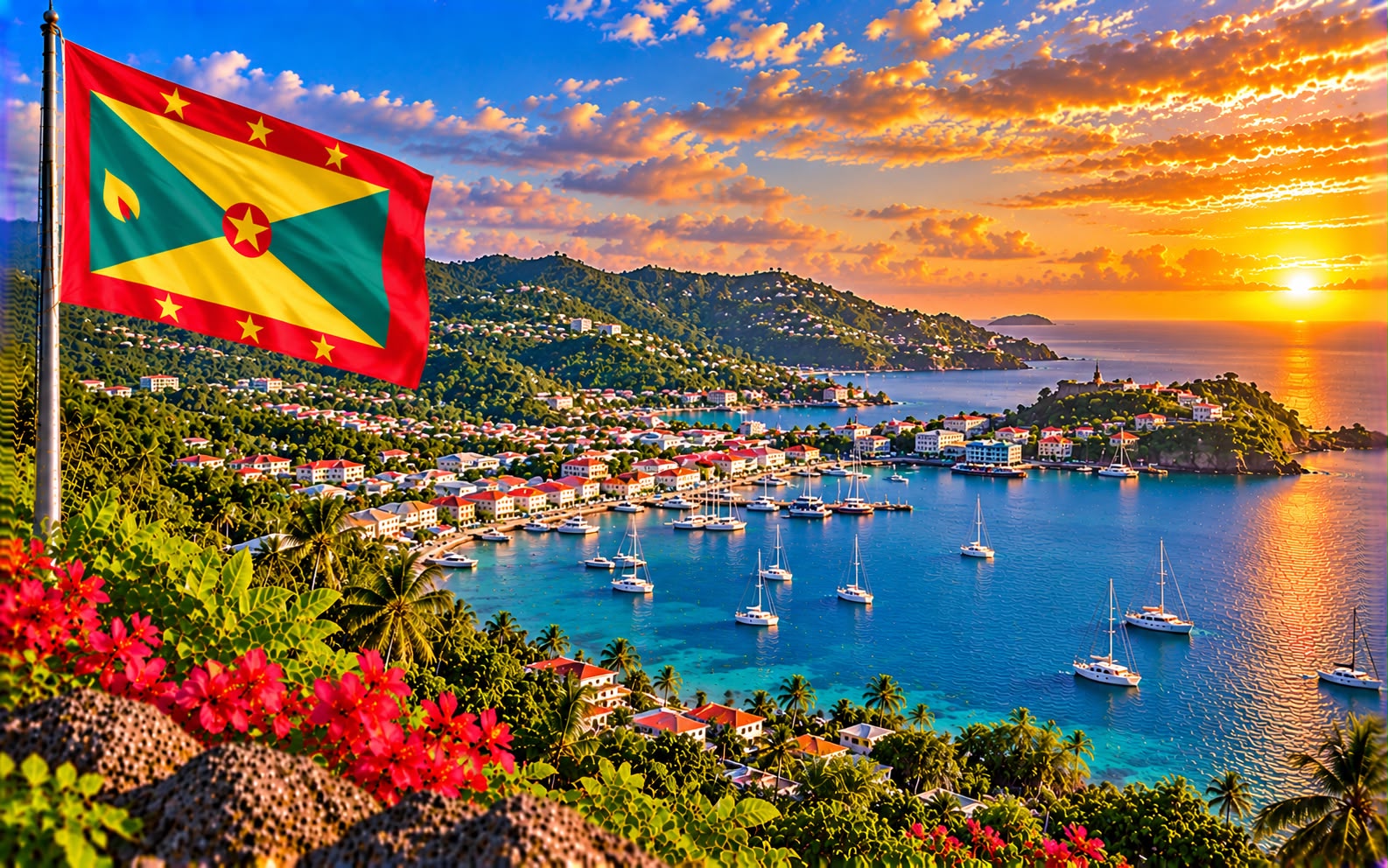
Grenada in 7 days: the underwater sculptures, nutmeg and Carriacou
An island that still runs on nutmeg, with the first underwater sculpture park ever built, a 1785 distillery powered by a water wheel, and a wreck that divers call the Titanic of the Caribbean.
- The Caribbean
- 7 days
- ≈ AED 2,400 / person
- The world's first underwater sculpture park, and rum made by water wheel since 1785
Before you go
Grenada is small, green and genuinely still agricultural. It is called the Spice Isle and the name is not marketing: the island was once among the world’s largest nutmeg producers, and nutmeg and mace are still processed in sheds you can walk into, by hand, by people sorting with their fingers.
St George’s is the prettiest harbour town in the Caribbean — a horseshoe of a drowned volcanic crater, with warehouses in ochre and terracotta stacked up the slope and the Carenage curving round the water.
Two things make the diving distinctive. The Molinere Underwater Sculpture Park was the first in the world, installed by Jason deCaires Taylor in 2006: concrete figures on the seabed at five to eight metres, deliberately sited on damaged reef so coral would colonise them, which it has. And the Bianca C — a cruise liner that caught fire and sank in 1961 — is the largest wreck in the eastern Caribbean, about 180 metres of it, and a serious deep dive.
River Antoine has been making rum since 1785 on a water wheel, which still turns, crushing cane the way it always has. The result is 75% alcohol and airlines will not carry it.
And Carriacou, an hour and a half north by ferry, is the quiet sister island where the boatbuilding and the Big Drum tradition survive.
Seven days. Figure XCD 1,750 (≈ AED 2,380) per person excluding flights. Go January–April; Spicemas carnival is in August.
Before you go: the 15-minute admin
Visas and money
- Many nationalities enter visa-free for short stays. Check your own case officially.
- The East Caribbean dollar (XCD), pegged to the US dollar at 2.70. US dollars are accepted, usually at 2.60–2.65, so EC is slightly better value.
- Cards work in St George’s and Grand Anse; carry cash for the market, buses, the nutmeg station and the rural distilleries.
Getting around
- Hire a car at around US$50 a day, driving on the left, with a local permit bought on presentation of your licence.
- The interior roads are steep, narrow and full of blind corners. Horn on the bend is the local convention.
- Minibuses run from the St George’s terminal to everywhere, cost a few EC dollars, and are the fastest way around — they leave when full and they drive accordingly.
- Nothing on this island is more than an hour away.
Diving, specifically
- The Molinere park is shallow — five to eight metres — so snorkelling works, and the boat trips are cheap. The sculptures are now heavily encrusted, which is the point of them.
- The Bianca C is a deep wreck, 30–50 metres, with current. Operators will ask for an Advanced certification and recent logged dives, and they are right to.
- Grenada has more than fifty dive sites and very few divers on them.
Hurricanes, and Carriacou
- Season runs June to November. Grenada sits at the southern edge of the belt and is hit less often than the islands north of it — but Hurricane Beryl struck Carriacou and Petite Martinique directly in July 2024 and caused severe damage.
- Carriacou has been rebuilding. Check current conditions and what is open before planning nights there.
Travelling with kids?
- Grand Anse is two miles of calm, shallow, pale sand and is as easy as a Caribbean beach gets.
- The sculpture park by snorkel is excellent for confident swimmers.
- Nutmeg station, chocolate factory and the rum water wheel are all short, cheap and genuinely interesting.
- The minibuses are an experience; small children may find them a lot.
Day by day
Day 1 — St George’s
- Afternoon — Arrive at Maurice Bishop International, fifteen minutes from town.
- 16:00 — The Carenage, the inner harbour, and up to Fort George — built by the French in 1705, still the police headquarters, and the site of the 1983 executions that triggered the US invasion. The view down over the red roofs is the one on every postcard.
- 18:00 — Sunset from Fort Frederick, which looks the other way over Grand Anse.
Where to stay (five nights Grenada, two Carriacou)
- Mid-range: Grand Anse and Morne Rouge, walkable to the beach and a short bus from town.
- Character: the small inns above St George’s harbour.
Day 2 — The sculptures and the west coast
- 09:00 — Molinere Bay by boat. The Underwater Sculpture Park sits on a sandy shelf just north of town: Vicissitudes, the ring of children holding hands, The Lost Correspondent at his desk, and around eighty more. Twenty years of coral has changed them completely, which was always the intention.
- 12:00 — Back for lunch at the Carenage.
- 14:00 — Grand Anse Beach — two miles of it, and the craft and spice market at the north end.
- 17:00 — Grand Anse sunset, which is the one the island is known for.
Day 3 — Into the interior
- 08:30 — Up into the mountains to Grand Etang National Park, a crater lake at 530 metres in cloud forest, with mona monkeys at the roadside.
- 10:30 — Seven Sisters Falls — a muddy forty-minute walk in to a set of falls you can swim and jump in. Take a guide; the trail crosses private land and the fee is small.
- 13:30 — Annandale Falls, which is the easy one, five minutes from the car.
- 15:30 — Gouyave on the west coast and the nutmeg processing station — a wooden shed where women sort nutmeg by hand into grades, exactly as they have for a century. It costs a few dollars and is the best thing on the island.
- 19:00 — If it is a Friday, stay for Gouyave Fish Friday — the street closes and the whole town cooks.
Day 4 — The north and the rum
- 09:00 — North up the coast.
- 10:30 — River Antoine Rum Distillery, running since 1785 on a water wheel that still drives the cane crusher. Everything is done the old way, the fermentation is open, and the result is bottled at 75% — which is why you cannot fly with it. They sell a weaker one you can.
- 12:30 — Belmont Estate, a working cocoa plantation with lunch, a tree-to-bar tour and the Grenada Chocolate Company connection — one of the first genuinely farmer-owned chocolate operations anywhere.
- 15:00 — Levera Beach on the north-east tip, wild and empty, looking across to Carriacou. Leatherback turtles nest here between March and July with community-run patrols.
- 17:00 — Back south, or stay north.
Day 5 — Carriacou
- Morning — The ferry from St George’s, about ninety minutes, or a short flight.
- Carriacou is thirteen square miles, quiet, and the centre of the region’s surviving boatbuilding tradition — sloops still built on the beach at Windward by eye, without plans.
- Afternoon — Paradise Beach and Sandy Island, a sandbar with a few palms in a marine protected area, which is the snorkelling.
- Evening — Hillsborough, which is the whole town.
Where to stay on Carriacou (two nights)
- Simple: the guesthouses at Hillsborough and L’Esterre. Check what has reopened since Beryl.
Day 6 — Carriacou, slowly
- Morning — Windward to see the boatbuilders, and Petite Martinique across the water if a boat is going.
- Afternoon — Diving or snorkelling — Carriacou’s reefs are in better condition than Grenada’s, and the operators are tiny.
- Or walk up High North for the view down the Grenadines.
Day 7 — Back, and fly out
- Morning — Ferry or flight back to Grenada.
- Afternoon — The Market Square in St George’s for nutmeg, mace, cocoa balls and saffron, then the airport. Allow for the ferry being late; it often is.
Costs and practicalities
Best time to visit
January–April is the dry season and the best window, and Grenada’s position in the southern Caribbean puts it largely below the main hurricane track.
- January–April — dry, breezy, and the peak. The best months for diving the Molinere sculpture park and walking in Grand Etang.
- May–June — the rains begin as short showers; good value and still mostly dry.
- July–August — hot and wet, with Spicemas in the second week of August, which is the island’s own carnival and includes the extraordinary pre-dawn Jab Jab opening.
- September–November — the wettest months and the end of hurricane season. Grenada is usually south of the track but Ivan in 2004 proved it is not immune.
Nutmeg harvest runs year-round with peaks after the rains; the processing stations are open to visitors in any month.
Travel tips
- Driving is on the left on steep, narrow, switchbacked roads. A local permit is issued with the hire and the minibuses drive fast.
- The East Caribbean dollar is pegged to the US dollar at about 2.70. US dollars are accepted at a rounder, worse rate.
- The Underwater Sculpture Park is a marine protected area — snorkel or dive with a licensed operator, and do not touch.
- Buy spices at the market in St George’s, not at the cruise terminal. Nutmeg, mace, cinnamon and cocoa are the real thing here and cost a fraction.
- Local minibuses are cheap, frequent and loud, with a conductor who shouts the route. They stop running in the early evening.
- A 10% service charge plus VAT is standard on bills.
- Grand Etang’s forest is wet all year. The trails are muddy whatever the season — proper shoes, not sandals.
What this trip actually costs
Two people, 6 nights, mid-range comfort, flights excluded:
| Item | Cost |
|---|---|
| Guesthouses, 6 nights | XCD 1,600 (≈ AED 2,176) |
| Car hire, 4 days, fuel and permit | XCD 600 (≈ AED 816) |
| Carriacou ferry and island transport | XCD 400 (≈ AED 544) |
| Sculpture park, diving, falls, guides | XCD 700 (≈ AED 952) |
| Food and drink, 7 days | XCD 200 (≈ AED 272) |
| Total for two | XCD 3,500 (≈ AED 4,761) |
- Roughly XCD 1,750 (≈ AED 2,380) per person — about US$650 — which is mid-range for the Caribbean and cheap for what is here.
- Minibuses instead of a car for the days you are not going into the interior will save most of that hire line.
- The nutmeg station, the rum distillery and the falls cost a few dollars each and are the best value on the island.
- Diving the Bianca C is a premium dive and priced accordingly; Molinere by snorkel costs almost nothing.
- Hotel picks here are chosen on location, not on commission — always check prices and recent reviews before booking.
What to pack
- Reef-safe sun cream and a rash vest for the sculpture park.
- Shoes you can get muddy for Seven Sisters, which is slippery.
- Insect repellent for Grand Etang.
- A dry bag for the ferry and the boat trips.
- Cash in EC for the rural stops, which take nothing else.
- Space in the bag for spices — nutmeg, mace and cocoa balls are what to take home.
FAQ
Can I snorkel the sculpture park? Yes — it sits in five to eight metres and the boat trips are cheap. The figures are heavily coral-encrusted now, which was the design.
Can I dive the Bianca C? If you are Advanced-certified with recent dives. It is 30 to 50 metres with current and operators check.
Is Carriacou open after Hurricane Beryl? It was hit directly in July 2024 and has been rebuilding. Check current conditions and which guesthouses have reopened before booking nights there.
Can I take the rum home? Not the 75% one — airlines refuse it. River Antoine sells a lower-proof version for exactly this reason.
What language do they speak? English, with a French-influenced creole in older speech. No difficulty at all.
Prices and entry rules change, and what you need depends on your passport; last checked 8 October 2026, so confirm with the embassy or your airline before booking.


