 The Itinerary
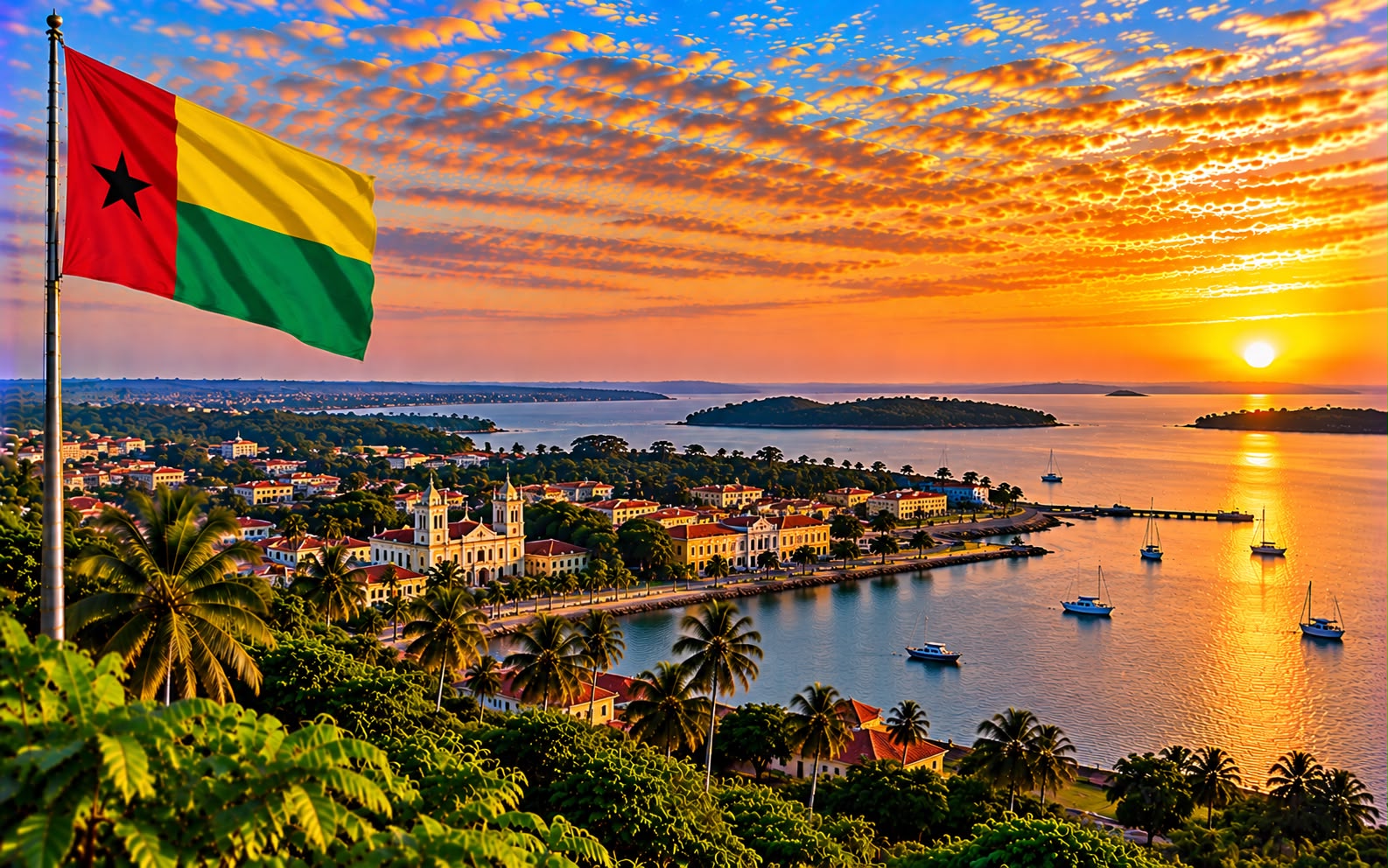
Guinea-Bissau in 7 days: the Bijagós islands, saltwater hippos and Bissau
Eighty-eight islands where hippos have adapted to salt water, green turtles nest in their thousands, and a matriarchal society still chooses its own husbands and runs its own religion — in a country most people could not place on a map.
- West Africa
- 7 days
- ≈ AED 3,200 / person
- Hippos that swim in the sea, and an archipelago run by its women
Before you go
Guinea-Bissau is small, Portuguese-speaking, and has had a difficult political history that keeps it off most lists. What it has is the Bijagós.
Eighty-eight islands and islets off the coast, about twenty of them inhabited, designated a UNESCO Biosphere Reserve — a maze of mangrove, savanna islands, sandbanks and tidal channels with a tidal range large enough to change the map twice a day.
On Orango, hippos live in salt water. They move between the freshwater lagoons inland and the sea, swim in the channels, and are found on beaches — a population that has adapted in a way almost nowhere else has.
On Poilão and the João Vieira islands, green turtles nest in numbers that make this one of the most important rookeries in the Atlantic — thousands of nests in a season, in a marine national park that is closed for much of the year to protect them.
And the Bijagó society itself is the other reason to come. It is matrilineal, with women choosing their husbands and holding religious authority, and the age-grade initiation system still structures village life. It is not a museum piece and it is not performed for visitors.
Bissau is a small, hot, decaying Portuguese colonial capital with a good market and not much else — a staging post rather than a destination.
Seven days. Figure USD 875 (≈ AED 3,213) per person excluding flights. Go November–May, the dry season; turtle nesting peaks around July to October, which is also the rains.
Before you go: the 15-minute admin
Getting to the islands is the trip
- Everything depends on boats, and boats depend on tides, weather and whether the fuel arrived.
- Public pirogues run from Bissau to Bubaque, the main island, taking three to five hours, on a schedule that is more of a tendency. They are cheap, crowded and sometimes overloaded.
- Private speedboats do it in under two hours, cost considerably more, and are what most visitors and all the lodges use.
- The lodges arrange transfers as part of the booking. Do this — arriving in Bissau and improvising is how people lose two days.
- Build slack before your flight home. Weather cancels crossings.
- Tides govern everything on the islands: when you can land, when you can leave, when a channel exists at all.
Visas and vaccinations
- A visa on arrival has been available at Bissau airport, and an e-visa can be applied for in advance. Confirm the current position officially before you fly; this is a country where the rules have moved.
- Yellow fever vaccination is compulsory and checked.
- Malaria risk is high year-round. Prophylaxis is essential, and the islands have no medical facilities to speak of.
Money
- The West African CFA franc (XOF), pegged to the euro.
- Bring euros in cash, all of it. There are a couple of ATMs in Bissau that may work with a foreign card and nothing at all on the islands.
- Small notes matter. Change on the islands is scarce.
- Costs are low ashore and the boats are what you pay for.
Current advice
- Read your government’s current travel advice before booking. Guinea-Bissau has a history of coups and attempted coups, and advice is periodically revised.
- Trouble, when it occurs, is political and concentrated in Bissau rather than aimed at visitors, and the islands are far removed from it.
- Avoid demonstrations and political gatherings entirely, and do not photograph the presidential palace, military or police.
SIM and data
- MTN and Orange sell SIMs in Bissau. Coverage on the islands is patchy to absent, which most visitors come to appreciate.
Respecting the Bijagós
- The islands are sacred ground in a living religion. Some forests, groves and islands are off limits entirely — Poilão itself is sacred as well as being a turtle sanctuary.
- Always ask before entering a village, taking a photograph, or walking into forest. Your guide will know; if the answer is no, it is no.
- Initiation ceremonies happen on their own calendar and are not for visitors unless specifically invited.
Travelling with kids?
- The boat journeys are long, open and sometimes rough.
- Medical facilities on the islands are essentially nonexistent; evacuation cover is essential.
- The beaches and the hippo walking are excellent for older children who can handle the logistics.
Day by day
Day 1 — Bissau
- Afternoon — Arrive at Osvaldo Vieira, 15 minutes from town.
- 16:00 — The Fortaleza d’Amura, a Portuguese fort still in military use — view it from outside only — and the decayed grid of the Bissau Velho colonial quarter around it, pastel façades with trees growing out of them.
- 17:30 — Mercado de Bandim, the city’s big market and the most alive place in it.
- 19:00 — Dinner. Portuguese-Creole food: grilled fish, jollof, cashew everything — the country runs on cashew exports.
Where to stay in Bissau (two nights across the trip)
- Mid-range: the centre near the Avenida Amílcar Cabral.
Day 2 — To Bubaque
- Morning — Boat to Bubaque, the administrative centre of the archipelago — one to five hours depending on what you are on.
- Afternoon — Bubaque is a slow, sandy island town with a Portuguese ruin or two and the main pier. Settle in.
- 16:00 — Praia Bruce on the south of the island, a long empty beach with the forest behind it, about an hour away on a rough track.
Where to stay on Bubaque or Rubane (four nights across the islands)
- Mid-range: the small lodges on Bubaque and neighbouring Rubane, most of them run as fishing camps and all of them simple.
Day 3 — Orango and the hippos
- Early — By boat to Orango, in the southern group, around two hours depending on tide.
- Orango Islands National Park protects the saltwater hippos — animals that move between inland lagoons and the sea and are regularly seen in salt water and on beaches.
- Finding them is a walk, often a long one across savanna and palm with a local guide, and it is not guaranteed. Go in the expectation of a day in an extraordinary landscape, with hippos as the prize.
- Orango is also where the Bijagó queens are buried, and the island carries considerable religious weight. Follow your guide exactly.
- Evening — Back, or stay at the simple lodge on Orango.
Day 4 — João Vieira and Poilão
- A day among the southern islands and the João Vieira–Poilão Marine National Park.
- Poilão is one of the most important green turtle nesting beaches in the Atlantic, with thousands of nests in a season. It is sacred and access is restricted — landing is generally not permitted, and arrangements, when they are possible at all, go through the park authority.
- João Vieira has beaches, reef and birds, and is the usual compromise.
- Expect your guide to say no to some things. That is the park working.
- Dolphins are common on the crossings, and manatees are in these waters although rarely seen.
Day 5 — Islands, slowly
- A deliberately loose day. The archipelago rewards not having a plan: sandbanks that appear at low tide, fishing with the villagers, a mangrove channel at dawn.
- Birdwatching here is outstanding — this is a major wintering ground for Palearctic waders, and the flocks on the tidal flats run to tens of thousands.
- Or a village visit, properly arranged, to see the age-grade houses and the women’s authority that structures Bijagó life.
Day 6 — Back to the mainland via Bolama
- Morning — Boat north-east towards Bolama, the first capital of Portuguese Guinea, abandoned as the capital in 1941 and largely left since.
- Midday — Bolama is an avenue of colonial buildings being taken apart by vegetation, a monument to a transatlantic flight, and a few thousand people living among it. It is one of the more haunting places in West Africa.
- Afternoon — On to Bissau.
Day 7 — Fly out
- Morning — The Mercado de Caracol for cloth and carving, and a last coffee.
- Afternoon — The airport.
Costs and practicalities
Best time to visit
November–May is the dry season, and the Bijagós islands — the reason to come — are at their most accessible within it.
- November–February — dry, cooler, and the best for island hopping. The harmattan reaches here lightly.
- March–May — dry and increasingly hot, with the best sea conditions for the outer Bijagós.
- June–October — the rains, heavy and reliable. Boat crossings become unpleasant and many island lodges close.
- Saltwater hippos on Orango are present year-round and easiest to find in the dry, when they concentrate in the remaining freshwater lagoons.
- Green turtles nest on Poilão from June to November, which is the wet season and the reason some specialist trips invert the calendar.
The Bijagós are a UNESCO biosphere reserve and parts require permits arranged in advance.
Travel tips
- Boat transfers to the Bijagós are tide-dependent, not timetabled. A crossing may leave at four in the morning because that is when the water allows. Build flexible days.
- Bring euros in cash. The CFA franc is pegged to the euro; there are almost no working ATMs outside Bissau and no card acceptance.
- Portuguese is official; Kriol is what people speak. French is useful from the neighbours; English barely exists.
- The Bijagós are matrilineal and have their own religious calendar and sacred sites. Ask before entering a village or photographing anything, and expect some places to be closed to you.
- A yellow fever certificate is mandatory. Malaria is year-round and the risk is high.
- Power is generator-based on the islands and runs for a few hours a day. Charge when you can.
- Bring everything you need from Bissau — the islands have no shops worth the name.
What this trip actually costs
Two people, 6 nights, simple comfort, flights excluded:
| Item | Cost |
|---|---|
| Hotels and island lodges, 6 nights | USD 600 (≈ AED 2,204) |
| Boat transfers and island days | USD 500 (≈ AED 1,836) |
| Car and driver in Bissau, 2 days | USD 200 (≈ AED 735) |
| Park fees, local guides, village fees | USD 200 (≈ AED 735) |
| Food and drink, 7 days | USD 250 (≈ AED 918) |
| Total for two | USD 1,750 (≈ AED 6,427) |
- Roughly USD 875 (≈ AED 3,213) per person. The boats are the budget and there is no way around them.
- Private transfers cost several times the public pirogue and save hours and a good deal of risk. Most visitors should pay it.
- Fuel prices move the boat costs noticeably; get a quote close to the date rather than months out.
- Bring every franc you will need in euros, changed in Bissau.
- Hotel picks here are chosen on location, not on commission — always check prices and recent reviews before booking.
What to pack
- Euros in cash, in small denominations.
- Yellow fever certificate and malaria prophylaxis.
- Dry bags — everything on a boat here gets wet.
- Reef shoes, for landings over mud, rock and oyster beds.
- Strong sun protection and a hat; the boats have no shade.
- A torch, because island power is generator-only and goes off.
FAQ
Are the saltwater hippos reliable to see? No. They are wild, the island is large and finding them is a long walk with a guide. Treat a sighting as the bonus rather than the booking.
Can I visit Poilão and the turtles? Generally not. Poilão is both sacred and a strictly protected nesting beach, and landing is restricted. Nesting peaks in the rainy months, when travel is hardest anyway.
Is Guinea-Bissau safe? The islands are calm and remote from the country’s political difficulties, which are real and concentrated in Bissau. Read your government’s current advice and avoid demonstrations.
What language do they speak? Portuguese is official and Guinea-Bissau Creole is what is actually spoken, along with Bijagó in the islands. English is rare; some French helps on the mainland.
Could I combine it with Senegal? Yes — the land border is straightforward and Casamance is immediately north. It is the usual way people arrive overland.
Prices and entry rules change, and what you need depends on your passport; last checked 8 October 2026, so confirm with the embassy or your airline before booking.


