 The Itinerary
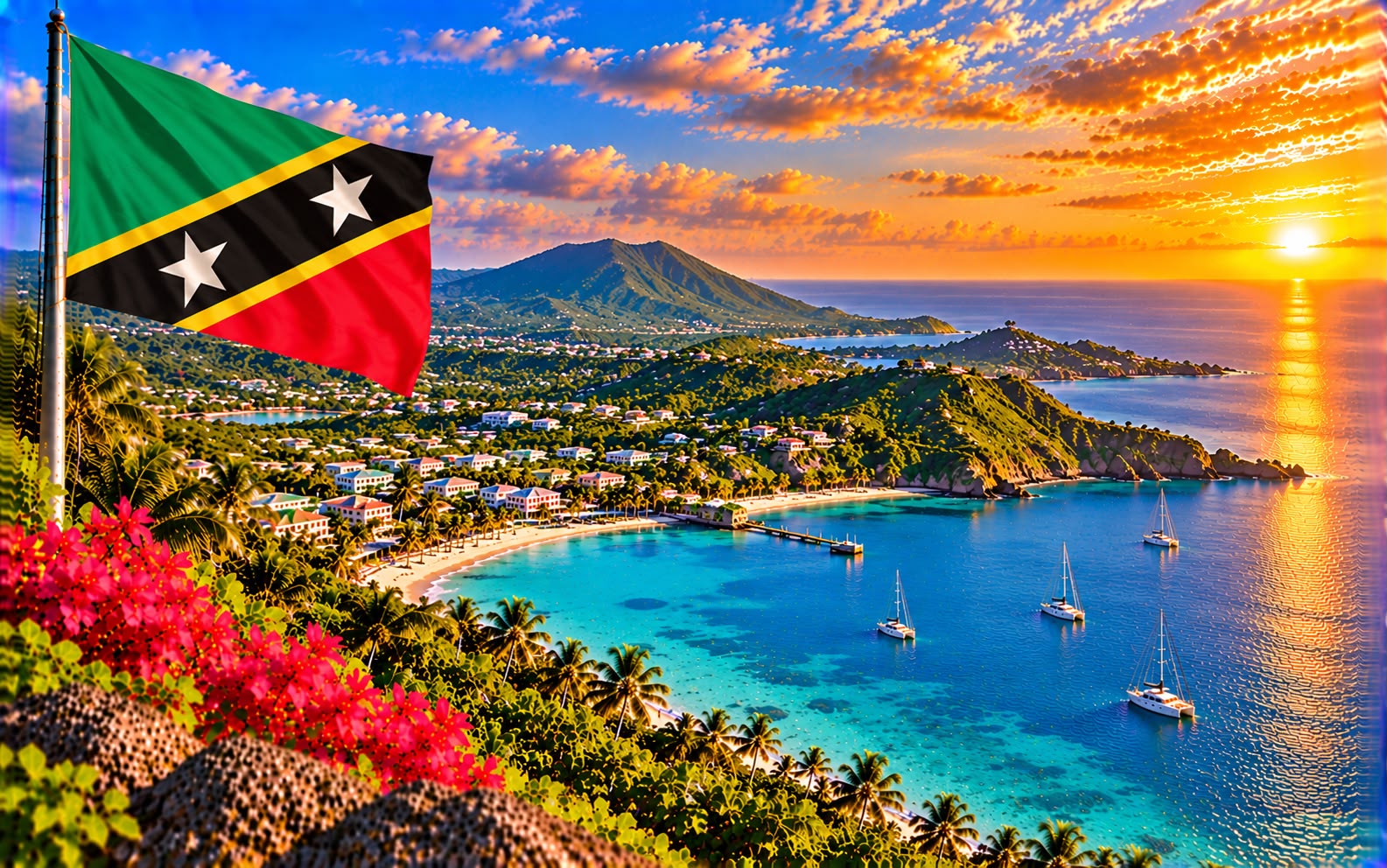
Saint Kitts and Nevis in 7 days: Brimstone Hill, the sugar train and Nevis Peak
The smallest country in the Americas, with a hilltop fortress on the UNESCO list, a narrow-gauge sugar railway that still circles the island, and the volcano Alexander Hamilton grew up under.
- The Caribbean
- 7 days
- ≈ AED 2,700 / person
- A fortress called the Gibraltar of the West Indies, and the last railway in the Caribbean
Before you go
Saint Kitts and Nevis is the smallest country in the Americas by both area and population — two volcanic islands three kilometres apart, with about 50,000 people between them.
Brimstone Hill Fortress is the reason to come. The British spent a century from the 1690s building it on a 230-metre volcanic outcrop, using enslaved African labour to cut and haul the stone, and it was called the Gibraltar of the West Indies. It is on the UNESCO list and the view from the citadel takes in Saba, Sint Eustatius, Saint Barthélemy and Nevis.
The railway is the other. Sugar built these islands and the narrow- gauge line was laid from 1912 to carry cane to the mill. The industry closed in 2005 and the railway survived as a passenger line — the last operating railway in the West Indies — running three hours around the island’s north with the volcano on one side and the Atlantic on the other.
Nevis is quieter, rounder and greener: a single volcano with a cloud permanently on it, ringed by a road, with Pinney’s Beach on the leeward side and a sugar-estate hotel tradition that is genuinely charming rather than branded. Alexander Hamilton was born here in 1755 or 1757, and his birthplace is the island’s museum.
Seven days. Figure XCD 2,000 (≈ AED 2,720) per person excluding flights. Go December–April; Carnival is around Christmas and New Year.
Before you go: the 15-minute admin
Getting between the islands
- The ferry from Basseterre to Charlestown takes 45 minutes, runs several times a day and costs a few dollars. Schedules change; check locally rather than online.
- A water taxi from Cockleshell Bay in the south-east is quicker and dearer.
- The islands are three kilometres apart at the narrowest, across The Narrows.
- Nevis has its own small airport with regional connections, but most visitors arrive via St Kitts.
Visas and money
- Many nationalities enter visa-free for short stays. Check your own case officially.
- The East Caribbean dollar (XCD), pegged to the US dollar at 2.70. US dollars are taken everywhere, usually at 2.60–2.65.
- Cards work in Basseterre, Charlestown and the resorts. Carry cash elsewhere.
Getting around
- Hire a car at around US$50 a day, driving on the left, with a local permit issued on your licence.
- One road rings each island, so navigation is simple.
- Minibuses run the ring roads cheaply and frequently on St Kitts, less so on Nevis.
- Vervet monkeys are everywhere — introduced by the French in the seventeenth century, and now reckoned to outnumber people. They cross roads without looking.
Travelling with kids?
- The railway is a three-hour ride with a commentary and a double-decker carriage, and it is a reliable hit.
- Pinney’s Beach and Cockleshell Bay are calm and shallow.
- Nevis Peak is not a family hike — it is steep, muddy and partly roped.
- The monkeys are entertaining and should not be fed.
Day by day
Day 1 — Basseterre
- Afternoon — Arrive; the airport is ten minutes from town.
- 16:00 — Basseterre: Independence Square, laid out in 1790 as a slave market and now a garden, the Berkeley Memorial clock at The Circus, and the Georgian and Victorian streets between them.
- 17:30 — The waterfront at Port Zante, and dinner.
Where to stay (four nights St Kitts, two Nevis)
- Mid-range: Frigate Bay, between the Caribbean and Atlantic beaches, twenty minutes from town.
Day 2 — Brimstone Hill and the north
- 09:00 — Up the leeward coast.
- 10:00 — Brimstone Hill Fortress. Allow two hours. The Fort George Citadel at the top is the best-preserved example of its kind in the Americas, and the interpretation is honest about who built it and how. The French took it after a month’s siege in 1782 and handed it back a year later.
- 13:00 — Lunch at Sandy Point or Dieppe Bay.
- 14:30 — Romney Manor and Caribelle Batik — a seventeenth- century estate with a 400-year-old saman tree, gardens, and batik being made on site. The estate was Thomas Jefferson’s great-great-grandfather’s.
- 16:30 — Black Rocks on the Atlantic coast, where lava from Mount Liamuiga ran into the sea and froze.
Day 3 — The scenic railway
- Morning or afternoon — The St Kitts Scenic Railway, three hours around the north of the island on 30-inch gauge track laid for the sugar industry from 1912. Double-decker carriages, open upper deck, a choir, and an unbroken run past abandoned mills, the volcano and the Atlantic cliffs.
- It is the last railway operating in the West Indies, and the reason it exists is that the sugar industry’s closure in 2005 left the track and somebody thought to use it.
- The other half — the south — is covered by bus, so the tour is a loop.
- Evening — Frigate Bay’s “Strip” at South Friars Bay, a row of beach bars, which is where the island goes on a Friday.
Day 4 — The south-east peninsula
- 09:00 — Down the peninsula road, opened in 1989 and the reason the south is developed at all.
- 10:00 — Cockleshell Bay and Majors Bay, looking straight across The Narrows at Nevis — the best beaches on St Kitts and calm enough for anything.
- 13:00 — Lunch on the sand.
- 15:00 — The salt ponds and the viewpoint at Timothy Hill, where you see the Atlantic and the Caribbean at once with the road between them.
- Optional — Mount Liamuiga, the 1,156-metre volcano, is a five-hour guided round trip to the crater rim through rainforest. Book it as a full day if you want it.
Day 5 — To Nevis
- Morning — Ferry to Charlestown, 45 minutes.
- Charlestown is a small Georgian port with a tamarind-shaded square and the Hamilton Museum on the waterfront — the house where Alexander Hamilton was born, rebuilt after an earthquake, now the island’s museum and its parliament upstairs.
- Afternoon — Pinney’s Beach, three miles of pale sand and palms on the leeward side, with Sunshine’s beach bar on it and the Killer Bee rum punch that has its own reputation.
Where to stay on Nevis (two nights)
- Character: the restored sugar-estate inns on the mountain slopes — Montpelier, Golden Rock, Hermitage — which are the island’s real speciality.
- Value: guesthouses in and around Charlestown.
Day 6 — Nevis
- 08:00 — Nevis Peak if you are climbing it: 985 metres, three to four hours return, extremely steep and muddy with ropes on the upper section. A guide is effectively required. The summit is usually in cloud; the forest is the reward.
- Or, gently: the Nevis Heritage Trail around the island, taking in the Bath Hotel and its hot springs — built 1778, among the oldest hotels in the Caribbean — the Jewish cemetery at Charlestown, and St John’s Fig Tree Church, where the register records Nelson’s marriage to Frances Nisbet in 1787.
- Afternoon — Oualie Beach or the Botanical Gardens, and the road round the island, which takes an hour if you do not stop and half a day if you do.
Day 7 — Back, and fly out
- Morning — Ferry to Basseterre.
- Afternoon — Port Zante for last shopping, and the airport ten minutes away.
Costs and practicalities
Best time to visit
December–April is the dry, breezy high season, with June–November the hurricane season.
- December–April — dry, 25–29°C, and peak. The best for the Mount Liamuiga climb and for the beaches.
- May–June — warm, quieter, still mostly dry, and the best value.
- July–August — hot and humid, with Culturama on Nevis at the start of August and St Kitts Music Festival in late June.
- September–October — the wettest and the peak of hurricane risk; some properties close.
- November–December — the rains ease, and the National Carnival, Sugar Mas, runs from late November to early January, peaking around Christmas and New Year.
The rainforest interior is wet in every month, which is why the Mount Liamuiga trail is muddy whatever the season.
Travel tips
- Driving is on the left and a local permit is required, issued on the spot with the hire.
- The East Caribbean dollar is pegged to the US dollar at about 2.70; US dollars are accepted at a rounder, worse rate.
- Brimstone Hill Fortress is UNESCO-listed and the best historic site in the eastern Caribbean — allow half a day and go early before the cruise groups.
- The ferry between St Kitts and Nevis takes 45 minutes and runs several times daily; the water taxi is faster and more expensive.
- The St Kitts Scenic Railway is the last remaining railway in the West Indies and runs on the old sugar line — touristy and genuinely good.
- Vervet monkeys outnumber people and will take food from an unattended table. Do not feed them.
- A 10% service charge plus VAT is standard. Check before tipping again.
What this trip actually costs
Two people, 6 nights, mid-range comfort, flights excluded:
| Item | Cost |
|---|---|
| Guesthouses and inns, 6 nights | XCD 2,200 (≈ AED 2,992) |
| Car hire, 4 days, fuel and permit | XCD 600 (≈ AED 816) |
| Scenic railway, two | XCD 700 (≈ AED 952) |
| Brimstone Hill, ferries, guides | XCD 350 (≈ AED 476) |
| Food and drink, 7 days | XCD 150 (≈ AED 204) |
| Total for two | XCD 4,000 (≈ AED 5,441) |
- Roughly XCD 2,000 (≈ AED 2,720) per person — about US$740 — at guesthouse level. The Four Seasons and the estate inns on Nevis are a different bracket.
- The railway is the single biggest excursion cost and is the thing people remember. Worth it.
- Brimstone Hill costs a few dollars and deserves two hours.
- Nevis’s estate inns are expensive but are the island’s real character; one night in one is a reasonable compromise.
- Hotel picks here are chosen on location, not on commission — always check prices and recent reviews before booking.
What to pack
- Reef-safe sun cream and a hat; both islands are exposed.
- Proper boots if you are climbing Nevis Peak or Mount Liamuiga — both are mud and rope.
- Insect repellent for the rainforest.
- Cash in EC for buses, the ferry and the beach bars.
- Something smart-casual for the estate inns, which still dress for dinner.
FAQ
Is the railway a tourist train or a real one? Both. The track was laid from 1912 to carry sugar cane and the industry closed in 2005; the passenger operation kept the line alive. It is the last operating railway in the West Indies.
Which island should I base on? St Kitts for the fortress, the railway and the beaches; Nevis for quiet and the estate inns. Four and two is a good split, and the ferry makes either workable.
How hard is Nevis Peak? Harder than its height suggests — steep, slippery, with fixed ropes near the top, and usually cloudy at the summit. Take a guide.
Is it really the smallest country in the Americas? Yes, by both area and population — about 261 square kilometres and around 50,000 people.
What language do they speak? English, with a local creole in everyday use.
Prices and entry rules change, and what you need depends on your passport; last checked 8 October 2026, so confirm with the embassy or your airline before booking.


