 The Itinerary
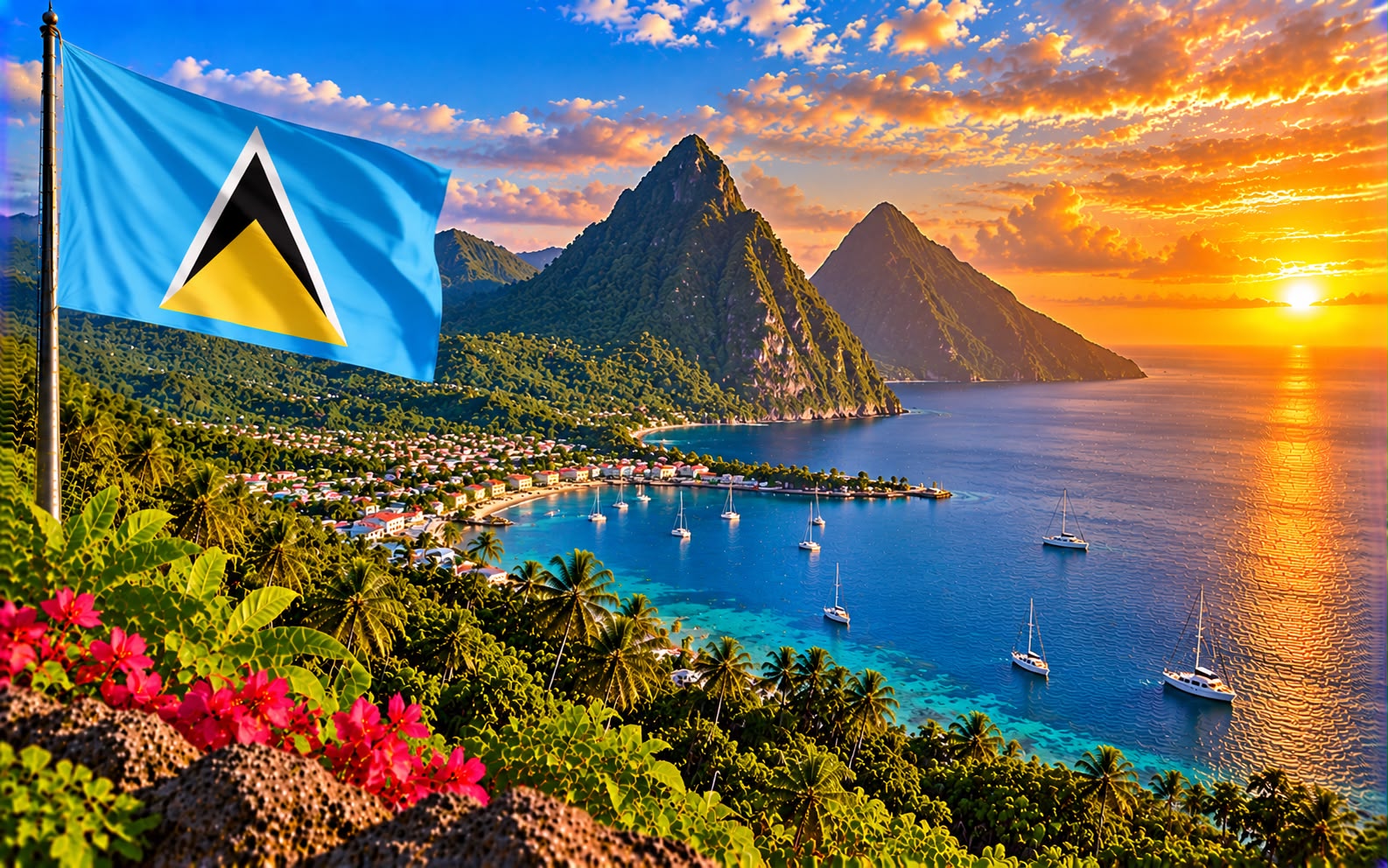
Saint Lucia in 7 days: climbing Gros Piton, the drive-in volcano and Marigot Bay
Two forested lava plugs standing 770 metres out of the Caribbean, a collapsed crater you drive into and bathe in, cocoa estates making chocolate where the beans grow — and the honest note on which coast is worth the money.
- The Caribbean
- 7 days
- ≈ AED 2,600 / person
- Two volcanic spires rising straight out of the sea, and a crater you can drive into
Before you go
Saint Lucia sells itself on one image and the image is accurate. The Pitons — Gros Piton at 770 metres and Petit Piton at 743 — are volcanic plugs rising almost vertically out of the sea on the south-west coast, forested to the summit, with the town of Soufrière between them. They are a UNESCO World Heritage Site and they are the reason most people come.
What is less well known is that they sit on the rim of a collapsed volcanic crater, and you can drive into it. The Sulphur Springs at Soufrière are marketed as the Caribbean’s only drive-in volcano, which is a stretch, but you do park a few metres from vents hissing sulphur, and bathe in the warm mud below.
The island also grows cocoa and makes chocolate from it on the estate, which is rarer than it sounds — most cocoa leaves the Caribbean as raw beans.
A word on geography, because it decides what your week is like. The north — Rodney Bay, Gros Islet — is where the restaurants, the nightlife and the flat beaches are. The south-west around Soufrière is where the scenery is, and it is an hour and a half of hairpins away. This itinerary splits the week between them rather than pretending one place does both.
Seven days. Figure XCD 1,900 (≈ AED 2,584) per person excluding flights. Go December–April; the Jazz Festival is in May.
Before you go: the 15-minute admin
Which airport, which coast
- Hewanorra (UVF) is in the south, at Vieux Fort, and takes the long-haul flights. It is ninety minutes from Soufrière and a full hour and a half to two hours from Rodney Bay in the north.
- George F. L. Charles (SLU) is in the north, at Castries, five minutes from Rodney Bay, and takes regional aircraft only.
- This matters more than anything else in your planning. Landing at Hewanorra and staying in the north means two long transfers bracketing your holiday.
- A water taxi or helicopter cuts the Hewanorra transfer. The helicopter is around ten minutes and is not cheap.
- Stay south first, north second, which is what this itinerary does and which uses the transfers properly.
Visas and money
- Many nationalities enter visa-free for short stays. Check your own case officially.
- The East Caribbean dollar (XCD), pegged to the US dollar at 2.70. US dollars are accepted everywhere, usually at 2.60–2.65, so paying in EC is marginally better.
- Cards work widely. Carry cash for the markets, buses and guides.
- A service charge of around 10% plus VAT is usually added to restaurant bills — check before tipping again.
Getting around
- Hire a car at around US$55–70 a day, driving on the left, with a temporary local permit issued on your licence.
- The west coast road is a sequence of hairpins over a mountain ridge. It is spectacular and slow; Castries to Soufrière is about an hour and a half for 40 kilometres.
- Minibuses run the main routes cheaply, stop anywhere, and do not run late.
- Taxis are unmetered — agree the fare first, every time. Rates to the main destinations are published and your hotel will know them.
Travelling with kids?
- The north’s beaches — Reduit, Pigeon Island — are calm and shallow.
- Sulphur Springs, the mud bath and the waterfalls work very well.
- Gros Piton is a real climb — two hours up, steep and rough. There is no minimum age but there is a reality.
- The west coast road makes some people carsick. Sit in front.
Day by day
Day 1 — Arrive, and south
- Afternoon — Land at Hewanorra. Drive north-west to Soufrière, about an hour.
- 17:00 — Settle in with the Pitons in front of you, which is the point of staying here.
- 19:00 — Dinner in Soufrière town, which is a working fishing town rather than a resort strip.
Where to stay near Soufrière (three nights)
- Mid-range: the hillside guesthouses above the town, several with Piton views for a fraction of the resort rate.
- Splurge: the hotels built into the ridge between the Pitons, which are the famous ones and are priced accordingly.
Day 2 — The volcano, the falls and the chocolate
- 08:30 — Sulphur Springs, before the cruise-ship buses. You drive into the old crater, walk a platform past vents and boiling grey pools, and then bathe in the warm sulphur mud downstream. It stains swimwear permanently — wear something you do not care about.
- 11:00 — Diamond Falls Botanical Gardens, where the waterfall runs over mineral deposits in orange, yellow and green, and the baths Louis XVI had built for his troops in 1784 are still fed by the hot spring.
- 13:30 — A cocoa estate — Fond Doux or Rabot — for lunch and a tree-to-bar tour. You roast, grind and temper your own bar, and the estates are working farms rather than demonstrations.
- 16:30 — Anse Chastanet or Sugar Beach for a swim under Petit Piton.
Day 3 — Gros Piton
- 06:30 — Climb Gros Piton from the trailhead at Fond Gens Libre, a village founded by escaped slaves. A guide is compulsory and the fee is fixed.
- Two hours up, steep the whole way, on rock steps and roots, with a halfway platform and a summit view back over Petit Piton and the whole south-west coast. Two hours down, which is harder on the knees.
- Petit Piton is the other one — shorter, much steeper, with ropes in places, and not open in the same way.
- 13:00 — Lunch, then the Tet Paul Nature Trail if your legs allow: forty-five minutes, easy, and arguably a better Piton view than the summit.
- 16:00 — Anse Mamin or a swim, and an early night.
Day 4 — North via Marigot Bay
- 09:30 — Drive north up the west coast.
- 10:30 — Marigot Bay, a narrow inlet behind a palm spit that the British navy is said to have hidden a fleet in by dressing the masts with palm fronds. It is the prettiest harbour in the Caribbean and takes twenty minutes to see.
- 12:30 — Castries — the Castries Market on a Saturday is the real thing, and the Cathedral of the Immaculate Conception is painted inside by Dunstan St Omer, who also designed the national flag.
- 15:00 — Rodney Bay, and the flat water of Reduit Beach.
Where to stay in the north (three nights)
- Mid-range: Rodney Bay village, walkable to the restaurants and the beach.
Day 5 — Pigeon Island and the north
- 09:00 — Pigeon Island National Landmark, a former island now joined to the shore by a causeway: ruined barracks, two hills with Fort Rodney on one, and a short steep climb to a view over Rodney Bay and across to Martinique on a clear day.
- 12:30 — Lunch at Gros Islet.
- 15:00 — Cas en Bas on the Atlantic side — windier, emptier, and good for riding horses along the sand.
- Evening — Gros Islet Friday Night Street Party, if it is a Friday. It is a genuine local jump-up rather than a hotel event, and the fish is cooked on the street.
Day 6 — The Atlantic side, or the water
Either — the east:
- Mamiku Gardens and the Atlantic coast at Micoud and Dennery, which almost no visitor sees, then the rainforest aerial tram or the Edmund Forest Reserve trail across the island’s spine.
Or — the water:
- A day sail down the west coast to the Pitons and back, which is the best way to see them, with snorkelling at Anse Cochon on the way.
- Diving at Anse Chastanet, where the reef starts a few metres off the beach.
Day 7 — Fly out
- Morning — Last swim at Reduit.
- Midday — Allow two hours to Hewanorra if you are flying long-haul, or ten minutes to George Charles for a regional connection.
Costs and practicalities
Best time to visit
December–April is the dry season and the obvious window, with June–November the hurricane season.
- December–April — dry, breezy, and peak. The best for the Gros Piton climb and the clearest views of the Pitons.
- May–June — the rains begin as short afternoon showers; good value and still very usable. The St Lucia Jazz Festival is in May.
- July–August — hot and humid, with Carnival in mid-July, which is the island’s biggest event.
- September–October — the wettest and the peak of hurricane risk. Some properties close.
- November — the rains ease and rates have not yet climbed.
The Pitons are often in cloud in any season — early morning is the most reliable time for a clear view, and the rainforest interior is wet year-round.
Travel tips
- Driving is on the left on steep, narrow, hairpinned roads with sheer drops. Many visitors take a driver; if you hire, take the extra insurance and a local permit.
- The Gros Piton climb requires a guide from the Fond Gens Libre interpretive centre — it is a steep four hours return and not a casual walk.
- The “drive-in volcano” at Sulphur Springs is a geothermal field, not a crater you drive into. The mud baths stain swimwear permanently; wear something old.
- The East Caribbean dollar is pegged to the US dollar at about 2.70, and US dollars are widely accepted.
- Check the cruise schedule before a Castries day — Pointe Seraphine and the market are transformed by ship arrivals.
- Water taxis between Soufrière and Marigot Bay are quicker and far more pleasant than the road.
- A 10% service charge plus VAT is standard on bills.
What this trip actually costs
Two people, 6 nights, mid-range comfort, flights excluded:
| Item | Cost |
|---|---|
| Guesthouses and hotels, 6 nights | XCD 1,900 (≈ AED 2,584) |
| Car hire, 6 days, fuel and permit | XCD 850 (≈ AED 1,156) |
| Gros Piton guide, Sulphur Springs, gardens | XCD 350 (≈ AED 476) |
| Cocoa estate, boat trip, Pigeon Island | XCD 400 (≈ AED 544) |
| Food and drink, 7 days | XCD 300 (≈ AED 408) |
| Total for two | XCD 3,800 (≈ AED 5,169) |
- Roughly XCD 1,900 (≈ AED 2,584) per person — about US$700 — at guesthouse level. The famous Piton-view hotels are several times this, and that is the single decision that sets your budget.
- Staying in Soufrière town rather than on the ridge buys the same view from a balcony for a fraction of the price.
- Entrance fees add up — the springs, the gardens, Pigeon Island and the Piton guide are all separate.
- Eat where the buses stop. Soufrière and Gros Islet both have excellent cheap food.
- Hotel picks here are chosen on location, not on commission — always check prices and recent reviews before booking.
What to pack
- Swimwear you will throw away for the sulphur mud, which stains permanently.
- Proper shoes for Gros Piton — it is rock and root, not a path.
- Reef-safe sun cream and a rash vest.
- Insect repellent for the rainforest and the evenings.
- Something smart-casual — the north dresses for dinner.
- A light rain layer for the interior, which catches cloud daily.
FAQ
Which airport should I fly into? Hewanorra (UVF) for long-haul, and plan your first nights in the south because it is ninety minutes from the north. George Charles (SLU) is in the north but takes regional flights only.
Can I climb both Pitons? Gros Piton is the one with an organised trail and a compulsory guide. Petit Piton is steeper, partly roped, and not generally offered.
Is it only for honeymooners? That is the marketing, and the island is genuinely good at it. The hiking, the cocoa estates and the Atlantic side are an entirely different and cheaper holiday.
Is the drive-in volcano really a volcano? It is a collapsed crater with active fumaroles and you do drive in. The “only drive-in volcano in the world” line is tourism copy; the sulphur is real.
What language do they speak? English is official and Kwéyòl is widely spoken at home. English everywhere you will go.
Prices and entry rules change, and what you need depends on your passport; last checked 8 October 2026, so confirm with the embassy or your airline before booking.


