 The Itinerary
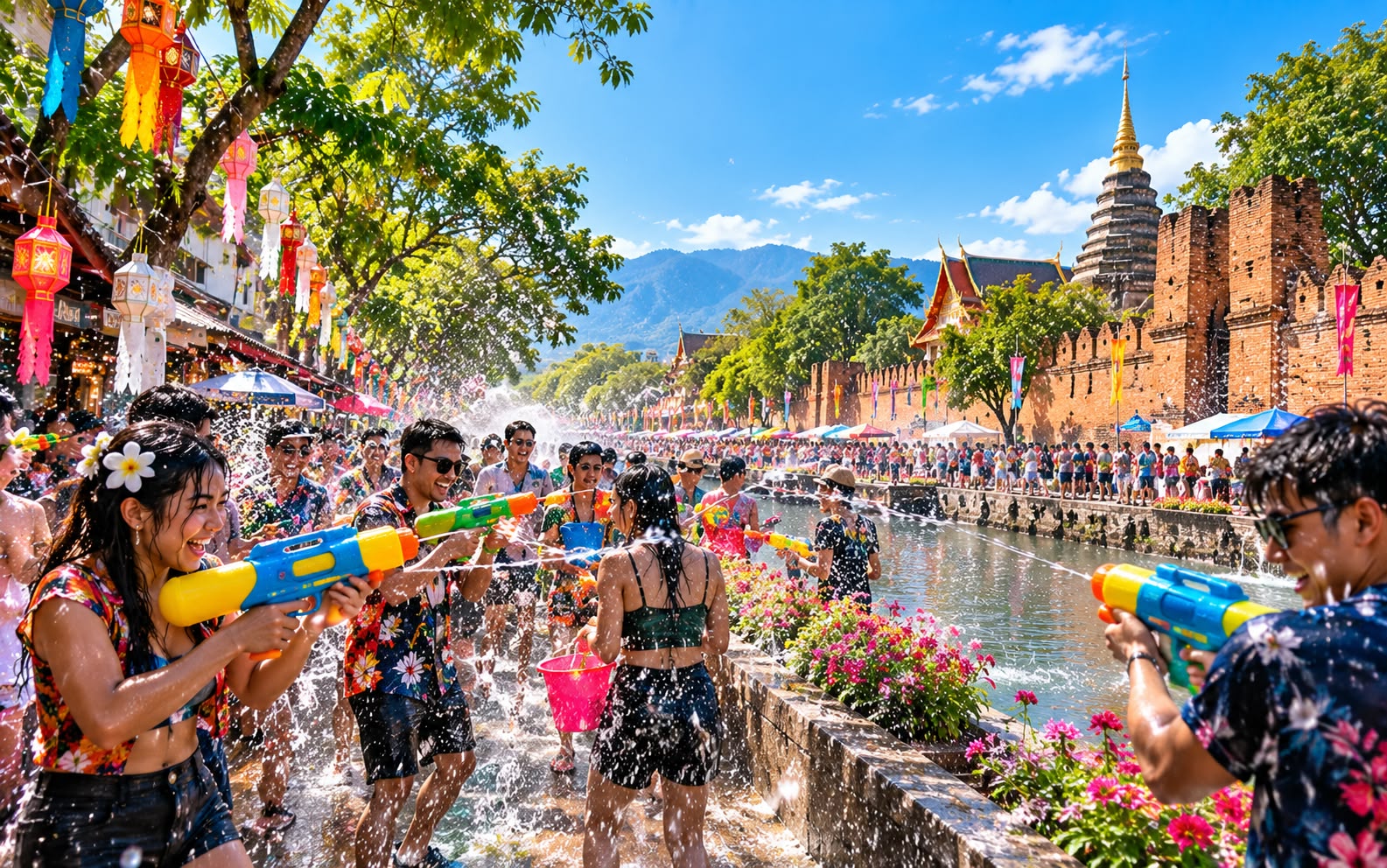
Songkran in 5 days: Bangkok and Chiang Mai, and how to survive it
Songkran runs 13 to 15 April nationwide and longer in Chiang Mai, where it is at its most serious. What actually happens, which streets to be on and which to avoid, how to protect a phone and a passport, and the road-safety statistic nobody mentions in the brochure.
- Southeast Asia
- 5 days
- ≈ AED 1,700 / person
- The largest water fight on earth, with the logistics worked out in advance
Before you go
Songkran is the Thai new year and it runs 13 to 15 April, with Chiang Mai generally going longer — often from the 12th or 13th into the 16th. The dates are fixed, which makes this the easiest festival on the site to plan around.
What it actually is: a water festival. The traditional form is pouring scented water over Buddha images and gently over the hands of elders as a blessing. The street form is a national water fight of genuinely enormous scale, fought with buckets, hoses and pressure guns, for three days, in 35°C heat.
The five-day Thailand route covers Bangkok and Ayutthaya normally. This is the same days rebuilt around the festival, with two nights in Bangkok and two in Chiang Mai, which is where Songkran is at its best and its wettest.
Figure THB 15,500 (≈ AED 1,696) per person. 13 to 15 April, every year.
Before you go: the admin
Entry
- Visa exemption for a long list of nationalities, commonly 60 days, including the GCC states, the EU, the UK and India.
- An online arrival card is required before travel.
- Six months’ passport validity.
- Last checked: 30 October 2026. Official sites only.
The things that catch people out
- You will get wet. There is no opting out. Walking down a street in a festival zone in dry clothes is not an available choice, and attempting it with a laptop bag is how electronics die.
- Carry nothing you mind losing. A waterproof pouch for phone, cash and cards, and leave the passport in the hotel safe — carry a photocopy.
- Water is thrown at everyone, including from pickup trucks at speed. Ice water is common and the shock is real.
- Powder and clay paste are smeared on faces. It is a blessing, not an assault — but it stings in eyes, and some people find the face-touching uncomfortable. A firm, smiling no is understood.
- Phones get destroyed every year. Double-bag.
Road safety, which is the serious part
- The days around Songkran are known in Thailand as the “seven dangerous days”, and the road toll rises sharply — drink-driving and motorcycles are the main causes.
- Do not ride a motorbike during Songkran. Not for an hour, not to the shop.
- Avoid long-distance road travel on the festival days. Fly between Bangkok and Chiang Mai, and book the flight months ahead — it is the busiest domestic travel week of the year.
- Roads are slippery, visibility is poor, and drivers are often soaked and distracted.
Practicalities
- Book accommodation and flights months in advance. Chiang Mai fills completely.
- Many businesses close for several days. Banks, offices and some restaurants.
- Temples remain open and are the calm version of the festival.
Day by day
Day 1 — Bangkok, before it starts
- Arrive on the 11th or 12th if you can. The day before is normal Bangkok and worth having.
- 09:00 — The Grand Palace and Wat Pho. Shoulders and knees covered, and go early.
- 13:00 — Wat Arun across the river, reached by a small ferry for a few baht.
- 16:00 — The Chao Phraya express boat at the end of the day.
- 18:00 — Buy your supplies. A water gun, a waterproof pouch and goggles, from any street stall. Goggles sound absurd and are not.
Day 2 — Songkran day one in Bangkok
- Morning: the traditional side. Go to a temple. Wat Pho or a neighbourhood wat — people bathe Buddha images with scented water and build small sand stupas. This is the part that explains the rest.
- Afternoon: pick your intensity.
- Silom — a long closed road, extremely crowded, the most intense version, and manageable because the Skytrain runs above it.
- Khao San Road — the backpacker epicentre, dense and chaotic.
- A neighbourhood soi — far gentler, families outside their houses, and the better choice with children.
- Keep to the edges if you want to leave. The middle of Silom is not somewhere you walk out of quickly.
- Evening — dry off and eat. Most restaurants off the festival streets run normally.
Day 3 — Fly north
- Morning — a quieter Bangkok corner, or the hotel pool.
- Midday — fly to Chiang Mai, about 75 minutes. Booked months ago.
- Afternoon — arrive and get your bearings. Chiang Mai’s festival centres on the moat around the old city — people draw water straight from it, and pickup trucks circle it with tanks in the back.
- The moat circuit is the main event and it runs for days.
- Evening — the old city, and a Northern Thai dinner. Khao soi is the dish here.
Day 4 — Songkran in Chiang Mai
- 07:00 — The procession. Buddha images are carried through the city and people line the route to pour water as they pass. This is the real thing and it is quiet, careful and moving.
- 10:00 — Wat Phra Singh and Wat Chedi Luang — sand stupas in the courtyards, decorated with paper flags.
- Afternoon — the moat. Join it or watch it. It is more good-natured than Bangkok and more relentless.
- Tha Phae Gate is the densest point.
- Evening — dry, eat, sleep. Three days of this is genuinely tiring.
Day 5 — The calm, and out
- The 16th is usually the comedown. Chiang Mai sometimes carries on; Bangkok has stopped.
- 09:00 — Doi Suthep, the temple on the mountain above the city — a 306-step naga staircase, and the city laid out below. Go in the morning for the view.
- 12:00 — A cooking class or the Sunday walking street if your dates catch it.
- Fly home from Chiang Mai rather than routing back through Bangkok, if the schedule allows.
Costs and practicalities
Best time to visit
13 to 15 April, with local variation.
- 13 to 15 April — the official national holiday, observed everywhere.
- Chiang Mai generally runs longer, often from the 12th or 13th through the 16th, and is widely considered the best place to experience it.
- Some regions have their own variants — Phuket, Pattaya and Khon Kaen all run festivals on slightly different dates.
- April is the hottest month of the Thai year, routinely 35–40°C. The water is not a hardship.
- The week before and after is ordinary Thailand at high-season prices and low-season heat.
- Outside April, the standard route covers the same cities, and November to February is the comfortable season.
Travel tips
- Fly between cities. Do not drive, and do not ride a motorbike. The road toll over these days is the single most serious risk of the trip.
- Book flights and hotels months ahead. This is the busiest domestic week of the year.
- Waterproof pouch, goggles, and nothing you mind losing.
- Photocopy the passport and leave the original in the safe.
- Go to a temple in the morning. It is the half of Songkran that explains the other half.
- Pick your street by intensity. A neighbourhood soi and Silom are different events.
- Do not throw water at monks, the elderly, or anyone clearly trying not to take part.
- Do not throw water at a moving motorbike. It causes crashes.
- Expect businesses to be shut for several days.
What this trip actually costs
Two people, 4 nights, mid-range hotels at festival rates, international flights excluded:
| Item | Cost |
|---|---|
| Bangkok hotel, 2 nights at Songkran rates | THB 8,000 (≈ AED 875) |
| Chiang Mai hotel, 2 nights | THB 7,000 (≈ AED 766) |
| Domestic flights, two people | THB 5,000 (≈ AED 547) |
| Water guns, pouches, goggles and temple entries | THB 2,000 (≈ AED 219) |
| Food and drink, 5 days | THB 9,000 (≈ AED 985) |
| Total for two | THB 31,000 (≈ AED 3,392) |
- Roughly THB 15,500 (≈ AED 1,696) per person, and the flights and the Chiang Mai rooms are where the festival shows. Both roughly double.
- The festival itself is free. A water gun costs a few hundred baht and the streets cost nothing.
- Book the domestic flight early. Prices on these dates climb steeply and the seats go.
- Hotel picks here are chosen on location, not on commission — always check prices and recent reviews before booking.
What to pack
- A waterproof phone pouch, and a spare.
- Goggles. Not optional if you intend to be on the streets.
- Quick-dry clothes and sandals with grip. Flip-flops on wet pavement are how ankles go.
- A dry bag for anything electronic.
- Sunscreen, which will wash off and need reapplying.
- A light layer for temples — shoulders and knees covered.
- A Type A/B/C adapter, 220V.
Part of a bigger trip?
- Thailand in 5 days is the same cities outside the festival.
- Thailand in 7 days adds Krabi.
- Chiang Mai in 3 days if the north is the trip.
- Bangkok in 3 days for the city alone.
- Thailand with kids is the family-paced version.
FAQ
When exactly is Songkran? 13 to 15 April every year, nationwide. Chiang Mai generally runs longer — often from the 12th or 13th into the 16th — and some regions hold their own variants on slightly different dates.
Bangkok or Chiang Mai? Chiang Mai, if you have to choose. The moat gives the whole city a natural arena, the morning procession is the real thing, and it is more good-natured. Bangkok’s Silom is more intense and easier to escape, because the Skytrain runs above it.
Can you avoid getting wet? Not in a festival zone. There is no polite exemption for tourists with dry clothes. If you want no part of it, stay in a hotel with a pool, use the Skytrain, and go out in the evening when it stops.
Is it safe? The water is harmless; the roads are not. These days are known in Thailand as the “seven dangerous days” and the road toll rises sharply. Do not ride a motorbike, do not take long road journeys, and fly between cities.
Is it suitable for children? In a neighbourhood street, yes, and Thai families take part together. Silom and Tha Phae Gate at peak are not — the crush is heavy, ice water gets thrown hard, and a small child will be overwhelmed.
Prices and entry rules change, and what you need depends on your passport; last checked 30 October 2026, so confirm with the embassy or your airline before booking.


