 The Itinerary
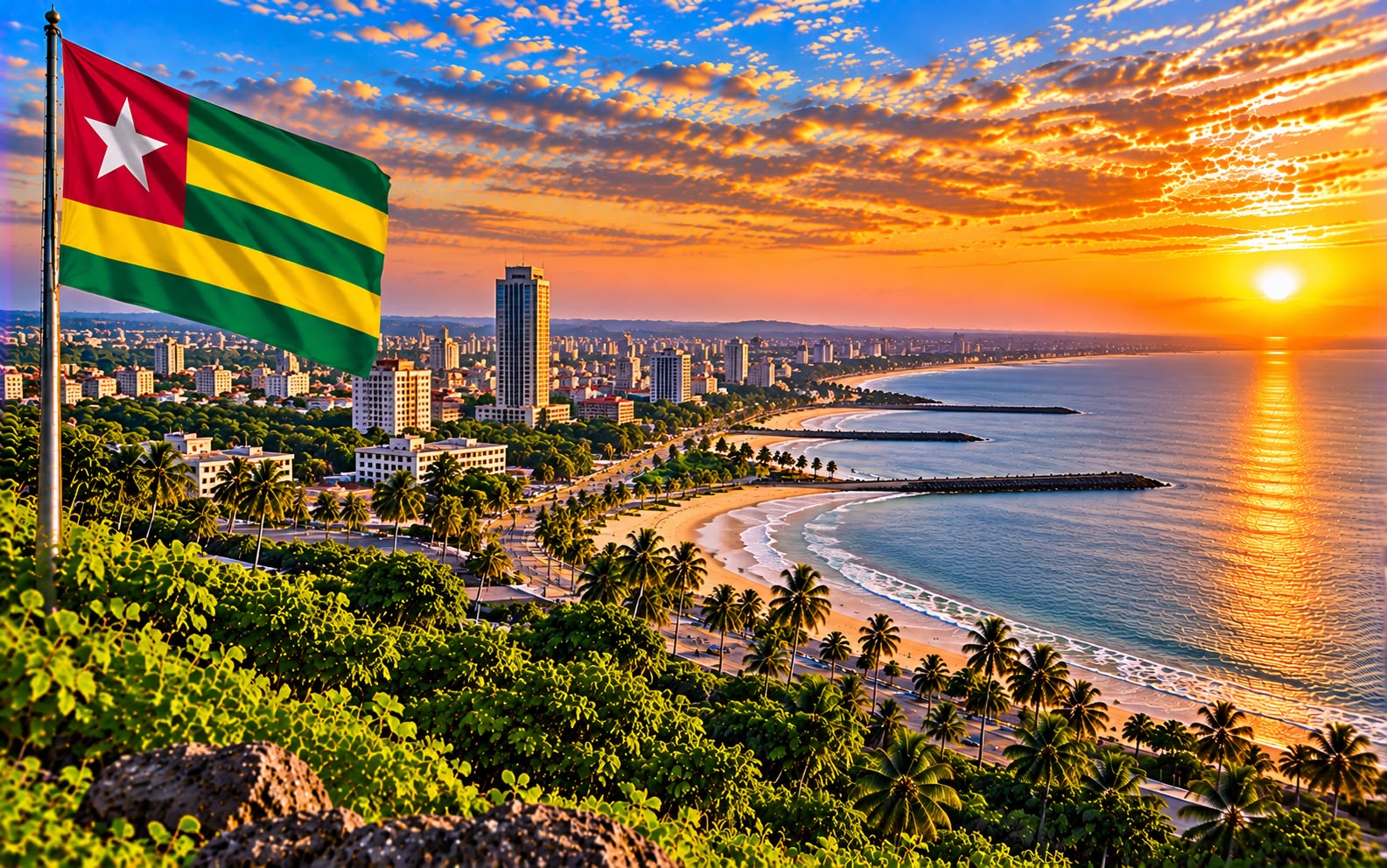
Togo in 7 days: Koutammakou's tower-houses, Kpalimé and the fetish market
Two-storey fortified houses of mud and straw that families still live in, a hill country of waterfalls and coffee, and a market in the capital selling the raw materials of Vodun by the sackful — in a country you can drive end to end in a day.
- West Africa
- 7 days
- ≈ AED 2,550 / person
- Fortified mud tower-houses on the UNESCO list, and the world's largest fetish market
Before you go
Togo is a 56-kilometre-wide strip running 550 kilometres inland, which means you can see the whole country in a week without hurrying, and the two ends of it are completely different places.
Koutammakou, in the north, is the reason to make the drive. The Batammariba people build takienta — fortified two-storey houses of mud and straw, with granaries on the roof, livestock below and living quarters above, each compound a small castle. The landscape is on the UNESCO list and it is not a preserved village: people live in these, now, and the building knowledge is still being passed on.
Kpalimé, in the hills north-west of the capital, is coffee and cocoa country — waterfalls, butterflies, the highest point in the country, and a cool green that is a relief after the coast.
And the Akodessewa fetish market in Lomé is the largest of its kind anywhere: a compound of stalls selling the raw materials of Vodun practice — skulls, hides, bones, roots, dried animals — by weight, to practitioners from across the region. It is confronting, it is entirely serious, and it is not staged.
Seven days. Figure USD 700 (≈ AED 2,571) per person excluding flights. Go November–March, the dry season.
Before you go: the 15-minute admin
Visas and vaccinations
- A visa on arrival is issued at Lomé airport for most nationalities, valid seven days and extendable at the immigration office in the city — which you will need to do for a week-long trip, so build in the hour. An e-visa is also available and avoids the errand.
- Yellow fever vaccination is compulsory and the certificate is checked on arrival.
- Malaria is present year-round. Prophylaxis is essential.
Money
- The West African CFA franc (XOF), pegged to the euro — the same currency as Benin, Senegal and Côte d’Ivoire, so leftovers travel.
- Bring euros in cash. Cards work at a few Lomé hotels; ATMs in Lomé are reasonably reliable and scarce elsewhere.
- Costs are low. This is one of the cheaper weeks in West Africa.
Getting around
- Hire a car with a driver. Around $100–120 a day. The north-south highway is tarred and in decent condition; the tracks in Koutammakou are not.
- Lomé to Kara is about seven hours. It is the long day of the trip and there is no way around it — domestic flights are not a practical option.
- Zemidjans — motorcycle taxis — are how Lomé moves, cheap and helmetless.
- Expect police checkpoints between regions. Carry passport and vaccination certificate.
Vodun, and how to behave
- Vodun is a living religion across southern Togo and Benin, not folklore. The fetish market is a supply trade for practitioners.
- Photography at Akodessewa is charged for and the fee is fixed at the entrance — pay it, and do not take pictures without agreeing first.
- At Togoville and the village shrines, follow your guide exactly. Some things may not be photographed and some places may not be entered.
- A guide is effectively required at both and is worth it.
In Koutammakou
- People live in the takienta you will be walking among. Entry to a compound is by invitation, arranged by your guide, and there is a village fee — pay it without haggling; it is the mechanism by which the community benefits.
- Ask before photographing people or houses.
- Climbing onto a roof terrace is usually offered and is the best part; take your shoes off if asked.
Travelling with kids?
- The drives are the limiting factor — Kara is a long day each way.
- Kpalimé’s waterfalls and butterflies work very well.
- The fetish market is genuinely confronting — dried animal parts in quantity — and is worth thinking about before taking a child in.
- High malaria risk.
Day by day
Day 1 — Lomé
- Afternoon — Arrive. The airport is 15 minutes out.
- 16:00 — The Grand Marché and the Nana Benz quarter — the women who built fortunes trading Dutch wax print cloth and were once among the richest traders in West Africa.
- 17:30 — The Independence Monument and the beach road, where the fishing boats land and the palms run along the Atlantic right past the city centre.
- 19:30 — Dinner. Togolese food is West African with a French edge, and Lomé has a genuinely good evening scene.
Where to stay in Lomé (three nights across the trip)
- Mid-range: the beach road east of the centre, or the streets behind the Grand Marché.
Day 2 — Akodessewa, and Togoville
- 09:00 — The Akodessewa fetish market, on the eastern edge of the city. The scale is the shock — tables of skulls, hides and dried animals stacked in the open, sold to Vodun practitioners from across the region, with healers on site who will explain what each thing is for. Pay the photography fee at the entrance.
- 11:30 — East to Lake Togo and across by pirogue to Togoville.
- 12:30 — Togoville is where the Germans signed the 1884 treaty that created the protectorate of Togoland. It is also a centre of Vodun, with shrines through the village and a cathedral built over them — the two coexisting openly, which is the point.
- 16:00 — Aného, the colonial capital until 1920, and the lagoon road back.
Day 3 — Kpalimé
- 08:00 — North-west into the hills, about two hours.
- 10:30 — Kpalimé, at the foot of the Plateaux region, surrounded by coffee, cocoa and forest.
- 11:30 — The Cascade de Womé, a waterfall in a cocoa plantation half an hour out, and a swim in the pool.
- 14:00 — Mount Agou, the highest point in Togo at 986 metres, with villages terraced up the side of it and a view to Ghana.
- 17:00 — The artisan centre in town, which is the best place in the country for carving and batik.
Where to stay at Kpalimé (one night)
- Simple: the hotels in town or the Château Viale, a German-era folly on the ridge above, if it is open.
Day 4 — North to Kara
- 07:00 — The long drive north, six to seven hours up the spine of the country through progressively drier country.
- 14:00 — Kara, the northern capital.
- 16:00 — The Kara market if the timing works, or rest. Tomorrow is the reason you came.
Where to stay at Kara (two nights)
- Mid-range: the hotels in town, which are simple and adequate.
Day 5 — Koutammakou
- 08:00 — East towards the Benin border, about an hour and a half, into the Koutammakou landscape.
- The takienta are the point: two-storey compounds of mud, straw and wood, with a flat terrace roof carrying the granaries, animals stabled in the base and the sleeping rooms above. Each is laid out on the same cosmological plan and each is built without a single right angle.
- Visit with a guide and by arrangement. You will be shown a compound by the family who live in it, climb to the roof, and have the layout explained — the shrine at the entrance, the division of space, how it was defended.
- 13:00 — Lunch in Nadoba, and the market there if it falls on the right day — it runs on a cycle, so ask.
- 16:00 — The Tamberma valley more widely, and the hills on the Benin side.
Day 6 — Back south
- 07:00 — The long drive south. Break it at Sokodé, the second city and a Kotokoli centre, or at Atakpamé.
- If the timing works, ask about the fire dance at Sokodé — a Tem tradition performed at festivals rather than on demand, and not something to expect.
- 16:00 — Lomé.
Day 7 — Lomé, and out
- Morning — The beach east of the centre, the Musée National in the Palais des Congrès, and the Village Artisanal for a last round of carving and cloth.
- Afternoon — Airport.
Costs and practicalities
Best time to visit
November–March is the main dry season, and Togo’s narrow north–south shape gives it two climates on one short road.
- November–February — the best months. Dry, with the harmattan hazing the light in December and January and cooling the nights in the north.
- March–April — hot and humid as the first rains approach in the south.
- April–July — the main rains in the south; Lomé and the coast are wettest in June.
- August — a short dry break in the south.
- September–October — the second rains in the south, and the end of the north’s single wet season.
Koutammakou, the Batammariba landscape of fortified tower-houses in the north, is UNESCO-listed and far easier to reach in the dry months. The Evala wrestling initiations in Kara fall in July.
Travel tips
- Togo is narrow and long — 550km north to south on one main road. The north and the coast are different countries climatically and culturally.
- Bring euros in cash. The CFA franc is pegged to the euro; ATMs are in Lomé and a few towns, and cards work at a handful of hotels.
- French is essential; Ewe and Kabye are the main local languages.
- The Akodessewa fetish market in Lomé is a working supply market for traditional medicine, not a curiosity. Photography requires a fee and permission, and it is not somewhere to browse casually.
- At Koutammakou you visit family compounds — ask permission, pay the village fee, and let your guide make the introduction.
- A yellow fever certificate is mandatory and malaria prophylaxis is essential.
- Zémidjan motorcycle taxis are the transport in Lomé. Agree the fare first and insist on a helmet.
What this trip actually costs
Two people, 6 nights, mid-range comfort, flights excluded:
| Item | Cost |
|---|---|
| Hotels, 6 nights | USD 420 (≈ AED 1,542) |
| Car with driver, 5 days | USD 550 (≈ AED 2,020) |
| Guides, village fees, entries, photography fees | USD 230 (≈ AED 845) |
| Food and drink, 7 days | USD 200 (≈ AED 735) |
| Total for two | USD 1,400 (≈ AED 5,142) |
- Roughly USD 700 (≈ AED 2,571) per person, which makes Togo one of the cheapest weeks in West Africa.
- The driver is the biggest line and splits well across four.
- Two of seven days are spent driving to and from Kara. If that is unappealing, a four-day southern loop — Lomé, Togoville, Kpalimé — is a good short trip, and Koutammakou can be reached more easily from northern Benin.
- Village and photography fees are small and are the mechanism by which communities benefit. Pay them.
- Hotel picks here are chosen on location, not on commission — always check prices and recent reviews before booking.
What to pack
- Yellow fever certificate — checked on arrival — and malaria prophylaxis.
- Euros in cash to change.
- Light, modest clothing, covered shoulders and knees for the villages and shrines.
- Strong repellent and long sleeves after dark.
- Walking shoes for Agou and the Koutammakou compounds.
- Small CFA notes for the village and photography fees.
FAQ
Is the fetish market exploitative to visit? It is a working wholesale market for practitioners, not a display, and visitors are a small part of its trade. The fee system is explicit. Go with a guide, pay what is asked, and do not photograph without agreeing.
Can I combine Togo with Benin? Very easily — Lomé to Cotonou is about two and a half hours and the border is straightforward. Koutammakou continues across the border into Benin as the Tamberma valley, so the two trips fit together naturally.
Is the drive to Kara worth it? If Koutammakou is why you are coming, yes. It is the only UNESCO cultural landscape of its kind and the houses are genuinely extraordinary. If you are short of time, do the south and reach Koutammakou from Benin another year.
Is Togo safe? Ordinary travel in the south and centre is straightforward. The far north near the Burkina Faso border has seen spillover from the Sahel and carries advisories — check your government’s current position, as Koutammakou sits within reach of the areas sometimes named.
What language do they speak? French is official, with Ewé in the south and Kabye in the north. English is limited.
Prices and entry rules change, and what you need depends on your passport; last checked 8 October 2026, so confirm with the embassy or your airline before booking.


