 The Itinerary
Turkey in 7 days: Istanbul and Cappadocia
Four nights in Istanbul and three in Cappadocia is the week that works — two cities, one hour of flying, and nothing else. The balloon booking that needs a spare morning, the museum pass arithmetic, and why the coast is a different trip.
- Middle East
- 7 days
- ≈ AED 4,150 / person
- Two places, one short flight, and the balloon morning you came for
Before you go
Seven days in Turkey means two places. Istanbul and Cappadocia, one short flight apart, and nothing else.
The coast — Antalya, Pamukkale, Ephesus — is a genuinely good trip and it is not this one. Adding it turns a week into a coach tour. The fourteen-day route does the Aegean properly.
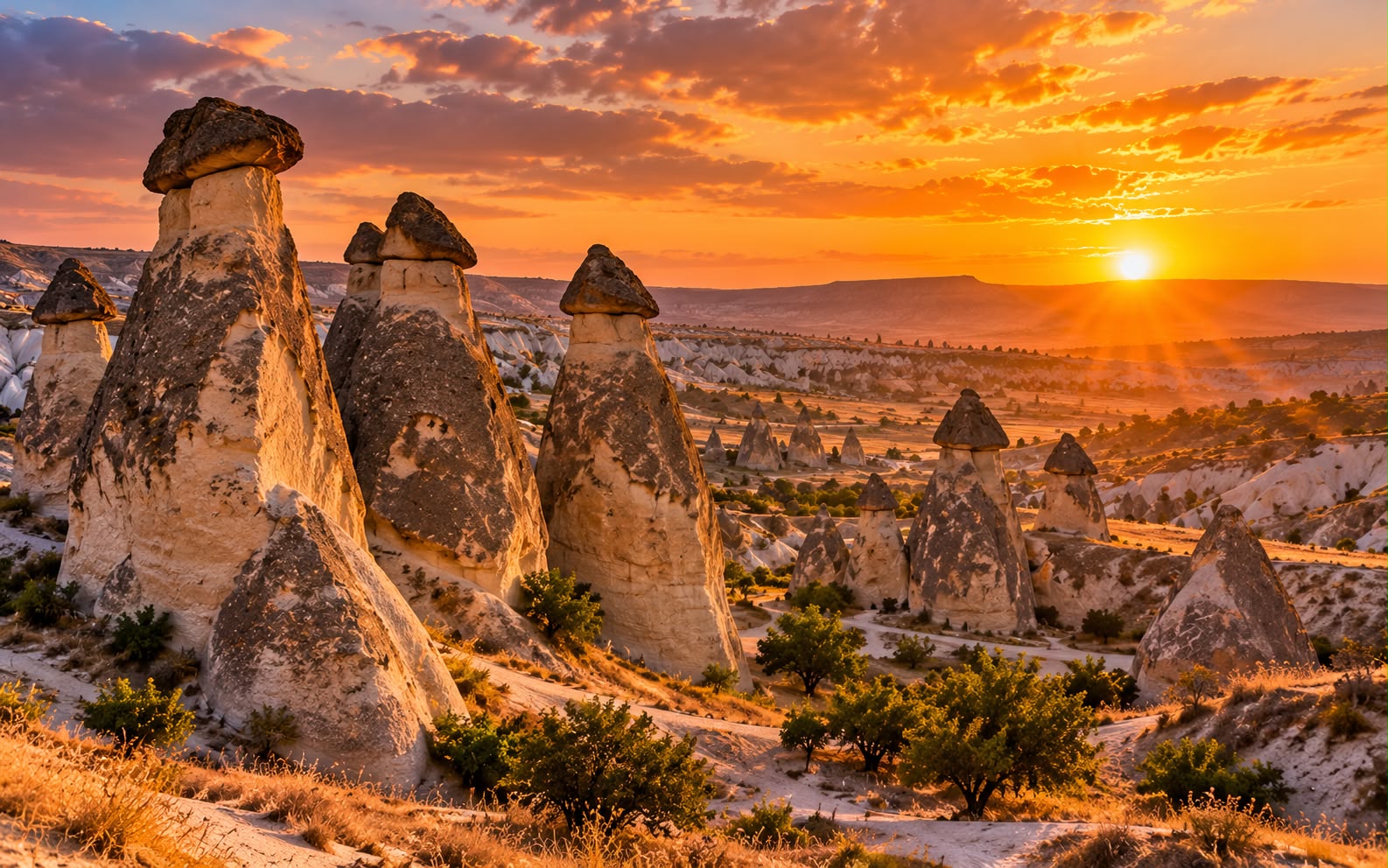
Istanbul is the only city on two continents and needs four nights rather than the two most people give it. Cappadocia is volcanic tuff eroded into valleys of cones and carved into underground cities, and the balloons at dawn are the single most photographed morning in the country.
Figure EUR 1,015 (≈ AED 4,156) per person. April to early June and September to October are the windows.
Before you go: the admin
Entry
- Many nationalities are visa-free; others use the e-Visa, which is applied for online in minutes and costs around US$50. Indian passport holders with a valid Schengen, UK or US visa can often use the e-Visa rather than a full embassy application — check the current rule on the official portal.
- Apply only on the government site. The search results are full of agents charging several times the fee.
- Six months’ passport validity beyond your departure.
The internal flight
- Istanbul to Cappadocia is 75 minutes. Fly into Nevşehir (NAV) or Kayseri (ASR) — Kayseri has more flights, Nevşehir is closer.
- Turkish Airlines, AJet and Pegasus all run it several times a day and it is cheap booked two weeks out.
- Istanbul has two airports. Istanbul (IST) on the European side and Sabiha Gökçen (SAW) on the Asian. Check which one your domestic flight leaves from — crossing the city between them takes 90 minutes and has caught out a lot of people.
- Hotels in Cappadocia include airport transfers more often than not. Ask before booking a separate one.
Money
- Turkish lira, and inflation has been high for several years, so prices quoted online may be out of date. Figures here are in USD for that reason.
- Cards work almost everywhere, including taxis and most market stalls.
- Carry some lira for mosques’ shoe bags, small cafés and tips.
- Get an Istanbulkart on arrival for trams, ferries, buses and the metro. One card can be tapped for several people.
Mosque dress, and the free bit people miss
- Shoulders and knees covered, shoes off, and a headscarf for women. Scarves are lent at the door of the major mosques.
- Mosques are free. The Blue Mosque, Süleymaniye and the New Mosque cost nothing; Hagia Sophia now charges foreign visitors.
- They close to visitors during the five daily prayers and for longer at Friday midday. Plan around the prayer times rather than arriving and being turned away.
Day by day
Day 1 — Sultanahmet
- 13:00 — Drop bags in Sultanahmet or Karaköy. Sultanahmet puts you inside the sights; Karaköy and Galata are where the city actually eats.
- 14:00 — Hagia Sophia — cathedral for 900 years, mosque for 500, museum for 80, and a mosque again since 2020. The upper gallery is where the Byzantine mosaics are, and most visitors never go up. Shoes off, heads covered for women, and it closes to visitors around prayer times.
- 16:00 — The Blue Mosque across the square: six minarets and 20,000 İznik tiles.
- 17:30 — The Basilica Cistern, 336 columns in a Roman underground reservoir, two of them standing on Medusa heads set sideways and upside down for reasons nobody has settled.
- 20:00 — Dinner in Karaköy, over the bridge.
Day 2 — Topkapı, and the bazaars
- 09:00 — Topkapı Palace at opening, and specifically the Harem, which is a separate ticket and the better half. Allow three hours for both. Closed Tuesdays.
- 13:00 — The Grand Bazaar: 4,000 shops, and closed Sundays. Walk through it rather than shopping in it — the better shopping is in the streets around it, where the same goods cost less.
- 15:30 — The Spice Bazaar and the streets behind it, which is where Istanbul actually buys its spices.
- 17:00 — Süleymaniye Mosque for the best view back over the Golden Horn, and far fewer people than Sultanahmet. Sinan’s masterpiece, and he is buried in the garden.
Day 3 — The Bosphorus and the Asian side
- 10:00 — The public commuter ferry to Kadıköy. It costs almost nothing and gives you the same view as the tour boats — the only difference is that nobody is narrating it.
- 11:00 — Kadıköy and Moda for the rest of the day. This is where Istanbul eats and drinks, and a morning here is worth more than another mosque.
- 16:00 — Back across, or carry on up the Asian shore to Üsküdar.
- 19:00 — A hamam. Çemberlitaş and Cağaloğlu are the historic ones — both sixteenth- and eighteenth-century, both touristed, and both still the real thing.
Day 4 — Balat, and the Golden Horn
- 10:00 — Balat and Fener for the painted houses and the Greek Orthodox patriarchate, which has been the seat of the Ecumenical Patriarch since the fifteenth century.
- 13:00 — Lunch in Balat, which has become the city’s best brunch quarter without losing its own population.
- 15:00 — The Chora Church (Kariye) nearby, whose mosaics and frescoes are the finest Byzantine work left anywhere.
- 18:00 — An early night. Tomorrow’s flight is before dawn.
Day 5 — Fly to Cappadocia
- 06:00 — Fly from Istanbul, about 90 minutes to Kayseri or Nevşehir, and you have the whole afternoon.
- 11:00 — Check into a cave hotel in Göreme, Uçhisar or Ortahisar. The rooms are carved into the rock and it is the point of staying here.
- 14:00 — Devrent and Paşabağ for the fairy chimneys and the hermit cones — the strangest landforms in the region and a gentle introduction.
- 17:30 — Uçhisar Castle at sunset, for the view over the whole region laid out below you.
- Confirm tomorrow’s balloon and set the alarm.
Day 6 — Balloons at dawn, and the valleys
- 04:30 — Collected for the balloons. Roughly 150 lift at first light over the valleys, and it is the thing people come for. Book before you arrive and build in a spare morning — flights are cancelled for wind perhaps one day in four, and most operators roll you to the next morning rather than refund.
- 08:00 — Breakfast back at the hotel.
- 10:00 — Göreme Open-Air Museum: rock-cut churches with Byzantine frescoes, UNESCO-listed. The Dark Church is a separate ticket and worth it — it was sealed for centuries and its frescoes survived because of it.
- 16:00 — The Red and Rose valleys on foot. The walk between them takes two hours and is the best free thing here, finishing as the rock turns the colour it is named for.
Day 7 — Underground, then out
- 09:00 — Derinkuyu or Kaymaklı underground city. Derinkuyu runs eighteen levels down and sheltered perhaps 20,000 people, with ventilation shafts, stables and a church. Not if you are claustrophobic — the connecting passages are genuinely tight and you go through them bent double.
- 12:00 — Avanos for the pottery, which is still worked on kick-wheels with clay from the Kızılırmak.
- 15:00 — Fly back to Istanbul, or straight home if your airline allows a Kayseri connection.
Costs and practicalities
Best time to visit
April to early June, and September to October.
- April–early June — wildflowers in the Cappadocian valleys, mild in Istanbul, and balloon flights at their most reliable. The best window of the year.
- September–October — warm, clear, the summer crowds gone, and the light in Cappadocia at its best.
- July–August — 35°C and more in both, with Istanbul humid and Cappadocia dry. Balloons still fly but the valleys are hard work by ten in the morning.
- November–March — cold, and Cappadocia under snow is extraordinary and has the highest balloon cancellation rate of the year. Istanbul is grey, wet and much cheaper.
Ramadan changes the rhythm of Istanbul rather than closing it, and the iftar crowds in Sultanahmet at sunset are worth seeing. Mosque visiting hours tighten.
Travel tips
- Book the balloon before you fly, and leave a spare morning. Cancellation for wind is routine, not exceptional.
- Check which Istanbul airport your domestic flight uses. IST and SAW are 90 minutes apart across the city.
- Buy an Istanbulkart at the airport and tap it for everyone in your party.
- Take the public ferry, not a Bosphorus cruise. Same water, a tenth of the price.
- Mosques are free and close during prayers. Check the times for the day rather than turning up.
- Apply for the e-Visa on the official government site only.
- A taxi should run the meter. If it does not, get out — or use BiTaksi or Uber, which both work in Istanbul.
- Carpet shops that begin with a free tea and a long story end with a hard sell. That is not a reason to avoid them, only to know which conversation you are in.
What this trip actually costs
Two people, 6 nights, mid-range comfort, international flights excluded:
| Item | Cost |
|---|---|
| Hotels, 6 nights including a cave hotel | EUR 740 (≈ AED 3,030) |
| Balloon flight, museums and entries | EUR 460 (≈ AED 1,884) |
| Food and drink, 7 days | EUR 410 (≈ AED 1,679) |
| Istanbul–Cappadocia flights, two people | EUR 280 (≈ AED 1,146) |
| Local transport, transfers and the Istanbulkart | EUR 140 (≈ AED 573) |
| Total for two | EUR 2,030 (≈ AED 8,312) |
- Roughly EUR 1,015 (≈ AED 4,156) per person. The balloon is the single biggest discretionary line at roughly US$180–250 each and is the thing most people are here for.
- Hagia Sophia and Topkapı now charge foreign visitors separately and have risen steeply; the mosques are still free.
- A cave hotel costs more than a normal room and is worth it for three nights.
- Hotel picks here are chosen on location, not on commission — always check prices and recent reviews before booking.
What to pack
- A scarf — for mosques, and for the balloon basket at dawn, which is cold.
- Shoes that come off easily, repeatedly, all day.
- A warm layer whatever the month. Cappadocia is at 1,000m and the dawn launch is near freezing even in spring.
- Walking shoes with grip for the valleys and the underground cities.
- Sun protection; the valleys have no shade.
- A Type C/F adapter, 230V.
FAQ
Is seven days enough for Turkey? For Istanbul and Cappadocia, yes, and that is the right pair. It is not enough to add Ephesus, Pamukkale and the coast without the week becoming transport.
How many nights in Cappadocia? Three. Two works only if the balloon flies on your first morning, and roughly one morning in four is cancelled for wind.
Is the balloon worth it? It is the most expensive two hours of the week and almost nobody regrets it. Book the first available morning and keep a spare.
Istanbul or Cappadocia first? Istanbul. It absorbs jet lag better, and it means the balloon has two possible mornings rather than one.
Do I need a guide? No. Istanbul is straightforward on public transport and Cappadocia’s sites are signposted and walkable. A guided day for the underground cities and the valleys is worth it if you want the history rather than the photographs.
Prices and entry rules change, and what you need depends on your passport; last checked 26 October 2026, so confirm with the embassy or your airline before booking.


