 The Itinerary
The UAE in 10 days: Dubai, Abu Dhabi, Ras Al Khaimah and Fujairah
Ten days is enough to leave the two big cities behind: the oasis at Al Ain, the highest mountain in the country at Jebel Jais, and the Gulf of Oman coast at Fujairah, where the diving is and the crowds are not. A hire car, five bases, and the week most UAE visitors never have.
- Middle East
- 10 days
- ≈ AED 4,700 / person
- All seven emirates' worth of country, including the mountains and the east coast nobody visits
Before you go
Almost every UAE trip is Dubai, with a day in Abu Dhabi. Ten days is enough to see the country, and the parts outside the two big cities are genuinely different — mountains, an oasis city, and an east coast on a different sea.
Dubai for three nights, Abu Dhabi for two, Al Ain for one, Ras Al Khaimah for two and Fujairah for one. A hire car makes it work; the distances are small and the roads are superb.
Five days is Dubai and Abu Dhabi; seven is the two cities properly.
Figure AED 4,700 per person. November to March, and outside those months the outdoor half of this does not work.
Before you go: the admin
Entry
- Many nationalities get a free visa on arrival — GCC, UK, EU, US and around 60 others.
- Indian passport holders need a visa, though holders of a valid US visa or green card, or a UK or EU residence permit, can get a 14-day visa on arrival.
- Six months’ validity.
The car
- Hire one. The emirates are 90 minutes apart at most, the roads are excellent and the alternative is a lot of intercity buses.
- An international driving permit is required alongside your licence for most nationalities; GCC and some others can drive on theirs.
- Salik and Darb tolls are automatic gantries in Dubai and Abu Dhabi and are billed to the hire company — budget for them.
- Speed cameras are everywhere and unforgiving. Fines reach the hire company and are passed on with a handling charge.
- Fuel is cheap by any standard.
Money
- Dirhams, pegged to the dollar at about 3.67. Cards everywhere.
Conduct
- Alcohol is served in licensed hotels and bars, and the licensing is stricter in Sharjah, which is dry. Plan accordingly if you drive through it.
- Dress modestly away from beaches and hotels, particularly in Sharjah and the northern emirates.
Day by day
Day 1 — Old Dubai
- 15:00 — Al Fahidi, the wind-tower quarter, which is the oldest surviving part of the city and takes an hour on foot.
- 16:30 — The creek by abra, which costs one dirham and is the best value in the UAE, over to the Gold and Spice Souks in Deira.
- 19:00 — The Dubai Fountain, which is free, every half hour from six.
- 20:00 — The Burj Khalifa, booked ahead — sunset slots cost most and sell first, so an hour after dark is the value choice and the view is the same.
Day 2 — Culture, and the beach
- 10:00 — The Sheikh Mohammed Centre for Cultural Understanding for an Emirati meal with questions encouraged — their motto is “open doors, open minds” and they mean it. Book the breakfast or lunch sitting.
- 13:00 — Etihad Museum or the Museum of the Future, depending on which direction your interest runs.
- 16:00 — Kite Beach or JBR, both public and free.
- 19:00 — Dinner on the beach, which is where Dubai actually relaxes.
Day 3 — The desert
- 15:00 — An evening desert safari in a conservation reserve — DDCR or Al Marmoom — rather than the cheapest roadside operator, whose dune-bashing is both worse and worse for the dunes.
- 17:30 — Sunset over the dunes, falconry, and camels.
- 20:00 — Dinner in camp, and the stars once the generator lights go down.
- Pick up the hire car in the morning.
Day 4 — Down to Abu Dhabi
- 09:00 — Ninety minutes down the E11.
- 11:00 — Sheikh Zayed Grand Mosque — 82 domes, the largest hand-knotted carpet in the world, and free to enter. Dress code is enforced: ankles, wrists and hair covered for women, long trousers for men. Abayas are lent at the entrance and the queue for them is long.
- 15:00 — Qasr Al Watan, the presidential palace, open to visitors, and far more interesting than it sounds.
- 18:00 — The Corniche for the evening.
- 20:00 — Al Mina fish market for dinner — you pick it, they cook it.
Day 5 — Saadiyat and Yas
- 10:00 — Louvre Abu Dhabi on Saadiyat: Nouvel’s perforated dome and its “rain of light”, with the collection arranged by era across civilisations rather than by country, which is the whole argument of the building.
- 14:00 — Yas Island — Ferrari World, Warner Bros and Yas Waterworld — if you have children. If not, Saadiyat beach instead.
- 19:00 — Back to the Corniche, or on towards Al Ain tonight to save tomorrow’s drive.
Day 6 — Al Ain
- 08:30 — Ninety minutes inland, to the UAE’s only inland city.
- 10:00 — Al Ain Oasis — 147,000 date palms under UNESCO protection, and the falaj irrigation channels that have run for three thousand years. Shaded, cool and almost silent, which after five days of city is the point.
- 13:00 — Al Jahili Fort, and the camel market, which is a working market and not a show — go in the morning if you want it busy.
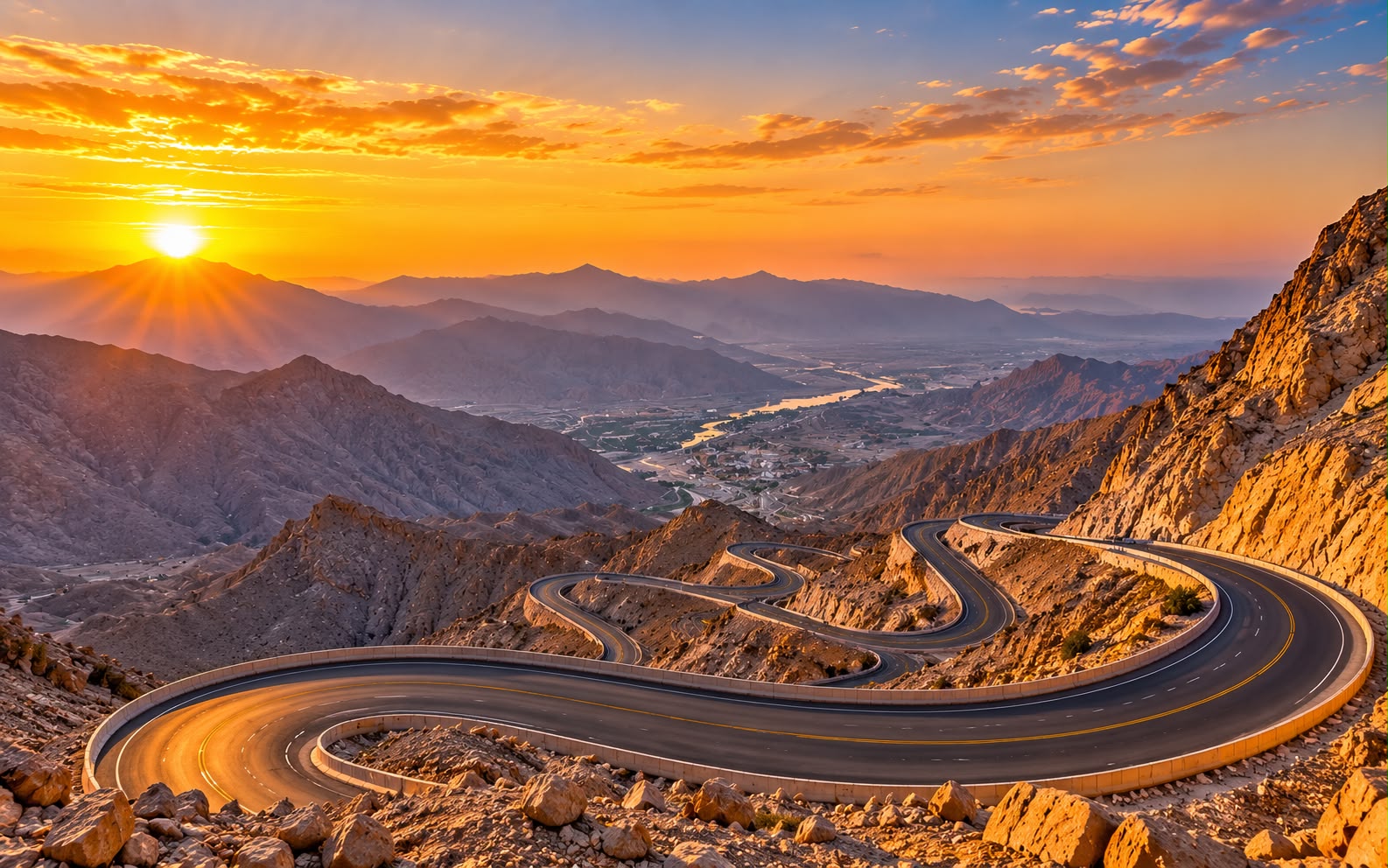
- 16:30 — Jebel Hafeet, 1,249m, up one of the best drives in the Gulf: eleven kilometres, 60 corners, and the whole country laid out at the top. Go for sunset.
Day 7 — North to Ras Al Khaimah
- 09:00 — Two hours north, past Sharjah and Ajman.
- 13:00 — Al Jazirah Al Hamra, an abandoned pearling village of coral-block houses, left when the pearl trade collapsed — and genuinely eerie. Go in daylight.
- 16:00 — Dhayah Fort, a hilltop fort above the date palms, reached by 239 steps, and the only fort in the UAE on a natural hill.
- 18:00 — The RAK beaches, quiet and long.
Day 8 — Jebel Jais
- 09:00 — Jebel Jais, the highest mountain in the UAE at 1,934m, with a road to the summit and temperatures ten degrees below the coast.
- 11:00 — The Jais Flight zipline, the longest in the world at 2.83km, reaching 150km/h. Book ahead.
- Or the Jais Sky Tour and the viewing deck, if the zipline is too much — the view is the same and you keep your lunch.
- 16:00 — The drive down at the hour the rock turns orange.
Day 9 — Over to Fujairah
- 09:00 — Across the mountains, 90 minutes, to the Gulf of Oman — a different sea, with coral and clear water. The drive over the Hajar mountains is the reason to do this by car.
- 11:00 — Al Bidyah Mosque, the oldest in the country, built around 1446 of mud and stone, with four domes on a single pillar.
- 13:00 — Snorkelling or diving at Snoopy Island off Al Aqah, the best accessible reef in the UAE — you swim to it from the beach.
- 17:00 — Fujairah Fort, and the Friday market on the mountain road, which runs all week despite the name.
Day 10 — Back to Dubai, and out
- 10:00 — Ninety minutes back across the mountains.
- Drop the car, and the airport is on the metro if you have time to spare.
Costs and practicalities
Best time to visit
November to March, without qualification.
- November–March — 22–30°C, dry, and the mountains at Jebel Jais are cold enough for a jacket. Everything in this itinerary works.
- December–January are peak for hotel rates, especially New Year.
- April and October — 32–38°C, workable early and late, much cheaper.
- May–September — 40–48°C with August humidity. The oasis, the mountains, the desert and the beaches are all unusable in the middle of the day. Hotels are half price for good reason.
Ramadan shifts the day: daytime eating and drinking in public is not done, many restaurants close until sunset, and the evenings are at their most alive. Rates fall.
Travel tips
- Hire the car for days four to ten, not from the airport — you will not want it in Dubai.
- Carry an international driving permit unless your licence is exempt.
- Sharjah is dry. No alcohol is served or sold there at all.
- Dress for the Grand Mosque — strictly enforced, and the lent-abaya queue is long.
- Jebel Jais is 10°C colder than the coast. Take a jacket.
- Book the zipline ahead; it runs limited slots and closes in wind.
- Watch the speed cameras. Fines follow you to the hire company.
- Friday mornings are quiet across the country.
What this trip actually costs
Two people, 9 nights, mid-range comfort, international flights excluded:
| Item | Cost |
|---|---|
| Hotels, 9 nights across five bases | AED 4,400 |
| Food and drink, 10 days | AED 2,000 |
| Attractions, desert safari, mosque and zipline | AED 1,600 |
| Car hire, fuel and tolls | AED 1,000 |
| Airport transfers and city transport | AED 400 |
| Total for two | AED 9,400 |
- Roughly AED 4,700 per person. Accommodation is most of it, and the northern emirates are markedly cheaper than Dubai and Abu Dhabi for the same standard.
- Alcohol is the hidden cost at AED 40–60 a drink, and it is unavailable in Sharjah at any price.
- December and early January run well above this.
- Hotel picks here are chosen on location, not on commission — always check prices and recent reviews before booking.
What to pack
- Modest clothing for the old quarters, the mosque and the northern emirates — shoulders, knees and a scarf.
- A warm layer for Jebel Jais, which is genuinely cold at the top.
- Reef shoes and a snorkel for Snoopy Island.
- Sun protection and a hat in any month.
- Comfortable walking shoes and swimwear.
- A Type G adapter — the UK three-pin.
FAQ
Is ten days too long for the UAE? Not if you leave Dubai. Al Ain, Ras Al Khaimah and the east coast are a different country from the two big cities, and almost no visitors see them.
Do I need a car? For this route, yes. Intercity buses exist and are cheap, but Jebel Jais, the oasis and the mountain road to Fujairah are not practical without one.
Which emirate has the best beaches? Fujairah for clear water and coral; Ras Al Khaimah for long, quiet sand; Dubai for facilities. The east coast is the one most visitors never reach.
Is Sharjah worth stopping in? For the museums, yes — the Museum of Islamic Civilization is the best of its kind in the country. Know that it is dry before you plan an evening there.
How cold is Jebel Jais? Ten degrees below the coast, so 12–18°C in winter and genuinely cold after dark. People are regularly caught out in shorts.
Prices and entry rules change, and what you need depends on your passport; last checked 29 October 2026, so confirm with the embassy or your airline before booking.


