 The Itinerary
Angola in 8 days: Kalandula Falls, the Tundavala gap and the Namibe desert
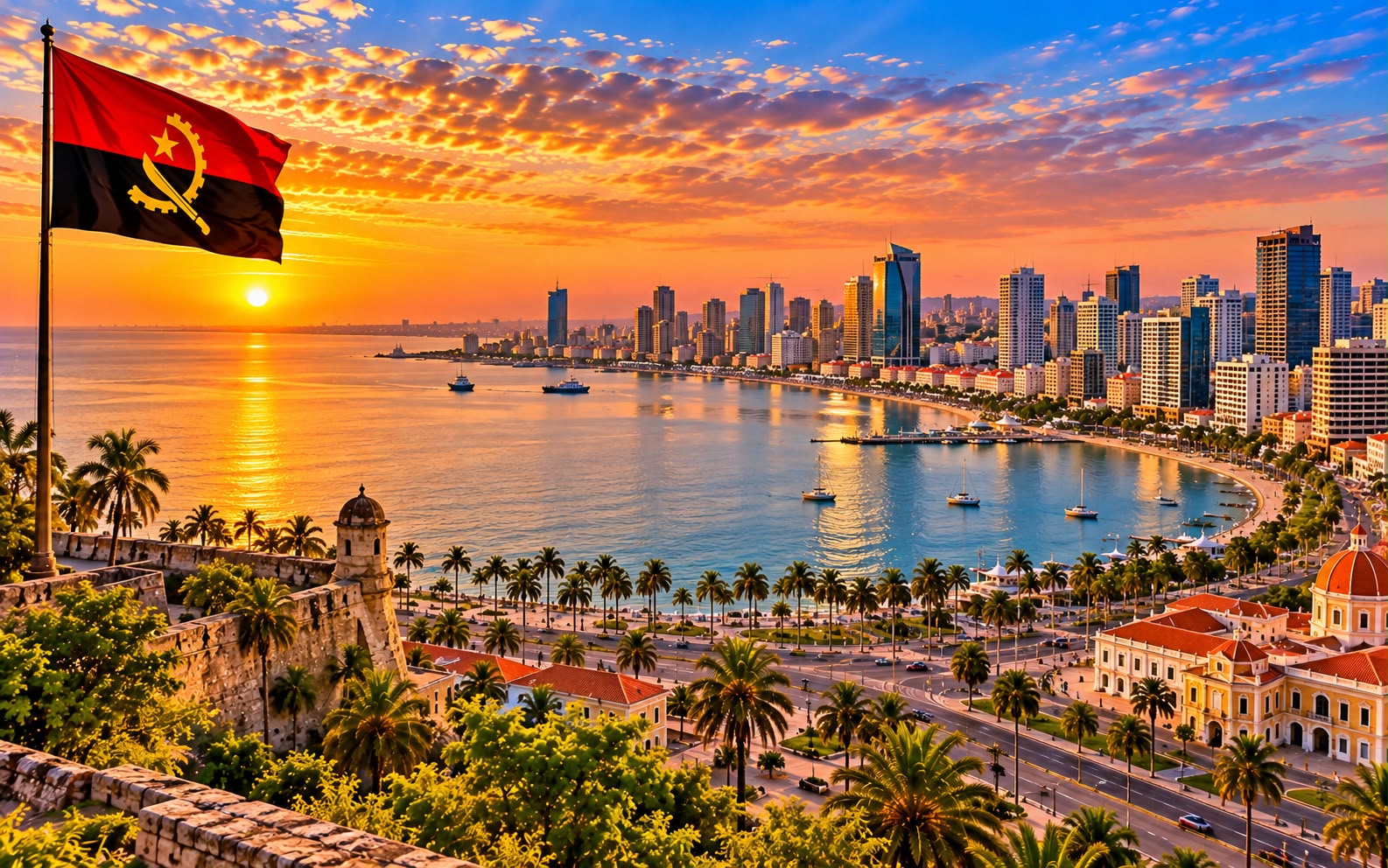
A waterfall four hundred metres wide, an escarpment that simply stops and drops a kilometre, a desert where plants live two thousand years, and a Portuguese colonial coast — in a country that quietly dropped its tourist visa and that almost nobody has got round to visiting yet.
- Southern Africa
- 8 days
- ≈ AED 5,050 / person
- One of Africa's great waterfalls, and a cliff edge with a kilometre of nothing below it
Before you go
Angola spent twenty-seven years at war with itself, ending in 2002, and spent most of the two decades after that being difficult to enter. Then it abolished tourist visas for dozens of nationalities, and became one of the easiest countries in central Africa to reach and one of the least visited anywhere.
Kalandula is the reason most people go. One of the largest waterfalls in Africa by volume, roughly four hundred metres across and a hundred metres high, in a horseshoe of red rock and forest in Malanje province. There is no fence, no ticket office of any consequence, and frequently nobody else.
Tundavala is the other. The Angolan highlands run south at around 2,200 metres and then simply stop — a gap in the escarpment where the ground falls away over a kilometre to the coastal plain. You walk to the edge. There is nothing between you and it.
Between and beyond: the Pedras Negras, black monoliths rising out of farmland at Pungo Andongo; the Serra da Leba, a pass of stacked hairpins that is on the back of the banknotes; and the Namibe desert, where welwitschia plants that live for a thousand years and more sit in gravel between the dunes and the Atlantic.
Luanda is expensive, chaotic and worth two days — a Portuguese fort above the bay, a seafront promenade, and the best museum on the slave trade on this coast.
Eight days does the classic loop. Figure USD 1,380 (≈ AED 5,068) per person excluding flights — this is not a cheap country. Go May–September, the dry, cooler half.
Before you go: the 15-minute admin
The visa, which is easier than its reputation
- Angola dropped tourist visa requirements for a long list of nationalities — including most of the EU, the UK, the US and others — allowing visa-free entry for short stays. This changed recently enough that a lot of published advice is out of date.
- Others can apply for a pre-visa or e-visa online, which is straightforward by regional standards.
- Check your own case on the official Angolan immigration site, not on a travel forum — this is the detail most likely to be wrong elsewhere.
- Yellow fever vaccination is required, and the certificate is checked. Carry it with your passport.
Money, and why Luanda costs what it does
- The kwanza (AOA). Bring US dollars or euros in cash to change; card acceptance is limited and foreign cards are unreliable at ATMs.
- Luanda has repeatedly been ranked among the most expensive cities in the world for expatriates, and while that measures imported goods rather than a traveller’s basket, it is felt in hotel rates and restaurant bills. Outside the capital, prices drop sharply.
- There is an official rate and a street rate; ask your hotel rather than a stranger.
- Keep cash in reserve. Away from Luanda and Lubango there is very little banking.
Getting around, which is most of the planning
- Domestic flights are what make eight days work. TAAG links Luanda with Lubango and Namibe; the drive south is well over a thousand kilometres.
- Hire a 4WD with a driver for Malanje and for the south. Roads range from excellent new Chinese-built highway to washed-out track, sometimes within the same hour.
- Distances are large and fuel stops are sparse. Fill up when you can.
- Expect police checkpoints. Carry your passport and your vaccination certificate; let the driver talk.
- Self-driving is for the experienced and well-prepared only.
SIM and data
- Unitel and Africell sell SIMs; bring your passport. Data is reasonably priced.
- Coverage follows the main roads and the cities, and disappears in Malanje’s back country and the Namibe.
Language
- Portuguese, and almost nothing else. English is spoken in a handful of Luanda hotels and essentially nowhere in the interior.
- This is the single biggest practical difference between Angola and the more-travelled parts of Africa. A Portuguese-speaking guide or driver is not a luxury here.
Photography and officials
- Do not photograph government buildings, ports, military or police. This is enforced, and it is the most common way visitors get into difficulty.
- Ask before photographing people. In the south, some communities expect a negotiated fee and it is better to agree it openly.
Travelling with kids?
- Long drives and long flights are the limiting factor.
- Kissama is an easy, short safari from Luanda and works well.
- Medical facilities outside Luanda are limited. Insurance with evacuation cover is essential, as is malaria prophylaxis — take advice well before you fly.
Day by day
Day 1 — Luanda
- Morning — Arrive. The airport is close to the city and the traffic is not, so allow time.
- 14:00 — The Fortaleza de São Miguel, built by the Portuguese in 1576 above the bay, with tiled panels of the colonial story and a military museum inside.
- 16:00 — The National Museum of Slavery, out at Morro da Cruz, in a chapel where captives were baptised before being put on ships. Small, plain and the most important hour in the city.
- 18:30 — The Marginal, Luanda’s rebuilt seafront promenade, at sunset.
Where to stay in Luanda (two nights)
- Mid-range: the Ingombota district near the Marginal.
- Expect to pay more than the room is worth. That is Luanda, not your booking.
Day 2 — Kissama, and the Moon viewpoint
- 07:30 — South to Kissama (Quiçama) National Park, about two hours. The park was emptied by the war and restocked afterwards with elephant and giraffe brought in from Botswana and South Africa in an airlift that became famous locally. It is not the Serengeti and it is a genuine, improving African park an easy drive from a capital city.
- 14:00 — Back north, stopping at the Miradouro da Lua — the “moon viewpoint”, where erosion has cut the cliffs into a badlands of fins and gullies dropping to the sea.
- 17:00 — Luanda. Dinner on the Ilha.
Day 3 — East to Malanje
- 07:00 — Inland on the Malanje road, roughly six to seven hours with stops.
- 13:00 — Pedras Negras de Pungo Andongo — huge black monoliths standing straight out of green farmland, with the Portuguese-era fort below and, in local tradition, the footprints of Queen Njinga on one of the rocks.
- 17:00 — Into Malanje for the night.
Day 4 — Kalandula Falls
- 08:00 — Kalandula. Around four hundred metres wide and a hundred high, in a forested horseshoe. There is a viewpoint at the top and a path down to the base — steep, slippery, an hour each way, and the reason to come. Go down. The spray at the bottom is the whole experience.
- 13:00 — Lunch, then the Capanda area or the black rocks again on the way back, depending on energy.
- 16:00 — Back towards Luanda, or stay a second night in Malanje and drive in the morning.
Day 5 — Fly south to Lubango
- Morning — Return to Luanda and fly to Lubango, roughly an hour and a half. The drive is two long days and is not worth it.
- 14:00 — Cristo Rei, the statue on the hill above Lubango — one of three in the world of its kind, and the view over the town and the plateau.
- 16:30 — Lubango sits at 1,750 metres and is noticeably cooler than the coast. Walk the centre; the Portuguese grid is intact.
Where to stay in Lubango (two nights)
- Mid-range: the town centre, which is compact and walkable.
Day 6 — Tundavala and the Serra da Leba
- 08:00 — The Tundavala Gap, half an hour out of town. The escarpment ends in a notch, and the ground drops something over a kilometre to the plain below. There are no barriers. Stand well back from the edge, take the obvious care, and give it an hour — the scale takes that long to register.
- 12:00 — Lunch in town.
- 14:00 — The Serra da Leba, the pass down to the coastal plain: a sequence of hairpins stacked on the cliff face, photographed from the viewpoint above and printed on Angolan currency. Drive it, then come back up.
- 18:00 — Lubango.
Day 7 — Down to Namibe
- 08:00 — Down the Leba and west to Namibe, about three hours, out of the highlands into desert.
- 12:00 — Namibe town: a decaying Portuguese colonial port with pastel façades and an Atlantic that is cold because the Benguela current is cold.
- 15:00 — Into the desert proper to find welwitschia — a plant with two leaves that grow and split for as long as it lives, which can be well over a thousand years. The large ones sit alone in the gravel and look like wreckage.
- 17:30 — Back to Namibe, or push on to the Arco, a natural arch above a lagoon in the Curoca valley, if the light allows.
Day 8 — Fly home
- Morning — Fly Namibe or Lubango back to Luanda, and connect out. Keep the connection generous — domestic schedules move.
Costs and practicalities
Best time to visit
May–September, the dry cacimbo, when the humidity drops, the roads are passable and Luanda is bearable. The rains run roughly October to April and turn secondary roads to mud.
- May–September — dry, cooler, and the only sensible window for driving beyond the main highways.
- October–April — hot and wet, with heavy afternoon storms.
- March–April — the exception worth knowing: Kalandula Falls is at its most spectacular at the end of the rains, when the volume is several times the dry-season flow. The trade-off is the access road.
The Namibe desert and the welwitschia plains in the south are dry year-round and can be visited whenever the roads to them can.
Travel tips
- Luanda is one of the most expensive cities in the world for visitors. Hotel rates in particular bear no relation to the rest of the region.
- Portuguese is essential. English is rare outside international hotels, and Portuguese from Portugal is understood.
- Carry US dollars and change into kwanza as you go. Cards work in Luanda hotels and almost nowhere else.
- Police checkpoints are routine on every intercity road. Keep your passport and vehicle papers to hand.
- Do not photograph government buildings, military, ports or the presidential palace. This is taken seriously.
- A yellow fever certificate is required and checked on arrival. Malaria prophylaxis is not optional.
- Fuel is heavily subsidised and very cheap, which makes self-driving affordable even though the vehicle hire is not.
What this trip actually costs
Two people, 7 nights, mid-range comfort, international flights excluded:
| Item | Cost |
|---|---|
| Hotels, 7 nights | USD 980 (≈ AED 3,599) |
| Domestic flights, two | USD 400 (≈ AED 1,469) |
| 4WD with driver, 5 days | USD 700 (≈ AED 2,571) |
| Food and drink, 8 days | USD 480 (≈ AED 1,763) |
| Park fees, guides, entries | USD 200 (≈ AED 735) |
| Total for two | USD 2,760 (≈ AED 10,136) |
- Roughly USD 1,380 (≈ AED 5,068) per person, and Luanda is where it goes. Two nights in the capital can cost as much as four anywhere else in the country.
- Cut a Luanda night rather than anything in the south if the budget is tight.
- The driver splits well — four people pay what two do, which changes the per-person figure a great deal.
- Carry cash for everything outside Luanda.
- Hotel picks here are chosen on location, not on commission — always check prices and recent reviews before booking.
What to pack
- Dollars or euros in cash, and your yellow fever certificate, which is checked.
- Malaria prophylaxis and repellent — take medical advice before you fly.
- Shoes with grip for the path down to Kalandula, which is wet the whole way.
- A warm layer. Lubango is at 1,750 metres and the Namibe coast is cold and foggy, both of which surprise people arriving from Luanda.
- A Portuguese phrasebook, used more than you expect.
FAQ
Do I need a visa for Angola? Possibly not. Angola removed tourist visa requirements for a long list of nationalities, and others can apply online. Check the official immigration site, because older guides describe a much harder process that no longer applies to everyone.
Is Angola safe? The war ended in 2002 and ordinary travel is calm. The real constraints are practical: cost, Portuguese, long distances and thin medical cover outside the cities. Landmine clearance continues in some rural areas, which is a reason to stay on established tracks and use a local driver.
Is Kalandula worth the drive from Luanda? Yes, and do the walk to the base rather than only looking from the top. If time is very short, it can be flown into Malanje instead.
Do I need Portuguese? You need someone who has it. English will not carry you beyond a few Luanda hotels.
When should I go? May to September: dry, cooler, and the roads in Malanje are passable. The falls are fullest at the end of the rains around April, which is the trade-off.
Prices and entry rules change, and what you need depends on your passport; last checked 8 October 2026, so confirm with the embassy or your airline before booking.


