 The Itinerary
Argentina and Brazil in 13 days: Buenos Aires, Iguazú from both sides, and Rio
Two cities that could not be less alike, and between them 275 waterfalls on a border — walked out over the top of from one country and seen whole from the other, which is the reason to cross rather than choose.
- Southern Cone
- 13 days
- ≈ AED 7,700 / person
- The falls from both banks, which are two completely different sights
Before you go
Before you go: the admin
Two entries, one border you cross twice
- Most nationalities enter both visa-free — 90 days each. Brazil reinstated visa requirements for US, Canadian and Australian passports in 2025, applied for online, so check yours specifically.
- Both need six months’ passport validity.
- The Iguazú crossing is the point of the route, and you do it as a day trip or a one-way transfer. It is a routine road border with stamps on both sides — make sure the bus or taxi actually stops for you to be stamped, because some shuttle drivers do not wait, and an unstamped entry is a problem on the way out.
Flights
- Fly into Buenos Aires and out of Rio, open-jaw.
- Buenos Aires has two airports: international arrivals land at Ezeiza (EZE) and most domestic flights go from Aeroparque (AEP), an hour apart in traffic. Allow four hours between them — this is the most common missed connection in Argentina.
- Buenos Aires to Iguazú is a two-hour flight. The bus is eighteen.
- Foz do Iguaçu to Rio is another two hours. Flying between the two sides of the falls is not necessary — they are 25km apart by road.
Money
- Argentine pesos and Brazilian reais, neither usable in the other.
- Argentina’s exchange situation has normalised since controls were lifted in April 2025 — foreign cards now get a fair rate. Check current practice before travelling; this has changed repeatedly.
- Brazil is card-friendly almost everywhere, including street vendors, and Pix has largely replaced cash for locals.
- Carry some US dollars as a reserve in Argentina.
One gentle brief
- Take urban street-crime advice seriously in Rio, and moderately in Buenos Aires. Carry little, leave the good watch and the phone out of sight, and use apps rather than hailing taxis at night.
- Portuguese, not Spanish, in Brazil. Spanish is understood grudgingly; a little Portuguese changes how you are treated.
- Dinner is late in both — 9pm in Buenos Aires and often later.
Day by day
Day 1 — Buenos Aires, arrival
- Land, drop bags, and take it gently. Most flights from Europe and the Gulf land in the early morning.
- 15:00 — Recoleta Cemetery — a city of mausoleums with Evita in a modest one, and worth an hour with a map. Her family vault is marked Duarte and is easy to walk past.
- 17:00 — The Floralis Genérica in the park opposite, a steel flower that opens and closes with the light.
- 20:30 — A parrilla, properly — bife de chorizo, a Malbec, and three hours. Dinner here starts at nine and nobody is in a hurry.
Day 2 — The centre, and the opera house
- 10:00 — Teatro Colón on a tour, which is one of the great opera houses — book the English tour slot ahead.
- 12:30 — Plaza de Mayo, the Casa Rosada and the Cabildo, and the white headscarves painted on the paving for the Madres.
- 15:00 — El Ateneo Grand Splendid, a 1919 theatre turned bookshop with the boxes still in place.
- 17:30 — Puerto Madero for the waterfront walk.
- 21:00 — Palermo for the eating and the bars, which is where the city actually spends its evenings.
Day 3 — San Telmo, La Boca, and a milonga
- 10:00 — San Telmo on a Sunday for the antiques market and the tango in Plaza Dorrego, which is street tango rather than a dinner show. Any other day the covered market is still worth it.
- 14:00 — La Boca’s Caminito in daylight only, and do not wander off the two tourist streets — the surrounding neighbourhood is not for strolling. Take a taxi both ways.
- 17:00 — Back to Palermo, and the botanical garden or the Japanese garden.
- 22:00 — A milonga rather than a tango show if you want the real thing. They start late and welcome beginners — most run a class before the dancing.
Day 4 — A last day, or the delta
- 09:00 — Tigre and the Paraná delta, an hour north by train, where the city commutes by boat and the houses stand on stilts.
- Or MALBA for Latin American painting, and the Museo Nacional de Bellas Artes, both free or nearly.
- 15:00 — Shopping on Defensa or Florida, and leather is the thing worth buying here.
- 19:00 — Pack and fly early tomorrow — the Iguazú flights leave from Aeroparque in the city, not Ezeiza.
Day 5 — Iguazú, the Argentine side
- 08:00 — Fly to Puerto Iguazú, under two hours from Aeroparque.
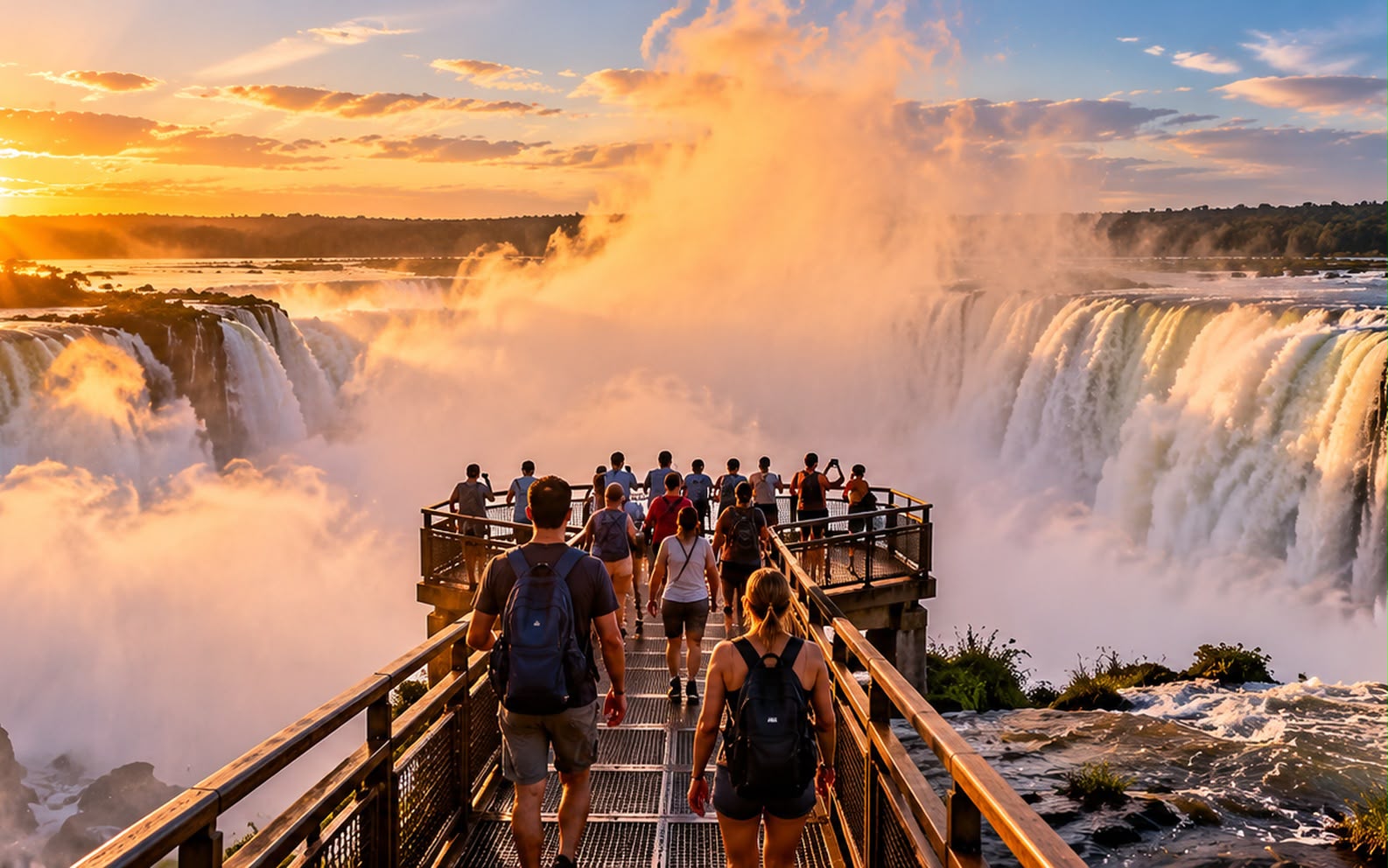
- 12:00 — The Argentine side is the walking side — about 80% of the falls are in Argentina, and the park puts you among them on kilometres of catwalk.
- 13:00 — The Garganta del Diablo — the Devil’s Throat — is a 1.1km catwalk out over the river to the lip of a horseshoe where half the Iguazú river falls 80m at once. You stand directly above it. It is the single most physical experience on this site.
- 16:00 — The Upper Circuit, which gives you the falls from above.
- Stay two nights. One day is not enough for both sides.
Day 6 — The lower circuit, and the boat
- 09:00 — The Lower Circuit, which puts you at the foot of them, and the free boat to San Martín island when the river is low enough to run.
- 12:00 — The Gran Aventura boat takes you under a fall. You will be soaked; bag everything. Dry bags are sold at the jetty and are not optional for a phone.
- 15:00 — Dry off, and the coati are everywhere — they will open a bag that has food in it.
- 17:00 — The park closes at six; the last train back from the Devil’s Throat leaves well before that.
Day 7 — Iguaçu, the Brazilian side
- 09:00 — Cross the border — 25km, about an hour with formalities. Keep your passport to hand; both sides stamp.
- 11:00 — The Brazilian side is the panorama. One trail, about 1.5km, and it gives you the whole horseshoe at once, which from Argentina you can never see because you are inside it.
- 12:30 — The walkway out over the Floriano falls at the end is the wet one.
- 14:30 — The Parque das Aves opposite the entrance is a genuine Atlantic Forest bird rescue, with walk-through aviaries, and is better than it sounds.
- Or the Itaipu dam if engineering appeals — it was the largest hydroelectric plant in the world until Three Gorges.
- Both sides in two days is the right allocation, and the argument for the route: they are not the same sight.
Day 8 — To Rio
- 10:00 — Two hours by air.
- 14:00 — Settle in Copacabana, Ipanema or Leblon. Leblon is the quietest of the three and Ipanema the best placed.
- 16:00 — Ipanema beach, and the posto numbers are how everyone gives directions on the sand.
- 18:30 — Sunset from Arpoador, the rock at the Ipanema end, where the beach applauds the sun going down.
- 21:00 — Dinner in Ipanema.
Day 9 — Christ the Redeemer, and Santa Teresa
- 07:30 — Christ the Redeemer by the cog train from Cosme Velho, booked with a timed slot. Go early — the statue is in cloud by mid-morning more often than not.
- 11:00 — Santa Teresa by the yellow tram, the hill quarter of colonial houses and studios.
- 13:30 — The Selarón Steps in Lapa, below it — 215 steps tiled over twenty years by one man with tiles sent from sixty countries.
- 16:00 — The Lapa arches and the cathedral, which is a concrete cone and is better inside than out.
- 19:00 — Lapa at night at the weekend, which is where the samba is.
Day 10 — Sugarloaf, and the beaches
- 10:00 — Copacabana, and the Sunday road closure when the beachfront becomes a promenade.
- 13:00 — Lunch at a kilo restaurant, which is how Rio eats at midday.
- 16:30 — Sugarloaf at sunset, two cable cars, and the view back at the whole bay. Go up an hour before sunset so you see it in both lights.
- 20:00 — Dinner in Botafogo, under the hill.
Day 11 — Tijuca, and the city’s other half
- 08:30 — Tijuca Forest — the largest urban rainforest in the world, replanted by hand in the nineteenth century after the coffee plantations stripped it. The Cascatinha waterfall and the Vista Chinesa.
- 13:00 — The Botanical Garden, with the avenue of imperial palms.
- 15:30 — A favela visit only with a community-run operator, and think about whether you want to at all.
- 18:00 — Niterói across the bay by ferry for the Oscar Niemeyer museum and the best view of Rio, which is from outside it.
Day 12 — Paraty
- 08:00 — Four hours down the Costa Verde, which is one of the great coastal drives.
- 13:00 — A Portuguese colonial port with no cars in the centre, streets that flood at spring tide by design, and the Atlantic Forest coming down to the water behind it.
- 14:30 — A schooner out to the islands, which is the thing to do here — four or five swimming stops and back by six.
- Or stay in Rio and do Niterói and the Oscar Niemeyer museum instead, if four hours each way does not appeal.
- 19:30 — Dinner on the cobbles, which are deliberately uneven and punishing in the wrong shoes.
Day 13 — Fly out of Rio
- 09:00 — Back up the coast, or straight to Galeão.
- Leave three hours. Rio’s international terminal is slow, and the coastal road has no alternative if it blocks.
Costs and practicalities
Best time to visit
April–June and September–November — the shoulders at both ends of the southern summer.
- April–June — the best of the year. Rio is warm and drier, Buenos Aires is in autumn, and Iguazú has good flow without the summer heat.
- September–November — spring: the jacarandas in Buenos Aires in late October and November, and comfortable everywhere.
- December–March — hot and humid. Rio is at 40°C with the beaches full, Buenos Aires is sticky and half-empty in January, and Iguazú is at its highest flow and its most crowded.
- Carnival falls in February or early March — five days before Lent. Rio’s prices multiply, accommodation demands minimum stays, and the whole country stops. Decide deliberately whether you want to be in it.
- July–August — the southern winter. Cool in Buenos Aires, pleasant in Rio, and Iguazú’s flow is at its lowest, though it is never less than spectacular.
Iguazú is impressive in every month. Flooding closes the Devil’s Throat catwalk occasionally after heavy rain — it is rebuilt each time.
Travel tips
- Do both sides of the falls. Argentina puts you on top of them; Brazil shows you the whole thing. They are not the same sight and choosing one is the mistake this route exists to prevent.
- Make sure you get stamped at the Iguazú border. Some shuttle drivers do not stop for passengers who do not ask, and an unstamped entry causes real problems on departure.
- Allow four hours between Ezeiza and Aeroparque in Buenos Aires. Different airports, an hour apart, and the most common missed connection in the country.
- Bag everything on the Argentine side. The Devil’s Throat catwalk and the Gran Aventura boat will both soak you and your camera.
- Use 99 or Uber in Rio and Cabify or Uber in Buenos Aires, and do not hail street taxis at night in either.
- Spanish here sounds different — ll and y are “sh”, and vos replaces tú. Brazil is Portuguese and the switch matters.
- Coatis at Iguazú will take food from your hand or bag. They bite and they carry disease; do not feed them.
What this trip actually costs
Two people, 12 nights, mid-range comfort, international flights excluded:
| Item | Cost |
|---|---|
| Hotels, 12 nights | USD 1,560 (≈ AED 5,729) |
| Internal flights, two people | USD 900 (≈ AED 3,305) |
| Food and drink, 13 days | USD 780 (≈ AED 2,865) |
| Iguazú both sides, Christ, Sugarloaf, guides | USD 560 (≈ AED 2,057) |
| Transfers, border crossing and local transport | USD 400 (≈ AED 1,469) |
| Total for two | USD 4,200 (≈ AED 15,425) |
- Roughly USD 2,100 (≈ AED 7,712) per person. Argentina is the cheaper half, though less so since the 2025 reforms.
- Two park entries at Iguazú — one each side — are unavoidable and are the point.
- Carnival roughly doubles the Rio accommodation line and imposes minimum stays.
- Hotel picks here are chosen on location, not on commission — always check prices and recent reviews before booking.
What to pack
- A dry bag and a waterproof. Both sides of the falls will soak you, and the Argentine boat is a drenching by design.
- Quick-dry clothes and sandals that stay on.
- Insect repellent for Iguazú, which is subtropical forest.
- A money belt you never open in public, and a cheap phone for the street if that suits you.
- Smart-casual for Buenos Aires, which dresses better than Rio.
- SPF 50. The Rio sun is stronger than the temperature suggests.
FAQ
Do I really need both sides of the falls? Yes, and it is the reason this is a two-country route. Argentina is 80% of the falls and puts you on catwalks among them; Brazil gives you the whole horseshoe in one view. Two days, one each.
Which side is better? Argentina for the experience, Brazil for the photograph. Most people who do both say the Devil’s Throat catwalk is the single most extraordinary thing on the trip.
Is Rio safe? With ordinary big-city caution, yes in the tourist corridor. Carry little, use apps after dark, and do not walk into neighbourhoods you do not know.
Should I do Carnival? Only deliberately. It is extraordinary and it doubles prices, imposes minimum stays and books out a year ahead.
Can I add Patagonia? Not on thirteen days — it is a separate route of its own and is four hours of flying south of Buenos Aires.
Prices and entry rules change, and what you need depends on your passport; last checked 29 October 2026, so confirm with the embassy or your airline before booking.


