 The Itinerary
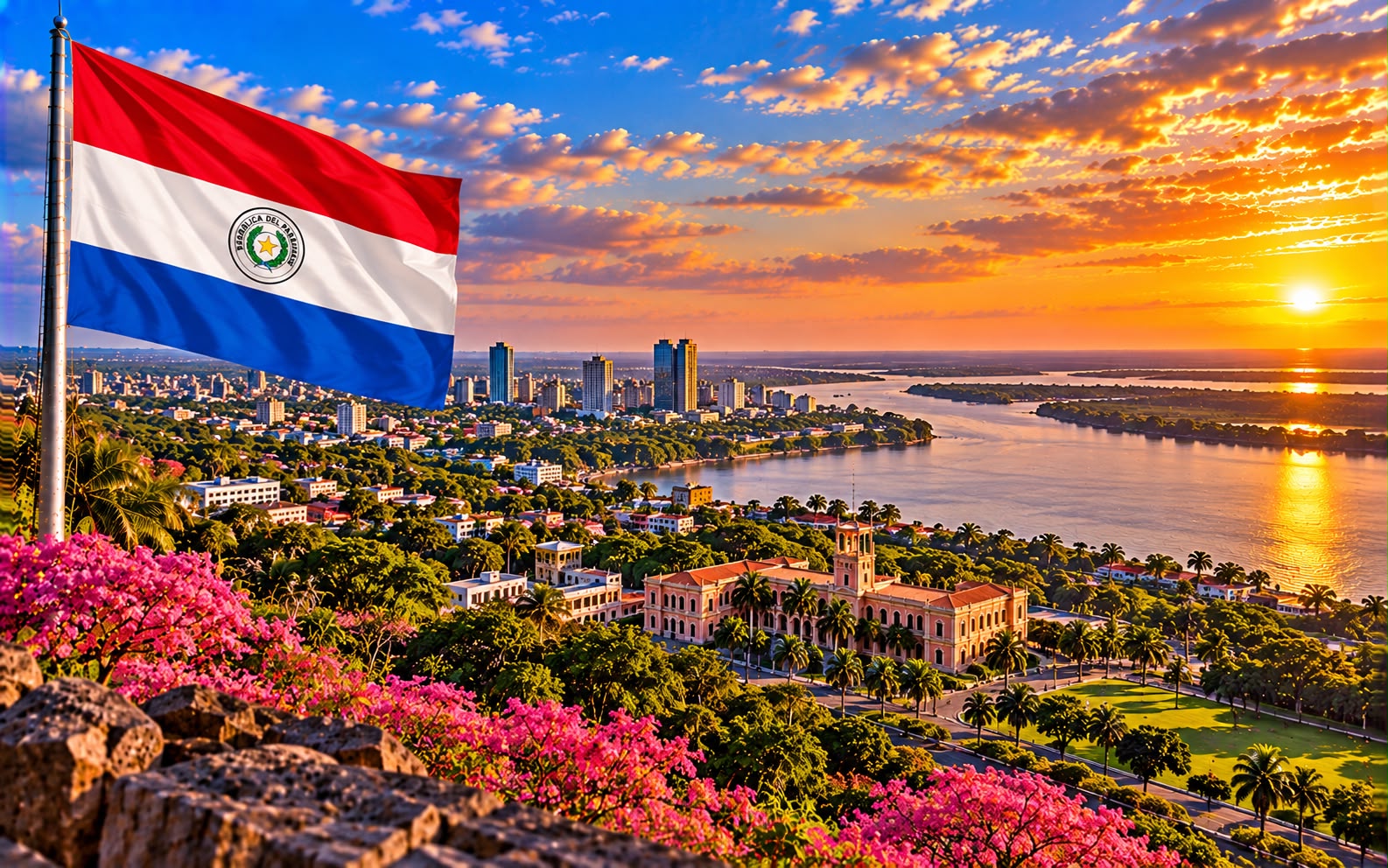
Paraguay in 8 days: the Jesuit ruins, Asunción and the Chaco
A landlocked country most travellers skip entirely, holding the ruins of the Jesuit-Guaraní reductions, a German-speaking Mennonite colony in the Chaco scrub, and the last place in the Americas where an indigenous language is spoken by nearly everyone.
- Southern Cone
- 8 days
- ≈ AED 1,650 / person
- Two UNESCO Jesuit missions almost nobody visits, and South America's cheapest week
Before you go
Paraguay is the country South American itineraries route around. It is landlocked, has no famous ruin on the scale of Machu Picchu, and gets a fraction of the visitors its neighbours do.
It is also the cheapest country on the continent, and it has something genuinely singular: it is bilingual in an indigenous language. Guaraní is spoken by around ninety per cent of the population, by people of every background, and is co-official with Spanish. Nowhere else in the Americas is that true.
The Jesuit reductions are the sight. Between 1609 and 1767 the Jesuits built some thirty mission towns across what is now Paraguay, Argentina and Brazil, where Guaraní communities lived, farmed, and produced sculpture and music at a level that astonished European visitors. Spain expelled the Jesuits in 1767 and the missions collapsed. La Santísima Trinidad del Paraná and Jesús de Tavarangue are UNESCO-listed, substantially intact, and you will very often have them to yourself. If you have seen The Mission, this is what it was about.
The Chaco is the other half of the country — a vast flat scrub plain west of the river, almost empty, where Mennonite colonists from Russia and Canada founded German-speaking farming towns in the 1920s that are still German-speaking.
Eight days. Figure PYG 2,800,000 (≈ AED 1,648) per person excluding flights — about US$360, which is remarkable. Go April–September, the cooler dry half. December to February is brutally hot.
Before you go: the 15-minute admin
Visas and money
- Many nationalities enter visa-free for short stays. Check your own case officially — Paraguay has changed its rules more than once.
- The guaraní (PYG), which runs to large numbers: a coffee is around 10,000 and a hotel night 250,000. You will carry a brick of notes.
- Bring US dollars in cash to change. Cards work in Asunción malls and larger hotels, less so elsewhere; ATMs are reliable in the cities.
- This is the cheapest country in South America by a clear margin. Food, transport and rooms are all noticeably below Argentina or Brazil.
The heat, which decides your dates
- Summer, December to February, routinely passes 40°C with high humidity in Asunción and worse in the Chaco. It is not a holiday.
- April to September is the window — mild, dry, and the Chaco is passable.
- The Chaco road floods. After heavy rain, the unpaved sections beyond Filadelfia become impassable for days.
Getting around
- Long-distance buses are excellent and very cheap — Paraguay’s intercity coaches are better than the country’s reputation, with overnight sleepers to Encarnación and Ciudad del Este.
- Asunción to Encarnación is about five to six hours on a good road.
- Hire a car if you want the Chaco or the mission circuit at your own pace; driving is on the right.
- The Chaco highway (Ruta 9) is paved to Filadelfia and beyond that is not. Do not attempt the deep Chaco without a 4WD, fuel and water.
Language
- Spanish and Guaraní are both official, and most Paraguayans move between them mid-sentence — a mix called jopará.
- Learning five words of Guaraní will change how you are received. Mba’éichapa (how are you), aguyje (thank you).
- English is rare outside Asunción hotels.
Travelling with kids?
- Distances are long and hot; the bus journeys are the limiting factor.
- Areguá, the lake and the Jesuit ruins work well.
- Malaria is not generally a concern; dengue is, and repellent matters.
Day by day
Day 1 — Asunción
- Afternoon — Arrive. Silvio Pettirossi airport is 20 minutes out.
- 16:00 — The Panteón Nacional de los Héroes, modelled on Les Invalides, and the Palacio de los López on the river.
- 17:30 — The Manzana de la Rivera, a block of restored colonial houses, and the Casa de la Independencia where the 1811 break from Spain was organised.
- 19:00 — Dinner. Sopa paraguaya is a cornbread, not a soup — the name is a national joke with several origin stories. Chipa, the cheese bread, is everywhere.
Where to stay in Asunción (three nights across the trip)
- Mid-range: the Villa Morra and Carmelitas districts, or the historic centre.
Day 2 — Asunción, and Areguá
- 09:00 — The Museo del Barro, which is the best museum in the country — indigenous, colonial and contemporary art together, including the extraordinary carved santos of the mission tradition.
- 12:00 — The Mercado 4, sprawling and chaotic, where the city shops.
- 14:30 — Areguá, 30 kilometres out on Lake Ypacaraí — a cobbled town of ceramicists and strawberry fields, with a basilica on a hill above it.
- 17:00 — San Bernardino across the lake if the water is clean enough to want it — the lake has had serious algal problems and swimming is often not advised.
Day 3 — The Circuito de Oro
- A day looping the towns south-east of the capital, each with one craft.
- Itauguá for ñandutí — “spiderweb” lace, radial, in colours, which is the national craft and is genuinely beautiful.
- Yaguarón for the church of San Buenaventura, a 1700s Franciscan church whose entire interior — walls, ceiling, altars — is carved and painted wood by Guaraní craftsmen. It is astonishing and almost unvisited.
- Piribebuy and the Chololó falls, and Caacupé, whose basilica draws hundreds of thousands of pilgrims every 8 December.
Day 4 — South to Encarnación
- Morning — Bus or drive south, five to six hours through cattle country.
- Afternoon — Encarnación, on the Paraná opposite Argentina, which has rebuilt itself around a costanera — a river beach and promenade — since the Yacyretá dam raised the water.
- Evening — The costanera is where the town is. In February Encarnación holds the country’s biggest carnival.
Where to stay in Encarnación (two nights)
- Mid-range: along or near the costanera.
Day 5 — Trinidad and Jesús
- 08:30 — La Santísima Trinidad del Paraná, 30 kilometres north-east. The largest and best preserved of the Paraguayan reductions: a vast plaza, the shell of a great church with its carved stone pulpit and frieze of angels playing instruments, the indigenous quarters, and a bell tower.
- The carving is the thing. Guaraní sculptors worked in a style of their own, and the frieze of musician angels at Trinidad is the best surviving example.
- 11:30 — Jesús de Tavarangue, 12 kilometres on — never finished, because the expulsion order arrived first. Its three enormous trefoil arches stand in open grass, roofless, and the effect is stranger than Trinidad’s.
- 14:00 — San Cosme y Damián, if you have the time, which kept the mission’s astronomical observatory — Buenaventura Suárez worked here and published star tables from it in 1744.
- 17:00 — Trinidad after dark has a light-and-sound showing several evenings a week, which is worth timing for.
Day 6 — Back north, and into the Chaco
- Morning — Return to Asunción.
- Afternoon — Cross the river and head north-west on Ruta 9 into the Chaco — flat thorn scrub, enormous skies, and almost nobody.
Day 7 — The Mennonite colonies
- Filadelfia and Loma Plata are the centres of the Mennonite colonies founded in the 1920s and 30s by settlers from Canada and the Soviet Union, who were given land nobody else wanted and made it productive. Plattdeutsch and High German are still spoken, the museums tell the story straight, and the cooperatives now supply much of Paraguay’s dairy.
- The Chaco’s wildlife is the other reason: this is one of the last strongholds of the jaguar, the giant anteater and the Chacoan peccary — a species known only from fossils until living animals were found here in 1975.
- Laguna Capitán and the salt lagoons hold flamingos.
- The deep Chaco beyond Filadelfia needs a 4WD, fuel and planning. Do not improvise it.
Day 8 — Back, and fly out
- Morning — The long road back to Asunción, five to six hours.
- Afternoon — Ñandutí lace and silver from the market, and the airport.
Costs and practicalities
Best time to visit
April–September is the cooler half of the year and far more comfortable than a Paraguayan summer, which is among the hottest in South America.
- April–June — autumn: warm days, cool nights, and the best for Asunción and the Jesuit missions.
- July–August — the coolest, occasionally dropping to single figures at night, and the driest. The best window for the Chaco, where the heat is otherwise extreme.
- September–October — spring, warming, and the lapacho trees in flower across the country — pink and yellow, and genuinely spectacular.
- November–March — 35–40°C with high humidity, and the wettest months in the east. The Chaco regularly exceeds 45°C.
The Pantanal fringe in the northern Chaco is best in the dry, roughly June to September, when wildlife concentrates on the remaining water.
Travel tips
- Paraguay is genuinely bilingual — Spanish and Guaraní, with Guaraní spoken by the majority. A few words go a very long way.
- Tereré — cold mate — is the national habit and sharing a guampa is an offer of friendship. Drink it all and hand it back.
- Bring US dollars to change. The guaraní comes in large numbers; cards work in Asunción and Ciudad del Este and less reliably elsewhere.
- Ciudad del Este is a vast shopping frontier town with real crime risk. If you cross to Iguazú, do it in daylight and with arranged transport.
- The Jesuit missions at Trinidad and Jesús are UNESCO-listed and are the country’s finest sight — about an hour from Encarnación and much quieter than their Argentine counterparts.
- The Chaco is remote and hot. Fuel, water and a reliable vehicle are the whole planning problem; the Trans-Chaco road is long and lonely.
- Buses are comfortable and cheap for the main routes; night services between Asunción and Encarnación are standard.
What this trip actually costs
Two people, 7 nights, mid-range comfort, flights excluded:
| Item | Cost |
|---|---|
| Hotels, 7 nights | PYG 2,100,000 (≈ AED 1,236) |
| Buses, car hire and fuel | PYG 1,900,000 (≈ AED 1,118) |
| Site entries and guides | PYG 450,000 (≈ AED 265) |
| Food and drink, 8 days | PYG 1,150,000 (≈ AED 677) |
| Total for two | PYG 5,600,000 (≈ AED 3,296) |
- Roughly PYG 2,800,000 (≈ AED 1,648) per person — about US$360 — which makes this the cheapest week on this site outside Africa.
- The Jesuit sites cost a few dollars each and a single ticket covers all three.
- Buses are a fraction of car hire and are genuinely comfortable. Hire a car only for the Chaco.
- Asunción’s set lunch menus are a dollar or two and are how the city eats.
- Hotel picks here are chosen on location, not on commission — always check prices and recent reviews before booking.
What to pack
- Light clothing and a hat — even the cool season is warm.
- Strong repellent. Dengue is present and the Chaco has mosquitoes in numbers.
- A torch for the Chaco, where power is intermittent.
- US dollars to change, and patience for the note counting.
- Sun protection — the Chaco has no shade at all.
FAQ
Why would I go to Paraguay? The Jesuit reductions, which are UNESCO-listed and almost empty; the fact that an indigenous language is spoken by nearly everyone; the Chaco; and the price. It is the cheapest country on the continent.
Are the Jesuit ruins worth a detour? Trinidad and Jesús are among the most substantial mission remains anywhere in South America, and you will frequently be the only visitor. Yes.
Is Guaraní really that widely spoken? Yes — around ninety per cent of Paraguayans speak it, across all social classes, and it is co-official. Most conversation mixes it with Spanish.
Can I visit the Chaco independently? As far as Filadelfia on the paved road, yes. Beyond that you need a 4WD, fuel, water and local advice; the road floods and there is nothing out there.
When should I avoid? December to February, when Asunción routinely exceeds 40°C and the Chaco is worse.
Prices and entry rules change, and what you need depends on your passport; last checked 8 October 2026, so confirm with the embassy or your airline before booking.


