 The Itinerary
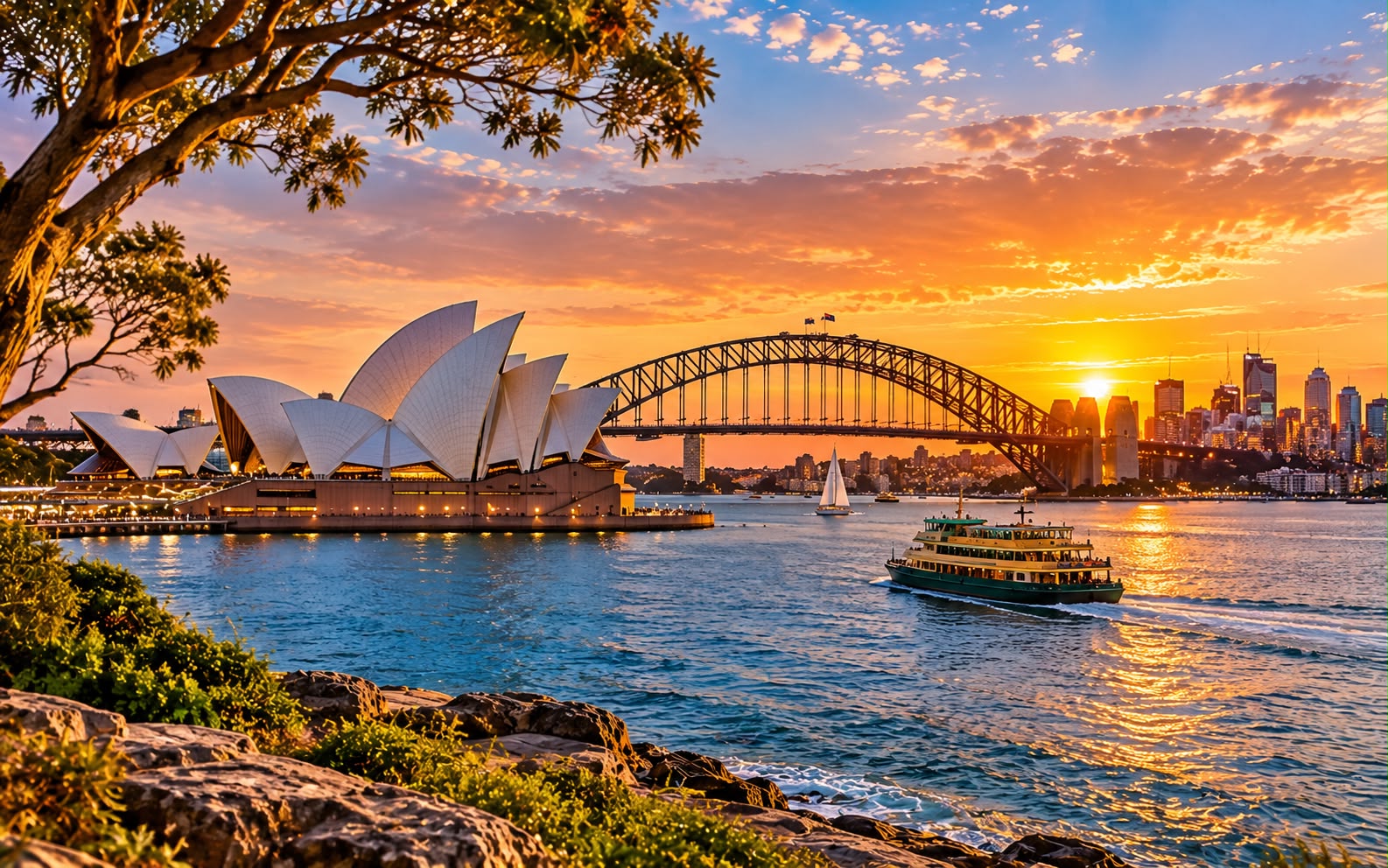
Australia in 10 days: Sydney, the Reef and Melbourne
The east-coast grand tour: the Opera House and a harbour that shows off, the Great Barrier Reef by pontoon, Melbourne's laneway espresso religion and the Great Ocean Road — plus the subclass-600 visa played correctly (apply months out), the slip-slop-slap sun rules, and why nobody tips.
- Australia
- 10 days
- ≈ AED 9,100 / person
- First-time visitors
Before you go
Australia is the far one — 13 hours from the Gulf, a fare that stings, a visa that rewards patience — and then you’re standing at Circular Quay watching the Opera House glow while ferries fan across the harbour, and the maths stops mattering. This guide runs the definitive first pass: Sydney (the world’s most beautiful working harbour), Cairns (the only address on earth with the Great Barrier Reef out front), and Melbourne (coffee, laneways, and the coast road every car ad rents).
Three cities, two internal flights, ten days — brisk but proven. And one consolation for the costs: nobody tips in Australia, prices include tax, and half the best things (Bondi’s clifftop walk, Melbourne’s free trams, penguins at St Kilda pier) cost nothing.
Go September–November or March–May — the overlap windows when Sydney and Melbourne are mild and Cairns is dry-season gorgeous. December–February is southern summer (glorious cities, wet-season Cairns); June–August flips it (whales off Sydney, dry warm Cairns, chilly Melbourne). All costs are in Australian dollars (AUD).
Before you go: the visa, and the local rules
The visa, and the timeline
- Two routes in, and your passport fixes which one you get. The EU, UK, US, Canada, Japan, Singapore and a number of others clear an ETA or eVisitor online in minutes. For a long list of others, India included, no such shortcut exists — those need the Visitor visa (subclass 600): AUD 200, applied entirely online through ImmiAccount, with biometrics at a VFS centre if requested. Check yours before you plan around a date.
- The honest timeline: most tourist grants come in a few weeks, but processing is case-by-case and can stretch — apply 2–3 months before travel and don’t buy non-refundable flights first. Grants are commonly 3, 6 or 12 months, often multi-entry.
- What refusals look like: weak or unexplained bank funds, vague itineraries, inconsistent employment info, thin home ties. The file that works: 3–6 months of statements, employer NOC + leave approval, day-by-day itinerary (this page is one), refundable bookings, and proof of residence if you are applying from a country other than your own.
At the border
- Border strictness is real: Australia’s biosecurity is the world’s fussiest — declare every food item (yes, the snacks in your bag and the sweets from home) on the incoming card. Declared = usually fine; undeclared = AUD 300+ fines. When in doubt, tick yes.
Money and tipping
- Tap your card on everything: Sydney’s Opal system and Melbourne’s trams take contactless bank cards directly; Sydney fares cap daily (~AUD 18–19) — the Manly ferry and Blue Mountains train ride inside the cap, which is cheating, legally.
- No tipping. Anywhere. Menu price = final price (weekend/holiday surcharges of 10–15% are printed on the menu). Australia is expensive honestly.
Sun, surf and stingers
- Slip, slop, slap: the UV index here breaks instruments — SPF50+, hat and sunglasses are equipment, not accessories, even on cloudy days.
- Swim between the red-and-yellow flags — rips kill more visitors than every animal combined. Flags = lifeguards watching that exact stretch.
- Cairns extras: stinger season (Nov–May) means netted beaches and free lycra suits on reef boats (wear one); croc signs are not decorative — no wild-river swims.
Staying connected
- eSIM ~US$15–25; Telstra coverage rules outside cities.
Day by day
Day 1 — Land in Sydney, harbour hello
Stay around Circular Quay/The Rocks (splurge-worthy, everything on foot) or Darling Harbour (families, value).
- Afternoon — Land SYD (direct ~13.5 h from the Gulf). Airport train in (~$17), check in, shower off the flight.
- 17:00 — The walk that resets the jet lag: Circular Quay → Opera House forecourt → Royal Botanic Garden’s Mrs Macquarie’s Chair — the postcard angle with bridge and sails together.
- 19:30 — Dinner in The Rocks (1788’s cobbled quarter): pub classics under the bridge pylons (~$30–45 pp). Early night; the harbour will still be there tomorrow.
Where to stay in Sydney (four nights)
- Luxury: The Langham Sydney — 4.7/5 on TripAdvisor (~2,000 reviews), Observatory Hill quiet above The Rocks. ~$450+.
- Harbour-view value: Shangri-La Sydney — 4.2/5 (~8,800 reviews), TripAdvisor’s #1 value: Opera House-and-bridge panoramas from the high floors. ~$280–380.
- Value: Kith Hotel Darling Harbour — 4.5/5, fresh rooms by the water’s family precinct. ~$180–250.
Day 2 — Opera House inside, Manly by ferry
- 09:00 — Sydney Opera House guided tour ($49 adult / $30 child, 1 h — book by 5pm the day before; ~300 stairs): under the sails, into the Concert Hall, and the story of the world’s greatest planning-permission saga.
- 11:00 — Walk the Harbour Bridge footpath (free) for the reverse view — or bank the splurge decision: BridgeClimb runs ~$300–400 by slot (the Pylon Lookout, ~$30, delivers 80% of the photo for 10% of the price).
- 13:00 — The Manly ferry (tap Opal card, ~30 min): the world’s best commute — harbour heads, sailboats, skyline receding. Fish and chips on the Corso, beach hour, the Shelly Beach snorkel loop.
- 17:30 — Ferry back at golden hour (sit left) — the Opera House lights up on approach.
- 20:00 — Dinner around Circular Quay or Barangaroo’s waterfront strip (~$35–60 pp).
Day 3 — Bondi to Coogee, the clifftop classic
- 09:00 — Bus/Uber to Bondi Beach: watch the sunrise-surf crowd, breakfast at a beach café (~$20–28 — avocado toast in its natural habitat).
- 10:30 — The Bondi–Coogee coastal walk (6 km, free, 2–3 unhurried hours): sculpted sandstone cliffs, Tamarama and Bronte’s surf bowls, Waverley Cemetery’s absurdly scenic headstones, ocean pools at every turn. Swim at flagged Bronte or Clovelly midway.
- 14:00 — Coogee lunch, bus back via Bondi Icebergs for that pool photo (entry ~$10 if you swim it).
- 17:00 — Darling Harbour evening: families hit the SEA LIFE aquarium option, everyone else hits the waterfront bars; Saturday nights often end in fireworks.
- 20:00 — Chinatown/Spice Alley dinner (~$20–35 pp — Sydney’s cheap-eats pressure valve).
Day 4 — The Blue Mountains
- 07:15 — Train from Central to Katoomba (~2 h, inside the Opal daily cap — the great Sydney day-trip bargain). Or a small-group tour (~$110–170) if you’d rather be driven.
- 09:45 — Echo Point: the Three Sisters over the Jamison Valley’s blue-eucalyptus haze (the blue is real — oil mist). Walk the Giant Stairway’s first section or the clifftop track toward Katoomba Falls.
- 12:00 — Scenic World (~$60ish unlimited rides): the world’s steepest railway (52°!) down into the rainforest, boardwalks under tree ferns, cableway back up. Touristy and terrific.
- 14:30 — Leura village for pie-and-bookshop charm, or Wentworth Falls lookout if legs remain.
- 18:30 — Back in Sydney; pack for the tropics. Farewell harbour dinner (~$35–60 pp).
Day 5 — Fly north into the tropics
- 08:30 — SYD → Cairns (~3 h; Qantas/Virgin/Jetstar ~$160–260 booked ahead, bags counted on the budget carriers).
- 12:30 — Land in the wet-tropics air, check in on the Esplanade.
- 14:00 — Cairns Esplanade Lagoon (free, lifeguarded, stinger-proof — the town’s answer to no-swim beaches), boardwalk stroll, fig-tree flying foxes at dusk.
- 18:00 — Night Markets browse + mud-crab or barra dinner (~$30–45 pp). Book tomorrow’s reef boat seats confirmed; early night — the reef starts early.
Where to stay in Cairns (two nights)
- Resort: Crystalbrook Riley — oceanfront pool scene, TripAdvisor’s #1 value here. ~$280–380.
- Mid: Pullman Reef Hotel Casino — 4.6/5 (~2,700 reviews), marina-front polish. ~$220–300.
- Value: Il Palazzo Boutique — 4.5/5, quiet, by the night markets. ~$140–190.
Day 6 — The Great Barrier Reef
- 07:30 — Check in at the Reef Fleet Terminal for a full-day OUTER-reef cruise — the honest sweet spot runs $260–325 pp (pontoon or roaming-boat operators; snorkel gear, lycra suit, buffet lunch and reef levy included). Outer reef = clearer water, healthier coral — worth it over cheap inner-reef runs.
- 10:30 — First drop: parrotfish crunching coral, clouds of fusiliers, a turtle if the day is kind. Intro dives (~$100–160 add-on, no licence needed) are the upgrade people remember at 80; glass-bottom and semi-sub loops carry the non-swimmers.
- The climate honesty: bleaching events are real and recurring; what survives is still the largest living structure on Earth and utterly worth seeing — go with eco-certified operators, wear reef-safe sunscreen (provided suits do most of the work), touch nothing.
- 16:30 — Back ashore, salt-crusted and quiet. Recovery gelato; easy dinner; horizontal by nine.
Day 7 — Rainforest morning, Melbourne midnight
- 08:30 — Kuranda day, compressed: ride the Skyrail cableway over the World-Heritage rainforest canopy up, and the 1891 Kuranda Scenic Railway through 15 tunnels and past Barron Falls down (combo ~$130–150): butterflies, didgeridoo galleries, market stalls in the village between.
- 15:30 — Back to Cairns, airport.
- 18:00 — CNS → Melbourne (~3.5 h, ~$180–280); land in a city that considers 11pm dinner-time negotiable. SkyBus or train in; check in; sleep.
Where to stay in Melbourne (three nights)
- Luxury: The Langham Melbourne — 4.6/5 (~8,800 reviews), Southbank river views. ~$380+.
- Heritage mid: Treasury on Collins — 4.8/5 (~2,200 reviews), 1876 bank building, suites with kitchenettes, dead-centre. ~$220–300.
- Apartment value: Quest St Kilda Road — 4.7/5, self-catering calm on the tram line. ~$160–220.
Day 8 — The Great Ocean Road
- 07:00 — Small-group day tour (~$120–180, 12 h — the correct call over self-driving your first left-hand-side day): the surf coast through Torquay and Bells Beach, koala-spotting at Kennett River, rainforest at Maits Rest, Apollo Bay lunch.
- 15:30 — The Twelve Apostles: limestone stacks in Southern-Ocean spray (eight remain; the ocean is renegotiating), Loch Ard Gorge’s shipwreck cove, Gibson Steps down to sea level. Reverse-itinerary tours hit the Apostles near sunset — worth choosing.
- 21:00 — Back in Melbourne; late bowl of ramen or pasta in a laneway that never closed (~$20–30).
Day 9 — Melbourne: laneways, markets, penguins
- 08:30 — Coffee is the religion; attend a service (flat white, ~$5.50) — then Hosier Lane’s street-art canyon, Centre Place and Degraves Street’s espresso alleys. The free City Circle tram (and the whole CBD Free Tram Zone) is your day pass.
- 11:00 — Queen Victoria Market (closed Mon/Wed): jam doughnuts from the van, cheese hall, souvenir sweep.
- 13:30 — Fed Square + NGV (free galleries), a Yarra riverside walk, and the Shrine of Remembrance view down St Kilda Road.
- 17:30 — Tram 96 to St Kilda: pier sunset, cake on Acland Street — and at dusk, the free little- penguin colony on the breakwater (volunteers point them out; no flash) — Phillip Island’s famous parade (~$150+ by tour) is the bigger show, but this one costs a tram fare.
- 20:30 — Farewell dinner: Lygon Street Italian, Chinatown dumplings, or a rooftop over the grid (~$35–60 pp).
Day 10 — Home from Melbourne
- Morning — SkyBus to MEL, and fly home (~14 h). You’ve done the harbour, the reef and the laneways — the other 95% of the continent (see FAQ) is the reason people come back.
Costs and practicalities
Best time to visit
September–November and March–May are the national compromise, because the country has two opposite climates and no single month suits both halves.
- The tropical north — Darwin, Kakadu, Cairns and the Daintree — runs on dry (May–October) and wet (November–April). The wet brings genuine flooding, road closures and stifling humidity; the dry is the only sensible window.
- The south — Sydney, Melbourne, Tasmania, the Great Ocean Road — is best in December–February, when the north is unbearable.
- The Red Centre is pleasant April–September and dangerously hot from November, when the Uluru summit-area walks close in the middle of the day.
- Stinger season runs November–May in Queensland waters: box jellyfish and irukandji make unprotected swimming unwise, and nets or stinger suits are the norm.
School holidays, especially late December to late January, move prices and availability more than the weather does.
Travel tips
- The distances are the thing people underestimate. Sydney to Perth is further than London to Moscow. Fly between regions and only drive within them.
- The UV is genuinely extreme — an index of 11+ is routine. SPF 50, a hat and shade between 10am and 3pm, even on cool days.
- Biosecurity at the airport is strict and unsentimental. Declare all food, wood, seeds and anything that has been on a farm. Declaring costs nothing; not declaring costs a fine.
- Do not drive at dawn or dusk in the country. Kangaroos move then, and hitting one at speed is the most common serious accident involving visitors.
- Tipping is not expected. Wages are high and the menu price is the price.
- Tap water is excellent everywhere. Bottled water is a waste of money.
- Carry water in the outback and tell someone your route. Mobile coverage disappears quickly outside towns.
What this trip actually costs
Two people, 9 nights (4+2+3), mid-range comfort, international flights excluded:
| Item | Cost |
|---|---|
| Visitor visas (subclass 600) for two | AUD 400 (≈ AED 1,009) |
| Hotels, 9 nights | AUD 2,400 (≈ AED 6,054) |
| Internal flights SYD→CNS and CNS→MEL, two seats with bags | AUD 900 (≈ AED 2,270) |
| Local transport: Opal caps, Myki/trams, airport links | AUD 300 (≈ AED 757) |
| Tours & entries: Opera House tour, outer-reef cruise, Kuranda rail+Skyrail, Great Ocean Road day, Scenic World | AUD 1,400 (≈ AED 3,532) |
| Food, 10 days (no tipping, ever) | AUD 1,400 (≈ AED 3,532) |
| eSIM, extras | AUD 60 (≈ AED 151) |
| Buffer: an intro dive, Taronga, market damage | AUD 340 (≈ AED 858) |
| Total for two | AUD 7,200 (≈ AED 18,163) |
- Roughly AUD 3,600 (≈ AED 9,082) per person (~US$2,350) — the priciest guide on this site, and honestly so: Australia is far and charges like it. The counterweights: no tipping, tax-inclusive menus, free-tram Melbourne, free clifftop Sydney, $0 penguins. Hostel-and-food-court discipline pulls it toward AUD 2,800 (≈ AED 7,063); add the BridgeClimb (~$300–400 pp) and Langham nights and AUD 4,800 (≈ AED 12,109) arrives fast.
- Book in this order: visa first, 2–3 months out (it gates everything) → international flights (into Sydney, home from Melbourne — open-jaw) → hotels free-cancel → internal flights (fares creep) → reef boat and Great Ocean Road tours 1–2 weeks out → Opera House tour by 5pm the day before → the Manly ferry, Bondi walk and laneways: tap on and go.
- Hotel and restaurant picks here are unsponsored — no affiliate links in this article. Chosen on location and current ratings; always check prices and recent reviews before booking.
What to pack
- SPF50+, real hat, sunglasses — the UV here is a contact sport; reef-safe sunscreen for Cairns.
- Layers for Melbourne (“four seasons in a day” is the city’s own slogan) and one warm layer for reef-boat wind.
- Swimwear ×2, quick-dry towel; the lycra stinger suit is provided on boats.
- Walking shoes for 6-km cliff paths and laneway miles.
- No undeclared food in the bags — biosecurity reads this list too. Declare the snacks; keep the fine.
- Type I plug adapter (the slanted-pin one — different from UK/UAE/US).
FAQ
How early should the visa really be filed? Two to three months before travel is the safe lane: many grants land in 2–4 weeks, but the tail is long and the department doesn’t rush for itineraries. Strong funds paper, employer letters and a coherent plan (borrow this page) do the persuading. Nothing non-refundable until the grant email.
Is 10 days enough for Australia? For this triangle, yes — briskly. It’s a sampler by design: two internal flights, three bases, zero rest days. With 12–13 days, stretch Cairns to 3 nights (add the Daintree) and Sydney to 5. The continent’s other icons — see below — are separate trips, and that’s not a flaw; it’s geography.
Is the reef still worth it — really? Yes, with clear eyes: bleaching has hurt sections, and operators now steer to the healthiest sites — which remain hallucinatory. Book eco-certified boats, go outer reef, snorkel don’t stand, and understand you’re seeing something both magnificent and mortal. Nobody comes back underwhelmed; many come back changed.
BridgeClimb or not? It’s ~$300–400 per person for 3 hours and a jumpsuit — unforgettable if the budget laughs, skippable if it doesn’t: the Pylon Lookout (~$30) and the free bridge footpath deliver the views without the harness. Put it in the same mental box as the Teotihuacán balloon.
Halal and vegetarian food? The big two cities are easy: Sydney’s Lakemba/Auburn and Melbourne’s north are halal heartlands, the halal snack pack is a genuine Melbourne institution, and kebab-and-charcoal-chicken shops dot every suburb; Cairns is thinner (a few Indian/Malay halal spots — the night markets help). Vegetarians coast everywhere; even pubs carry real options now.
What about Uluru, Perth, Tasmania, New Zealand…? All separate trips by honest distance: Uluru + the Red Centre (2N, Field of Light) pairs with this route as a +3-day splurge and leads our Australia #2 shortlist, with Sydney + New Zealand’s South Island the other contender. Perth and Tasmania are their own journeys entirely.
Prices and entry rules change, and what you need depends on your passport; last checked 8 October 2026, so confirm with the embassy or your airline before booking.


