 The Itinerary
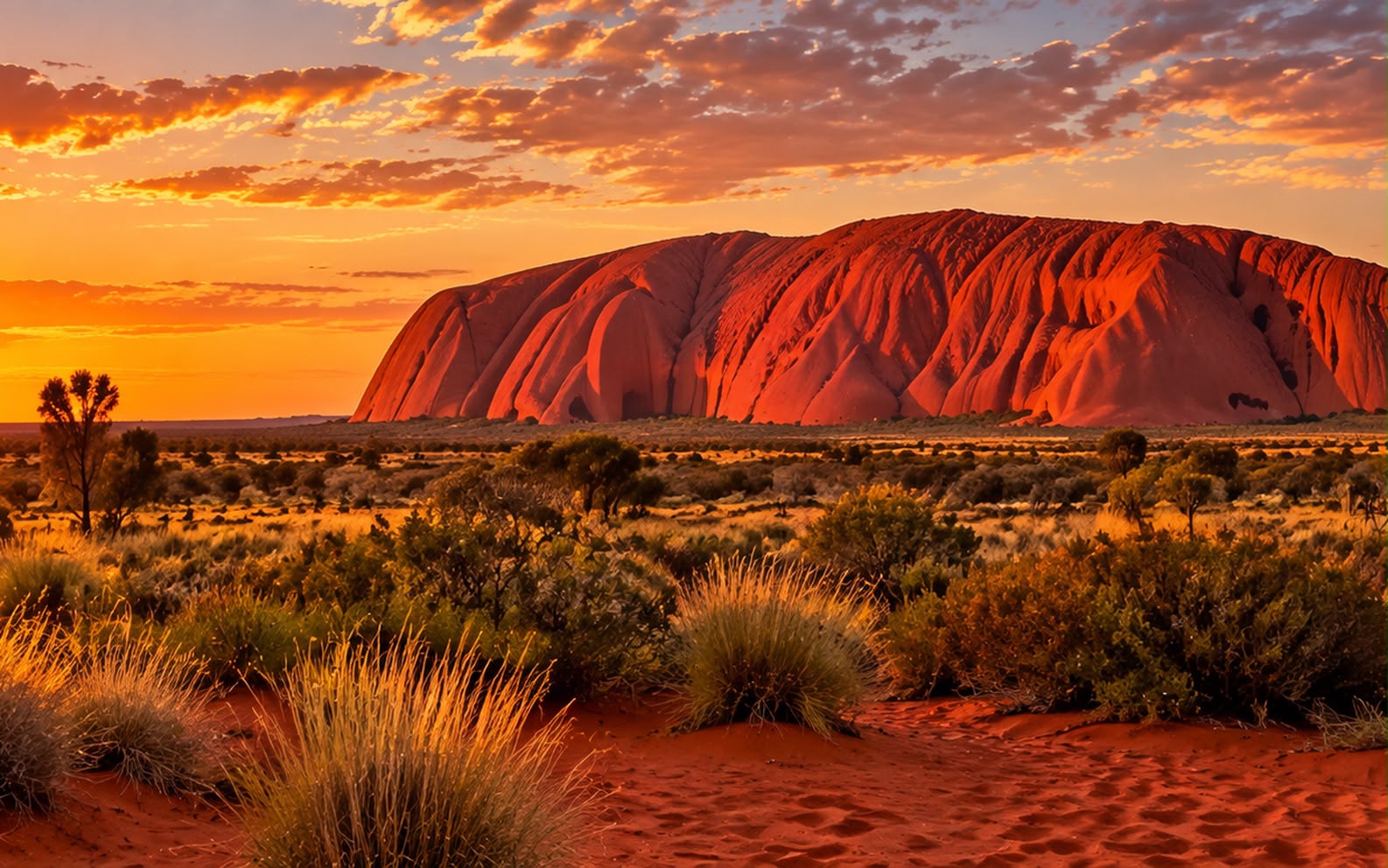
Australia and New Zealand in 16 days: Sydney, Uluru, the Reef and the South Island
A harbour city, a monolith in the middle of a continent, the largest living structure on earth, and then three hours across the Tasman to a South Island of glaciers and fiords — the long-haul trip people do once and plan around for years.
- Australia
- 16 days
- ≈ AED 16,900 / person
- The two countries everyone combines, done in the order that actually works
Before you go
Before you go: the admin
Two entries, two systems
- Australia requires an ETA or eVisitor for most visa-exempt nationalities — applied for through the official app or website, usually granted in minutes to days. Do not use the paid agent sites; the official fee is nominal.
- New Zealand requires an NZeTA plus the IVL (International Visitor Conservation and Tourism Levy), both applied for together. Allow 72 hours, and do it before you book the trans-Tasman flight.
- Both need six months’ passport validity.
- A transit through Australia to New Zealand still needs Australian clearance if you leave the airside area.
Flights, and the order that works
- Fly into Sydney and out of Christchurch, or the reverse. An open-jaw is essential here — backtracking across the Tasman wastes a day and a lot of money.
- Do Australia first. It is the longer flight from almost anywhere, the jet lag is worse, and Sydney is a gentler landing than Queenstown.
- Three internal legs: Sydney–Uluru, Uluru–Cairns, and Cairns–Queenstown via Sydney or Brisbane. The trans-Tasman crossing is about three hours from the east coast.
- Book the internal Australian flights early. They are the single largest controllable cost on this trip.
Money
- Australian and New Zealand dollars, both decimal, both similar in value and neither usable in the other.
- Both countries are near-cashless. Cards and phones work everywhere including buses, car parks and market stalls.
- Tipping is not expected in either. Wages are high and the menu price is the price.
Biosecurity, which is not a formality
- Both countries run the strictest biosecurity in the world, and New Zealand’s is stricter.
- Declare all food, wood, seeds, soil and anything that has been on a farm. Declaring costs nothing; not declaring carries an instant fine — NZ$400 in New Zealand, and more in Australia.
- Clean your hiking boots and tent pegs of soil before you fly. This is the single most common way visitors get fined, and it applies between the two countries as well as into them.
Day by day
Day 1 — Land in Sydney
- Arrive and get outside. The worst thing you can do to sixteen-hour jet lag is sleep at two in the afternoon.
- Get an Opal card or just tap a contactless card; it covers ferries, trains, buses and light rail.
- 14:00 — The ferry to Manly is ordinary public transport and the best harbour tour in the city — Opera House, bridge, heads, all for the price of a bus fare.
- 16:00 — The Manly to Shelly Beach walk, which is twenty minutes and ends at a snorkelling cove.
- 19:00 — Back on the ferry at dusk, which is the better direction for the skyline.
Day 2 — Sydney: the harbour and the coast
- 08:00 — The Bondi to Coogee coastal walk — 6km of clifftop, beaches and ocean pools, and the best two hours in Sydney. Go early; there is no shade.
- Watch the UV. An index of 11+ is routine and it burns through cloud.
- 12:00 — Icebergs at Bondi for a swim in the pool the waves break into.
- 15:00 — The Opera House on a tour, which gets you inside the shells, and the BridgeClimb if heights are your thing.
- 18:00 — The Royal Botanic Garden and Mrs Macquarie’s Chair for the postcard angle of the bridge and the Opera House together — sunset is when that view works.
Day 3 — The Blue Mountains, or Sydney again
- 08:00 — The Blue Mountains are two hours by train — the Three Sisters, Wentworth Falls, and the Scenic Railway, which is the steepest passenger railway in the world at 52 degrees.
- 11:00 — The Wentworth Falls track down into the valley, which is the walk most day-trippers skip.
- Or stay in the city for the Art Gallery of NSW, Paddington and Newtown, which is where Sydney actually lives.
- 18:00 — Back in Sydney, and pack light for the centre — you fly early.
Day 4 — Fly to Uluru
- 08:00 — Three and a half hours into the centre. The red earth starts about an hour out of Sydney and does not stop.
- Uluru is sacred to the Anangu, who are the traditional owners and co-manage the park. Climbing was permanently banned in October 2019 at their request, after decades of asking.
- 14:00 — The Cultural Centre first, which is what makes the rest of it legible.
- 16:00 — The base walk is 10.6km and is the right way to see it — the rock is not one shape but a sequence of caves, waterholes and faces.
- 19:00 — Sunset from the viewing area, which is the colour change everyone comes for.
Day 5 — Kata Tjuta, and the sky
- 05:30 — Sunrise at Uluru, from the Talinguru Nyakunytjaku dune, which faces both rocks at once.
- 08:00 — Kata Tjuta — 36 domes, higher than Uluru, and the Valley of the Winds walk is the better walk of the two sites.
- It is hot. Walks close at 11am when the forecast exceeds 36°C, which is most of summer — so this is a morning, not a plan for later.
- Photography is restricted at certain sacred sites and the signs say which. They are not suggestions.
- 14:00 — Out of the sun.
- 20:00 — The Field of Light or a dinner under the stars — the centre has almost no light pollution and the Milky Way is a physical presence.
Day 6 — Fly to Cairns
- 10:00 — Via Alice Springs or direct, about three hours.
- 15:00 — Arrive and do nothing ambitious. Cairns is a base rather than a destination.
- 16:30 — The Esplanade lagoon is the swimming — the sea here has box jellyfish and crocodiles, and the stinger season runs November to May.
- 19:00 — The night markets and the waterfront.
- Book tomorrow’s reef boat tonight if you have not; the good ones fill.
Day 7 — The Great Barrier Reef
- 07:30 — Out to the outer reef, not the inner — the day boats run to Agincourt, Norman or Moore reef and the difference in coral health is substantial.
- Pick the operator on reef position and group size, not price. The best ones have marine biologists aboard and run guided snorkels.
- 10:00 — First site. Reef-safe sunscreen, and do not touch anything. The reef has suffered successive bleaching events and the pressure from visitors is a live issue.
- A stinger suit is provided in season and is worth wearing regardless for the sun.
- 13:00 — A second site after lunch, which is where the better boats earn their price.
- 17:00 — Back in Cairns.
Day 8 — The Daintree, or the reef again
- 07:00 — The Daintree — the oldest continuously surviving rainforest on earth at around 180 million years, where it meets the reef at Cape Tribulation. The ferry across the river is the only crossing.
- 10:00 — Mossman Gorge with an Indigenous guide, which is the better version of the visit.
- 14:00 — Cape Tribulation, and do not swim in the estuaries — the crocodile signs are accurate.
- Or a second reef day, which most divers prefer.
- 18:00 — Back, and repack for New Zealand.
Day 9 — Cross the Tasman
- 06:00 — A long travel day — Cairns to Queenstown via Sydney or Brisbane, around eight hours door to door including the connection.
- New Zealand biosecurity on arrival is thorough. Boots clean, everything declared — the fines are instant and they do check hiking boots.
- 18:00 — Queenstown in the evening — the lake, the Remarkables behind it, and a Fergburger queue.
- Pick up the car tomorrow, not tonight.
Day 10 — Queenstown
- 09:00 — The Skyline gondola for the view down the lake, and the luge if there are children.
- 11:30 — Bungy at the Kawarau Bridge, which is where commercial bungy was invented in 1988.
- Or the quiet version: the Arrowtown gold-rush village, the Gibbston valley wineries, and a jet boat on the Shotover.
- 16:00 — The lakefront, and the TSS Earnslaw steamer if it is running.
- 18:00 — Drive to Te Anau tonight, two hours, which makes tomorrow possible.
Day 11 — Milford Sound
- 07:00 — The drive in from Te Anau is the thing — the Eglinton valley, the Mirror Lakes and the Homer Tunnel, which is hand-cut and one-way.
- It is a long day from Queenstown — four hours each way. Stay at Te Anau the night before if you can — which is what last night was for.
- 11:00 — The cruise takes two hours among 1,200m walls and Stirling Falls.
- Go in the rain. Milford gets 6–8 metres a year and in wet weather every cliff runs with waterfalls. It is better, not worse.
- There is no fuel and no phone signal past Te Anau. Fill up before you go.
- 16:00 — Back out, stopping at Lake Gunn on the return.
Day 12 — Wanaka and the Haast, or Mount Cook
- 08:30 — North to Wanaka — the lake, the tree, and Roys Peak if the legs want 1,200m of ascent for the best view in the country. It is five to six hours return and relentless.
- Or straight to Mount Cook via the Lindis Pass and the turquoise of Lake Pukaki, which gets its colour from glacial rock flour.
- 13:00 — Lunch in Wanaka or at the Pukaki salmon farm.
- 17:00 — Into Aoraki village, with the mountain in front of you the whole last 55km.
Day 13 — Aoraki / Mount Cook
- 07:00 — The Hooker Valley track — 10km return, flat, three swing bridges, and Aoraki standing at the end above a glacial lake with icebergs in it. It is the best easy walk in New Zealand.
- 13:00 — The Tasman Glacier terminal lake by boat, among the calved ice.
- 16:00 — The Red Tarns track if you want height, or the Sir Edmund Hillary centre if you do not.
- 22:00 — Stargazing: the Aoraki Mackenzie International Dark Sky Reserve is one of the largest in the world, and the Southern Cross and Magellanic Clouds are the reward.
Day 14 — Lake Tekapo and the high country
- 09:00 — The Church of the Good Shepherd on the lakeshore, and the lupins in November and December, which are beautiful and are also an invasive weed nobody can agree about.
- 11:00 — Mount John Observatory for the daytime view, and the café at the top has the best outlook in the country.
- 14:00 — The Mackenzie Basin is the emptiest part of the country and the drive is the point — take the Tekapo to Fairlie road slowly.
- 17:00 — The Tekapo hot pools, facing the lake.
- 21:00 — The night tour at Mount John if you did not get the sky at Aoraki.
Day 15 — To Christchurch
- 09:00 — Three hours east, dropping out of the high country onto the Canterbury Plains.
- 13:00 — Christchurch is a city still rebuilding from the 2010 and 2011 earthquakes — the Transitional Cathedral is made of cardboard tubes and the 185 Empty Chairs memorial is quietly devastating.
- 15:30 — The Botanic Gardens and punting on the Avon, and the tram loop.
- 17:30 — The Riverside Market for dinner, or New Regent Street.
Day 16 — Fly out of Christchurch
- 09:00 — The International Antarctic Centre by the airport if the flight is late — Christchurch is one of five gateway cities to the continent and the centre is the better part of that story.
- Biosecurity on the way out matters too — clean boots, no food.
- Leave three hours for a long-haul departure.
Costs and practicalities
Best time to visit
The two countries share a hemisphere and not a climate, which is the planning problem.
- October–November and March–April are the best compromise. New Zealand’s shoulder seasons have stable weather and no crowds; Australia’s are comfortable almost everywhere.
- December–February — New Zealand’s summer and the only reliable window for the Great Walks and alpine passes. But Australia’s centre is dangerously hot — Uluru walks close at 11am above 36°C — and Cairns is in the wet season with stinger season running November to May.
- May–September — Australia’s dry season in the north, which is the best time for the Reef and the Daintree, and the Red Centre is pleasant. New Zealand is in winter: ski season at Queenstown, some alpine roads chained, and Milford in snow.
- School holidays, especially late December to late January, move prices and availability in both more than the weather does.
If forced to choose one window, take late March or early April: the reef is out of stinger season, the centre is cool enough to walk, and the South Island is in autumn colour.
Travel tips
- Declare everything at both borders. Biosecurity is the strictest in the world and the fines are instant. Clean soil off boots and tent pegs before you fly, including between the two countries.
- Do not climb Uluru. It has been banned since October 2019 at the request of the Anangu traditional owners. Photography is also restricted at marked sacred sites.
- The UV is extreme in both — index 11+ is routine, and New Zealand has the ozone hole on top. SPF 50, a hat, and shade between 10 and 3.
- Do not drive at dawn or dusk in rural Australia. Kangaroos move then and hitting one at speed is the most common serious accident involving visitors.
- Both drive on the left, and New Zealand’s roads are winding — 200km is three hours, not two.
- Sandflies in Fiordland are ferocious. DEET, and cover up at dawn and dusk; Milford’s car park is the worst place in the country for them.
- Tap water is excellent in both. Bottled water is a waste.
What this trip actually costs
Two people, 15 nights, mid-range comfort, international flights excluded:
| Item | Cost |
|---|---|
| Hotels and motels, 15 nights | USD 3,000 (≈ AED 11,018) |
| Internal and trans-Tasman flights, two people | USD 2,200 (≈ AED 8,080) |
| Food and drink, 16 days | USD 1,600 (≈ AED 5,876) |
| Reef trip, Uluru experiences, Milford cruise, entries | USD 1,100 (≈ AED 4,040) |
| Car hire in New Zealand, 7 days | USD 900 (≈ AED 3,305) |
| Transfers and city transport | USD 400 (≈ AED 1,469) |
| Total for two | USD 9,200 (≈ AED 33,787) |
- Roughly USD 4,600 (≈ AED 16,894) per person, which makes this the second most expensive route on the site after Kenya and Tanzania.
- The internal flights are the largest controllable line. Booked early they are a third of the walk-up price; booked late they can add $800 for two.
- Dropping Cairns saves about $1,200 for two and turns this into a 13-day Sydney, Uluru and South Island trip, which is a perfectly good shorter version.
- Hotel picks here are chosen on location, not on commission — always check prices and recent reviews before booking.
What to pack
- Layers for New Zealand, in every month. Four seasons in a day is the local cliché and it is accurate.
- A proper hard shell, not a showerproof — Fiordland rain is horizontal.
- Reef-safe sunscreen, a hat and SPF 50, used seriously.
- Insect repellent with DEET for Fiordland sandflies.
- Walking shoes you have cleaned of soil, for both borders.
- A reusable bottle. Tap water everywhere.
- Sunglasses. The UV and the glacier glare are both punishing.
FAQ
Which country should I do first? Australia. It is the longer flight, the jet lag is worse, and Sydney is a gentler landing than Queenstown. Fly out of Christchurch so you are not backtracking across the Tasman.
Is sixteen days enough? For this routing, yes — but it is one city, one desert, one reef and one island. It is not enough for Melbourne, Tasmania or New Zealand’s North Island as well. Do not try to add them.
Can I climb Uluru? No. It has been permanently closed to climbing since October 2019 at the request of the Anangu traditional owners, who had been asking for decades.
Should I do the North Island instead? Only if geothermal landscapes and Māori culture interest you more than mountains. The South Island is the stronger half for a first visit and this routing reflects that.
How bad is the biosecurity really? Strict and unsentimental, and New Zealand’s is worse. Declare everything, clean your boots, and expect your bags to be x-rayed and sometimes opened. Declaring costs nothing.
Prices and entry rules change, and what you need depends on your passport; last checked 29 October 2026, so confirm with the embassy or your airline before booking.


