 The Itinerary
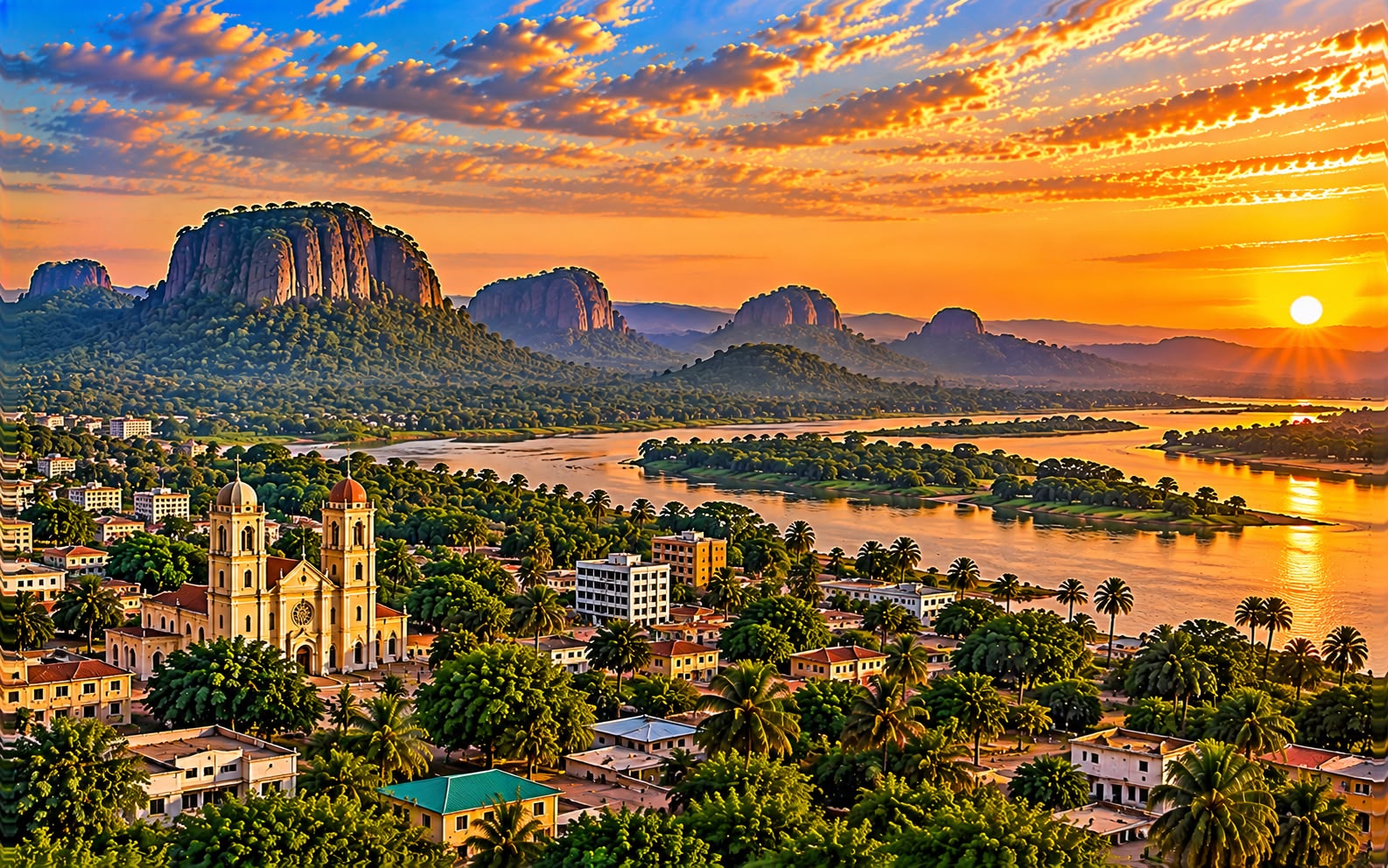
Central African Republic in 8 days: Dzanga Bai, forest elephants and the BaAka
A mineral clearing in the Congo Basin where forest elephants arrive in their dozens and can actually be seen, western lowland gorillas tracked on foot with BaAka guides, and a country most of which is held by armed groups and cannot be entered.
- Central Africa
- 8 days
- ≈ AED 14,300 / person
- A forest clearing where a hundred elephants gather at once — the only place on earth you can count them
Before you go
Read this first
Most governments advise against all travel to the Central African Republic, and several state that they can provide little or no consular assistance anywhere in the country.
- Armed groups control a large part of the territory and have since the collapse of 2013. Control shifts; the pattern does not.
- Russian paramilitary personnel operate alongside government forces, and have been the subject of credible allegations of abuses against civilians.
- Bangui has been comparatively calmer in recent years, which is a statement about Bangui and about recent years, not a guarantee.
- The borders with Chad, Sudan, South Sudan and Cameroon carry the strongest warnings, along with the north, east and centre.
- Kidnapping of foreign nationals is a specific risk.
- Medical facilities are minimal. Serious illness or injury means an evacuation flight, and you need the policy that pays for it.
- The road from Bangui to Bayanga is long, poor and crosses checkpoints, and the south-west corridor’s status can change.
This guide does not tell you to go. Dzanga-Sangha, in the extreme south-west, has operated continuously through most of the crisis under WWF and government co-management and is the one part of this country that receives visitors. Check your own government’s advice, which reflects this week rather than this year.
The Dzanga-Sangha Protected Areas form the CAR’s share of the Sangha Trinational, a UNESCO World Heritage site shared with Cameroon and the Republic of the Congo. It is one of the most intact blocks of lowland rainforest left in Africa, and it contains the single best place in the world to see forest elephants.
Dzanga Bai is a clearing of perhaps half a square kilometre where mineral-rich water seeps to the surface. Forest elephants come to it in numbers — fifty, a hundred, sometimes more in a day — and because the clearing is open, they can be watched from a platform at the edge for hours. Everywhere else in the Congo Basin forest elephants are a rustle in dense undergrowth. Here researchers have identified individuals over decades. It is called the village of elephants, and the name is accurate.
Bai Hokou is where western lowland gorillas have been habituated since 2000. Tracking is on foot through thick forest with BaAka trackers, whose knowledge of this forest is the reason the programme works at all, and a permit that funds both the park and the communities.
The BaAka themselves — net hunting, honey collection, and the polyphonic singing that has been recorded and studied for decades — are part of what visitors come for, and the ethics of that are worth thinking about before you arrive rather than after.
Manovo-Gounda St Floris, the country’s other World Heritage site in the north-east, is listed as in danger and has been effectively destroyed by poaching and armed occupation. It cannot be visited.
Eight days, if and when it is possible. Figure USD 3,900 (≈ AED 14,323) per person. December to February, the drier window, when the bai is busiest and the tracks are passable.
Before you go: the 15-minute admin
Entry
- A visa is required and is arranged through Dzanga-Sangha’s booking office or an operator, with a letter of invitation.
- Yellow fever vaccination is mandatory and checked.
- Bangui M’Poko is the entry point, usually via Casablanca, Istanbul, Addis Ababa or Douala.
- Getting to Bayanga is either a long two-day drive or a charter. Most visitors charter; some combine with Cameroon overland through the Sangha corridor.
Money
- The Central African CFA franc (XAF) is pegged to the euro.
- Cash in euros, every franc of it. There are a very small number of ATMs in Bangui and none at all in Bayanga.
- Park fees, permits and lodge costs are often prepaid by transfer, which is worth arranging — carrying four thousand euros is not ideal.
On the ground
- Book through Dzanga-Sangha directly or through a specialist, who will handle permits, transport and the Bangui end.
- Gorilla permits are limited and dated. They are the thing to book first and everything else arranges around them.
- You will be asked for a negative result or vaccination record for gorilla tracking, and the minimum age is typically 12.
- Distance rules around gorillas are enforced and exist to protect them from human respiratory disease, not to protect you.
- Do not photograph military, police or government buildings in Bangui.
- The forest is hot, wet and full of things that bite. Long sleeves are not optional.
Day by day
Day 1 — Bangui
- Arrive, and keep the day simple. Most visitors stay near the river and move on the next morning.
- Your operator will brief you on movement in the city. Follow it. This is the whole safety architecture of the trip.
- Yellow fever vaccination is mandatory and the certificate is checked on arrival.
- 13:00 — The Boganda Museum, if it is open, for the ethnographic collections — it keeps no reliable hours.
- 16:00 — The Oubangui from the riverbank, with the DRC on the far side.
- Do not photograph the river crossing, the airport or anyone in uniform.
- 18:30 — Back to the hotel before dark, and that is not negotiable here.
Day 2 — To Bayanga
- 08:00 — Charter flight, around two hours, over unbroken forest, which is itself worth the window seat.
- Or the road, which is two days, a genuine expedition, and crosses the Lobaye and Sangha-Mbaéré. Few itineraries take it and fewer should.
- 11:00 — Arrive at Sangha Lodge or the Doli Lodge on the river.
- 15:00 — Spend the afternoon on the Sangha, which is the gentle introduction to the forest from the outside.
- 17:30 — The lodge’s own trails for the first sweat-bee education, which is unavoidable and harmless.
Day 3 — Dzanga Bai
- 07:00 — The walk in is about forty-five minutes through forest and swamp, in water, which is part of it. Wellingtons are lent and are necessary.
- 08:00 — The platform overlooks the whole clearing. Give it hours, not an hour. Elephants arrive and leave continuously; the composition changes all afternoon.
- Up to a hundred forest elephants use the clearing in a day, and they come for the mineral salts in the mud.
- 11:00 — Sitatunga, forest buffalo, bongo and giant forest hog use the bai as well, and bongo are far more likely here than anywhere.
- 15:00 — Stay through the afternoon, which is when the larger groups come in.
- 18:00 — Out before the light goes.
Day 4 — Dzanga Bai again
- 06:00 — Go twice. Mornings and afternoons are completely different, and one visit is the common regret.
- 08:00 — The morning on the platform, which is quieter and has the better light.
- 13:00 — Back to the lodge through the heat.
- 16:00 — The Sangha in the late afternoon, or the lodge’s bat cave and pangolin work if either is running.
- Keep absolutely quiet on the platform. Sound carries across the clearing and the elephants leave.
Day 5 — Bai Hokou and the gorillas
- 05:30 — An early start, a drive, then tracking on foot with BaAka trackers and a researcher.
- The habituated group is the focus of an ongoing study, so you are joining a research visit rather than being shown an attraction. One hour with them, seven metres back, masks worn.
- Tracking takes anything from forty minutes to several hours and the trackers read ground you cannot see anything on.
- 11:00 — The forest itself — buttressed trees, swarms of sweat bees, and the fact that you cannot see twenty metres in any direction, which is what makes Dzanga Bai so extraordinary by contrast.
- 15:00 — Back, wet through, and the afternoon is gone.
Day 6 — A second permit, or the mangabeys
- 05:30 — A second permit on the following day if availability allows; gorilla viewing is weather and luck as much as tracking.
- Or the habituated agile mangabeys at Bai Hokou, which are a separate study group and a much easier morning.
- 12:00 — Lunch at the camp.
- 16:00 — Kayaking or a boat on the Sangha, and the chance of putty-nosed monkeys and hornbills along the bank.
- 18:30 — The river at dusk, when the hornbills cross to roost.
Day 7 — The BaAka, the Sangha and the forest
- 08:00 — A net hunt with a BaAka community, which is arranged through the park and paid directly to the participants.
- Think about how you want to do this. It is run as a community programme with consent and payment, and it is still worth asking yourself what you are photographing and why.
- 12:00 — A forest walk with BaAka guides, who will show you the medicinal plants and the honey, which is the better half of the day.
- 19:00 — Polyphonic singing in the evening, which is the reason ethnomusicologists have been coming here for fifty years — overlapping yodelled lines, unaccompanied, and nothing else sounds like it.
Day 8 — Back to Bangui
- 08:00 — The charter out, then the international connection, usually the same evening or the next day.
- Leave a day of margin. Charters in this part of the world move for weather and for aircraft availability — and Bangui has very few international departures to miss.
Costs and practicalities
Best time to visit
December–February, the drier window, when the Dzanga-Sangha tracks are passable and the bai is at its busiest.
- December–February — the main dry season. Best road and track conditions, and the most reliable elephant numbers at Dzanga Bai.
- June–August — a shorter, less reliable dry spell. Workable but wetter.
- March–May and September–November — the two rainy peaks. The forest tracks to Bai Hokou become very difficult and the Bangui–Bayanga road is effectively out.
Dzanga Bai has elephants year-round — this is not a migration — but the clearing is busiest and the viewing platform most usable in the dry months. Gorilla tracking runs all year and is simply wetter and harder outside them.
Travel tips
- Book gorilla permits first and build the trip around them. They are limited, dated, and everything else arranges around the dates you get.
- You will be asked for a negative test or vaccination record before gorilla tracking, and the minimum age is typically 12. Skip it if you have a cough — the rule protects them, not you.
- The seven-metre distance rule and the masks are enforced.
- Bring euros in cash for everything not prepaid by transfer. There are very few ATMs in Bangui and none at all in Bayanga.
- Sango is the national language and is genuinely useful; French is official.
- Boots you are happy to soak — the walk in to Dzanga Bai is through water, and a head net helps with the sweat bees at the platform.
- Evacuation cover is the insurance line that matters. Medical facilities are minimal and the answer to anything serious is a flight out.
What this trip would cost
Two people, 7 nights, lodge standard, international flights excluded:
| Item | Cost |
|---|---|
| Bangui–Bayanga charter, return, two people | USD 3,000 (≈ AED 11,018) |
| Lodge, full board, 6 nights | USD 2,400 (≈ AED 8,814) |
| Gorilla permits, bai fees and park entry | USD 1,400 (≈ AED 5,142) |
| BaAka community activities and local guides | USD 400 (≈ AED 1,469) |
| Bangui hotel, transfers and visa support | USD 600 (≈ AED 2,204) |
| Total for two | USD 7,800 (≈ AED 28,646) |
- Roughly USD 3,900 (≈ AED 14,323) per person. The charter is nearly half of it, and the overland alternative costs two days each way plus the risk the advisories describe.
- Most of this is prepaid by transfer to Dzanga-Sangha or your operator. Carry euros for the rest.
- Evacuation cover is the one insurance line worth arguing about. Standard travel policies exclude countries under advisory; specialist medical evacuation cover is a separate product and this is the trip to buy it for.
- Figures are indicative and the charter rate is the most volatile of them.
- Hotel picks here are chosen on location, not on commission — always check prices and recent reviews before booking.
What to pack
- Euros in cash for everything not prepaid.
- A yellow fever certificate.
- Malaria prophylaxis, non-negotiable — this is among the highest transmission areas anywhere.
- Long sleeves and long trousers, light, and a head net for the sweat bees at the bai.
- Boots you are happy to soak, because the walk to Dzanga Bai is through water.
- A dry bag for everything electronic.
- Masks for gorilla tracking, and the willingness to skip it if you develop a cough.
FAQ
Can I visit the Central African Republic now? Most governments advise against all travel to the whole country. Dzanga-Sangha in the south-west has operated through most of the crisis and is where the few visitors go. Check current advice.
Why is Dzanga Bai special? Forest elephants are almost impossible to see in dense Congo Basin rainforest. The mineral clearing at Dzanga draws them into the open in their dozens, which makes it the one place on earth where they can reliably be watched and counted.
How hard is gorilla tracking here? Harder than in Rwanda or Uganda — flatter, but far thicker, wetter and hotter, and sightings can be brief. The trackers are BaAka and they are extraordinary at it.
Can I reach Bayanga overland? Yes, in two long days from Bangui, or through Cameroon. Most visitors charter.
What language do they speak? Sango is the national language and is widely spoken; French is official. The BaAka speak Diaka and related languages.
Prices and entry rules change, and what you need depends on your passport; last checked 29 October 2026, so confirm with the embassy or your airline before booking.


