 The Itinerary
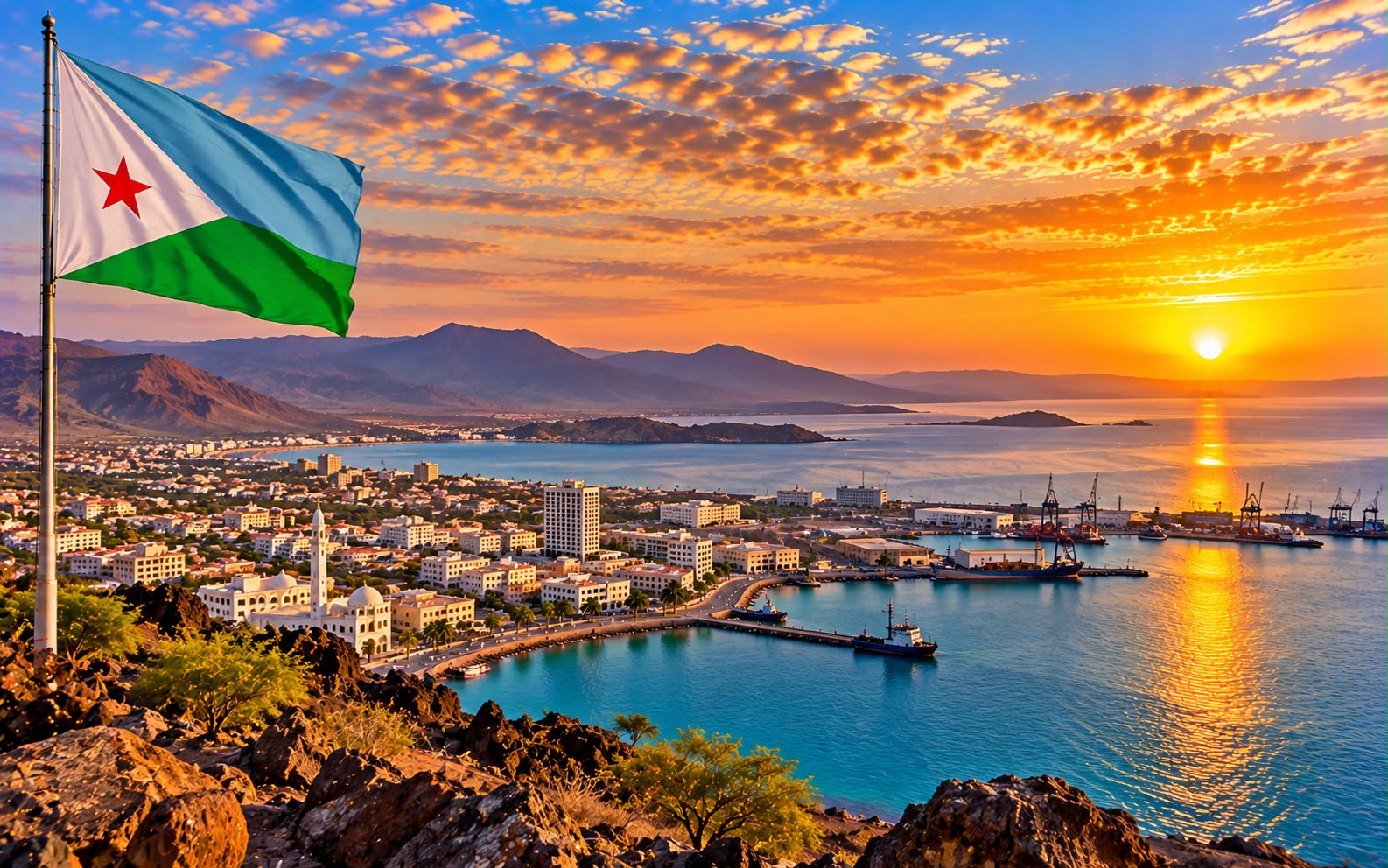
Djibouti in 6 days: Lake Assal, the chimneys of Lac Abbé and whale sharks
A salt lake 155 metres below sea level, a plain of steaming limestone chimneys where three tectonic plates are pulling apart, and a gulf that fills with juvenile whale sharks every winter — in a country the size of Wales that almost nobody visits for pleasure.
- East Africa
- 6 days
- ≈ AED 4,400 / person
- Swimming with whale sharks, and the lowest point in Africa
Before you go
Djibouti is a small, hot country at the mouth of the Red Sea, better known for its port and its foreign military bases than for anything a visitor would come for. That is a mistake, and a short one to correct.
This is where the Earth is coming apart. The Afar Triple Junction — where the Arabian, Nubian and Somali plates meet and separate — sits under this country, and the landscape is the visible evidence: a rift floor sinking below sea level, young volcanoes, and geothermal fields.
Lake Assal is the lowest point in Africa at 155 metres below sea level and one of the saltiest bodies of water on earth — saltier than the Dead Sea. It sits in a crater of black lava with a blinding white salt shore, and the contrast is the photograph everyone comes back with.
Lac Abbé, on the Ethiopian border, is a plain of limestone chimneys up to fifty metres high, venting steam at dawn, with flamingos on the shallows and Afar herders moving camels between them. It looks like no other place and it is reached by three hours of track.
And between November and February the Gulf of Tadjoura fills with juvenile whale sharks, which gather here in numbers and in shallow water. You snorkel with them from a small boat.
Six days is right. Figure USD 1,200 (≈ AED 4,407) per person excluding flights — Djibouti is expensive. Go November–February. Outside that window it is genuinely too hot.
Before you go: the 15-minute admin
The heat decides when you come
- Djibouti is one of the hottest countries on earth. Summer routinely passes 45°C with high humidity on the coast, and the desert interior is worse.
- Travel between November and February. March and October are bearable at the edges. May to September is not a holiday, and some operators simply stop running.
- That window is also whale shark season, which is convenient, and it is when the country is busiest, which means booking ahead.
- Carry far more water than feels sensible on any excursion, and expect your guide to carry more.
Visas
- An e-visa is applied for online before travel, and it is straightforward. There has also been a visa on arrival at the airport; the e-visa is the dependable route.
- Check your own case on the official portal, and print the approval.
- Yellow fever certificate is required if you arrive from an endemic country, which includes Ethiopia and Kenya — the two most likely connections.
Money
- The Djiboutian franc (DJF), pegged to the US dollar at a fixed rate, which makes budgeting unusually easy.
- US dollars are widely accepted and often quoted directly. Bring cash.
- Cards work at the larger Djibouti City hotels and essentially nowhere else.
- It is an expensive country — the port, the bases and almost total import dependence see to that. Food and rooms cost more than the region around it.
Getting around
- A 4WD with a driver-guide is not optional for Lac Abbé and Assal. The tracks are unmarked, unsigned and genuinely remote, and recovery is your guide’s problem rather than a phone call.
- Expect $150–200 a day including fuel. It is the largest line in the budget and the one that cannot be cut.
- Djibouti City is small and taxis are cheap within it.
- There is a railway to Addis Ababa, Chinese-built and fast, if you are combining with Ethiopia.
SIM and data
- Djibouti Telecom is the only operator. SIMs are sold at the airport; data is expensive by regional standards.
- Coverage is good in the city and along the Tadjoura road, absent at Lac Abbé.
Khat, and the shape of the afternoon
- Khat — a mild stimulant leaf — arrives daily from Ethiopia around midday and a large part of the male population chews it through the afternoon.
- The practical effect is that the country slows down sharply after about 13:00. Offices thin out, drivers get vaguer, and things promised for the afternoon often happen the next morning.
- Plan your mornings properly and keep afternoons loose.
Travelling with kids?
- Whale sharks are the trip’s highlight and are docile, but this is open-water snorkelling from a small boat — confident swimmers only.
- The heat is the real constraint. Lac Abbé involves hours in a vehicle and a night in a basic camp.
- Medical facilities are limited outside the capital; evacuation cover matters.
Day by day
Day 1 — Djibouti City
- Afternoon — Arrive. The airport is ten minutes from the centre.
- 16:00 — The European quarter around Place Menelik, with its arcaded colonial buildings, and the African quarter behind it.
- 17:30 — The Marché Central and the fish market by the port, which is where the city actually is.
- 19:00 — Dinner. The food here is the one unexpected pleasure: French, Yemeni, Ethiopian and Somali all at once, and the seafood is excellent.
Where to stay in Djibouti City (three nights across the trip)
- Mid-range: the Héron or Plateau du Serpent districts, near the sea and the restaurants.
Day 2 — Lac Abbé
- 07:00 — West into the Afar country, about four hours, the last two on track.
- 12:00 — Lunch at the camp, out of the sun.
- 16:00 — Lac Abbé. A dried lake bed with limestone chimneys standing across it — some fifty metres high, built up by hot springs over millennia and still steaming. Flamingos on the remaining water, Afar camel herds moving through, and nothing else.
- Sunset and sunrise are the reason to stay the night. The camps are basic — a mat, a hut, a shared bucket — and the sky afterwards is worth the discomfort.
Day 3 — Lake Assal, and over to Tadjoura
- 06:00 — Up for the chimneys at dawn, steam catching the light.
- 08:00 — Drive north-east towards Lake Assal, three hours.
- 12:00 — Lake Assal, at 155 metres below sea level — the lowest point in Africa, and among the saltiest water anywhere. A white salt shelf, turquoise brine, and black basalt all around it. You float without trying. Rinse immediately; the salt is aggressive and will crack skin.
- 14:00 — The Ardoukôba fissure nearby, a rift that opened in a 1978 eruption and is the plate boundary made literally visible.
- 17:00 — On to Tadjoura, along the gulf.
Where to stay in Tadjoura (one night)
- Simple: the small hotels on the seafront. Tadjoura is a town of whitewashed houses and is called the city of seven mosques.
Day 4 — The Day Forest, and back along the gulf
- 08:00 — Up to the Forêt du Day in the Goda mountains, an hour above Tadjoura — a relict juniper forest at 1,500 metres, a surviving fragment of vegetation from a wetter age, and the reason the air up there is twenty degrees cooler than the coast.
- 12:00 — Down to the coast and the Gulf of Tadjoura road, which runs between black mountains and very blue water.
- 15:00 — Plage des Sables Blancs, the best beach on the gulf, for a swim.
- 18:00 — Djibouti City.
Day 5 — Whale sharks
- 07:00 — Out into the Gulf of Tadjoura by boat.
- Between November and February, juvenile whale sharks aggregate here to feed — typically three to six metres, in shallow, sheltered water. You snorkel; diving with them is not the form.
- The rules exist for the animals: no touching, no flash, keep a distance from the head and the tail, and limit the number of swimmers in the water. A good operator enforces this. Choose one that does.
- 13:00 — Moucha Island on the way back for snorkelling over reef, or Maskali for the sand.
- 17:00 — Back to the city.
- Outside the season, swap this for a second day on the gulf — the reef diving is good year-round and the water is extremely clear.
Day 6 — Fly out
- Morning — The Marché Riyad for Afar knives and baskets, and a last coffee.
- Afternoon — The airport, ten minutes away.
Costs and practicalities
Best time to visit
November–February. Djibouti is one of the hottest countries on earth and the summer is not a matter of discomfort but of genuine danger.
- November–February — 25–30°C, the only comfortable months, and the right window for Lac Assal and the Ardoukôba crater.
- October–February — whale shark season in the Gulf of Tadjoura, peaking around November to January. This is the single best reason to come and it is why the season matters.
- March–April — rapidly heating; still workable early in March.
- May–September — 40–45°C with the khamsin wind off the desert. Lac Assal at 155m below sea level is among the hottest places measured anywhere. Avoid entirely.
Travel tips
- Whale shark swims are regulated. Go with an operator that keeps groups small and does not allow touching — the Gulf of Tadjoura aggregation is juveniles and is vulnerable.
- Djibouti is expensive, largely because of the military bases and the port economy. Hotel rates bear no relation to the region.
- The Djiboutian franc is pegged to the US dollar. Dollars and euros both change easily; cards work at a few hotels only.
- French and Arabic are official; Somali and Afar are what people speak. Very little English.
- Drink far more water than you think, and carry rehydration salts. Heat illness is the real hazard here.
- Lac Assal’s salt crust cuts — wear proper shoes, not sandals, and do not swim with any open skin.
- Khat is chewed from early afternoon and the country slows markedly after it. Schedule anything important for the morning.
What this trip actually costs
Two people, 5 nights, mid-range comfort, flights excluded:
| Item | Cost |
|---|---|
| Hotels and desert camp, 5 nights | USD 700 (≈ AED 2,571) |
| 4WD with driver-guide, 4 days | USD 800 (≈ AED 2,938) |
| Whale shark boat day, two | USD 300 (≈ AED 1,102) |
| Food and drink, 6 days | USD 400 (≈ AED 1,469) |
| Permits, local guides, island fees | USD 200 (≈ AED 735) |
| Total for two | USD 2,400 (≈ AED 8,814) |
- Roughly USD 1,200 (≈ AED 4,407) per person, which makes Djibouti one of the more expensive countries in Africa for what you get in comfort.
- The 4WD is a third of it and is genuinely not optional for Lac Abbé.
- It splits well — four people pay what two do, which is the single biggest saving available.
- Whale shark trips sell out in season. Book before you arrive.
- Hotel picks here are chosen on location, not on commission — always check prices and recent reviews before booking.
What to pack
- US dollars in cash, which are accepted directly.
- Far more sun protection than you think — a hat, long sleeves, and high-factor cream. There is no shade at Assal or Abbé.
- Rehydration salts. You will sweat more than you notice.
- A sleeping bag liner for the Lac Abbé camp, and a head torch.
- Reef shoes for the salt shelf at Assal, which is sharp, and fresh water to rinse with afterwards.
- Your own mask and snorkel if you have them.
FAQ
When can I see whale sharks? Roughly November to February, when juveniles aggregate in the Gulf of Tadjoura. It is one of the more reliable aggregations anywhere, but it is wildlife, not a booking.
Is Djibouti safe? The country is stable and ordinary travel is straightforward. Check current advice for the border areas with Eritrea and Somalia, which are treated differently, and do not photograph military installations — there are several and they are sensitive.
Can I do Lac Abbé as a day trip? You can, and you will spend eight hours driving to see it in the worst light. Stay the night; dawn is the whole point.
Is it worth it if I cannot snorkel? Yes — Assal, Abbé and the Day Forest stand on their own. The whale sharks are the bonus rather than the premise.
What language do they speak? French and Arabic are official, with Somali and Afar widely spoken. French is what you need; English is limited outside the bigger hotels.
Prices and entry rules change, and what you need depends on your passport; last checked 8 October 2026, so confirm with the embassy or your airline before booking.


