 The Itinerary
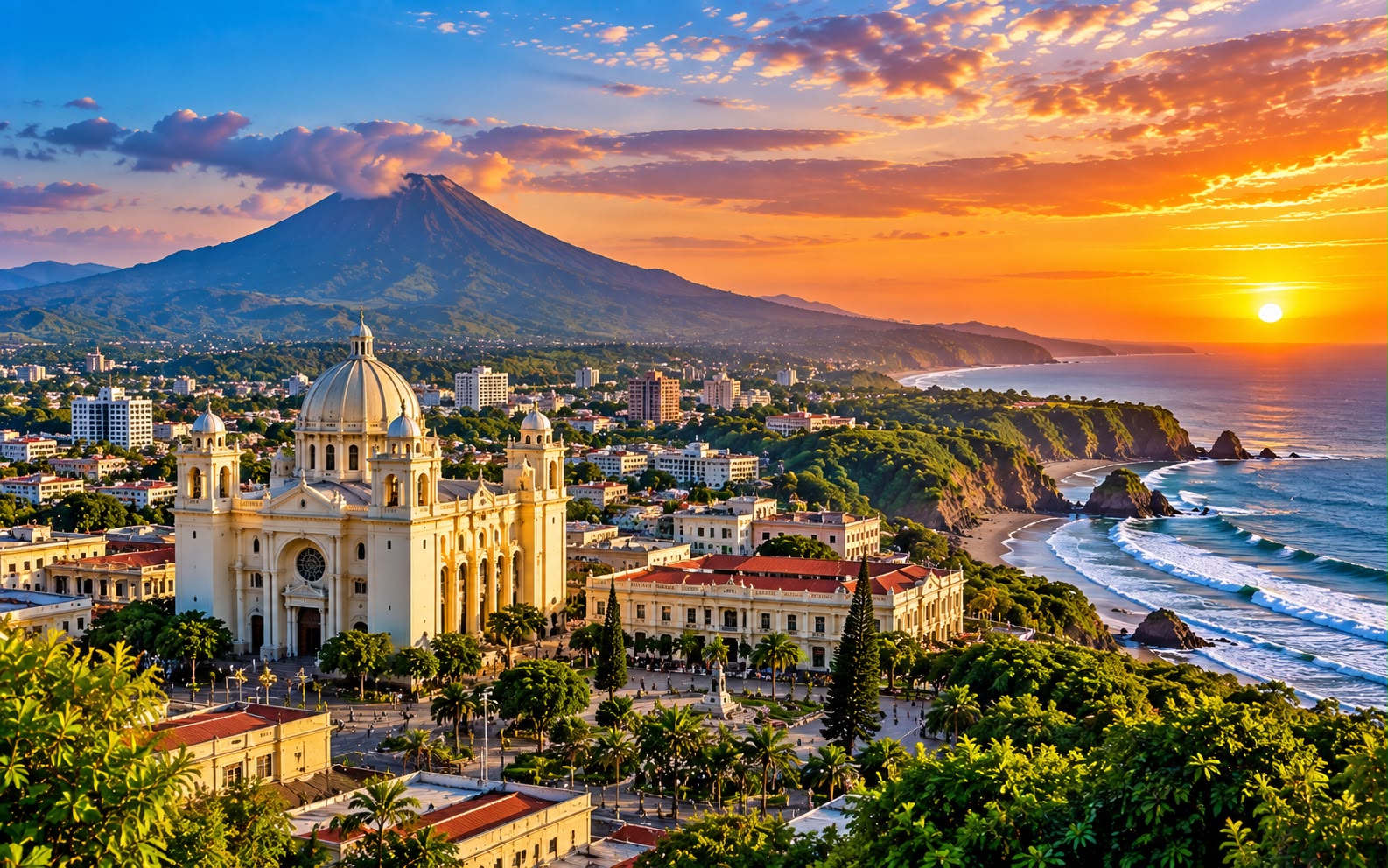
El Salvador in 6 days: volcanoes, coffee towns and surf
A turquoise crater lake at the top of a two-hour climb, a road of coffee towns that puts its food on the street every weekend, a Maya farming village buried by ash and preserved like Pompeii, and black-sand surf beaches an hour from the capital.
- Mexico and Central America
- 6 days
- ≈ AED 3,500 / person
- Central America's smallest country, done properly
Before you go
El Salvador is the smallest country on the American mainland and the only one in Central America with no Caribbean coast. Everything is close: you can climb a volcano in the morning and be in the Pacific by the afternoon, and the drive between them takes under two hours.
Santa Ana volcano is the one to climb. Two hours up through pine and lava field to a crater holding a lake of an almost unreal turquoise, 2,381 metres up, with Izalco’s perfect cone next door and Lake Coatepeque below.
The Ruta de las Flores is a road through five coffee towns in the western highlands — Juayúa puts on a food festival every weekend, Ataco’s walls are covered in murals, and waterfalls run off the hills between them.
And Joya de Cerén is the country’s quiet masterpiece: a Maya farming village buried under volcanic ash around 600 AD and preserved so completely that the dishes are still on the mats. It is UNESCO-listed and it is called the Pompeii of the Americas for good reason.
The shape: San Salvador (1 night) → Ruta de las Flores (2) → Suchitoto (1) → El Tunco (1). Figure USD 950 (≈ AED 3,489) per person excluding flights. Go November–April, the dry season.
Before you go: the 15-minute admin
Current conditions
- Check your own government’s current travel advice before booking. El Salvador’s position has changed substantially in recent years — homicide rates fell dramatically after the state of exception begun in 2022, and several countries have relaxed their advice accordingly. That state of exception also carries significant human rights criticism, and ordinary legal protections are suspended under it.
- Both of those things are true at once, and a traveller should know both before deciding.
Visas
- Many nationalities enter visa-free or buy a tourist card on arrival for a small fee.
- El Salvador, Guatemala, Honduras and Nicaragua share the CA-4 agreement: one entry covers all four for 90 days combined, and moving between them does not reset the clock.
Money
- The US dollar, adopted in 2001. No conversion, no surprises.
- Bitcoin was made legal tender in 2021 and that status was rolled back in 2025. A few places on the coast still take it; everyone takes dollars. Do not plan around it.
- Carry small notes — change for a $20 is a daily problem.
SIM and data
- Tourist SIMs from Claro or Tigo at the airport. Coverage is good across this route.
Getting around
- A hire car is the right call — distances are short, roads in the west are good, and buses are slow. From $40–55/day.
- The airport is 50 minutes from San Salvador and 40 from the surf beaches, so you can skip the capital entirely if you want.
- Avoid driving after dark outside towns, which is standard advice across the region and about road conditions as much as anything else.
Travelling with kids?
- Short drives and a lot of variety make this an easy country with children.
- The Santa Ana climb is two hours up with a guide and a park ranger; judge it for your own family.
- Juayúa’s weekend food festival and the waterfalls at Los Chorros de la Calera are the easy wins.
- Pacific surf is powerful. The beaches are for paddling under supervision, not swimming.
Day by day
Day 1 — San Salvador
- Afternoon — Land, collect the car, drive into the city, about 50 minutes.
- 16:00 — El Rosario Church: a concrete arc from the outside and, inside, a wall of coloured glass that throws the whole spectrum across the floor. It is among the most striking modern churches anywhere and almost nobody outside the country knows it.
- 17:00 — The Metropolitan Cathedral, where Archbishop Óscar Romero is buried in the crypt. He was shot saying mass in 1980, and understanding him is most of understanding the country.
- 19:00 — Dinner in Zona Rosa or Santa Tecla. Pupusas — thick stuffed corn tortillas with curtido — are the national dish and cost about a dollar.
Day 2 — Joya de Cerén, and into the flower route
- 09:00 — Joya de Cerén, 40 minutes west. A farming village buried under 14 layers of ash around 600 AD, with buildings, painted gourds, planted fields and food still in the pots. It is small, and it tells you more about ordinary Maya life than any pyramid.
- 11:00 — San Andrés or Tazumal ruins nearby if you want the pyramids too.
- 13:00 — Drive to the Ruta de las Flores and check in at Ataco or Juayúa.
- 15:30 — Ataco: every wall in the centre is painted, and the coffee is grown on the slopes you can see from the square.
- 18:00 — Dinner. If it is a Saturday or Sunday, Juayúa’s feria gastronómica fills the main square with grills from Friday evening onward.
Where to stay on the Ruta (two nights)
- Mid-range: boutique hotels in Ataco and Apaneca, often in converted coffee fincas.
- Value: guesthouses in Juayúa, which is the liveliest of the towns at weekends.
Day 3 — Waterfalls and coffee
- 09:00 — Los Chorros de la Calera above Juayúa: a short guided walk to a set of waterfalls running straight out of the rock face. Go with a local guide; the route crosses private land.
- 12:00 — A coffee finca tour in Apaneca or Concepción de Ataco — picking, washing, drying and roasting, and the altitude here produces genuinely good coffee that mostly leaves the country.
- 15:00 — Apaneca and Nahuizalco, the last two towns on the route, the second still weaving with techniques that predate the Spanish.
- Evening — Back on the Ruta.
Day 4 — Santa Ana volcano and the crater lake
- 07:00 — Drive to Cerro Verde National Park, about an hour. The Santa Ana (Ilamatepec) climb leaves in a guided group with a park ranger, usually at 11:00.
- 11:00 — Up. Two hours, moderate, through forest and then bare lava. At the top, a crater holding a lake of sulphurous turquoise, with Izalco’s cone beside you and Lake Coatepeque spread out below.
- 15:00 — Down, then to Lake Coatepeque itself — a caldera lake with lakeside restaurants and swimming off the docks.
- 17:00 — Drive north-east to Suchitoto, about two hours.
Day 5 — Suchitoto and the lake
- 09:30 — Suchitoto: cobbled streets, a white church on the square, and the best-preserved colonial centre in the country, above Lake Suchitlán.
- 11:00 — Boat on the lake to see the birdlife — this is a Ramsar wetland and in winter it fills with migratory species.
- 14:00 — Los Tercios waterfall, a curtain of hexagonal basalt columns, best after rain.
- 16:00 — Drive south to the coast, about two hours, to El Tunco or El Zonte.
- 18:00 — Sunset on the beach. The Pacific here is black sand and serious surf.
Day 6 — Surf, and home
- 07:00 — A dawn surf lesson at El Tunco or El Sunzal, which is where everyone learns.
- 11:00 — Breakfast on the beach, then the drive to the airport — only 40 minutes from the coast, which is why many people start and end here and skip the capital.
Costs and practicalities
Best time to visit
November–April is the dry season and the practical window for the volcano routes and the Ruta de las Flores.
- November–April — dry, warm, and clear. The best months for climbing Santa Ana and walking the coffee towns.
- May–October — the rains, arriving as heavy afternoon storms. Mornings are usually clear, the country is green, and rates fall.
- March–April — the hottest, and the end of the dry season when the landscape is brownest.
- Surf on the Pacific is best May–October, which is the opposite of the general advice — the wet season brings the southern swell to El Tunco and Punta Roca.
The Ruta de las Flores is at its best from October to February, when the coffee is in flower and then in harvest.
Travel tips
- The US dollar is the currency. Bitcoin was made legal tender in 2021 and that status was scaled back in 2025; dollars run everything in practice.
- Security has changed substantially since 2022 and the country is now far safer than its reputation — but check current advice rather than either the old reputation or the new publicity.
- Volcano hikes at Santa Ana require a guide and depart in a group at a fixed morning time from Cerro Verde.
- Chicken buses are the cheap network and are an experience; for intercity comfort take the direct services or a shuttle.
- Spanish is essential. English is limited outside the surf towns.
- Pacific rip currents are strong at El Tunco and El Zonte. Swim where the surf schools are.
- Cards work in San Salvador and the main towns; carry cash for the Ruta de las Flores markets.
What this trip actually costs
Two people, 5 nights, mid-range comfort, flights excluded:
| Item | Cost |
|---|---|
| Hotels, 5 nights | USD 500 (≈ AED 1,836) |
| Car hire, 5 days + fuel | USD 340 (≈ AED 1,249) |
| Food and drink, 6 days | USD 420 (≈ AED 1,542) |
| Guides, park fees, boat and surf lesson | USD 240 (≈ AED 881) |
| Entries and incidentals | USD 400 (≈ AED 1,469) |
| Total for two | USD 1,900 (≈ AED 6,978) |
- Roughly USD 950 (≈ AED 3,489) per person. Food is very cheap — pupusas are about a dollar — and the car is the main cost.
- Santa Ana must be climbed with the organised group and the ranger, which leaves once a day. Miss it and the volcano is gone for that day.
- Weekends are when the Ruta de las Flores is worth being on. Plan to be in Juayúa on a Saturday or Sunday.
- Hotel picks here are chosen on location, not on commission — always check prices and recent reviews before booking.
What to pack
- Hiking shoes for Santa Ana — the upper section is loose volcanic scree.
- A warm layer. The highlands are cool and the crater rim is windy, whatever the coast is doing.
- Reef-safe sunscreen and rash vest for the Pacific sun.
- Small dollar bills.
FAQ
Is it safe now? Homicide rates fell dramatically after 2022 and several governments have relaxed their advice. The same measures have drawn serious human rights criticism. Check your own government’s current guidance and form your own view — both of those facts belong in the decision.
Is six days enough? For this route, comfortably. El Salvador is small and the longest drive here is two hours. Adding days means more beach, not more ground.
Can I combine it with Guatemala or Honduras? Yes — the CA-4 agreement means one entry covers El Salvador, Guatemala, Honduras and Nicaragua for 90 days between them. Copán in Honduras is about four hours from the Ruta de las Flores.
Do I need to visit San Salvador at all? No. The airport is 40 minutes from the surf beaches and under two hours from the Ruta. El Rosario church is the one thing in the capital worth the detour.
Prices and entry rules change, and what you need depends on your passport; last checked 8 October 2026, so confirm with the embassy or your airline before booking.


