 The Itinerary
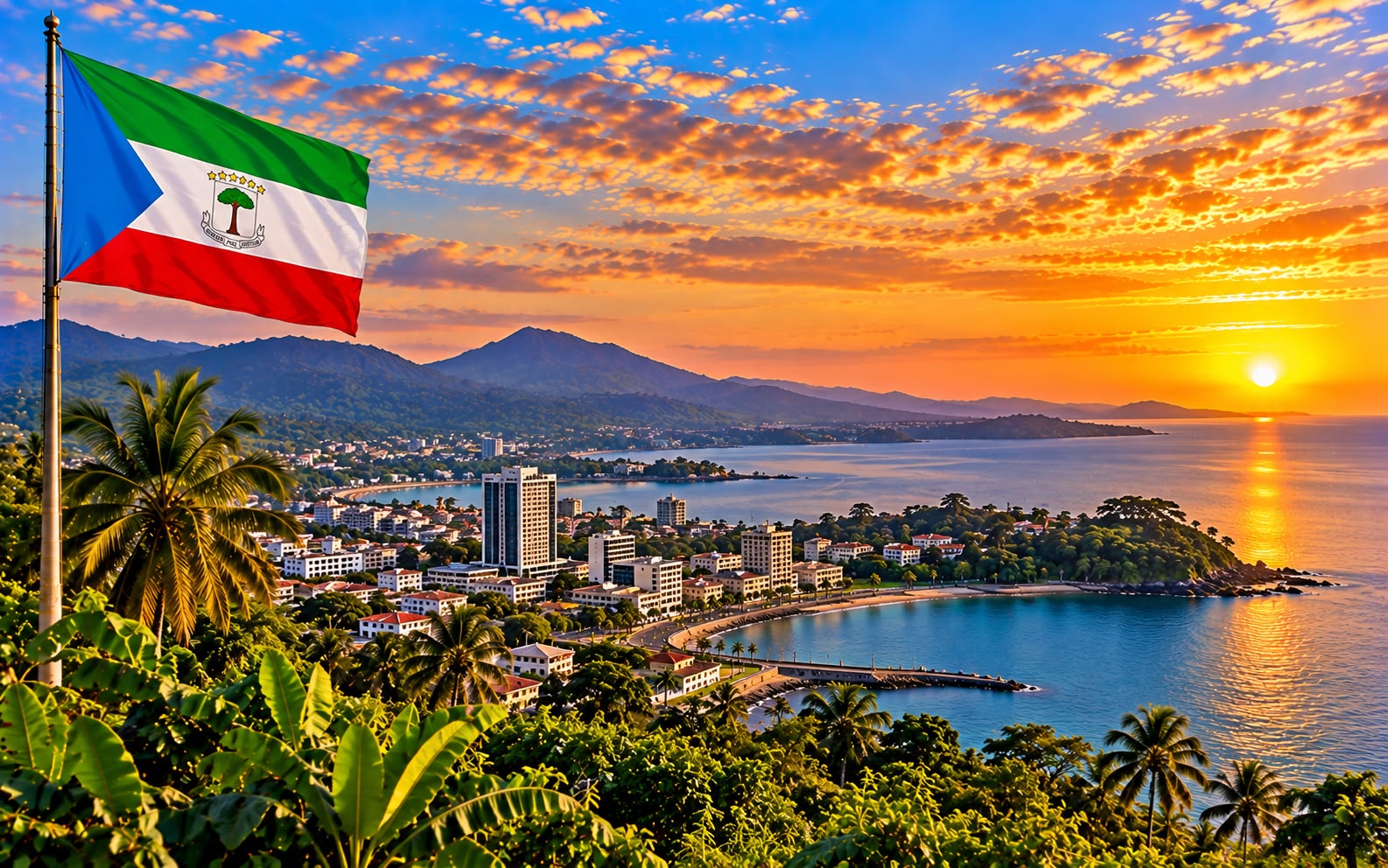
Equatorial Guinea in 6 days: Bioko's volcano, Malabo and the Monte Alén forest
A volcanic island of cloud forest and black-sand turtle beaches, a Spanish colonial capital on the crater rim, and mainland rainforest holding gorillas and forest elephants — behind what has long been one of the hardest visas in Africa.
- Central Africa
- 6 days
- ≈ AED 4,400 / person
- Africa's only Spanish-speaking country, and a rainforest island almost nobody reaches
Before you go
Equatorial Guinea is the only country in Africa where Spanish is an official language, a legacy of three centuries of Spanish rule that ended in 1968. It is also one of the least visited countries on the continent, and unlike most of the others on that list the reason is not war or poverty. It is oil, and the fact that the country has never especially wanted tourists.
That is changing slowly, and what is there is remarkable.
Bioko is a volcanic island 40 kilometres off Cameroon, with Pico Basilé rising to just over 3,000 metres from the sea. The south of the island — the Gran Caldera de Luba and the beaches at Ureca — is one of the least disturbed rainforests in Africa, home to seven primate species including the drill and Preuss’s monkey, and to beaches where four species of sea turtle nest between November and February.
Malabo sits on the rim of a drowned crater, with a Spanish colonial old town of iron-framed buildings around the Cathedral of Santa Isabel, and the oil money visible in everything built since.
On the mainland, Río Muni, Monte Alén National Park is Congo Basin rainforest with forest elephants, gorillas and chimpanzees, and near-zero infrastructure.
Six days is a realistic first visit. Figure USD 1,200 (≈ AED 4,407) per person excluding flights — this is an expensive country. Go December–February, the drier window on Bioko, which is also turtle season.
Before you go: the 15-minute admin
The visa is the hard part, and the paperwork is real
- Equatorial Guinea has long had one of the most difficult visas in Africa, and while the rules have loosened, nothing about this is casual.
- Most nationalities need a visa in advance from an embassy, typically with a letter of invitation, proof of accommodation, a return ticket and sometimes a yellow fever certificate and police clearance.
- US passport holders have been visa-exempt for short stays — an unusual carve-out dating from a bilateral agreement. Confirm it still stands before relying on it.
- Use a local agency or a hotel to produce the invitation. This is the normal route and it is difficult without one.
- Start three months out. Embassies are few and processing is slow.
- Yellow fever vaccination is required and checked.
Photography, which gets visitors arrested
- Do not photograph government buildings, the presidential palace, military or police, airports, ports or bridges. This is not a formality — detentions over photography are the single most common problem foreign visitors have here.
- Carry your passport and visa at all times. There are frequent checkpoints, including between Malabo and the airport.
- Ask before photographing people, every time.
- Some operators still advise obtaining a photography permit for travel outside the cities. Ask your agency whether this applies to your route.
Money
- The Central African CFA franc (XAF), pegged to the euro — the same currency as Cameroon and Gabon.
- Bring euros in cash. Card acceptance is limited to a handful of Malabo hotels and ATMs are unreliable for foreign cards.
- It is expensive. Oil economies import everything, and Malabo hotel rates reflect a business market rather than a tourist one.
Getting around
- Malabo and Bata are linked by short domestic flights, under an hour, several a day.
- Hire a car with a driver. Roads on Bioko are good along the north and rough to the south; the mainland has a surprisingly good highway network, built with oil revenue.
- The south of Bioko — the Gran Caldera and Ureca — needs a serious 4WD expedition or a multi-day trek, and permits. Treat it as a separate undertaking rather than a day out.
- Expect checkpoints, and let the driver handle them.
Language
- Spanish is the working language and the one you need. French and Portuguese are also official, and Fang, Bubi and pidgin English are widely spoken.
- English will not get you far.
Travelling with kids?
- Turtle nesting at Ureca is extraordinary and logistically hard to reach.
- Malaria is present year-round — prophylaxis is essential.
- Medical facilities are limited; evacuation cover matters.
- The photography and checkpoint rules need explaining to anyone old enough to be carrying a phone.
Day by day
Day 1 — Malabo
- Afternoon — Arrive on Bioko. The airport is 20 minutes from the city.
- 16:00 — Malabo’s old town: the Cathedral of Santa Isabel, neo-Gothic with twin towers, finished in 1916, and the Spanish colonial streets around it with their iron balconies and shuttered façades.
- 17:30 — The Paseo Marítimo along the bay, and the view back at the crater rim the city is built on.
- 19:00 — Dinner. Spanish food survives here in a way it does nowhere else in Africa — expect tapas alongside pepper soup.
Where to stay in Malabo (three nights across the trip)
- Mid-range: the centre near the cathedral, or the hotels along the bay.
- Expect business-market prices. There is no budget tier worth the name.
Day 2 — Pico Basilé and Moka
- 07:00 — Up the Pico Basilé road, which climbs the volcano on a tarred military road to around 2,800 metres. A permit and usually an escort are required — your agency arranges it. The forest changes band by band as you climb and the view over the bay is the reward.
- 12:00 — Down and south to Moka, a highland village at 1,400 metres in the island’s southern caldera, cool and green.
- 14:00 — Lake Biao, a crater lake in forest, and the walks around Moka. This is the base for the Bioko Biodiversity Protection Program, which runs the primate research here; ask whether anyone is available to talk about the drills.
- 17:00 — Back to Malabo, or stay at Moka in the very simple lodge.
Day 3 — Bioko’s coast
- 08:00 — The north coast road east towards Riaba, or west to Luba, the island’s second port, past cocoa plantations gone half back to forest.
- 11:00 — Arena Blanca near Luba — black volcanic sand, forest to the waterline, and almost nobody on it.
- 14:00 — Cascadas de Ilachi or the smaller waterfalls inland if the road allows.
- Note on the far south: the Gran Caldera de Luba and the turtle beaches at Ureca are the island’s great wilderness and need a guided multi-day expedition with permits. If that is why you came, plan the trip around it rather than squeezing it in.
Day 4 — To the mainland
- Morning — Fly to Bata, under an hour across the bight.
- Midday — Bata: a hot coastal city with a long promenade, a fishing port and the Torre de la Libertad. It is more relaxed than Malabo and more African in character.
- Afternoon — Drive inland. The highway is excellent and nearly empty — one of the more surreal experiences in Central Africa.
- Optional detour: Ciudad de la Paz (formerly Oyala), the planned new capital being built in the jungle, with boulevards and a golf course and almost no inhabitants. Access varies; ask first.
Day 5 — Monte Alén
- Full day — Monte Alén National Park, Congo Basin rainforest covering around 2,000 square kilometres. Forest elephants, western lowland gorillas, chimpanzees and mandrills are all here; seeing them is another matter, because there is essentially no habituation and no tourist infrastructure.
- Go for the forest, the birds, and the walk to the Lago Atoc. Take a park guide from the village at Monte Alén; they are the only way in.
- Evening — Back to Bata.
Day 6 — Fly out
- Morning — Fly Bata to Malabo and connect, or fly out of Bata directly if your routing allows.
- Leave generous margin: domestic schedules shift and the airport checks are slow.
Costs and practicalities
Best time to visit
December–February, the main dry season, when Bioko’s roads to the southern beaches are passable and the climb on Pico Basilé is clear.
- December–February — the driest and clearest window on Bioko, and the best for Monte Alén on the mainland.
- March–May — the first rains, hot and humid.
- June–August — a relatively drier spell on the mainland and the wettest on Bioko’s south coast, which is among the rainiest places in Africa.
- September–November — heavy rain and difficult travel.
Turtle nesting on Bioko’s southern beaches runs roughly November to February, which is also when the access is least impossible. Whales pass the coast July to September.
Travel tips
- Photography is the thing that gets visitors arrested. Do not photograph government buildings, the presidential palace, airports, ports, military or police, and ask before anything else. A permit is sometimes required even for ordinary tourist photography — ask your host.
- Visas are difficult and sponsorship is usually required. Start early and work through an operator.
- This is an expensive country on oil-economy prices with very little tourism infrastructure.
- Spanish is the working language, which is unique in sub-Saharan Africa; French and Portuguese are also official and English is rare.
- Bring euros in cash. The CFA franc is pegged to the euro and cards work in a couple of Malabo hotels only.
- A yellow fever certificate is required and malaria prophylaxis is essential.
- Police checkpoints are frequent and expect paperwork. Carry your passport and your permits at all times.
What this trip actually costs
Two people, 5 nights, mid-range comfort, international flights excluded:
| Item | Cost |
|---|---|
| Hotels, 5 nights | USD 900 (≈ AED 3,305) |
| Car with driver, 4 days | USD 600 (≈ AED 2,204) |
| Malabo–Bata flights, two return | USD 300 (≈ AED 1,102) |
| Permits, escorts, park guides | USD 200 (≈ AED 735) |
| Food and drink, 6 days | USD 400 (≈ AED 1,469) |
| Total for two | USD 2,400 (≈ AED 8,814) |
- Roughly USD 1,200 (≈ AED 4,407) per person. Hotels are the problem — Malabo is priced for oil contractors and there is no backpacker tier underneath it.
- The visa and the invitation may add an agency fee on top of this. Ask for it as a quoted figure, not an estimate.
- A Gran Caldera expedition is a separate budget entirely and needs a week of its own.
- Bring all of it in euros, in cash.
- Hotel picks here are chosen on location, not on commission — always check prices and recent reviews before booking.
What to pack
- Euros in cash, plus printed copies of your visa, invitation and hotel bookings for the checkpoints.
- Yellow fever certificate and malaria prophylaxis.
- Rain gear. Bioko is one of the wetter places on earth; even the dry season is relative.
- A warm layer for Moka and Pico Basilé, which are cold at altitude.
- Boots for Monte Alén, which is mud for most of the year.
FAQ
How hard is the visa, really? Hard enough that most visitors go through an agency that produces the invitation letter. Start three months ahead. US citizens have had a visa exemption, which is worth checking but not assuming.
Can I photograph in the street? Be very careful. Government buildings, military, police, ports and airports are all off limits, and enforcement is real. Ask your guide before raising a camera anywhere in a city.
Is it worth going for the wildlife? Bioko’s southern forest is genuinely world-class and genuinely hard to reach. Monte Alén is rich and almost unvisited, with no habituated animals — go for the forest rather than a sightings list.
Why is Spanish spoken here? Spain held the territory from the late eighteenth century until independence in 1968. It is the only sub-Saharan African country where Spanish is official.
Is six days enough? For Malabo, Bioko’s north and a look at the mainland, yes. The Gran Caldera and Ureca need a dedicated expedition.
Prices and entry rules change, and what you need depends on your passport; last checked 8 October 2026, so confirm with the embassy or your airline before booking.


