 The Itinerary
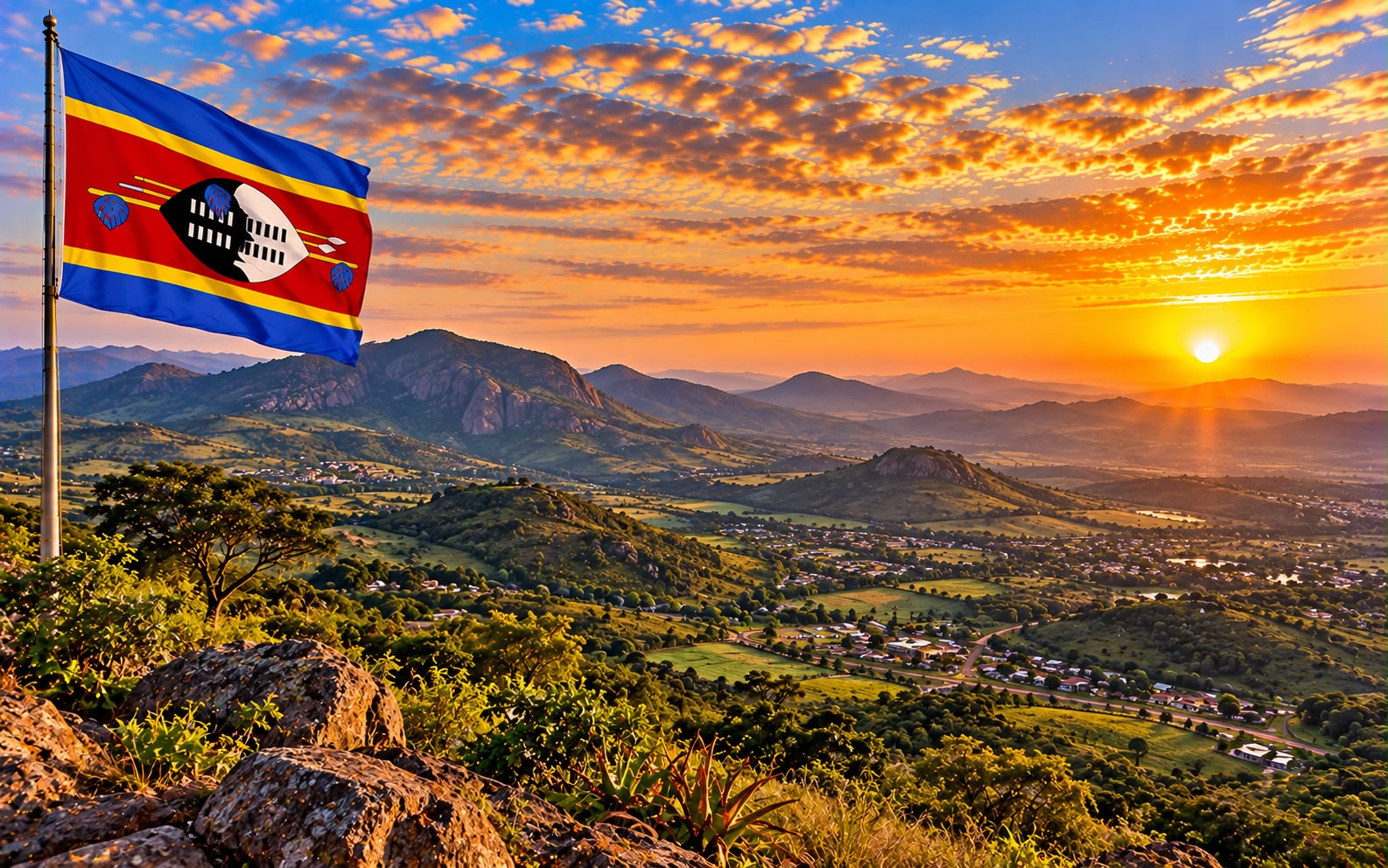
Eswatini in 5 days: black rhino at Mkhaya, Malolotja's ridges and the Ezulwini valley
A kingdom the size of Wales where you can cycle through a reserve full of antelope because nothing there eats you, track black rhino on foot an hour away, and stand on a granite dome older than almost any rock on earth.
- Southern Africa
- 5 days
- ≈ AED 2,300 / person
- Walking among zebra with no predators about, and the best black rhino viewing in southern Africa
Before you go
Eswatini — Swaziland until the king renamed it in 2018 — is one of Africa’s smallest countries and one of its last absolute monarchies. It is also the easiest safari country on the continent to drive yourself around, and it is routinely skipped by people heading between Johannesburg and the Kruger, which is their loss.
Mlilwane Wildlife Sanctuary is the trick that makes the country distinctive: a reserve with zebra, wildebeest, warthog, impala and hippo, and no lion, leopard or elephant. So you walk through it. You cycle through it. You ride a horse through it. Doing that among wild animals is simply not possible in most of Africa, and it changes what a game reserve feels like.
Mkhaya Game Reserve is the opposite end: a private reserve built around black rhino, where the viewing is as good as anywhere in southern Africa and the game drives are open vehicles with a ranger who will take you in on foot.
Malolotja in the north-west is high grassland and deep ravines, with proper multi-day hiking, a canopy zipline, and — at Ngwenya — a haematite mine worked 43,000 years ago, which makes a reasonable claim to being the oldest known mine in the world.
And the Ezulwini valley between them, the “Valley of Heaven”, holds the craft workshops, the cultural village and most of the places to stay.
Five days is plenty. Figure USD 625 (≈ AED 2,295) per person excluding flights. Go May–September, dry and cool, with the best game viewing.
Before you go: the 15-minute admin
Getting there, which is easiest by road
- Most people arrive by car from South Africa. Johannesburg is around four hours to the Ngwenya / Oshoek border; the Kruger’s southern gates are about two and a half hours from the north-eastern posts.
- There are flights into King Mswati III International (Sikhuphe), but the schedule is thin — largely Johannesburg.
- Border posts close at night. Ngwenya/Oshoek has long hours; the smaller ones shut as early as 16:00. Check the closing time of your crossing before you commit to it, because the detour is substantial.
- A hire car from South Africa needs a letter of authority from the rental company to cross the border, plus the vehicle papers. Ask when you book — being turned back at the post is a wasted day.
- Expect a small road levy on entry, payable in cash.
Visas and money
- Many nationalities enter visa-free for short stays. Check your own case officially.
- The lilangeni (SZL) is pegged 1:1 to the South African rand, and rand is accepted everywhere at par. Lilangeni are not accepted back in South Africa, so spend them or keep a few as souvenirs.
- Cards work in Mbabane, Manzini and the Ezulwini hotels. Carry cash for reserve gates, craft markets and fuel in the rural areas.
Health
- Malaria is present in the eastern lowveld — Hlane and Mkhaya are both in it — mainly in the wet summer months. Take advice; prophylaxis is commonly recommended for November to May.
- The highveld around Mbabane and Malolotja is malaria-free.
- Bilharzia is present in still fresh water. Swim in pools, not dams.
Getting around
- Self-driving is easy and is what most visitors do. Roads between the main centres are good, driving is on the left, and distances are tiny — nothing in this itinerary is more than ninety minutes from anything else.
- A 4WD is not needed except for some reserve tracks, and the reserves run their own vehicles anyway.
- Avoid driving at night. Livestock and pedestrians on unlit roads are the main hazard in the country.
- Minibus taxis exist and are not practical for this itinerary.
Culture and the monarchy
- Eswatini is an absolute monarchy and the king is treated with genuine deference. Do not criticise the monarchy in public, and do not photograph royal residences or the royal kraal at Lobamba without permission.
- Umhlanga, the reed dance, is held in late August or early September, and Incwala, the kingship ceremony, around December and January. Both are enormous and neither is staged for visitors; attendance is possible with the right guidance about dress and behaviour.
- Dress modestly away from lodges.
Travelling with kids?
- This is one of the best family safari destinations in Africa, precisely because Mlilwane has no predators — children can walk and cycle among the animals.
- Short drives, no long transfers, and malaria-free in the highveld if you stay west.
- The Malolotja canopy tour has a minimum age and weight; check before promising it.
Day by day
Day 1 — Mbabane and Malolotja
- Morning — Cross at Ngwenya/Oshoek and drive the few kilometres to Ngwenya Glass, where recycled bottles are blown into animals while you watch, and the Ngwenya Mine above it.
- 11:00 — The mine is the headline fact: haematite and specularite were dug here around 43,000 years ago, which makes it a serious candidate for the oldest known mining in the world. The pigment was used as cosmetic and ritual ochre.
- 13:00 — Into Malolotja Nature Reserve: high grassland, aloes, cliffs and waterfalls, and some of the best hiking in southern Africa with barely anyone on it.
- 15:00 — The canopy tour — a zipline across a gorge in the reserve — or a walk to the Malolotja Falls, the country’s highest.
Where to stay (two nights, Ezulwini valley)
- Mid-range: the Ezulwini valley between Mbabane and Lobamba, central to everything in this itinerary.
- Character: Mlilwane’s own rest camp, inside the sanctuary, where warthogs wander between the huts.
Day 2 — Mlilwane and the Ezulwini valley
- 08:00 — Mlilwane Wildlife Sanctuary, the country’s first protected area, founded by Ted Reilly on his family farm. Walk, cycle or ride among zebra, blesbok, impala, wildebeest, nyala and hippo. There are no large predators, which is why you can.
- 12:00 — Lunch at the rest camp.
- 14:00 — Mantenga Cultural Village, a reconstructed homestead with an explanation of Swazi building and social structure, and the sibhaca dance performance, which is genuinely good. The Mantenga Falls are a short walk from it.
- 16:00 — Lobamba — the royal village, the National Museum and parliament. The king’s residence is here; observe the photography rules.
- 17:30 — The craft markets of the valley — Swazi Candles, Baobab Batik, Gone Rural — which are cooperatives rather than souvenir stalls.
Day 3 — Sibebe, and east to Mkhaya
- 07:30 — Sibebe Rock, just outside Mbabane: an enormous granite dome, around three billion years old, and frequently described as the second-largest monolith on earth after Uluru. The walk up is steep, unmarked and takes about two hours; take a local guide from the village.
- 12:00 — Drive east and south to Mkhaya Game Reserve, about two hours.
- 15:00 — You leave your car at the gate and are collected — Mkhaya takes no self-drivers. The reserve exists to protect black rhino, and the viewing is exceptional; white rhino, elephant, buffalo, sable and roan are all here too.
- Afternoon drive, then dinner in a stone-and-thatch shelter open to the bush.
Where to stay at Mkhaya (one night)
- The only option: Stone Camp, half-open stone cottages with no doors on the bush side. It is the best night in the country and should be booked well ahead.
Day 4 — Mkhaya and Hlane
- 06:00 — Morning drive, and a rhino tracking walk on foot if the ranger judges conditions right. Approaching black rhino on foot with a guide who knows them is the single most memorable hour available in this country.
- 10:00 — Out of Mkhaya, north to Hlane Royal National Park, about an hour.
- 12:00 — Hlane is the big one — royal hunting ground turned park, with lion, elephant, white rhino and a large population of plains game. The lion and elephant are in separate fenced sections, which is honest about what it is.
- 15:00 — Game drive, or the waterhole hide at Ndlovu camp, where elephants come to drink a few metres from where you sit.
Where to stay at Hlane (one night)
- Simple: Ndlovu camp, lit by paraffin lamp, beside the waterhole.
Day 5 — Back west, and out
- 07:00 — A last drive at Hlane.
- 10:00 — Drive west towards the border, stopping at Manzini market if it is a Thursday or Friday, when the handicraft market is at its biggest.
- 13:00 — Cross back into South Africa, or on to the Kruger, which is two to three hours from the north-eastern posts.
Costs and practicalities
Best time to visit
May–September, the dry winter, which is the best game-viewing window and the most comfortable for walking in Malolotja.
- May–September — dry, cool, and the bush thin enough to see through at Hlane and Mkhaya. Cold at night in the highveld.
- October–April — the rains, hot and humid in the lowveld, with the mountains green and the waterfalls full. Malolotja’s wildflowers are at their best in spring.
- Late August–September — the Umhlanga Reed Dance, the largest cultural event of the year, when tens of thousands of young women process before the Queen Mother.
- December–January — Incwala, the kingship ceremony and the most sacred event in the Swazi calendar. Parts are closed to outsiders and photography is restricted.
Festival dates are set by the moon and announced late; confirm before planning around either.
Travel tips
- The lilangeni is pegged to the South African rand and rand is accepted everywhere at par. Emalangeni cannot be spent in South Africa, so spend them before you leave.
- Most visitors arrive overland from South Africa. Border posts have limited hours — Ngwenya and Lavumisa close in the evening — so check before a late crossing.
- This is a kingdom with real protocol. Do not photograph the King or royal residences, and follow your guide’s lead at any ceremony.
- Malaria risk exists in the lowveld — Hlane, Mkhaya, Big Bend — mainly in the wet season.
- Driving is on the left and the mountain roads are steep with livestock on them.
- Cards work in Mbabane and Manzini and at the lodges; carry cash for craft markets, which are the best in the region.
- Political demonstrations have occurred since 2021 and are policed hard. Avoid gatherings and check current advice.
What this trip actually costs
Two people, 4 nights, mid-range comfort, flights excluded:
| Item | Cost |
|---|---|
| Lodges and camps, 4 nights | USD 400 (≈ AED 1,469) |
| Car hire, 5 days, fuel and border fees | USD 350 (≈ AED 1,285) |
| Park fees, game drives, cultural village | USD 300 (≈ AED 1,102) |
| Food and drink, 5 days | USD 200 (≈ AED 735) |
| Total for two | USD 1,250 (≈ AED 4,591) |
- Roughly USD 625 (≈ AED 2,295) per person, which is remarkable value for a country where you can track black rhino on foot.
- Mkhaya is the expensive night and the one worth paying for. It is full-board and includes the drives.
- Mlilwane is the cheap one and arguably the most enjoyable — the rest camp is inexpensive and the walking and cycling cost nothing beyond the entry fee.
- Rand works everywhere, so there is no need to change money if you are coming from South Africa.
- Hotel picks here are chosen on location, not on commission — always check prices and recent reviews before booking.
What to pack
- Binoculars. Hlane’s hide and Mkhaya’s drives both reward them.
- Warm layers — the highveld is at 1,200 metres and winter mornings on an open game vehicle are genuinely cold.
- Walking shoes for Sibebe and Malolotja.
- Insect repellent and malaria prophylaxis if you are staying east in the summer months.
- Cash in rand for gates, markets and fuel.
- Modest clothing for Lobamba and the cultural village.
FAQ
Is it Swaziland or Eswatini? Eswatini. The king renamed the country in 2018 on the fiftieth anniversary of independence; it means “land of the Swazis” and ends the confusion with Switzerland.
Can I really walk among the animals? At Mlilwane, yes — it has no lion, leopard or elephant, which is exactly why walking, cycling and riding are offered. At Hlane and Mkhaya you do not, except on a guided rhino walk with a ranger.
Is it worth a detour from Kruger? Yes, and it is barely a detour — the north-eastern border posts are a couple of hours from Kruger’s southern gates. Two nights here changes the character of a South Africa trip.
Do I need a 4WD? No. Ordinary roads are good and the reserves run their own vehicles.
What language do they speak? siSwati and English, both official. English is spoken everywhere and you will have no difficulty at all.
Prices and entry rules change, and what you need depends on your passport; last checked 8 October 2026, so confirm with the embassy or your airline before booking.


