 The Itinerary
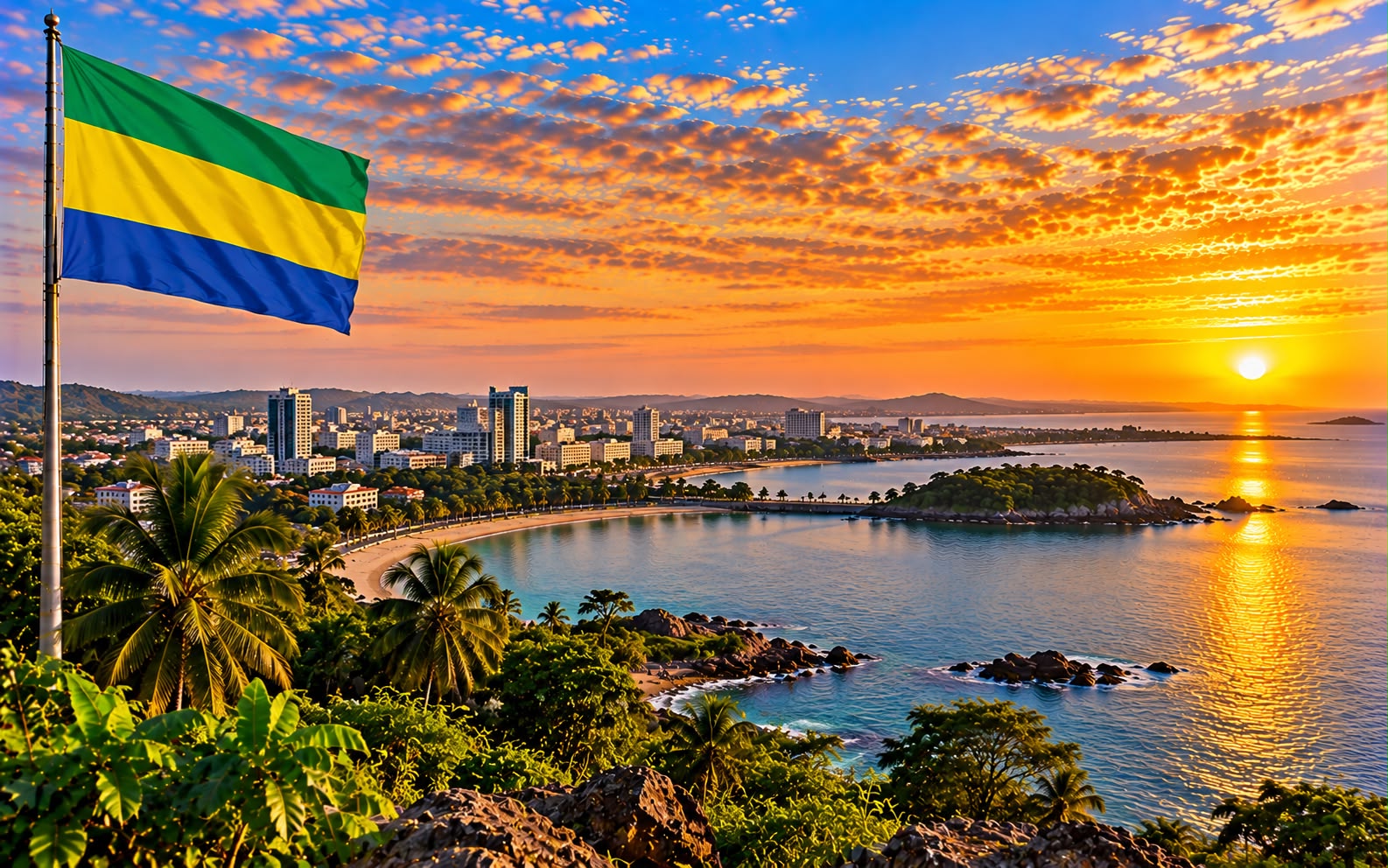
Gabon in 8 days: Loango's beach elephants, Lopé's mandrills and the Ivindo falls
Eighty-five per cent rainforest and a president who turned a tenth of it into national parks overnight — giving you elephants and buffalo walking on the surf line, the largest primate gatherings on earth, and waterfalls almost nobody has stood in front of.
- Central Africa
- 8 days
- ≈ AED 8,450 / person
- Forest elephants on an Atlantic beach, and hordes of a thousand mandrills
Before you go
Gabon is about eighty-five per cent rainforest, has fewer than two and a half million people, and in 2002 created thirteen national parks in a single stroke — roughly a tenth of the country — on the strength of a survey that showed what was still intact. Oil money meant it never needed to log it.
The result is the best wildlife country in Central Africa and one of the hardest and most expensive to travel in. Those two facts are related.
Loango National Park is the famous one, and the reason is a photograph: forest elephants and buffalo walking on an Atlantic beach, with the forest behind them and surf in front. Western lowland gorillas are habituated here, hippos are occasionally seen in the surf, and humpback whales pass offshore between July and September.
Lopé is a UNESCO site where savanna left over from the last ice age pushes into the forest, and it holds mandrills — the largest monkey in the world — in hordes that can run past a thousand animals, the biggest gatherings of any non-human primate.
Ivindo, listed by UNESCO in 2021, has the Kongou Falls and the Langoué Baï, a forest clearing where elephants, gorillas and sitatunga come out of the trees to drink and are watched from a platform.
Eight days, and it is not a cheap eight. Figure USD 2,300 (≈ AED 8,447) per person excluding international flights. Go June–September (the long dry season, best for Lopé and for whales) or December–January.
Before you go: the 15-minute admin
This is an expensive, logistics-heavy country
- Gabon has very little tourism infrastructure and very high costs. Park lodges are few, run at capacity, and priced accordingly.
- Almost everyone travels on an arranged itinerary through a Libreville operator or a lodge, because the parks cannot be reached independently in any practical way.
- Book months ahead. Loango’s lodges have a handful of rooms between them, and the Langoué Baï platform takes very small numbers.
- Internal transport is the other third of the budget — light aircraft, 4WD and boat, often all three in one day.
- The Trans-Gabon railway from Libreville to Franceville passes Lopé, takes about eight hours, and is both the cheapest way inland and an experience in itself. Overnight sleepers run; the schedule is approximate.
Visas and health
- An e-visa is applied for online and collected on arrival at Libreville. It is one of the more straightforward processes in Central Africa.
- Yellow fever vaccination is compulsory and the certificate is checked at the airport.
- Malaria is present year-round and the risk is high. Prophylaxis is essential; take advice well in advance.
- Bring everything medical you might need. Pharmacies outside Libreville are minimal.
Money
- The Central African CFA franc (XAF), pegged to the euro — same as Cameroon and Equatorial Guinea.
- Bring euros in cash. Libreville has ATMs that sometimes take foreign cards; the parks have nothing at all.
- Lodges are usually prepaid through your operator, which is just as well.
Getting around
- Light aircraft link Libreville with Port-Gentil and the airstrips near Loango and Ivindo. They are the normal way and they are weather-dependent.
- 4WD and boat for everything else, arranged by the lodges.
- Roads are poor and long. The drive to Loango is possible and takes most of a day in the dry season, longer in the wet.
- Leave a buffer day before your international flight. A missed light aircraft connection is not unusual.
Language
- French, and essentially only French outside the lodges. Guides at the lodges often speak English; drivers and park staff frequently do not.
Travelling with kids?
- Gorilla tracking has a minimum age, usually 15, as in the rest of the region. Check with the lodge.
- The forest walks are hot, wet and long.
- High malaria risk and remote medical cover make this a hard sell for young children. It is a trip for committed wildlife travellers.
Day by day
Day 1 — Libreville
- Afternoon — Arrive. The city sits on the estuary and is more pleasant than its reputation.
- 16:00 — The Musée National des Arts et Traditions for Fang and Punu masks and reliquary figures — the sculpture tradition that influenced Picasso and the Cubists, seen at home rather than in a European museum.
- 18:00 — The Bord de Mer at sunset, and the Marché du Mont-Bouët if you have energy.
Where to stay in Libreville (two nights across the trip)
- Mid-range: the Quartier Louis or the seafront.
Day 2 — Inland to Lopé
- Morning — Take the Trans-Gabon railway east, or fly. The train is about eight hours and takes you through the forest at ground level, which is the point.
- Afternoon — Arrive at Lopé. Check in; the lodge overlooks the Ogooué river.
- Evening — The forest-savanna edge right behind the lodge, where buffalo and elephant come out at dusk.
Where to stay at Lopé (two nights)
- The practical option: the lodge at Lopé village, which runs the park activities.
Day 3 — Mandrills and rock art
- 06:00 — Mandrill tracking. Researchers have radio-collared animals in a horde here, and when it is located you may find yourself among several hundred to over a thousand monkeys moving through the forest at once. It is the largest aggregation of any non-human primate and there is nothing else like it.
- It is not guaranteed. The horde ranges widely; some days it is not found.
- 13:00 — Lunch, then the savanna drive for forest buffalo, elephant and red river hog on the grassland — the odd open landscape that made this a UNESCO site, a relict of the last ice age.
- 16:00 — The petroglyphs at Kongo Boumba or Elarmékora, Iron Age engravings on the river rocks, part of the same listing.
Day 4 — To Ivindo and the Langoué Baï
- Morning — North to Ivindo National Park. This is a long day: road, then boat up the river, then a walk.
- Afternoon — The approach to the Langoué Baï is a forest hike of several hours to the research camp. Expect mud, river crossings and sweat.
- Evening — Camp. The facilities are a research station’s, not a lodge’s.
Day 5 — The baï, and the Kongou Falls
- Dawn — Langoué Baï. A marshy clearing in the forest, watched from a raised platform. Forest elephants, western lowland gorillas, sitatunga, forest buffalo and red river hogs come out of the trees to drink and take minerals from the mud. Sitting still for hours is the activity and it is the best wildlife watching in Central Africa.
- Afternoon — Out, and if the water and the permits allow, the Kongou Falls on the Ivindo — a kilometres- wide complex of cataracts in untouched forest, which very few people have stood in front of.
- Access to Kongou varies with river levels and with the state of the track. Ask your operator rather than assuming.
Day 6 — To Loango
- Travel day. Back to Libreville and on to Loango by light aircraft, or fly via Port-Gentil. This is the day the itinerary spends on logistics.
- Late afternoon — Arrive at the lodge on the lagoon.
Where to stay at Loango (two nights)
- The options are few: the lodges on the Iguéla lagoon, all small and all booked far ahead.
Day 7 — Loango
- 05:30 — The beach drive. The reason to come: a track along the coast where forest elephants and buffalo walk on the sand, with surf on one side and rainforest on the other. Red river hogs, sitatunga and occasionally leopard tracks.
- 10:00 — Gorilla tracking on the habituated group, if your lodge offers it and the permit is available. Minimum age applies and the walk can be long.
- 14:00 — The lagoon by boat for hippos, crocodiles, and an enormous bird list; or sport fishing, which Loango is also known for.
- July to September, humpback whales are offshore with calves and are seen from the beach and the boats.
Day 8 — Fly out
- Morning — Light aircraft back to Libreville.
- Afternoon — Connect out. Do not book a tight connection; this leg is weather-dependent.
Costs and practicalities
Best time to visit
June–September is the long dry season and the best window, with a second shorter one in December and January.
- June–September — dry, cooler, and the peak of Loango’s beach season: elephants and buffalo on the sand, and humpback whales offshore from July to September. The best months for the park tracks.
- December–January — a shorter dry spell, good for Lopé’s mandrill hordes.
- February–May and October–November — the two rainy seasons. Heavy, humid, and the forest tracks become very difficult.
- Leatherback turtles nest at Pongara and Mayumba from November to February, which is the opposite season and the reason some itineraries invert.
- Mandrills at Lopé are most reliably seen in the dry months, when the hordes — sometimes hundreds strong — move in open savanna rather than deep forest.
Travel tips
- Gabon is expensive and under-visited, which is the trade-off: almost no other tourists, and oil-economy prices in Libreville.
- Park access is through accredited operators and most lodges arrange the permits. Loango and Ivindo are not somewhere to turn up.
- The Trans-Gabon railway to Lopé is a genuinely good overnight journey and far better than the road.
- Bring euros in cash. The CFA franc is pegged to the euro; cards are useful only in Libreville.
- French is essential. English is rare outside the lodges.
- A yellow fever certificate is mandatory and checked; malaria is year-round and the risk is high.
- Do not photograph military, the port, the airport or government buildings. Elsewhere, ask first.
What this trip actually costs
Two people, 7 nights, lodge standard, international flights excluded:
| Item | Cost |
|---|---|
| Lodges and camps, 7 nights | USD 2,200 (≈ AED 8,080) |
| Light aircraft and transfers | USD 900 (≈ AED 3,305) |
| Park fees, guides, tracking permits | USD 800 (≈ AED 2,938) |
| Train, 4WD and boat transfers | USD 300 (≈ AED 1,102) |
| Food, drink and tips | USD 400 (≈ AED 1,469) |
| Total for two | USD 4,600 (≈ AED 16,894) |
- Roughly USD 2,300 (≈ AED 8,447) per person, which makes this one of the most expensive trips on this site. Gabon is not a budget destination and cannot be made into one.
- Lodges and flights are three quarters of it, and neither has a cheaper tier.
- Dropping Ivindo saves a significant amount and loses the baï, which is arguably the best thing in the country.
- The train to Lopé instead of flying is the one real saving available.
- Hotel picks here are chosen on location, not on commission — always check prices and recent reviews before booking.
What to pack
- Euros in cash, and your yellow fever certificate.
- Malaria prophylaxis, started as advised, and strong repellent.
- Boots that drain, and a second pair of shoes. You will be wet.
- Long sleeves and trousers for the forest, against insects rather than cold.
- Binoculars — essential at the baï.
- Dry bags for cameras. Everything is damp.
FAQ
Can I travel Gabon independently? Barely. The parks have no public access, no self-drive tracks and no walk-up accommodation. Almost everyone books through an operator or direct with a lodge.
Is the beach-elephant photograph realistic? Yes, at Loango, on the coastal track — though it is wildlife and not a set. Several days there improves the odds considerably over one.
How reliable are the mandrills? A collared horde is tracked at Lopé, which makes it far more likely than anywhere else, but it is not guaranteed on any given morning.
When is best? June to September is the long dry season, best for Lopé’s savanna and for whales at Loango. December and January are the shorter dry window.
Do I need French? Effectively yes, or a guide who has it. Outside lodge staff, English is rare.
Prices and entry rules change, and what you need depends on your passport; last checked 8 October 2026, so confirm with the embassy or your airline before booking.


