 The Itinerary
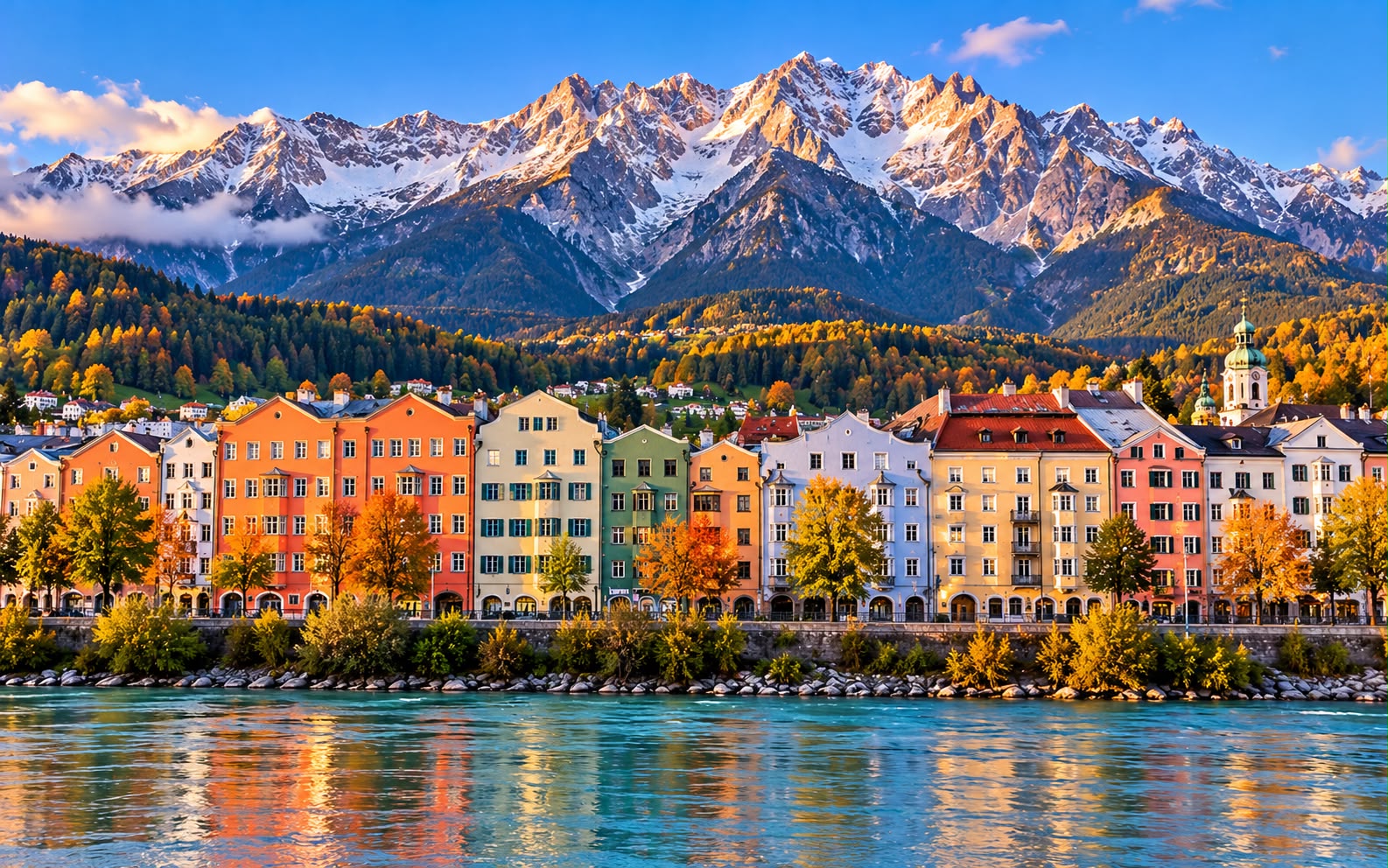
Germany and Austria in 12 days: Munich, Neuschwanstein, the Tyrol, Salzburg and Vienna
A fairytale castle built by a king who drowned before it was finished, an Alpine valley with the best road in Europe running through it, a lake village that half of Asia has seen a photograph of, and Vienna at the end — where the coffee houses are UNESCO-listed and mean it.
- Central Europe
- 12 days
- ≈ AED 9,850 / person
- Bavaria, the Tyrol and the Salzkammergut, ending in the city that ran an empire
Before you go
This is the Alpine spine of Europe and the two cities at either end of it, and it works because the distances are small, the trains are good and the landscape changes every hour.
Munich is the Bavarian capital and a beer city that is also an art city — people forget the second half. Schloss Neuschwanstein is the castle Ludwig II built on a crag above two lakes, bankrupted himself over, and died before completing; Disney’s castle is modelled on it, which is why it looks familiar before you arrive.
Innsbruck sits in a valley with a 2,300-metre wall of rock on both sides and a funicular from the city centre to the top of it. Salzburg gave the world Mozart and The Sound of Music and has not stopped mentioning either. Hallstatt is a village of 700 people on a lake beneath a salt mine worked for 7,000 years, and it is on more phone wallpapers than any other village in Europe.
Vienna finishes it: the Habsburg capital, where the coffee-house culture is on UNESCO’s intangible heritage list and the Spanish Riding School still trains the same horses the same way.
Twelve days, six stops, trains between all of them. Figure EUR 2,400 (≈ AED 9,827) per person. May–June and September–early October are the windows, and December is its own argument.
Before you go: the admin
Entry and the practical bits
- Both are Schengen, so one visa covers the trip and there is no border check between them. Apply at the embassy of the country you will spend most nights in — on this routing that is Austria, narrowly.
- 90 days in any 180 across the whole Schengen area, and the clock includes any other Schengen country you visited recently.
- The EU’s EES and ETIAS systems are being phased in. If you are visa-exempt, check whether ETIAS applies by your travel date; it is cheap and online, but it is not optional once live.
- Fly into Munich and out of Vienna. Both are major hubs, the open-jaw costs about the same as a return, and backtracking across Austria at the end wastes a day.
Getting around
- The trains are the reason this itinerary is easy. Munich → Innsbruck is under two hours, Innsbruck → Salzburg about two, Salzburg → Vienna two and a half on the railjet.
- Book ÖBB and Deutsche Bahn tickets in advance for the cheap advance fares. Walk-up prices are roughly double.
- Neuschwanstein and Hallstatt are the two that need thought. Neuschwanstein is a day trip from Munich by train and bus to Hohenschwangau, or a stop en route to Innsbruck if you hire a car. Hallstatt is reached from Salzburg by bus or by train-and-ferry, which is slower and much nicer.
- A car is worth it for exactly one stretch — the Romantic Road and the castles — and a liability in all four cities. Hire it for two days if you want it, not twelve.
- German trains are not as punctual as their reputation. Austrian ones mostly are. Leave slack on connections through Munich.
Money
- Both use the euro, which removes the usual multi-country headache.
- Germany is stubbornly cash-friendly. Many bakeries, smaller restaurants and some museums are cash only, and Bavaria is worse for it than the north. Carry notes.
- Austria takes cards more widely but the same rule holds in mountain huts and village cafés.
- Tipping is rounding up, or five to ten per cent for good service. Hand it to the server when paying rather than leaving it on the table.
Two things worth knowing early
- Sunday closes Germany. Shops shut almost entirely — museums, restaurants and cafés stay open. Plan supplies on Saturday.
- Neuschwanstein tickets sell out. They are timed entry, released in advance online, and in summer they go. Book the moment your dates are fixed; this is the one booking on the whole trip that cannot be fixed on the day.
Day by day
Day 1 — Munich, the centre
- 11:00 — Marienplatz and the Glockenspiel at eleven, which is gloriously underwhelming and everyone watches it anyway. It runs again at noon if you miss it.
- 12:30 — Viktualienmarkt for lunch, outdoors, under the maypole.
- 14:30 — The Residenz, the Wittelsbach palace in the centre — ten courtyards, and the Antiquarium is the largest Renaissance hall north of the Alps.
- 17:00 — The Englischer Garten — bigger than Central Park, with surfers on the Eisbach, a standing wave under a bridge that people have surfed since the 1970s. They surf it year-round, in wetsuits, in snow.
- 19:30 — A beer hall or a garden: the Hofbräuhaus is the famous one and the most touristic; Augustiner-Keller is where people from Munich actually go.
Day 2 — The galleries, and the parks
- 10:00 — The Alte Pinakothek for Dürer, Rubens and Altdorfer, and the Pinakothek der Moderne next door if that is more your thing. Munich’s galleries are the part visitors skip and regret skipping.
- Sunday entry to the Pinakotheken is €1, which is worth shaping the week around.
- 14:00 — The Nymphenburg Palace and its park, twenty minutes out on the tram.
- 17:00 — The Chinesischer Turm beer garden in the Englischer Garten, or the Seehaus by the lake.
- 20:00 — Dinner in Haidhausen or the Glockenbachviertel.
Day 3 — Dachau
- 09:00 — Dachau is twenty minutes out on the S-Bahn. The memorial site is free, the audio guide is worth it, and it is a difficult half day that most people are glad to have done.
- Plan nothing demanding after it. That is not a scheduling note so much as a practical one.
- 14:00 — Back in the city, and something quiet — the Asamkirche, a baroque church the Asam brothers built as their own, ten metres wide and extraordinary.
- 16:30 — The Deutsches Museum if you want several more hours, or the English Garden if you do not.
- Pick up the car this evening if you are driving to the castles tomorrow.
Day 4 — Neuschwanstein and the Bavarian castles
- 07:30 — Two hours south of Munich, either as a long day trip or as a stop on the way to the Tyrol.
- Timed entry, booked ahead, and no photography inside. The guided tour is thirty-five minutes and compulsory.
- 10:00 — Schloss Neuschwanstein — Ludwig II’s Romanesque Revival fantasy on a gorge above the Pöllat. He lived in it for eleven nights before he died, and it was never finished; the throne room has no throne.
- 11:30 — Marienbrücke is where the famous photograph is taken, on a bridge across the gorge behind the castle. It closes in ice and sometimes for maintenance — check at the ticket centre before you climb.
- 13:30 — Hohenschwangau, the yellow castle below, is where Ludwig actually grew up and is the more human of the two.
- 16:00 — If you have a car, add the Wieskirche — a rococo pilgrimage church in a field, UNESCO-listed, and absurdly beautiful inside for a building in the middle of nowhere.
Day 5 — Innsbruck
- 09:00 — Two hours by train from Munich, through the Alps.
- 11:30 — The Golden Roof — 2,657 gilded copper tiles on a balcony built so Maximilian I could watch the square. The old town around it is compact and medieval.
- 14:00 — The Nordkette, reached by the Hungerburgbahn from the centre: a Zaha Hadid funicular into cable cars, and you are at 2,300 metres about twenty-five minutes after leaving the old town. Nowhere else in Europe does a city put you that high that fast.
- 17:30 — The Bergisel ski jump, also Hadid, with a view back down the valley.
- 19:30 — Dinner in the old town.
Day 6 — Ambras, and the Tyrol
- 10:00 — Ambras Castle, with the Chamber of Art and Curiosities — the oldest surviving cabinet of curiosities in the world, exactly as its Habsburg owner arranged it. Narwhal tusks, coral, automata and portraits of the court’s oddities.
- 13:00 — Swarovski Kristallwelten at Wattens, twenty minutes out, which is either wonderful or very strange depending on temperament.
- Skip it without regret if that is not your register, and take the Stubai valley instead for an afternoon walk.
- 16:00 — The Hofkirche back in Innsbruck, with the twenty-eight black bronze figures around Maximilian’s empty tomb — he is buried elsewhere and they guard nothing.
Day 7 — Salzburg
- 09:00 — Two hours east by train.
- 12:00 — Getreidegasse itself is the famous street with the wrought-iron guild signs, and Mozart’s birthplace on it.
- 14:30 — Hohensalzburg Fortress on its rock — one of the largest fully preserved castles in Europe, and it has never been taken. The funicular goes up; walking down is ten minutes.
- 17:00 — The Residenz and the Cathedral, where Mozart was baptised and later worked.
- 19:30 — Dinner in the Altstadt, and a concert in the fortress if one is on.
Day 8 — Mirabell, Hellbrunn, and the lake
- 09:00 — Mirabell Gardens — the Do-Re-Mi steps, and the gardens are lovely independently of that.
- 10:30 — The Sound of Music tour is unapologetically what it is, and Austrians find the whole phenomenon baffling. Go or do not, but the film is far better known abroad than here.
- 13:00 — Hellbrunn Palace with its trick fountains, built by an archbishop with a sense of humour who liked soaking guests. Still does.
- 15:00 — Berchtesgaden and the Eagle’s Nest are half an hour back across the German border, with the Königssee below — an emerald fjord-like lake with electric boats and a trumpeter who plays at the echoing cliff.
- The Eagle’s Nest road is closed until late May and the bus is the only way up.
Day 9 — Hallstatt and the Salzkammergut
- 08:00 — An hour and a half from Salzburg, and the train-and-ferry arrival is the one to take — the station is across the lake and a boat meets the train.
- Hallstatt has 700 residents and receives up to a million visitors a year. The village has asked people to be considerate and has had to fence off one viewpoint. Go early or stay the night; between ten and four it is shoulder to shoulder.
- 10:00 — The salt mine above the village has been worked for 7,000 years — the oldest known in the world — with a wooden slide down into it and a funicular up.
- 13:00 — The Skywalk platform, 350 metres above the lake, which the same funicular reaches.
- 15:30 — The Beinhaus, a charnel house holding 1,200 painted skulls, because the graveyard was too small to keep anyone permanently. The painting says who each one was.
- 17:00 — Staying overnight is the single best decision on this trip. The day crowds leave at four and the village becomes what the photographs suggest it is.
Day 10 — To Vienna, and Schönbrunn
- 09:00 — Two and a half hours by railjet.
- 13:00 — Schönbrunn — 1,441 rooms, the Gloriette on the hill behind, and the oldest zoo in the world in the grounds. Book a timed slot.
- 16:30 — The Gloriette walk up behind the palace, which is free and gives you the whole city.
- 19:00 — A Heuriger in Grinzing — the wine taverns on the edge of the city, where the new wine is sold by the grower.
Day 11 — Imperial Vienna
- 09:00 — The Hofburg, the winter palace: the Imperial Apartments, the Sisi Museum and the Imperial Treasury, which holds the Imperial Crown of the Holy Roman Empire and a narwhal tusk that was believed to be a unicorn horn.
- The Spanish Riding School — Lipizzaners, and the morning exercise is far cheaper than a performance and nearly as good. It runs most weekday mornings; check the calendar.
- 13:00 — The Naschmarkt for lunch.
- 15:00 — The Kunsthistorisches Museum — the Habsburg collection, and the largest Bruegel holding anywhere.
- 19:00 — A concert. Vienna sells a great deal of tourist Mozart in wigs; the Musikverein and the Staatsoper sell the real thing, and standing tickets at the Staatsoper cost less than a sandwich if you queue — about eighty minutes before curtain.
Day 12 — Klimt, the coffee house, and out
- 09:30 — The Belvedere for Klimt’s The Kiss, which is smaller and better than reproductions suggest.
- 12:00 — St Stephen’s Cathedral and the tiled roof; climb the south tower’s 343 steps if the lift queue is long.
- 14:00 — A coffee house, properly: Café Central, Sperl or Hawelka. Order, take a newspaper and stay two hours — that is the custom, and being hurried would be the un-Viennese part.
- 16:30 — The Prater for the 1897 ferris wheel, if the flight is late.
- Vienna airport is 16 minutes on the City Airport Train and about half the price on the ordinary S7.
Costs and practicalities
Best time to visit
May–June and September–early October are the two clear windows, with December as a strong and completely different third.
- May–June — everything green, Alpine wildflowers out, long days, and the mountain lifts all running. Hallstatt and Neuschwanstein are busy but not yet at their worst.
- September–early October — warm days, cool nights, the clearest mountain air of the year and thinner crowds. Oktoberfest runs from mid-September for sixteen days and Munich hotel prices roughly treble, so target it deliberately or avoid it entirely.
- July–August — hot, very busy, and Hallstatt and Neuschwanstein become difficult. Cities can hit 35°C and much older accommodation has no air conditioning.
- December — the Christmas markets are the reason to come in winter, and Vienna, Salzburg and Innsbruck all run excellent ones. Short days, cold, some Alpine attractions closed, and the lakes and castles in snow are worth it.
- January–March — ski season, which is a different trip entirely. Hallstatt is quiet and lovely; several mountain roads and some castle approaches close.
Check Austrian and Bavarian public holidays. Both are heavily Catholic and the calendar has more of them than most visitors expect, with everything shut.
Travel tips
- Book Neuschwanstein tickets the day your dates are fixed. Timed entry, limited, and they genuinely sell out. Nothing else on this trip has that problem.
- Fly into Munich, out of Vienna. Same price, saves a day.
- Buy rail tickets in advance on ÖBB and DB — advance fares are roughly half the walk-up price.
- Carry cash in Germany. Bavaria in particular still has plenty of cash-only bakeries, cafés and small museums.
- Stay overnight in Hallstatt if you possibly can. The village empties at four and is a completely different place afterwards.
- Sunday closes German shops almost completely. Buy what you need on Saturday.
- Standing tickets at the Vienna Staatsoper are sold a couple of hours before the performance and cost a few euro.
- Take the morning exercise at the Spanish Riding School rather than the gala performance unless you are a specialist. Much cheaper, same horses.
What this trip actually costs
Two people, 11 nights, mid-range comfort, international flights excluded:
| Item | Cost |
|---|---|
| Hotels, 11 nights | EUR 1,760 (≈ AED 7,206) |
| Food and drink, 12 days | EUR 1,200 (≈ AED 4,913) |
| Trains, buses and transfers | EUR 700 (≈ AED 2,866) |
| Castles, palaces, museums and a concert | EUR 740 (≈ AED 3,030) |
| City transport and tourist cards | EUR 400 (≈ AED 1,638) |
| Total for two | EUR 4,800 (≈ AED 19,654) |
- Roughly EUR 2,400 (≈ AED 9,827) per person, which makes this one of the better-value European multi-country routes — the distances are short, so transport is a small line.
- Oktoberfest changes the arithmetic. Munich hotels in those sixteen days run two to three times these figures.
- Vienna museums add up. If you will visit more than three, the Vienna Pass or the combined Hofburg–Schönbrunn ticket pays for itself.
- Austria is slightly more expensive than Bavaria, and both are noticeably dearer than eastern Europe next door.
- Hotel picks here are chosen on location, not on commission — always check prices and recent reviews before booking.
What to pack
- A warm layer whatever the month. Innsbruck’s Nordkette is at 2,300 metres and roughly 15°C colder than the city below it.
- Walking shoes with grip — Hohensalzburg, the Marienbrücke path and the Hallstatt salt mine are all uneven.
- A rain shell. Alpine weather turns inside an hour.
- Smart-casual for one evening if you are going to the Staatsoper or the Musikverein. Not formal, but not hiking clothes.
- Cash in euro, more than you would carry elsewhere in western Europe.
- A European plug adapter — both countries use Type F.
- Proper winter kit in December if you are doing the markets; the squares are cold and you will be standing in them.
FAQ
Do I need two visas? No. Both are in the Schengen area, so one visa covers the trip and there is no border control between them. Apply through the country where you will spend the most nights.
Why not add Switzerland? You can, and plenty of tours do — but it adds cost, a non-euro currency and a lot of transit for a few days. The Swiss Alps also substantially repeat what Innsbruck and the Salzkammergut already give you here.
Is Hallstatt worth it given the crowds? Yes, if you stay the night or arrive before nine. Between ten and four in summer it is extremely crowded for a village of 700 people, and the residents have had a hard time of it.
Do I need a car? No. The trains link every stop. A car helps only for the Romantic Road and the castles, and is a nuisance in all four cities.
How much German do I need? Very little. English is widely spoken in both countries, particularly by anyone under forty and anyone in tourism. Grüß Gott rather than guten Tag is the local greeting in Bavaria and Austria, and using it is noticed warmly.
Prices and entry rules change, and what you need depends on your passport; last checked 29 October 2026, so confirm with the embassy or your airline before booking.


