 The Itinerary
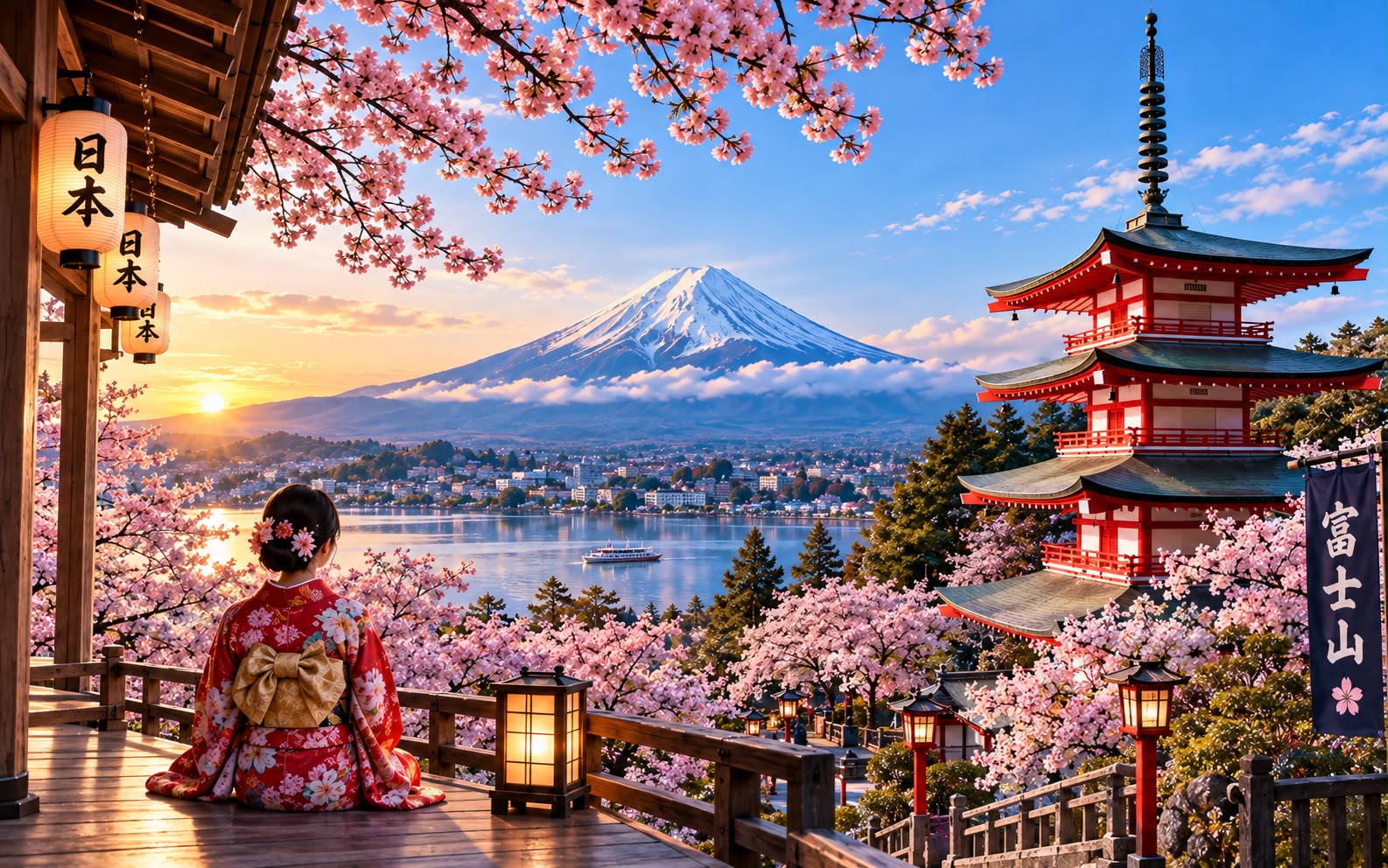
Japan in 10 days: Tokyo, Hakone, Kyoto and Osaka
The Golden Route done properly — Tokyo's neon and shrines, an onsen night under Mt Fuji, Kyoto's temples, Nara's deer and Osaka's food — with the 2026 ticket, rail-pass and tax changes most guides haven't caught up with.
- East Asia
- 10 days
- ≈ AED 4,200 / person
- First-time visitors
Before you go
Japan is the trip that over-delivers: the trains really do run to the second, a convenience-store meal really is good, and the jump from Tokyo’s neon canyons to a silent moss garden in Kyoto takes one train ride. This is the classic first-timer arc — the Golden Route — with an onsen ryokan night in Hakone between the two big cities, a day among Nara’s bowing deer, and a food-first finish in Osaka.
Two things date most Japan guides: the JR Pass stopped being good value for this route after its 2023 price rise, and the big Tokyo attractions now sell out online weeks ahead. Both are handled below.
All costs are in Japanese yen (JPY), with conversions calculated at today’s exchange rate. Opening hours are approximate — treat anything marked ~ as a guide, not a contract.
Before you go: the 15-minute admin
Visas
- Visa-free (90 days for most): ~70 passports including the EU, UK, USA, Australia, Singapore and the UAE. No forms, no fees.
- eVisa: Japan’s eVISA covers many others — including everyone resident in India, and all nationalities resident in the UAE — applied through Japan’s accredited agencies rather than directly. It follows where you live rather than what passport you hold, so check the list for your country of residence. Expect to supply proof of residence, bank statements and your itinerary.
- Visa fees rose sharply in July 2026 — single-entry is now around ¥15,000 — and processing runs 8–10 working days, so start 3–4 weeks out.
- Check the official MOFA eVISA list for your passport; it’s revised periodically.
The 2026 changes to know
- Skip the JR Pass for this route. The 7-day pass costs ¥50,000; every train in this itinerary bought individually totals roughly ¥30,000. The pass only pays off if you add Hiroshima or ride 5+ Shinkansen legs.
- Kyoto’s lodging tax jumped in March 2026: now ¥400–¥10,000 per person per night depending on your room rate (¥400 at mid-range levels), collected in cash/card at the hotel — it can’t be prepaid online, so don’t be surprised at check-in.
- Japan’s departure tax rose to ¥3,000 — normally baked into your air ticket, just budget for it.
- Book-ahead attractions sell out: teamLab (sales open ~2 months ahead), Shibuya Sky (~2 weeks ahead; sunset slots go first), Ghibli Museum (10th of each month, 10:00 JST, for the following month — a genuine lottery-speed scramble).
Money
- Japan is now largely cashless in cities — foreign Visa/ Mastercard work almost everywhere — but keep ¥10,000–20,000 in cash for shrines, small restaurants, markets and lockers.
- 7-Eleven ATMs take foreign cards, are everywhere, and have English menus. Exchange nothing at home; withdraw there.
- No tipping. Anywhere. It causes confusion, not gratitude. Put money on the small tray by the till, not into hands.
Transport cards and data
- iPhone: add Suica to Apple Wallet before you fly — no deposit, top up from your foreign card, and one tap covers trains, metros, buses, konbini and lockers nationwide.
- Android (foreign phones): grab a physical Welcome Suica at the airport (no deposit, 28-day validity) and top up with cash.
- Data: a travel eSIM (Ubigi, Airalo and similar) costs ~¥1,500–3,000 for the trip and activates instantly — no rental pocket-wifi needed. Google Maps works perfectly for transit.
- Luggage trick that makes Day 5 work: forward your big bags hotel-to-hotel with takkyubin (~¥2,000–2,500 per bag, arranged at any hotel desk) — send them Tokyo → Kyoto and carry one overnight bag to Hakone. Everyone who knows Japan does this.
Travelling with kids?
- Japan is one of the easiest countries on earth with children: spotless, safe, stroller-friendly stations (elevators are signed), and konbini food solves every meltdown.
- Kids love teamLab (barefoot water rooms), the Hakone pirate ship, and Nara’s deer — but hold small hands there: the deer headbutt for crackers.
- Under-6s ride trains free; the Romancecar’s front-window seats are the best ¥1,110 you’ll spend on a child.
Day by day
Day 1 — Land in Tokyo, ease in at Asakusa
Assumes a daytime arrival. Base yourself in Shinjuku (transport king) or Asakusa (atmosphere, value) — this guide works from either.
- 14:00 — Airport → hotel (Narita Express / Skyliner from NRT, or the monorail/Keikyu line from Haneda; ¥1,500–3,000pp). Set up Suica if you haven’t.
- 16:00 — Senso-ji Temple, Asakusa (grounds open always; main hall ~6:00–17:00, free) — Tokyo’s oldest temple behind the great red Kaminarimon lantern. The Nakamise shopping lane is touristy and fun; the temple at dusk, half-lit and quiet, is the real arrival moment.
- 18:00 — Walk to the Sumida River for the Skytree view.
- 19:00 — Dinner around Asakusa — a low-key izakaya, or tempura (the district’s specialty, ~¥1,500–2,500/person). Early night; jet lag is a tool if you sleep now.
Where to stay in Tokyo
- Splurge: Park Hyatt Tokyo (Shinjuku) — the Lost in Translation hotel: library calm, skyline views, the New York Bar.
- Mid-range: Hotel Gracery Shinjuku — under the Godzilla head in the middle of everything; compact, well-run, walk home from dinner.
- Budget: APA Hotel Shinjuku (and its many siblings) — small, spotless business-hotel rooms; Japan’s budget tier embarrasses other countries’ mid-range.
Day 2 — Market sushi, teamLab, Shibuya at sunset
Book teamLab and Shibuya Sky before your trip (see admin).
- 8:00 — Tsukiji Outer Market — breakfast standing up: tamagoyaki skewers, tuna bowls, grilled scallops (~¥2,000–3,000 well spent). Go early; stalls wind down after noon.
- 11:00 — teamLab Planets, Toyosu (~8:30–22:00; from ¥3,600, dynamic pricing; barefoot, knee-deep water — wear rollable trousers) — 2–3 hours inside the internet’s favourite art museum, and it deserves the hype.
- 14:30 — Ginza stroll — Uniqlo’s flagship, the depachika food basements under the department stores (lunch idea: buy a ¥1,500 bento masterpiece and eat it in Hamarikyu Gardens).
- 16:30 — Shibuya: cross the Scramble, find Hachiko, then up Shibuya Sky for your booked sunset slot (advance ¥2,700 before 15:00 / ¥3,400 after; sunset sells out ~2 weeks ahead) — Fuji silhouette on clear evenings, and Tokyo’s lights switching on beneath you.
- 19:30 — Dinner in Shibuya — conveyor sushi (Uobei/Genki Sushi, ~¥1,500) or ramen (Ichiran’s solo booths are a rite of passage, ~¥1,200).
Day 3 — Shrines, Harajuku and Shinjuku nights
- 9:00 — Meiji Shrine (sunrise–sunset, free) — a forest of 100,000 trees in the middle of the city; the giant torii and sake-barrel wall are the photo stops. Weekend mornings often bring traditional weddings.
- 11:00 — Harajuku: Takeshita Street’s chaos (crepes, ¥100 shops), then the calmer architecture-and-boutiques walk down Omotesando.
- 13:00 — Lunch around Harajuku/Omotesando.
- 15:00 — Shinjuku Gyoen (closed Mon; ~9:00–17:30ish by season, ¥500) — the city’s most beautiful garden: cherry blossoms in spring, fiery maples in November.
- 17:30 — Tokyo Metropolitan Government Building observatory (free, ~9:30–22:00, closed some Mondays) — the best free skyline view in Japan; Fuji at dusk in winter.
- 19:00 — Omoide Yokocho — the lantern-lit yakitori alley by Shinjuku Station: smoke, counters for six, skewers and beer (~¥2,000–3,000). Adults can nightcap in Golden Gai’s shoebox bars (cover charges posted at the door).
Day 4 — Old Tokyo: Ueno, Akihabara and the Imperial moat
- 9:00 — Ueno Park: pick one museum — the Tokyo National Museum (closed Mon; ~9:30–17:00, ¥1,000) for samurai swords and kimono, or the science museum with kids.
- 12:00 — Walk Ameyoko market for street food lunch — post-war black-market alley turned snack strip.
- 14:00 — Akihabara — electric town: retro game arcades, anime floors, gachapon halls. Even non-gamers give it an hour.
- 16:30 — Imperial Palace East Gardens (closed Mon/Fri, free) and the Tokyo Station red-brick facade.
- 19:00 — Free evening: return to whatever pulled you — Shibuya’s back streets, Asakusa at night, or a baseball game if the Giants are home. Pack for Hakone; send big bags to Kyoto by takkyubin from the hotel desk tonight.
Day 5 — Hakone: the mountain loop and an onsen night
The Hakone Free Pass (2-day, ¥7,100 from Shinjuku) covers the whole loop below — trains, cablecar, ropeway, pirate ship, buses. Add ¥1,110 each way for the Romancecar’s reserved panoramic seats.
- 8:30 — Romancecar from Shinjuku to Hakone-Yumoto (~85 min).
- 10:15 — Hakone Tozan Railway — the little mountain train switchbacking up through forest to Gora.
- 11:15 — Cablecar to Sounzan, then the Hakone Ropeway over the steaming sulfur valley of Owakudani — stop for the famous black eggs, boiled in the springs (one adds seven years to your life, says the legend). Note: the ropeway occasionally closes for volcanic gas; replacement buses run.
- 13:30 — Ropeway down to Lake Ashi and the gloriously unnecessary pirate ship cruise to Moto-Hakone.
- 15:00 — Hakone Shrine — the red torii standing in the lake; the queue for the photo moves fast. On clear days Mt Fuji owns the horizon (winter mornings are most reliable; summer afternoons are cloud roulette — honest odds: about 50/50).
- 16:30 — Check into your ryokan: yukata on, then kaiseki dinner course by course, then the onsen under the night sky. This night is the trip’s centrepiece — budget for it.
Where to stay in Hakone (one night, book early)
- Ryokan with dinner+breakfast run ~¥25,000–45,000 for two at mid-range and climb steeply from there; the Gora and Miyanoshita areas put you on the loop. Tattoos: check bath policy or book a room with a private bath — plenty offer them.
Day 6 — Shinkansen to Kyoto, temples at dusk
- 8:30 — One more onsen soak. You’ve earned nothing yet; do it anyway.
- 10:00 — Bus/train down to Odawara, then the Shinkansen to Kyoto (~2 h, ~¥12,000 reserved; buy via the SmartEX app or station machines).
- 13:00 — Arrive Kyoto, check in (bags from Tokyo are waiting — takkyubin magic), lunch near the station.
- 14:30 — Southern Higashiyama on foot: Kiyomizu-dera (~6:00–18:00, ¥500) and its wooden veranda over the maples, then down the preserved lanes of Sannenzaka and Ninenzaka.
- 17:30 — Gion at dusk — the wooden teahouse streets of Hanamikoji. Etiquette matters here: some private alleys are closed to tourists and photographing geiko/maiko without consent draws fines — admire, don’t chase.
- 19:00 — Dinner on Pontocho Alley — the lantern-lit lane along the river; in summer, riverside kawadoko terraces.
Where to stay in Kyoto
- Splurge: The Westin Miyako Kyoto — hillside gardens and woodland trails above Higashiyama; or spend the splurge on a second ryokan night instead.
- Mid-range: The Celestine Kyoto Gion — quietly elegant, walking distance to Higashiyama’s best.
- Budget: Miyako Hotel Kyoto Hachijo — plain, spotless, and directly at the station: perfect for the Nara and Osaka legs.
- Remember the lodging tax (¥400pp/night at mid-range rates since March 2026), paid at the desk.
Day 7 — Ten thousand torii, then Nara’s deer
Fushimi Inari and Nara sit on the same southbound JR line — the classic combination day.
- 7:00 — Fushimi Inari Taisha (open 24/7, free) — the vermilion torii tunnels up the sacred mountain. At 7am you’ll have whole stretches to yourself; by 10 it’s a procession. Climb at least to the Yotsutsuji viewpoint (~45 min up).
- 10:30 — JR Nara line onward to Nara (~45 min).
- 11:30 — Nara Park: 1,200 sacred deer who bow for shika-senbei crackers (~¥300 a bundle — hold them high and bow back). Todai-ji (~7:30–17:30, ¥800) houses the 15-metre bronze Great Buddha in one of the world’s largest wooden buildings.
- 14:00 — Lunch in Naramachi’s old merchant quarter.
- 15:00 — Kasuga Taisha’s lantern-lined forest paths, then amble back through the park.
- 17:00 — Train back to Kyoto.
- 19:00 — Nishiki Market’s evening tail end for snacks, then dinner in the Kawaramachi grid — Kyoto obanzai (home-style small plates) or ramen.
Day 8 — Gold, zen and bamboo
- 8:45 — Kinkaku-ji, the Golden Pavilion (9:00–17:00, ¥500) — be at the gate for opening; the first 30 minutes are the calm ones. It photographs like a painting because it basically is one.
- 10:30 — Ryoan-ji (~8:00–17:00, ¥600) — the fifteen-stone zen garden, ten minutes away. Sit; count; you’ll only ever see fourteen.
- 12:30 — Bus/taxi across to Arashiyama; lunch by the river (yudofu — Kyoto’s tofu hotpot — is the local order).
- 14:00 — Arashiyama: the bamboo grove (open always, free — thinner crowds after 15:00), Tenryu-ji’s garden (~8:30–17:00, ¥500), and the Togetsukyo Bridge river scene. % Arabica’s riverside espresso bar earns its queue.
- 17:30 — Optional: the Sagano lanes north of the grove — where Arashiyama gets quiet again.
- 19:30 — Last Kyoto dinner — book something special tonight; Kyoto kaiseki at a counter is the city’s art form (lunch kaiseki, ~¥6,000, is the smart way to taste it if dinner prices frighten).
Day 9 — Osaka: castle, markets, Dotonbori
- 9:00 — Local train Kyoto → Osaka (~30 min, ¥580 — no Shinkansen needed). Drop bags in Namba.
- 10:30 — Osaka Castle (~9:00–17:00, ¥600) — the donjon is a modern museum inside; the moats, walls and park are the real spectacle.
- 13:00 — Kuromon Ichiba Market — Osaka’s kitchen: grilled scallops, wagyu skewers, fatty tuna by the piece. This is lunch.
- 15:00 — Shinsekai — the retro district under Tsutenkaku Tower: kushikatsu (deep-fried skewers) at Daruma, the original — and obey the one rule: no double-dipping in the communal sauce.
- 17:30 — Namba back-streets: Hozenji Yokocho’s moss-covered temple alley, then into the lights.
- 19:00 — Dotonbori — the Glico running man, the giant crab, and a takoyaki crawl (Wanaka and Kukuru are the names to find, ~¥600 a boat). Osaka’s motto is kuidaore — “eat until you drop.” Comply.
Where to stay in Osaka (one night)
- Upscale: Swissotel Nankai Osaka — directly over Namba Station; airport train downstairs.
- Mid-range: Hotel the Leben Osaka — stylish, superbly run, in the Minami action.
- Budget: First Cabin Midosuji Namba — capsule-plus comfort for solo travellers.
Day 10 — Fly home from Kansai
- Morning — One last konbini breakfast (you’ll miss them), and if time allows, the Umeda Sky Building observatory or last shopping in Shinsaibashi.
- Airport — The Nankai Rapi:t train runs Namba → Kansai Airport in ~40 min (~¥1,500). KIX has direct Gulf and Asian connections, so book open-jaw flights (into Tokyo, out of Osaka) — it costs little more and saves the ¥28,000 and half-day of backtracking to Tokyo.
Costs and practicalities
Tickets and day trips
Shibuya Sky, teamLab and Universal Studios slots sell out well ahead. Both sites list many of the same attractions at different prices, so it is worth comparing before you commit.
Getting there
Fares swing hard by season and by day of the week — moving a trip by a few days is often the biggest single saving on the whole budget.
Best time to visit
Japan’s two famous seasons are short, precise and heavily booked, and the rest of the year is better value than either.
- Late March–early April — the cherry blossom, which moves north over about six weeks and lasts roughly a week in any one place. Forecasts are published from January; dates shift by a fortnight year to year.
- April–May — after the blossom, warm and clear. Golden Week, 29 April–5 May, is the busiest domestic travel period of the year — avoid it or book months ahead.
- June–mid-July — tsuyu, the rainy season, which is humid rather than torrential. Hydrangeas and far fewer people.
- July–August — hot and very humid, 35°C with it. Festival season, and the mountains and Hokkaido are the escape. Obon in mid-August moves the country.
- Late October–early December — the autumn foliage, which is as good as the blossom, lasts longer, and is less frantically booked.
- December–February — cold, clear, and the best skiing in the world in Hokkaido and Nagano.
Travel tips
- Get an IC card — Suica, Pasmo or ICOCA — on arrival. It covers trains, buses and convenience stores nationwide and removes all ticket machine decisions.
- Do the JR Pass maths before buying. Since the 2023 price rise it only pays off for long multi-city routes; point-to-point tickets are often cheaper.
- Cash still matters despite the reputation. Small restaurants, shrines and rural buses are cash-only; 7-Eleven ATMs take foreign cards.
- Do not tip. It causes genuine confusion and can be refused.
- Eating and drinking while walking is frowned on, as is talking on the phone on trains. Keep conversation low.
- Tattoos may bar you from onsen and some pools. Cover small ones; look for tattoo-friendly baths if they are large.
- Luggage forwarding (takkyūbin) is cheap and excellent. Send the big bag ahead to the next hotel and travel with an overnight bag.
What this trip actually costs
Two people, 9 nights, mid-range comfort with one ryokan splurge, international flights excluded:
| Item | Cost |
|---|---|
| Hotels, 9 nights (4 Tokyo + 1 Hakone ryokan w/ meals + 3 Kyoto + 1 Osaka) | JPY 175,000 (≈ AED 4,059) |
| Trains: Hakone pass + Romancecar, Shinkansen to Kyoto, Nara/Osaka/airport legs, city IC top-ups | JPY 55,000 (≈ AED 1,276) |
| Attractions: teamLab, Shibuya Sky, temples and castles, 2 pax | JPY 24,000 (≈ AED 557) |
| Food and drink, 10 days | JPY 90,000 (≈ AED 2,088) |
| eSIM, takkyubin luggage forwarding, Kyoto lodging tax, lockers, extras | JPY 16,000 (≈ AED 371) |
| Total for two | JPY 360,000 (≈ AED 8,350) |
- Roughly JPY 180,000 (≈ AED 4,175) per person — Japan’s secret is that the floor is low: hostels, konbini breakfasts and skipping the ryokan pull it near JPY 120,000 (≈ AED 2,783), while kaiseki dinners and a Park Hyatt night push past JPY 300,000 (≈ AED 6,959) without trying.
- Book in this order: flights (open-jaw) → visa/eVisa if needed (3–4 weeks) → Hakone ryokan and Kyoto hotels (they sell out first, especially cherry blossom and autumn weeks) → teamLab (~2 months out) → Shibuya Sky (~2 weeks out) → everything else.
- Hotel and restaurant picks here are unsponsored — no affiliate links in this article. Chosen on location and current ratings; always check prices and recent reviews before booking.
What to pack
- Your best walking shoes — this itinerary is 15,000+ steps a day, and they must slip off easily (temples, ryokan, some restaurants).
- Socks without holes. You will be showing them daily.
- A coin purse — cashless Japan still rains ¥100 coins on you.
- Trousers you can roll up (teamLab’s water rooms) and a compact umbrella any season.
- Layers for Hakone — the mountains run 5–10°C cooler than Tokyo.
- Deodorant and any specific medicines from home — both are surprisingly hard to buy in Japan (some common decongestants are actually banned; check before flying).
- A separate foldable bag for the souvenirs. This is not optional; you’ll see.
FAQ
When is the best time to go? March–April (cherry blossoms) and November (autumn colour) are peak Japan — book hotels 3–6 months out and add ~20% to prices. May and October are the smart compromise: superb weather, thinner crowds. June is rainy, July–August hot and humid, winter clear, cold and underrated (best Fuji visibility).
Is Japan expensive? Less than its reputation since the yen weakened. Food is the bargain of the developed world — a ¥1,000 ramen or a ¥500 konbini onigiri-and-coffee breakfast are both excellent. Trains and book-ahead attractions are where the money goes; hotels sit between Georgia-cheap and Europe-dear.
Do I need the JR Pass? For this route, no — the maths stopped working when the pass rose to ¥50,000. Buy the two Shinkansen legs individually (~¥30,000 total per person for everything in this guide, including the Hakone pass).
Is language a barrier? Minimal. Signage is bilingual, station staff are practiced, and Google Translate’s camera handles menus. Learn “sumimasen” (excuse me/sorry/thanks) and “oishii” (delicious) — they carry you far.
Halal / vegetarian food? Both need light planning: true vegetarian dishes often hide dashi (fish stock), so use apps like HappyCow and look for shojin ryori (Buddhist temple cuisine) in Kyoto. Halal-certified restaurants cluster in Tokyo, Kyoto and Osaka — search “halal gourmet Japan” listings — and Kuromon market has halal-friendly seafood everywhere.
Can I swap a day? The classic swaps: Day 4 for a Kamakura day trip (Great Buddha, coastal train) or the Ghibli Museum if you win the ticket scramble; in Osaka, families often trade the castle for Universal Studios Japan (book express passes ahead). The Hakone night is the one thing not to cut.
Prices and entry rules change, and what you need depends on your passport; last checked 23 October 2026, so confirm with the embassy or your airline before booking.


