 The Itinerary
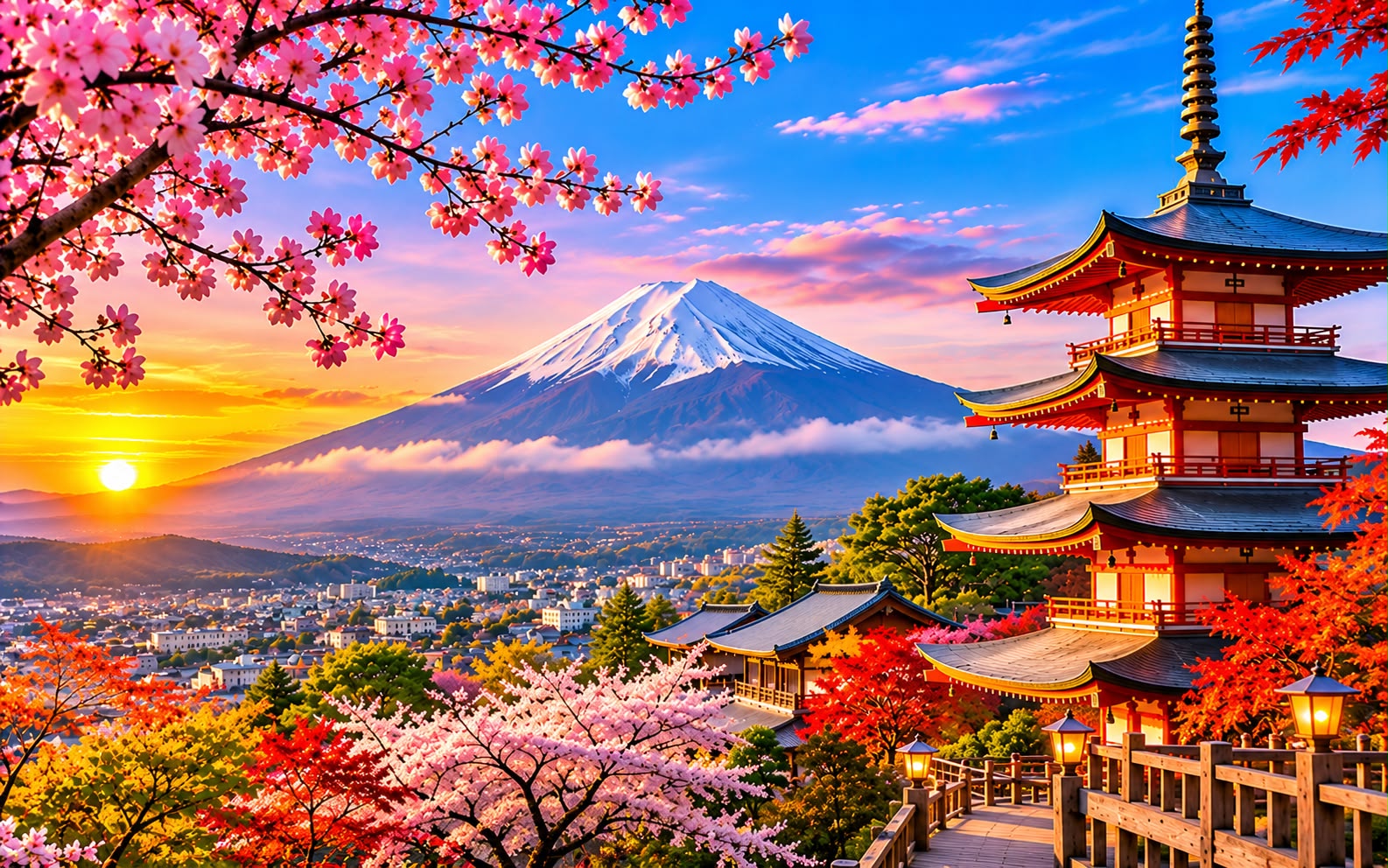
Japan and Taiwan in 12 days: Tokyo, Kyoto, Taipei and Taroko
Six days in Japan and six in Taiwan, joined by a short flight. Why the Japan Rail Pass is probably no longer worth buying for this route, what to check about Taroko Gorge before you plan a day around it, and the one month to avoid in both countries.
- East Asia
- 12 days
- ≈ AED 5,350 / person
- Two of Asia's best food countries, three hours apart, at half the cost people expect
Before you go
Taipei is about three hours from Osaka and is the obvious second country from Japan that almost nobody adds. Taiwan is cheaper, warmer, less formal and arguably eats better, and six days there costs roughly what three in Japan do.
Six days in each. Japan gets Tokyo and Kyoto, which is the honest minimum; Taiwan gets Taipei, a gorge and a hot spring town, which is most of what the island is famous for.
Japan in 10 days and Taiwan in 6 days are each half on its own.
Figure USD 1,450 (≈ AED 5,325) per person. March to May, or October to November.
Before you go: the admin
Entry
- Japan: visa-free for a long list of nationalities, 90 days, with an online immigration and customs pre-registration that produces QR codes. Do it before you fly; it makes arrival much faster.
- Taiwan: visa-free for many nationalities, 14 to 90 days depending on passport, plus an online arrival card which takes two minutes.
- Check both lists against your own passport. They are not the same list.
- Last checked: 2 November 2026.
The Japan Rail Pass, which has probably stopped paying
- The pass rose sharply in price in 2023 and no longer pays for a Tokyo–Kyoto–Osaka trip. Two one-way shinkansen legs cost well under a seven-day pass.
- Buy individual tickets unless you are adding Hiroshima, Kanazawa or Hokkaido, in which case run the arithmetic again.
- Get an IC card instead — Suica or Pasmo — which works on every metro, bus and convenience store in the country and is the thing you actually use daily.
- Reserve shinkansen seats if you are travelling with luggage; oversized bags now require a reserved space.
Taiwan’s transport
- The High Speed Rail runs down the west coast and is not needed on this itinerary, which goes east.
- Taipei to Hualien is about two hours on the east coast line and those seats sell out — book as soon as the window opens, 28 days ahead.
- Get an EasyCard in Taipei. Metro, buses, convenience stores, and a discount on every metro journey.
Taroko Gorge, which is not fully open
- A major earthquake in April 2024 caused extensive landslides in Taroko National Park. Parts of the park and several of its best trails have been closed since, and access has opened and closed repeatedly with the weather.
- Check the national park’s current status before building a day around it, and have Hualien’s coast and the Qingshui Cliffs as a fallback — both are excellent.
- This is not a reason to skip Hualien. It is a reason not to book a non-refundable guide.
Money
- Yen in Japan, New Taiwan dollars in Taiwan.
- Japan is still more cash-based than its reputation suggests — many small restaurants, shrines and markets are cash only. 7-Eleven ATMs take foreign cards and are everywhere.
- Taiwan is similar: cards in department stores, cash in night markets, and the night markets are where you will eat.
- Neither country tips. In Japan, attempting to tip causes confusion; do not.
Day by day
Day 1 — Land in Tokyo
- Arrive and stay near a Yamanote line station — Shinjuku, Shibuya, Tokyo or Ueno. The loop line is how the city works.
- Afternoon — Shibuya Crossing and the Hachiko statue, then the Shibuya Sky observation deck at sunset if you booked it.
- Evening — a standing bar or an izakaya in Omoide Yokocho, the alley of tiny counters by Shinjuku station.
- Get your IC card at the airport and stop thinking about tickets.
Day 2 — Old Tokyo
- 08:00 — Senso-ji at Asakusa, Tokyo’s oldest temple, and Nakamise-dori before the shops open, which is the only time it is quiet.
- 11:00 — the Tokyo National Museum at Ueno, or a river boat down to Hamarikyu gardens.
- 15:00 — Akihabara for electronics and arcades, or Yanaka, which is the only old-Tokyo neighbourhood that survived both the earthquake and the war.
- Evening — Golden Gai, six alleys of bars with four seats each. Many charge a cover; check before sitting down.
Day 3 — Tokyo’s other side
- Morning — the Meiji Shrine in its forest, and Harajuku’s Takeshita Street beside it, which is the whole contrast in one walk.
- Midday — Shinjuku Gyoen, or teamLab, which must be booked well ahead.
- Afternoon — a day trip instead, if you would rather: Kamakura for the Great Buddha and the coast, an hour out, or Nikko for the shrines, two.
- Evening — Tsukiji outer market in the late afternoon, or a department store’s basement food hall, which is the best value eating in Tokyo.
Day 4 — Shinkansen to Kyoto
- Morning — the bullet train, about two hours fifteen. Sit on the right for Mount Fuji, about forty minutes out, and it is visible roughly half the time.
- Afternoon — Fushimi Inari. Go late. The thousands of vermilion gates climb a mountain for four kilometres, and above the first twenty minutes almost everybody turns back.
- Evening — Gion and Pontocho, the lantern-lit lanes by the river.
- Do not photograph geiko and maiko in the street. Several Gion lanes ban it outright with fines, and it is enforced.
Day 5 — Kyoto
- 07:30 — Kiyomizu-dera at opening, on its wooden stage over the hillside, with Sannenzaka and Ninenzaka below it before the crowds.
- 11:00 — Nijo Castle, with its nightingale floors that squeak deliberately to announce intruders.
- 14:00 — the Philosopher’s Path, and Ginkaku-ji at the end of it.
- Or Arashiyama — the bamboo grove at dawn, the monkey park, and the Hozugawa river boat. The grove is only worth it before eight.
Day 6 — Nara, then fly to Taipei
- Morning — Nara, forty minutes away: Todai-ji, which holds a 15-metre bronze Buddha in the largest wooden building in the world, and a thousand deer that bow for biscuits.
- Afternoon — to Kansai airport, and fly to Taipei, about three hours.
- You lose an hour. Taiwan is behind Japan.
- Evening — arrive, and a night market. Raohe or Ningxia are better first stops than Shilin, which is the biggest and the most touristed.
Day 7 — Taipei
- 09:00 — the National Palace Museum, which holds the imperial collection evacuated from Beijing in 1948 — nearly 700,000 objects, rotated a fraction at a time.
- 13:00 — Longshan Temple, 1738, Buddhist and Taoist at once, and busy with people actually worshipping.
- 16:00 — Taipei 101, 508 m, with the 660-tonne tuned mass damper visible on the 88th floor — a giant gold pendulum that stops the tower swaying.
- Evening — Din Tai Fung’s original branch, or a night market. Both, ideally.
Day 8 — Jiufen and the north coast
- Jiufen, an hour out: a hillside gold-mining town of lantern-lit stepped lanes and tea houses, best in the late afternoon when the lanterns come on.
- Shifen on the way, for the sky lanterns released over the railway line, and Shifen waterfall.
- Or Yehliu Geopark on the coast, for the eroded mushroom rocks and the Queen’s Head.
- Go to Jiufen late and stay for dusk. It is a coach-tour town until four and transforms afterwards.
Day 9 — To Hualien and the gorge
- Morning — the east coast train, about two hours, booked 28 days out.
- Afternoon — Taroko Gorge, subject to what is open. A marble canyon with a road cut through it, and when the trails run, the Shakadang and Swallow Grotto are the best of them.
- Check the park’s status that morning. Landslides close sections at short notice, particularly after rain.
- Fallback — the Qingshui Cliffs, where the mountains drop 800 m straight into the Pacific, and the coast road south.
- Stay in Hualien.
Day 10 — The east coast
- The coast road south — Niushan Huting, Shitiping, and the rice terraces at Changbin. This is the quietest and most beautiful part of Taiwan and almost nobody goes.
- Or whale and dolphin watching from Hualien, April to October.
- Afternoon — the train back to Taipei.
- Evening — Beitou, twenty minutes from the centre on the metro: a hot spring valley inside the city, with public baths and a thermal stream.
Day 11 — Taipei, slowly
- Morning — Maokong by gondola, over the tea plantations on the city’s southern hills, with tea houses at the top.
- Or Elephant Mountain, twenty minutes up, for Taipei 101 at sunset — which is the photograph of this city.
- Afternoon — Dihua Street for dried goods, fabric and old shophouses, or Songshan Cultural Park.
- Evening — one last night market. Go hungry and eat small things from many stalls.
Day 12 — Out
- Taoyuan airport is about 40 minutes by the airport MRT, which runs from Taipei Main Station.
- Allow three hours.
- Morning — a breakfast shop for soy milk and youtiao, which is the one Taiwanese meal visitors miss.
Costs and practicalities
Best time to visit
March to May, or October to November — and the two countries agree on this more closely than most pairings.
- March to May — cherry blossom in Japan in late March and early April, and Taiwan warm and dry before the summer. The best window, and Japan’s most expensive.
- October and November — Japan’s autumn leaves, Taiwan dry and around 25°C, and the typhoon season tailing off. The other good one, and better value.
- June to September — Japan’s rainy season in June, then hot and humid; Taiwan reaches 35°C with high humidity, and typhoon season runs roughly July to October, hitting Taiwan’s east coast hardest. This is the half of the year to avoid.
- December to February — cold and clear in Japan, with snow in the north; Taipei is 15–20°C, damp and grey. Hot springs weather in both, which is a real argument for it.
- Avoid Japan’s Golden Week, around the end of April and start of May, and Lunar New Year in Taiwan, when much of the island closes and transport is full.
Travel tips
- Do not buy a Japan Rail Pass for this route. Individual tickets are cheaper since the 2023 price rise.
- Get an IC card in Japan and an EasyCard in Taiwan, on day one of each.
- Book the Taipei–Hualien train 28 days out. It sells out.
- Check Taroko’s current closures before planning the day.
- Fushimi Inari late, Arashiyama’s bamboo before eight.
- Jiufen after four, for the lanterns.
- Do not photograph geiko or maiko in Gion’s banned lanes.
- Carry cash in both — the best food in each is cash-only.
- Do not tip in either country.
- Taiwan is an hour behind Japan.
What this trip actually costs
Two people, 11 nights, mid-range throughout, international flights excluded:
| Item | Cost |
|---|---|
| Hotels, 11 nights across both countries | USD 1,250 (≈ AED 4,591) |
| Food and drink, 12 days | USD 620 (≈ AED 2,277) |
| Shinkansen and Japanese rail, two people | USD 480 (≈ AED 1,763) |
| Flight Osaka to Taipei, two people | USD 280 (≈ AED 1,028) |
| Taiwanese rail, the Hualien coast and Jiufen | USD 160 (≈ AED 588) |
| Entries: temples, the museums and Taipei 101 | USD 110 (≈ AED 404) |
| Total for two | USD 2,900 (≈ AED 10,650) |
- Roughly USD 1,450 (≈ AED 5,325) per person for twelve days.
- Taiwan costs roughly half what Japan does per day, which is what makes this pairing work: six Taiwanese days cost about three Japanese ones.
- The rail line is individual tickets, not a pass. A seven-day Japan Rail Pass would cost more than every train on this itinerary combined.
- Entries are low because most of what you came for is free — Fushimi Inari, the Meiji Shrine, Longshan Temple, every night market and Elephant Mountain all cost nothing.
- The food line is low for the same reason. Night markets, convenience stores and department store basements are the cheapest good eating in Asia.
- Hotel picks here are chosen on location, not on commission — always check prices and recent reviews before booking.
What to pack
- Shoes you can slip off. You will remove them at temples, ryokan, some restaurants and most hot springs.
- Good socks, for the same reason.
- A compact umbrella. Both countries rain suddenly and neither sells cheap umbrellas at the moment you need one.
- A warm layer — Kyoto is cold from November to March and Taipei is damper than its temperature suggests.
- A small towel. Japanese public toilets often have no dryer, by design.
- Cash, in both currencies.
- A swimsuit is not needed for Japanese onsen and is required at some Beitou public baths. Check the specific one.
- A Type A/B adapter for both, 100V in Japan and 110V in Taiwan.
Part of a bigger trip?
- Japan in 14 days adds Hiroshima, the Alps and the west.
- Taiwan in 6 days is the island on its own.
- Japan and South Korea in 14 days is the other East Asian pairing.
- Japan’s cherry blossom in 7 days is the spring version of the Japanese half.
- Tokyo in 3 days is the city on its own.
FAQ
Should I buy a Japan Rail Pass? Probably not, for this itinerary. The pass rose sharply in price in 2023 and a Tokyo–Kyoto–Nara–Osaka trip no longer reaches the break-even point — two one-way shinkansen legs cost well under a seven-day pass. It becomes worth recalculating if you add Hiroshima, Kanazawa or Hokkaido.
Is Taroko Gorge open? Partly, and it changes. A major earthquake in April 2024 caused extensive landslides in the national park, several of the best trails have been closed since, and access has opened and closed repeatedly with the weather. Check the park’s current status the morning you go, and treat the Qingshui Cliffs and the east coast road as the fallback — they are excellent in their own right.
Why Taiwan rather than Korea as the second country? Cost and contrast, mostly. Taiwan runs at roughly half Japan’s daily spend, which makes twelve days affordable in a way that two expensive countries would not be, and it is a looser, warmer, more informal place than Japan in a way Korea is not. Korea is the better choice if you want another high-speed rail network and big cities.
Is six days enough for Japan? For Tokyo and Kyoto with a day in Nara, yes — that is the headline and it is a full six days. It leaves out Hiroshima, the Japanese Alps, Hokkaido and the onsen towns entirely. If Japan is the point rather than half the point, give it ten days or more on its own.
When should I avoid this trip? June to September. Japan has its rainy season in June and is hot and humid afterwards, Taiwan reaches 35°C with high humidity, and the typhoon season runs roughly July to October and hits Taiwan’s east coast — which is exactly where days nine and ten go.
Prices and entry rules change, and what you need depends on your passport; last checked 2 November 2026, so confirm with the embassy or your airline before booking.


