 The Itinerary
Japan for vegetarians in 7 days: the dashi problem, solved
The hard part of vegetarian Japan is not finding salad — it is dashi, the bonito stock in almost every broth, dressing and simmered dish that looks meat-free. What to ask, what to avoid, where shojin ryori is worth a detour, and the chains that will feed you anywhere.
- East Asia
- 7 days
- ≈ AED 3,500 / person
- The standard route with every meal worked out, including the fish stock hiding in the vegetables
Before you go
Japan is a difficult country to be vegetarian in, for a reason most guides miss. The problem is not that the food is meaty — it is that the stock is.
Dashi, made from katsuobushi (dried bonito), is the base of almost everything: miso soup, udon and soba broth, tamagoyaki, most simmered vegetables, many dressings and dipping sauces. A dish can contain no visible animal and still be made of fish.
This is the seven-day route — Tokyo, Hakone, Kyoto, Osaka — with the eating solved rather than the sightseeing changed. It costs about the same, because the answer is knowing where to go, not paying more.
One honest framing: Japan has a genuine, centuries-old vegetarian cuisine in shojin ryori, and it is some of the best food in the country. You are not being accommodated; you are eating something Japan does superbly.
Figure JPY 150,000 (≈ AED 3,479) per person. Any month.
Before you go: the admin
Entry
- Visa-free for around 70 nationalities for 90 days.
- Indian passport holders need a visa in advance; an e-visa is available for some applicants.
- Last checked: 30 October 2026.
The dashi problem, in detail
- Katsuobushi (bonito flakes) and niboshi (dried sardine) are the standard stock base. Kombu dashi, from kelp, is the vegan one and does exist — you have to ask for it.
- Assume these contain fish stock unless told otherwise: miso soup, udon and soba broth, tempura dipping sauce, oden, chawanmushi, most nimono (simmered vegetables), tamagoyaki, okonomiyaki batter.
- Also watch for: katsuobushi flakes sprinkled on top of otherwise plain vegetables, bonito powder in dressings, lard in ramen and gyoza, gelatin in desserts, and chicken stock in Chinese-influenced dishes.
- “Vegetarian” is not a widely understood category. Fish is often not counted as meat. Say what you do not eat, specifically.
The phrases that work
- 私はベジタリアンです — watashi wa bejitarian desu — “I am vegetarian.” Useful but not sufficient.
- 肉と魚を食べません — niku to sakana o tabemasen — “I don’t eat meat or fish.” This is the one that lands.
- かつおだし は入っていますか — katsuo-dashi wa haitte imasu ka — “Does this contain bonito stock?” The single most useful question in this country.
- Write it down. A printed card in Japanese is better than an app at a busy counter.
- 出汁 (dashi), 鰹節 (katsuobushi), 豚 (pork), 鶏 (chicken), 魚 (fish) — worth recognising on a menu.
What will always feed you
- Shojin ryori — Buddhist temple cuisine, strictly vegan, no onion or garlic either. Kyoto is its home.
- Indian restaurants. Every Japanese city has them, they are everywhere, and they understand the question immediately.
- T’s TanTan — vegan ramen inside Tokyo Station and a few other locations — genuinely good, not a concession.
- Konbini: onigiri with umeboshi (pickled plum) or kombu, edamame, salads, inarizushi. Read the label; some rice has dashi in it.
- Depachika food halls have labelled vegetable dishes and staff who will check.
- Shabu-shabu and sukiyaki chains often do a kombu broth on request.
Day by day
Day 1 — Tokyo
- Arrive and settle.
- Eat: T’s TanTan in Tokyo Station if you are passing through, or an Indian place near your hotel — there will be one.
- Evening — Asakusa and Senso-ji, and the Nakamise street snacks are mostly sweet and mostly fine — ningyo-yaki and senbei, though check senbei for bonito.
Day 2 — Tokyo, and the first proper meal
- 09:00 — Meiji Shrine and Yoyogi Park.
- 12:00 — Lunch at a shojin ryori restaurant or a vegan café. Tokyo’s vegan scene has grown sharply — Shibuya, Nakameguro and Kichijoji have several.
- 15:00 — teamLab or the Imperial Palace East Gardens.
- 18:00 — Omoide Yokocho is hard; a izakaya with a vegetable menu is easier. Ask for yasai only and no dashi.
- Konbini backup: inarizushi and edamame will always be there.
Day 3 — Hakone, and the ryokan question
- Train to Hakone, and the loop — mountain railway, cable car, ropeway, pirate boat.
- Ryokan kaiseki dinners are the hardest meal in Japan to make vegetarian — they are built around fish.
- Book a ryokan that confirms shojin or vegetarian kaiseki in writing when you reserve, not on arrival. Many will do it with notice and almost none can improvise.
- Owakudani’s black eggs are just eggs boiled in sulphur springs, and are fine.
- Onsen etiquette is unchanged; tattoos are still refused at many.
Day 4 — To Kyoto, the home of shojin ryori
- The shinkansen to Kyoto. Ekiben — station lunch boxes — are mostly not vegetarian; buy from a depachika instead, where labelling is better.
- Afternoon — Nishiki Market, which is a grazing problem and an opportunity: pickles (tsukemono), yuba, chestnuts and sweets are mostly fine; ask about anything in broth.
- Evening — Gion and the Shirakawa canal.
Day 5 — Shojin ryori, properly
- 08:00 — Fushimi Inari before the crowds.
- 11:30 — A shojin ryori lunch. Several Kyoto temples serve it in their own grounds — Tenryu-ji in Arashiyama is the best-known — and you should book.
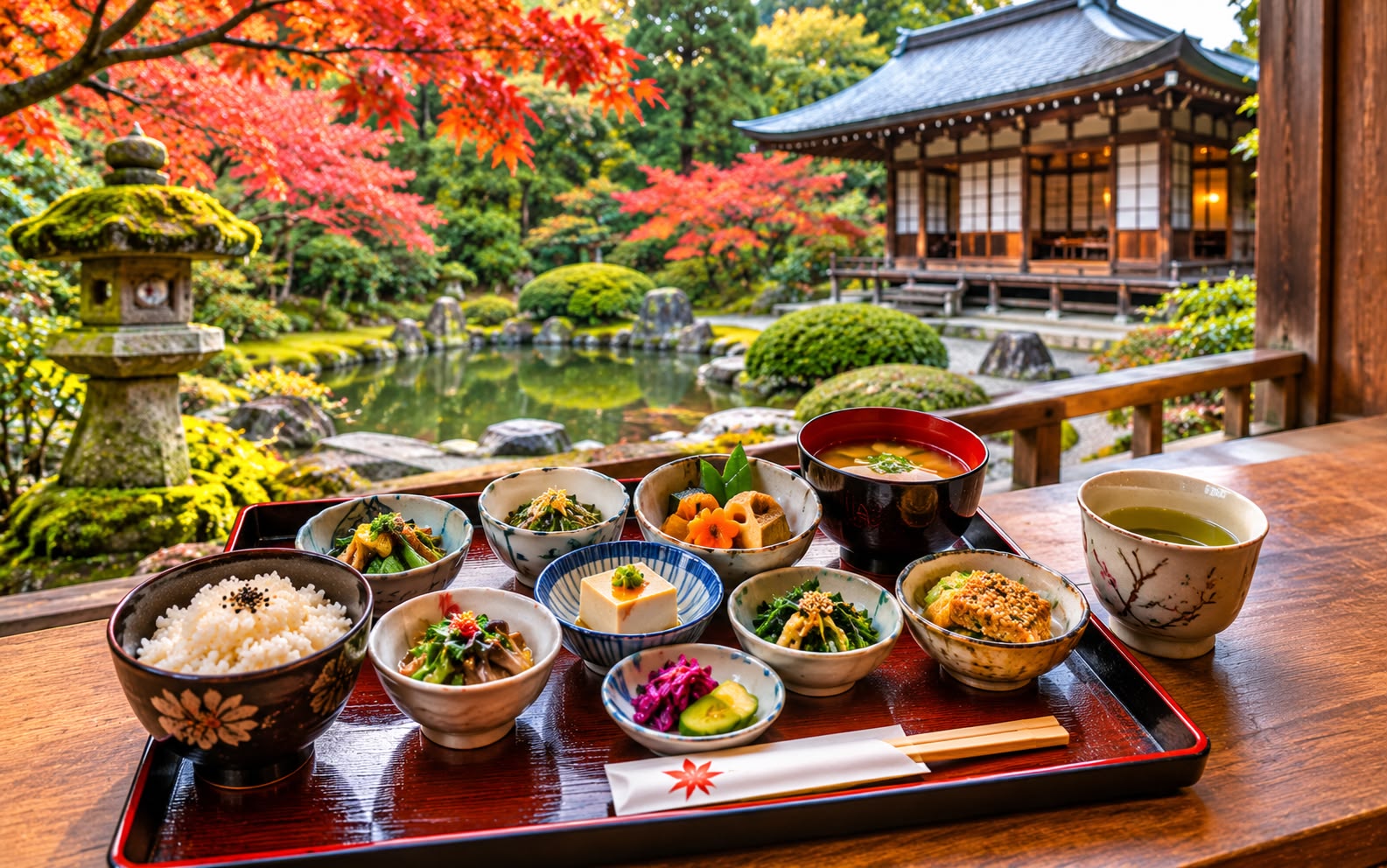
- What arrives: yuba (tofu skin), goma-dofu (sesame tofu), simmered vegetables in kombu dashi, pickles, rice, miso made without fish. Several small courses, no onion or garlic, and it is extraordinary.
- This is the meal to plan the day around, not a fallback.
- 15:00 — Arashiyama’s bamboo grove and Tenryu-ji’s garden.
- Evening — a yuba or tofu restaurant — Kyoto has a whole tradition of them.
Day 6 — Nara or Osaka
- Nara — the deer park, Todai-ji’s Great Buddha, and shojin ryori is available here too.
- Or Osaka — harder for street food, since takoyaki is octopus and okonomiyaki batter usually contains dashi. Ask at the okonomiyaki counters; some will make a vegetable version with a plain batter.
- Osaka’s Indian and vegan restaurants are plentiful in Namba and Umeda.
- Kushikatsu is mostly meat, but vegetable skewers are standard — confirm the oil has not fried meat alongside, if that matters to you.
Day 7 — Out
- A konbini or depachika breakfast.
- Kansai airport has limited vegetarian options airside — buy before security.
- Allow three hours.
Costs and practicalities
Best time to visit
Any month — the eating does not change with the season, though the sightseeing does.
- Late March to early April — cherry blossom, the most expensive and crowded fortnight. Its own route.
- April to June — warm, comfortable, and after the blossom crowds. Golden Week at the end of April is best avoided.
- June — the rainy season, and cheap.
- July and August — hot and very humid.
- October and November — the best window. Autumn colour, clear skies, mild days, and the autumn route covers it.
- December to February — cold, clear and quiet, and the cheapest.
Travel tips
- Learn the dashi question before anything else. Katsuo-dashi wa haitte imasu ka is the phrase that matters.
- Carry a printed card in Japanese listing what you do not eat. It works better than an app at a counter.
- Book shojin ryori ahead. The temple restaurants are small.
- Confirm a vegetarian ryokan dinner in writing when you reserve, never on arrival.
- Indian restaurants are the reliable fallback in every city.
- T’s TanTan in Tokyo Station if you need a known-good meal fast.
- Read konbini labels — some onigiri rice is cooked with dashi.
- Depachika over ekiben for train journeys.
- If you are Jain or avoid onion and garlic, shojin ryori is perfect and almost everything else is not.
- Buy food before airport security, where the options thin out.
What this trip actually costs
Two people, 6 nights including one temple lodging, international flights excluded:
| Item | Cost |
|---|---|
| Hotels, 6 nights including one temple lodging | JPY 144,000 (≈ AED 3,340) |
| Food and drink, 7 days, including two shojin ryori meals | JPY 76,000 (≈ AED 1,763) |
| Shinkansen and the Hakone Freepass | JPY 50,000 (≈ AED 1,160) |
| Temples, gardens and a vegetarian cooking class | JPY 20,000 (≈ AED 464) |
| Local transport and airport transfers | JPY 10,000 (≈ AED 232) |
| Total for two | JPY 300,000 (≈ AED 6,959) |
- Roughly JPY 150,000 (≈ AED 3,479) per person, which is within a few per cent of the standard route. Eating vegetarian here is a planning problem, not a cost problem.
- Shojin ryori is the one line that costs more than its equivalent, and it is the best meal of the week.
- A temple lodging (shukubo) is cheaper than a ryokan and its dinner is vegan by definition.
- Indian restaurants are inexpensive and solve any evening you have not planned.
- Hotel picks here are chosen on location, not on commission — always check prices and recent reviews before booking.
What to pack
- A printed card in Japanese listing what you do not eat.
- Snacks you trust for the first day or two, until you have found the pattern.
- Shoes that come off easily — temples, ryokan and some restaurants.
- A hand towel. Many public toilets have neither dryer nor paper.
- Layers, and a Type A adapter, 100V.
Part of a bigger trip?
- Japan in 7 days is the same route without the food planning.
- Japan on a budget is the same route for about half.
- Japan in 10 days adds Osaka and Nara properly.
- Kyoto in 2 days is where shojin ryori lives.
- Japan with kids is the slower family version.
FAQ
What is dashi and why does it matter so much? It is the stock that underlies most Japanese cooking, usually made from dried bonito. It means miso soup, noodle broth, simmered vegetables and many dressings contain fish even when nothing fishy is visible. Kombu dashi, made from kelp, is the vegan version and you have to ask for it.
Is “I am vegetarian” enough to say? Often not. The category is not widely understood and fish is frequently not counted as meat. Say niku to sakana o tabemasen — “I don’t eat meat or fish” — and ask specifically about bonito stock.
What is shojin ryori? Buddhist temple cuisine: strictly vegan, no onion or garlic, served as several small courses. Kyoto is its home and several temples serve it in their own grounds. It is not a concession to visitors — it is one of the best things you can eat in Japan, and it needs booking.
What about a ryokan dinner? This is the hardest meal in the country to make vegetarian, because kaiseki is built around fish. Confirm in writing when you reserve rather than asking on arrival — many ryokan will do it with notice and almost none can improvise. A temple lodging is the easier answer and costs less.
Does eating vegetarian make Japan more expensive? No. This itinerary comes within a few per cent of the standard route. Shojin ryori costs more than a cheap lunch, Indian restaurants cost less than most Japanese dinners, and konbini food is the same price for everyone.
Prices and entry rules change, and what you need depends on your passport; last checked 2 November 2026, so confirm with the embassy or your airline before booking.


