 The Itinerary
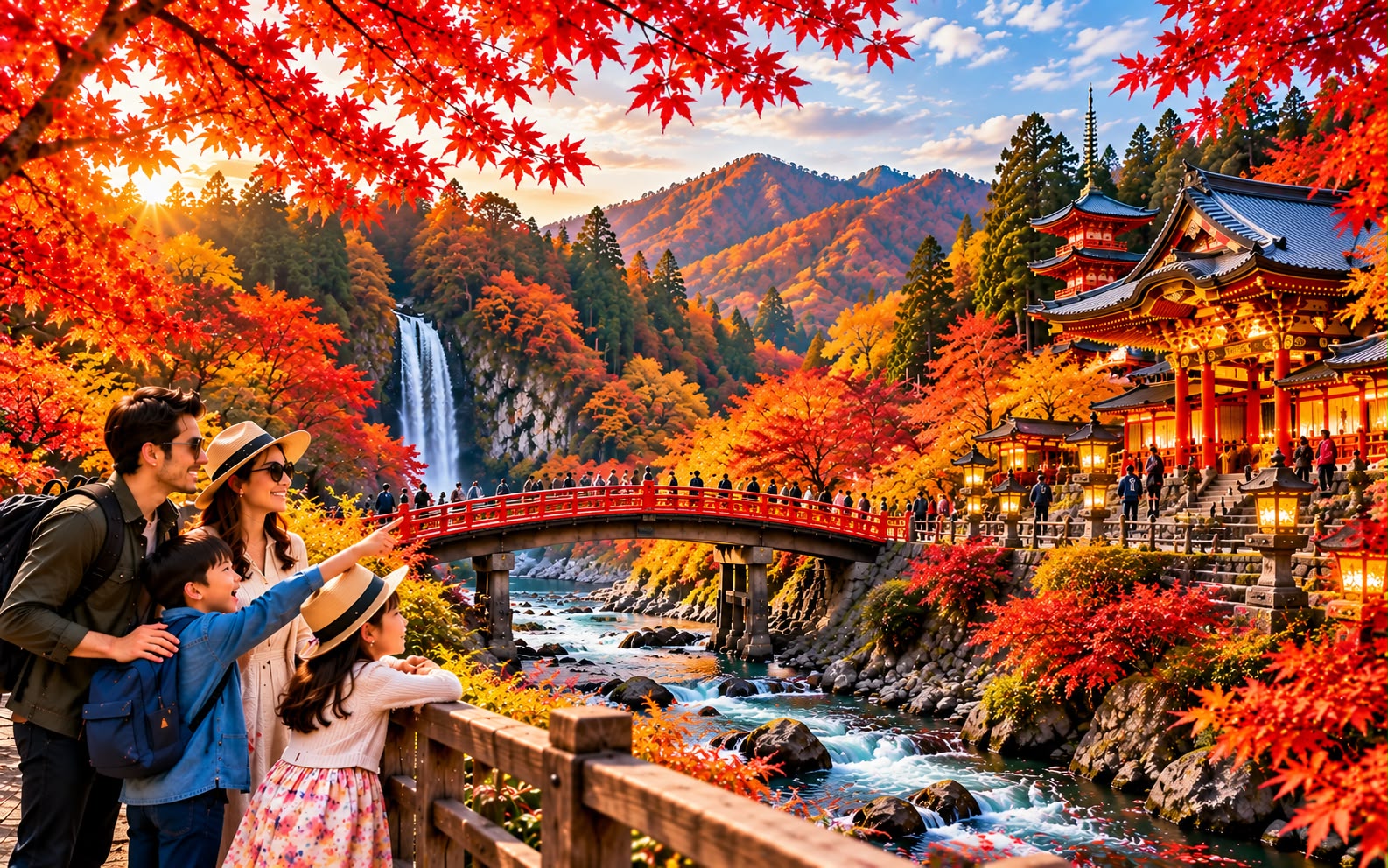
Japan autumn leaves in 7 days: Nikko's koyo and Kyoto in November
Koyo runs for weeks rather than days, which makes autumn the easier season to plan than sakura. Nikko in late October while it is still high and cold, Kyoto through November as the colour comes down the hills, and the night illuminations that are the best thing in the Japanese calendar.
- East Asia
- 7 days
- ≈ AED 3,650 / person
- The better half of the Japanese year — longer, cheaper and calmer than the blossom
Before you go
Autumn is the better trip and fewer people plan it. Koyo — the turning of the leaves — moves the opposite way to cherry blossom: north to south, high to low, and it lasts weeks rather than days.
That changes everything about the planning. Cherry blossom is a week-long gamble booked blind. Autumn gives you a month-wide target and a built-in hedge: if the colour has not reached the city, go up the hill; if it has passed, go down.
Nikko in late October while it is still high and cold, then Kyoto through November as the colour comes down. The seven-day Japan route is the same spine without the season.
Figure JPY 158,000 (≈ AED 3,665) per person. November is the month, with the detail below.
Before you go: the admin
Entry
- Visa-free for around 70 nationalities for 90 days.
- Indian passport holders need a visa in advance; an e-visa is available for some applicants.
- Last checked: 30 October 2026.
How koyo works, and why it is easier than sakura
- It moves north to south and high to low. Hokkaido turns in September, Nikko and the mountains through late October, Kyoto and the lowland cities through November.
- A given spot holds good colour for two to three weeks, not three days.
- Altitude is the lever. In any week of November somewhere within an hour of Kyoto is at peak — the hills first, the city temples last.
- Forecasts are published from September and are more useful than the sakura ones, because the window is wider.
- The last week of November is usually Kyoto’s peak, which is also the most crowded week of the Japanese autumn.
Night illuminations
- Many Kyoto temples open after dark in the koyo weeks only, with the maples lit.
- They are ticketed separately and the queues are long. Arrive before opening, not after.
- Eikan-do, Kodai-ji, Kiyomizu-dera and Tofuku-ji are the names people queue for. The smaller temples are the better evening.
Practicalities
- November is dry and clear — statistically one of the best months of the Japanese year for weather.
- It is cold in the mountains. Nikko sits at altitude and can be near freezing at night in late October.
- Forward your luggage between cities. Takuhaibin sends bags hotel to hotel overnight.
- Reserve shinkansen seats. November is busy, though not sakura busy.
Day by day
Day 1 — Tokyo
- Arrive, and keep it light.
- Rikugi-en or Koishikawa Korakuen — two of the best classical gardens in Tokyo, both illuminated in the koyo weeks.
- Tokyo turns late — often late November into early December — so if you are here at the start of the trip the city may still be green. That is expected.
- Evening — an izakaya, and an early night.
Day 2 — North to Nikko
- 08:00 — Train to Nikko, about two hours.
- 10:30 — Toshogu. The shrine complex of the first Tokugawa shogun, UNESCO-listed, carved and gilded to a degree that is almost un-Japanese — the sleeping cat, the three wise monkeys, and a five-storey pagoda.
- 13:00 — Shinkyo, the red bridge over the Daiya river, and the town.
- 15:00 — The Kanmangafuchi Abyss — a riverside walk past about seventy stone Jizo statues in a row, with maples over them. Short, free and nearly empty.
- Stay in Nikko, not as a day trip. The morning is why.
Day 3 — Up to Chuzenji and Kegon
- 08:00 — The Irohazaka switchback road up to the lake — two one-way roads of tight hairpins, each numbered after a syllable of the old alphabet. The colour here peaks earliest in the region, usually mid-to-late October.
- 09:30 — Kegon Falls, a 97m drop with a lift to a viewing platform at the base.
- 11:00 — Lake Chuzenji, formed by an eruption of Mount Nantai above it.
- The traffic on Irohazaka in peak koyo weekends is genuinely bad. Go on a weekday, early.
- 14:00 — Back down, and the train south.
- Evening — Tokyo, then on, or stay and move tomorrow.
Day 4 — To Kyoto, and the eastern hills
- 09:00 — Shinkansen to Kyoto.
- 13:00 — Tofuku-ji. The Tsutenkyo bridge over a valley of about two thousand maples is the single most photographed autumn view in Japan. It is also the most crowded — arrive at opening or not at all.
- 16:00 — Eikan-do, which runs one of the best illuminations in the city. Queue before it opens.
- The city turns later than the hills. If it is early November and Kyoto is still green, the valleys outside are not.
Day 5 — Arashiyama and the north-west
- 07:30 — Arashiyama early. The Togetsukyo bridge with Mount Arashi behind it in full colour is the classic, and by ten the street is impassable.
- 09:00 — Jojakko-ji or Gio-ji on the hillside — small, mossy, steep and quiet, and better than the famous ones.
- 11:00 — The Sagano scenic railway along the Hozugawa gorge, which is the best way to see the colour en masse. Book ahead in November.
- 15:00 — Ninna-ji and Ryoan-ji if there is appetite.
Day 6 — Ohara, or the city temples
- If the city is not yet at peak, go up. Ohara, an hour north in the hills — Sanzen-in’s moss garden under maples, and Hosen-in, where you sit with green tea and look at the garden through a frame of pillars. This is the quietest good morning of the trip.
- If the city is at peak, stay. Nanzen-ji and the Philosopher’s Path, Kiyomizu-dera, and Kodai-ji after dark.
- Kurama and Kibune are the other hill option — a short mountain railway, a temple walk over a ridge, and a river village.
Day 7 — Out
- One last temple at opening, which costs nothing and is the best hour of any Kyoto day.
- Kansai is about 75 minutes from Kyoto by direct express.
- Allow three hours.
Costs and practicalities
Best time to visit
November, with altitude as the adjustment.
- Late September and October — Hokkaido, then the northern mountains. Nikko’s high ground, including Irohazaka and Lake Chuzenji, usually peaks mid-to-late October.
- Early November — Nikko’s lower town, the Japan Alps, and the hills around Kyoto. The city itself is often still green.
- Mid-to-late November — Kyoto’s peak, and the illuminations at their best. The last week is the most crowded of the season.
- Early December — Tokyo and the southern lowlands, and Kyoto’s late temples. Quiet, cheap and often still very good.
- Autumn is cheaper and less crowded than sakura throughout, which is the main argument for it.
Travel tips
- Use altitude as the dial. Colour too early for the city? Go up. Too late? Go down.
- Every famous spot is bearable at opening and impossible by ten. Tofuku-ji especially.
- Queue before the illumination opens, not after.
- Avoid Irohazaka on a peak-season weekend. The traffic is the thing people complain about afterwards.
- Book the Sagano railway ahead in November.
- Reserve shinkansen seats.
- Forward your luggage between cities.
- The small temples beat the famous ones in this season, by a wide margin.
- It is cold in the mountains. Nikko can approach freezing at night in late October.
What this trip actually costs
Two people, 6 nights, mid-range hotels, international flights excluded:
| Item | Cost |
|---|---|
| Hotels, 6 nights including one ryokan | JPY 152,000 (≈ AED 3,526) |
| Intercity rail, two people | JPY 56,000 (≈ AED 1,299) |
| Temple entries and night illuminations | JPY 26,000 (≈ AED 603) |
| Local transport and luggage forwarding | JPY 16,000 (≈ AED 371) |
| Food and drink, 7 days | JPY 66,000 (≈ AED 1,531) |
| Total for two | JPY 316,000 (≈ AED 7,330) |
- Roughly JPY 158,000 (≈ AED 3,665) per person, which is less than the same week in cherry blossom season — the hotel line is the difference.
- Illuminations are a separate ticket each and they add up. Pick two, not six.
- The best things here are cheap: Kanmangafuchi is free, the hill temples cost a few hundred yen, and the colour is everywhere.
- Hotel picks here are chosen on location, not on commission — always check prices and recent reviews before booking.
What to pack
- Warm layers. Nikko at altitude in late October is near freezing at night.
- A rain layer. November is dry by Japanese standards, not dry.
- Comfortable shoes, and ones that come off easily for temples.
- A hand towel — many public toilets have neither dryer nor paper.
- A Type A adapter, 100V.
Part of a bigger trip?
- Japan in 7 days is the same spine in any season.
- Japan cherry blossom is the other half of the year.
- Japan in 10 days adds Hakone and Osaka properly.
- Kyoto in 2 days if one city is the trip.
- Hokkaido in winter is the snow season.
FAQ
Is autumn easier to plan than cherry blossom? Considerably. Koyo holds for two to three weeks at a given spot rather than a few days, and it moves predictably from high ground to low — so altitude gives you a hedge that sakura does not. It is also cheaper and less crowded.
When does Kyoto peak? Usually the second half of November, with the last week the most crowded of the season. The hills around the city turn a week or two earlier, which is what Ohara, Kurama and Arashiyama are for if you arrive early.
Are the night illuminations worth the queue? Two of them are; six are not. Pick a couple, arrive before the gates open rather than after, and prefer a smaller temple over the headline names — the colour is the same and the crush is not.
Is Nikko worth two nights? Yes, because the high ground and the town peak at different times and the morning at Toshogu before the coaches arrive is the best hour there. Doing it as a day trip from Tokyo means arriving exactly when everyone else does.
How does November weather compare? It is statistically one of the best months of the Japanese year — dry, clear and mild in the cities, cold in the mountains. Far more reliable than the late-March weather that can strip a cherry bloom in a day.
Prices and entry rules change, and what you need depends on your passport; last checked 30 October 2026, so confirm with the embassy or your airline before booking.


