 The Itinerary
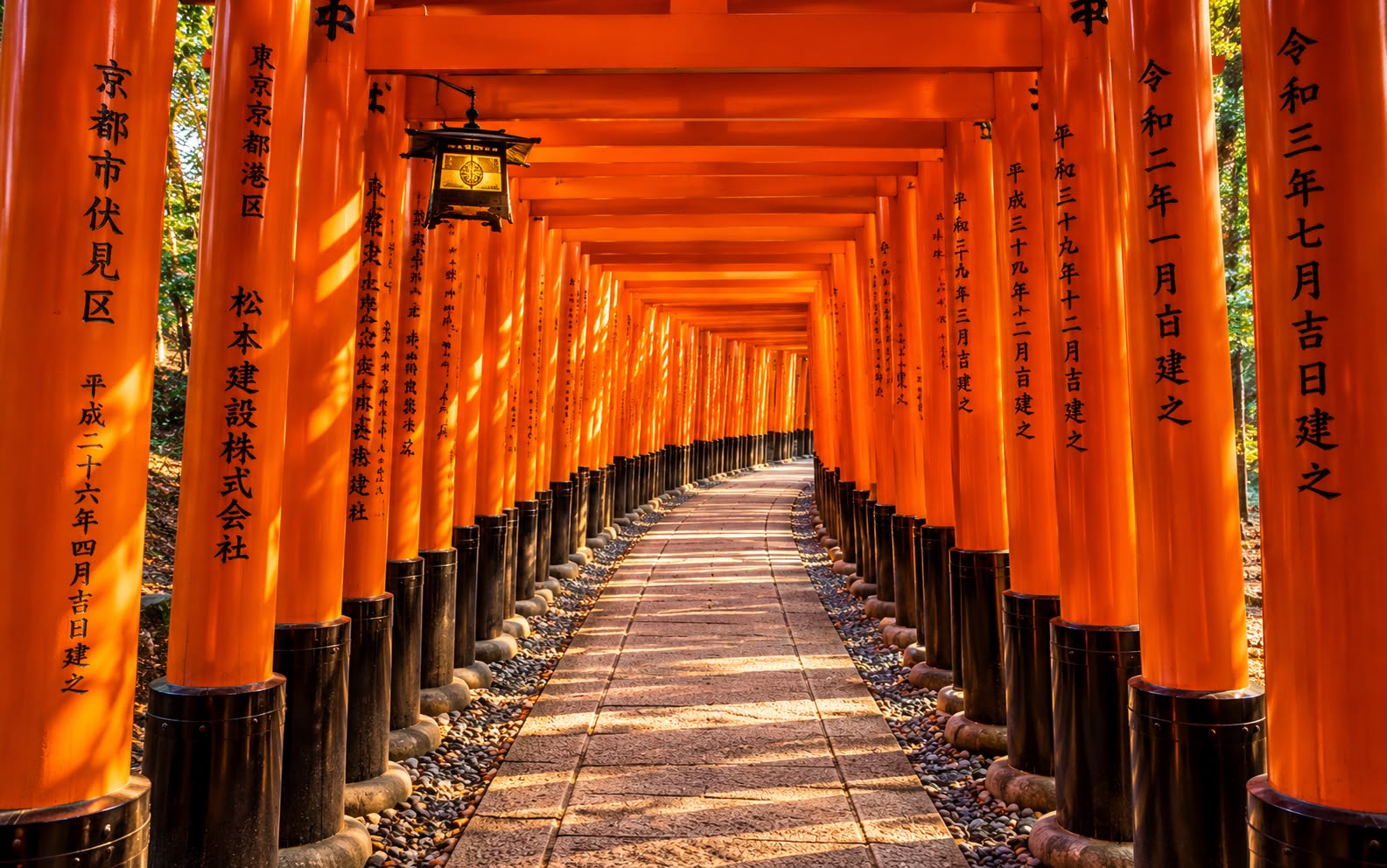
Japan in 7 days: Tokyo, Hakone, Kyoto and Osaka
One week is enough for Tokyo, a night in the mountains at Hakone, the temples of Kyoto and a last evening eating in Osaka — if you accept that it is a four-stop trip and stop trying to add Hiroshima. The rail pass maths, the Hakone loop in the right direction, and what to book before you fly.
- East Asia
- 7 days
- ≈ AED 3,400 / person
- The Golden Route done properly rather than the ten-day version with three days cut out
Before you go
Seven days in Japan is not the ten-day trip with three days removed. It is a different shape: four stops, two bases, one mountain night, and no internal flights.
The temptation is to add Hiroshima. Resist it — it is a four-hour round trip from Kyoto that costs you a day of the thing you came for. If you have ten days, the ten-day route adds it properly.
Tokyo takes three days and could take thirty. Hakone is the overnight that turns a city trip into a Japan trip: a lake, an active volcanic valley, and Fuji on a clear morning. Kyoto is the temples, and two full days there is the minimum that does not feel like a checklist. Osaka is forty minutes further on and is where you eat.
Figure JPY 146,000 (≈ AED 3,387) per person. Late March to early April and late October to November are the windows, and both are busy for good reason.
Before you go: the admin
Entry
- Most nationalities enter visa-free for 90 days, including UAE residents travelling on a UAE passport. Indian passport holders need a visa, applied for through the embassy or an authorised agency before travel.
- Visit Japan Web is the online arrival registration. Fill it in before you fly and screenshot the QR codes; the airport queue for people who did not is materially longer.
- Six months’ passport validity and an onward ticket.
The rail pass question
- The 7-day Japan Rail Pass is no longer the automatic buy. The price rose sharply in October 2023 and this exact route no longer justifies it.
- Tokyo → Kyoto → Osaka on individual Shinkansen tickets costs less than the pass for a one-way run west. Buy single tickets and keep the money.
- A pass only wins if you are backtracking — Tokyo to Kyoto and back, or adding Hiroshima. Price your actual route on a fare calculator before buying anything.
- Get a Suica or Pasmo IC card at the airport for metro, buses and convenience stores. This matters more day to day than the rail pass.
Money
- Japan is less cash-only than its reputation, but shrines, small restaurants and rural buses still are. Carry ¥10,000–20,000.
- 7-Eleven and Japan Post ATMs take foreign cards. Bank ATMs often do not.
- No tipping, anywhere. It causes confusion rather than pleasure.
Book before you fly
- Any Ghibli Museum or teamLab ticket — these sell out weeks ahead.
- One kaiseki or sushi dinner if you want a memorable meal.
- Your Hakone ryokan, which is the single most atmospheric night of the week and has the least availability.
Day by day
Day 1 — Arrive in Tokyo
- Narita is 60–90 minutes from the centre, Haneda 30. Do not plan anything beyond a walk and dinner.
- 17:00 — Shibuya Crossing, and the free view from the Starbucks above it.
- 18:30 — The Tokyo Metropolitan Government Building observatory in Shinjuku, which is free and has the view people pay for elsewhere.
- 20:00 — Golden Gai or Omoide Yokocho, two alleys of six-seat bars, which is the version of Tokyo you have seen.
Day 2 — Asakusa, Ueno and the old city
- 08:00 — Senso-ji early, before the coach parties. The Nakamise approach is a tourist street and the temple behind it is still worth it at eight in the morning.
- 10:30 — Ueno for the museums, or Akihabara if that is more your thing, or Yanaka if you want the low-rise Tokyo that survived the war.
- 15:00 — Whichever two of those three you skipped, since they are twenty minutes apart on the same line.
- 18:30 — A standing bar under the Yurakucho tracks, which costs very little and is the Tokyo people remember.
Day 3 — Markets, shrine and Harajuku
- 07:00 — Tsukiji Outer Market for breakfast. The inner wholesale market moved to Toyosu; the outer market is where you actually want to eat.
- 10:00 — Meiji Jingu, a forest shrine in the middle of the city — and the forest was planted in the 1920s from 100,000 donated trees.
- 12:00 — Harajuku and Omotesando, the best modern architecture in the city, a few hundred metres from the shrine.
- 16:00 — Shopping, or Shimokitazawa if you want second-hand and small bars instead.
Day 4 — Hakone, and a ryokan
- 08:00 — Ninety minutes from Shinjuku on the Odakyu line. The Hakone Freepass covers the whole loop and is worth buying.
- Do the loop anticlockwise: train to Gora, funicular, ropeway over the Owakudani volcanic valley, pirate boat across Lake Ashi, bus back. Clockwise puts you against the crowds all day.
- 11:00 — Owakudani sells black eggs boiled in the sulphur springs. Eating one is said to add seven years to your life; the queue is part of it.
- 14:00 — The Hakone Open-Air Museum, genuinely good and most people skip it.
- 16:30 — A ryokan with an onsen. Tattoos are still refused at many — check when booking, or book a room with a private bath.
- Fuji appears from the lake on a clear morning and hides behind cloud by midday, which is the argument for the overnight.
Day 5 — Fuji, then Kyoto
- 07:00 — Fuji from the lake, if the morning is clear.
- 10:00 — Hakone to Kyoto, about two and a half hours via Odawara on the Shinkansen.
- 14:00 — Nishiki Market for a late lunch.
- 17:00 — Kiyomizu-dera and the Higashiyama lanes below it, best at dusk when the day visitors have gone.
- 19:00 — Gion in the early evening — and the rule is that you do not chase or photograph geiko and maiko. Several lanes now carry fines for it.
- 20:30 — Pontocho for dinner.
Day 6 — Fushimi Inari and Arashiyama
- 07:00 — Fushimi Inari. This is not negotiable — by ten the vermilion gates are a queue. The full loop up the mountain takes two hours and almost everyone turns back after twenty minutes, which is why the top is empty.
- 11:00 — Arashiyama for the bamboo grove, and the Okochi Sanso villa garden above it that the crowds walk straight past — tea is included in the ticket.
- 15:30 — Kinkaku-ji, the golden pavilion, which is small, crowded and worth twenty minutes — and no more than that.
- 17:00 — Ryoan-ji’s rock garden nearby, which is the better of the two and almost always calmer.
Day 7 — Osaka, and out
- 09:00 — Forty minutes from Kyoto. If your flight is from Kansai this is the natural last stop; if it is from Tokyo, swap this day for a second Tokyo day rather than backtracking.
- 10:00 — Osaka Castle if you have the morning, Kuromon Ichiba if you would rather eat.
- 13:00 — Dotonbori for the neon and the food stalls — takoyaki, okonomiyaki, kushikatsu, and the rule about not double-dipping the sauce.
- Kansai airport is 50 minutes from Namba on the Nankai line.
Costs and practicalities
Best time to visit
Late March to early April, and late October to November.
- Late March–early April — cherry blossom, and the forecast moves by a week or more each year. Hotel prices roughly double and it is still worth it once.
- Late October–November — autumn colour, which lasts longer than blossom and is almost as beautiful. Kyoto in late November is the best week of the Japanese year.
- May and early June — green, mild, far cheaper, and the least compromised shoulder.
- June–July — the rainy season, then serious humidity. Tokyo at 35°C and 80% is unpleasant.
- August — hot, and Obon in mid-August books out domestic transport.
- December–February — cold, clear, cheap, and Fuji is visible from Hakone far more reliably than in summer.
Avoid Golden Week, 29 April to 5 May. The whole country travels at once and prices follow.
Travel tips
- Price the rail pass against your actual route before buying. For a one-way Tokyo–Kyoto–Osaka week, single tickets are cheaper.
- Fushimi Inari and Arashiyama before eight. Both are transformed by it, and both are unpleasant by eleven.
- Carry your passport. It is a legal requirement for foreign visitors and is checked for tax-free shopping.
- Luggage forwarding (takkyubin) moves your suitcase hotel to hotel overnight for about ¥2,000. Use it for the Hakone leg and travel with an overnight bag.
- Do not eat while walking, and do not talk on the phone on trains.
- Shoes off at ryokan, temples and some restaurants. Wear shoes you can slip off and socks without holes.
- Convenience store food is genuinely good and will save you money on at least two meals a day.
What this trip actually costs
Two people, 6 nights, mid-range comfort, international flights excluded:
| Item | Cost |
|---|---|
| Hotels, 6 nights including one ryokan | JPY 140,000 (≈ AED 3,247) |
| Food and drink, 7 days | JPY 63,000 (≈ AED 1,461) |
| Shinkansen and the Hakone Freepass | JPY 50,000 (≈ AED 1,160) |
| Temples, museums and activities | JPY 25,000 (≈ AED 580) |
| Local transport and airport transfers | JPY 14,000 (≈ AED 325) |
| Total for two | JPY 292,000 (≈ AED 6,773) |
- Roughly JPY 146,000 (≈ AED 3,387) per person. The ryokan night is the single largest line in the accommodation figure and is the one worth paying for.
- Blossom and autumn weeks run 30–50% above this. The same route in May or February costs noticeably less.
- Convenience stores and standing bars are how the food figure stays where it is without eating badly.
- Hotel picks here are chosen on location, not on commission — always check prices and recent reviews before booking.
What to pack
- Shoes you can walk 20,000 steps in and take off easily.
- Socks without holes, for the same reason.
- A small daypack. Bins are rare and you will carry your rubbish.
- A coin purse. Japan’s smallest notes stop at ¥1,000 and you will accumulate heavy change.
- A power bank, and a Type A adapter — Japan runs 100V.
- A light waterproof in any month.
FAQ
Is seven days enough for Japan? For Tokyo, Hakone, Kyoto and Osaka, yes. It is not enough to add Hiroshima, Kanazawa or the Alps without the week becoming a train timetable. If you want those, the ten-day and fourteen-day routes exist for a reason.
Do I need a Japan Rail Pass? Probably not for this route. Since the 2023 price rise, one-way Tokyo–Kyoto–Osaka on single tickets costs less than a 7-day pass. Price your own route before buying.
Should I stay in Kyoto or Osaka? Kyoto for the two temple days, then move. They are forty minutes apart, so a day trip either way works, but moving saves you an hour of commuting on the last morning.
Can I see Mount Fuji? From Hakone on a clear morning, often. From Tokyo, rarely. Winter has far better odds than summer, and midday is worse than dawn either way.
Is Japan expensive? Less than its reputation. Accommodation and transport are the costs; food can be very cheap if you eat where Japanese people eat.
Prices and entry rules change, and what you need depends on your passport; last checked 30 October 2026, so confirm with the embassy or your airline before booking.


