 The Itinerary
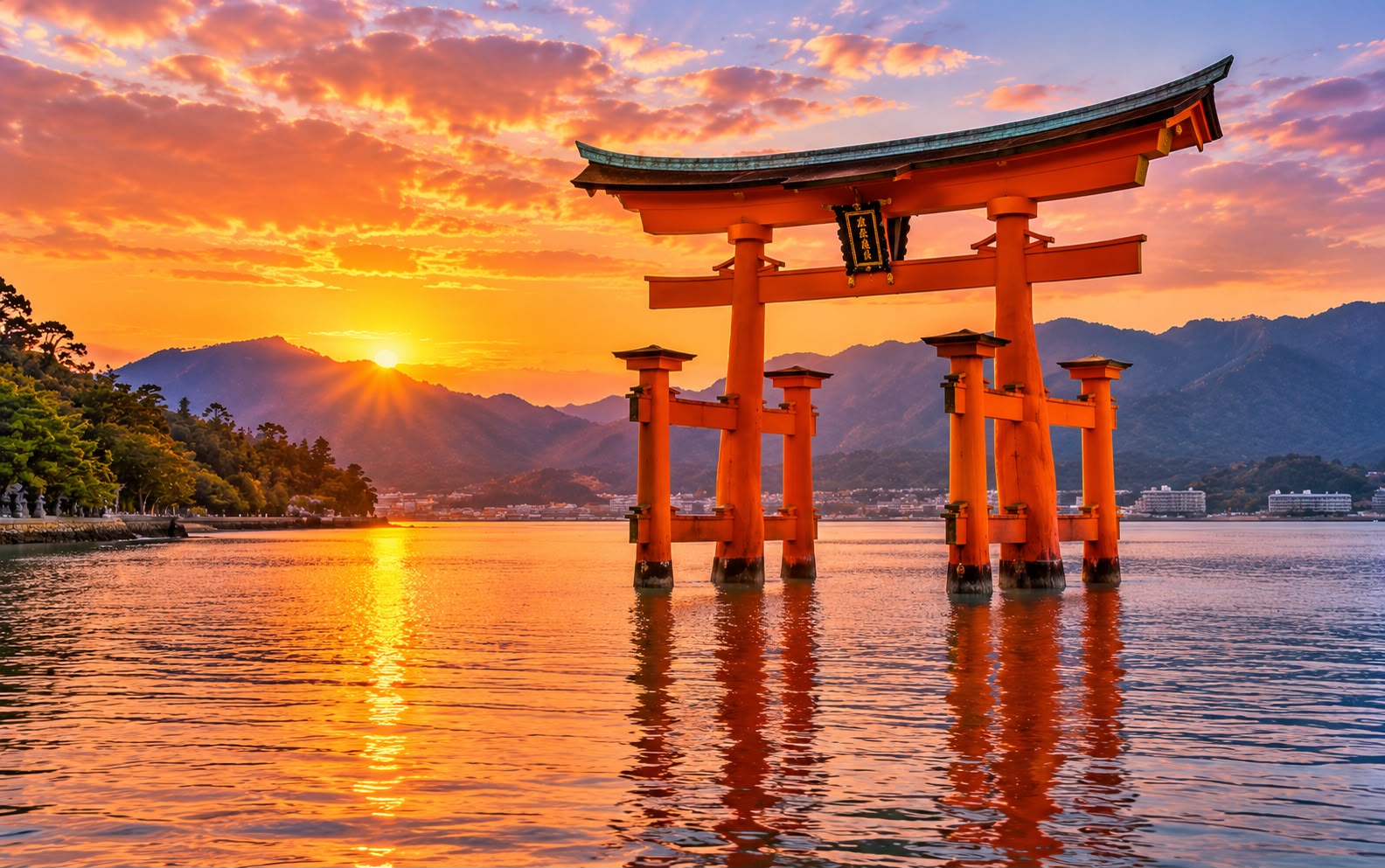
Japan in 14 days: Tokyo, the Alps, Kyoto, Hiroshima and Miyajima
Two weeks is where Japan stops being a highlights reel. This adds Nikko's shrines, Kanazawa's samurai and geisha districts, Hiroshima and the floating torii at Miyajima to the Tokyo–Kyoto spine — and it is the one duration where the rail pass genuinely pays.
- East Asia
- 14 days
- ≈ AED 7,650 / person
- The Golden Route with the two things everyone regrets missing: Kanazawa and Miyajima
Before you go
Two weeks is the length at which Japan stops being a list of famous things and starts being a country. The seven-day trip is Tokyo and Kyoto; fourteen days adds the parts people come back for.
Specifically: Nikko, an hour and a half north of Tokyo, where the Tokugawa shoguns are buried under the most ornate woodwork in Japan. Kanazawa, which kept its samurai and geisha districts because the bombers never came. Hiroshima, which did not. And Miyajima, where the torii gate stands in the sea.
This is also the one duration where the Japan Rail Pass pays. On the seven-day route single tickets are cheaper; over this much backtracking a 14-day pass wins comfortably.
Figure JPY 330,000 (≈ AED 7,655) per person. Late March to early April and late October to November are the windows.
Before you go: the admin
Entry
- Most nationalities enter visa-free for 90 days. Indian passport holders need a visa arranged through the embassy or an authorised agency before travel.
- Visit Japan Web for arrival registration — fill it in beforehand and screenshot the QR codes.
- Six months’ validity and an onward ticket.
The rail pass, which this time is worth it
- Buy the 14-day ordinary Japan Rail Pass. This route runs Tokyo → Nikko → back → Hakone → Kanazawa → Kyoto → Hiroshima → back to Osaka or Tokyo, and the individual fares add up well past the pass price.
- Activate it on your first long journey, not on arrival — the Narita Express is covered, but if your first two days are inside Tokyo you are burning pass days on the metro, which it does not cover anyway.
- It does not cover the Nozomi and Mizuho fastest Shinkansen. Take the Hikari and Sakura instead; they are ten to twenty minutes slower.
- Reserve seats at any JR ticket office, free with the pass, and do it for the Hiroshima and Kanazawa legs in advance.
- Get a Suica or Pasmo as well, for metros and convenience stores.
Money and logistics
- Carry ¥10,000–20,000. Shrines, rural buses and small restaurants are cash.
- 7-Eleven and Japan Post ATMs take foreign cards; bank ATMs often do not.
- Use takkyubin luggage forwarding between cities — about ¥2,000 a bag, overnight, and it turns a two-week trip with a suitcase into a two-week trip with a daypack.
- No tipping anywhere.
Day by day
Day 1 — Arrive in Tokyo
- Narita is 60–90 minutes out, Haneda 30. Which one you land at is the difference between an evening and no evening.
- 16:00 — Shibuya Crossing, and the free view from the Starbucks above it or Shibuya Sky if you have booked.
- 18:00 — The Metropolitan Government Building observatory in Shinjuku, which is free and has the view people pay for elsewhere — 202m, and Fuji on a clear evening.
- 20:00 — Omoide Yokocho or Golden Gai for the first dinner, both standing-room and both excellent.
Day 2 — Asakusa, Yanaka and the old city
- 07:30 — Senso-ji before eight, when Nakamise-dori is empty and the gate is yours. By ten it is a river of people.
- 10:00 — Yanaka, the low-rise district that survived both the earthquake and the war — wooden houses, a cemetery full of cherry trees, and the Tokyo that mostly no longer exists.
- 14:00 — The Tokyo National Museum in Ueno.
- 18:00 — Early night. Tomorrow starts at the fish market.
Day 3 — Markets, Meiji and Harajuku
- 07:00 — Tsukiji Outer Market for breakfast. The inner wholesale market moved to Toyosu; the tuna auction is there and needs an early start and a booking.
- 10:00 — Meiji Jingu, in forest. The trees were planted — 100,000 donated from across Japan in the 1920s and grown into what looks ancient.
- 12:00 — Harajuku and Omotesando, a few hundred metres apart and a world apart: Takeshita Street, then the best modern architecture in the city.
- 16:00 — teamLab or the Ghibli Museum. Both sell out weeks ahead — book before you fly or do neither.
Day 4 — Nikko
- 07:30 — Two hours each way, so leave early.
- 10:00 — Toshogu Shrine, where Tokugawa Ieyasu is buried under carving so dense it took 15,000 craftsmen — the sleeping cat, the three monkeys, and a pillar deliberately set upside down so the gods would not envy a perfect building.
- 13:00 — The Shinkyo bridge and the Kanmangafuchi Abyss, with its rows of stone jizo that nobody counts the same way twice.
- 15:00 — Lake Chuzenji above the Kegon Falls, if the season is right — the road up is 48 hairpins, each numbered.
- 19:00 — Back in Tokyo.
Day 5 — Hakone
- 08:00 — Ninety minutes from Shinjuku, and the Hakone Freepass covers the loop.
- Do it anticlockwise: Gora, funicular, ropeway over the Owakudani volcanic valley, boat across Lake Ashi, bus back. That is the direction the timetables are built for.
- 11:00 — The Hakone Open-Air Museum, which is genuinely good and usually skipped — Moore, Picasso, and a hillside.
- 16:00 — A ryokan with an onsen. Check the tattoo policy when booking, or take a room with a private bath.
- Fuji shows itself from the lake on a clear morning and hides by midday, so tomorrow’s first hour matters.
Day 6 — North-west to Kanazawa
- 07:00 — Fuji from the lake, if it is clear.
- 10:00 — Across via Tokyo, about four hours in total.
- 15:00 — Omicho Market for late lunch. Kanazawa’s seafood is as good as Tokyo’s and a tenth as busy.
- 17:00 — Higashi Chaya, the eastern teahouse district, which is Gion without the crowds. Kaikaro and Shima are open to visitors.
Day 7 — Kanazawa
- 08:00 — Kenrokuen at opening, one of the three great gardens of Japan and the reason most people come. Empty for the first hour.
- 10:30 — The Nagamachi samurai district: earthen walls, water channels, and the Nomura house with its garden.
- 14:00 — The 21st Century Museum of Contemporary Art, including Leandro Erlich’s swimming pool — you stand under the water.
- 16:00 — Gold leaf. Ninety-nine per cent of Japan’s is made here, and you can eat it on ice cream, which is as silly as it sounds and worth doing once.
Day 8 — South to Kyoto
- 09:00 — Two and a quarter hours on the Thunderbird and Shinkansen.
- 13:00 — Nishiki Market for lunch, five blocks of covered stalls.
- 16:00 — Kiyomizu-dera in late light, and Sannenzaka and Ninenzaka below it.
- 18:00 — Gion at dusk, and the rule: do not chase or photograph geiko and maiko. Several lanes now carry fines.
- 20:00 — Pontocho for dinner, along the river.
Day 9 — Fushimi Inari and Arashiyama
- 07:00 — Fushimi Inari, and walk the full mountain loop — two hours, and almost everyone turns back after twenty minutes, which is why the top is empty.
- 11:00 — Arashiyama: the bamboo grove is a corridor of people by midday and genuinely beautiful earlier.
- 12:30 — Okochi Sanso, the villa garden the crowds walk past, with tea included in the ticket.
- 16:00 — Tenryu-ji, and the walk along the river.
Day 10 — Nara, then the north-west
- 08:00 — Nara, 45 minutes. Todai-ji holds the great bronze Buddha in the largest wooden building in the world — and the current hall is two-thirds the size of the original.
- 10:30 — The deer, which bow for crackers and will headbutt you if you are slow about it. They are wild.
- 12:00 — Kasuga Taisha and its three thousand lanterns on the walk back through the forest.
- 16:00 — Back in Kyoto: Kinkaku-ji, Ryoan-ji’s rock garden and Ninna-ji make one good north-western afternoon, all on the same bus route.
Day 11 — West to Hiroshima
- 09:00 — Two hours from Kyoto on the Sakura or Hikari.
- 11:30 — The Peace Memorial Museum. It is unflinching and it should be. Allow two hours and plan nothing demanding afterwards.
- 14:30 — The A-Bomb Dome, left standing as it was, and the Children’s Peace Monument with its paper cranes.
- 16:00 — Shukkei-en garden, which is the right thing to do after the museum.
- 19:00 — Okonomiyaki, Hiroshima-style — layered rather than mixed, with noodles. Okonomimura is a building of twenty-odd stalls doing nothing else.
Day 12 — Miyajima
- 09:00 — The ferry, 45 minutes in total from the city.
- The Itsukushima torii stands in the sea at high tide and you can walk to it at low. Check the tide table and choose — they are different photographs and you only get one.
- 11:00 — Mount Misen, by ropeway or a two-hour climb, with wild deer and monkeys at the top and the Inland Sea below.
- 17:00 — Stay the night on Miyajima if you can. The day visitors leave at five and the island becomes a different place — the shrine lit, and nobody in it.
Day 13 — Osaka
- 10:00 — Ninety minutes back east.
- 13:00 — Osaka Castle, or Kuromon Ichiba if you would rather eat than climb.
- 16:00 — Shinsekai and the Tsutenkaku tower, the old and scruffier half of the city.
- 19:00 — Dotonbori for the neon and the street food: takoyaki, okonomiyaki, kushikatsu, and the rule about not double-dipping the kushikatsu sauce, which everyone enforces.
Day 14 — Out
- 09:00 — A last morning in Kuromon or Namba, which is breakfast and shopping in the same street.
- Kansai airport is 50 minutes from Namba. If you are flying from Tokyo instead, the Shinkansen back is two and a half hours and is covered by the pass — but you lose the morning, so decide when you book the flight, not on the day.
Costs and practicalities
Best time to visit
Late March to early April, and late October to November.
- Late March–early April — cherry blossom, and the front moves north over about three weeks, so a two-week trip has a real chance of catching it somewhere even if the forecast shifts.
- Late October–November — autumn colour, which lasts longer than blossom. Kyoto in the last week of November is the best week of the Japanese year.
- May and early June — green, mild, far cheaper, and the least compromised shoulder season.
- June–July — the rainy season, then humidity. Miyajima and Hiroshima are at their worst in this.
- December–February — cold, clear and cheap, with the best odds of seeing Fuji from Hakone. Kanazawa gets real snow and is beautiful in it.
Avoid Golden Week, 29 April to 5 May, and Obon in mid-August. The whole country moves and the rail pass will not get you a seat.
Travel tips
- Buy the 14-day rail pass for this route — unlike the week, it pays here.
- Reserve seats for Hiroshima and Kanazawa at a JR office. Free with the pass and the unreserved cars fill.
- Forward your luggage between cities. Two weeks with a suitcase on Japanese stairs is a different trip from two weeks with a daypack.
- Fushimi Inari and Arashiyama before eight, every time.
- Check the Miyajima tide table before choosing your ferry — the torii standing in water and the torii you can walk to are two different photographs.
- Carry your passport; it is a legal requirement and is needed for tax-free shopping.
- The Nozomi is not covered. Take the Hikari or Sakura.
- Do not eat while walking, and keep quiet on trains.
What this trip actually costs
Two people, 13 nights, mid-range comfort, international flights excluded:
| Item | Cost |
|---|---|
| Hotels, 13 nights including two ryokan | JPY 300,000 (≈ AED 6,959) |
| Food and drink, 14 days | JPY 126,000 (≈ AED 2,923) |
| Two 14-day rail passes | JPY 160,000 (≈ AED 3,711) |
| Temples, museums and activities | JPY 45,000 (≈ AED 1,044) |
| Local transport, luggage forwarding and transfers | JPY 29,000 (≈ AED 673) |
| Total for two | JPY 660,000 (≈ AED 15,309) |
- Roughly JPY 330,000 (≈ AED 7,655) per person. The rail pass is the line that justifies itself here — the same journeys bought singly come to more.
- Blossom and late-November weeks run 30–50% above this, and hotel availability in Kyoto in those weeks is genuinely tight.
- Two ryokan nights are in the accommodation figure — Hakone and Miyajima — and both are worth it.
- Hotel picks here are chosen on location, not on commission — always check prices and recent reviews before booking.
What to pack
- Shoes for 20,000 steps a day that come off easily.
- Socks without holes.
- A daypack, since your suitcase will often be a day ahead of you.
- A coin purse — notes stop at ¥1,000 and change accumulates.
- A warm layer in any season; Kanazawa and Nikko are colder than Tokyo.
- A light waterproof.
- A Type A adapter; Japan runs 100V.
FAQ
Is the rail pass worth it for 14 days? For this route, yes. It covers Nikko, Kanazawa, Kyoto, Hiroshima and the return, and those fares individually exceed the pass. On a seven-day Tokyo–Kyoto–Osaka run it does not.
Could I add Hokkaido or Okinawa? Not comfortably. Both are flights rather than trains and neither is covered usefully by the pass. Two weeks is already nine stops.
Is Hiroshima suitable for children? The city yes, the museum depends entirely on the child. It is explicit about what happened to people. Miyajima next door is straightforwardly delightful.
Kanazawa or Takayama? Kanazawa, if you are choosing one. It has the garden, the samurai district and the teahouse quarter, and it is on the Shinkansen. Takayama is prettier and takes longer to reach.
How many nights in Kyoto? Three, with Nara as a day trip from it. Two is the point at which you start choosing between temples rather than seeing them.
Prices and entry rules change, and what you need depends on your passport; last checked 30 October 2026, so confirm with the embassy or your airline before booking.


