 The Itinerary
Tokyo in 3 days: Shibuya, Asakusa and the waterfront
Tokyo is too big to wander — this plans it by geography, west on day one, east on day two, bay on day three. Which rail pass is a waste, what sells out weeks ahead, and the free observation deck that beats the paid ones.
- East Asia
- 3 days
- ≈ AED 1,150 / person
- Three days arranged by rail line, so no hour is spent crossing the city twice
Before you go
Tokyo punishes improvisation. It is not one city but a chain of centres strung along the Yamanote loop, and the mistake visitors make is zig-zagging — forty minutes to Shibuya, back east for lunch, west again for the evening.
So this plans by geography. Day one is the west — Shibuya, Harajuku, Shinjuku. Day two is the east and old city — Asakusa, Ueno, Yanaka. Day three is the bay and the centre. Nothing doubles back.
One thing to settle before you book anything: the Japan Rail Pass is almost certainly a waste for a Tokyo-only trip. It covers the Shinkansen, not the subway, and it now costs enough that it only pays off on long-distance travel.
Part of a Japan trip? See Japan in 7 days, which gives Tokyo these three days and adds Hakone and Kyoto.
Figure JPY 50,000 (≈ AED 1,160) per person for three days. March–May and October–November.
Before you go: the short version
Entry
- Most Western nationalities enter visa-free for 90 days.
- Everyone fills in Visit Japan Web before arrival — immigration and customs QR codes, which saves real time at the desk.
Getting in and around
- Narita (NRT) is 60–90 minutes out; Haneda (HND) is 30 and is much the better arrival.
- Get a Suica or Pasmo card on arrival — tap on every train, subway, bus and convenience store. They are also available in Apple Wallet, which avoids the physical-card shortages that recur.
- The subway is two companies — Tokyo Metro and Toei — and a journey crossing between them costs more. The IC card handles it invisibly.
- Taxis are expensive. A short hop is ¥1,500 and the trains run until roughly midnight.
What to book before you fly
- teamLab (either venue) and the Ghibli Museum sell out weeks ahead — Ghibli by lottery, monthly.
- The Shibuya Sky deck books out for sunset slots.
- A sumo tournament, if your dates fall in one of the three Tokyo basho (January, May, September).
Day by day
Day 1 — The west: Shibuya, Harajuku, Shinjuku
Walking order: Shibuya Crossing → Miyashita Park (5 min) → train one stop → Harajuku: Meiji Jingu (5 min from station) → Takeshita Street (5 min) → Omotesando (10 min) → train → Shinjuku. About 5km on foot, all flat, in three clusters.
- 09:00 — Meiji Jingu, a forest shrine in the middle of the city — the forest was planted in the 1920s from 100,000 donated trees and now looks ancient. Go before ten; it fills.
- 10:30 — Takeshita Street in Harajuku, which is the teenage version, then Omotesando, which is the best modern architecture in the city — a kilometre of flagship stores by Herzog & de Meuron, SANAA, Tadao Ando.
- 13:00 — Lunch in Omotesando or Shibuya.
- 14:30 — Shibuya Crossing, and the free view from the Starbucks above it if you can get a window. Shibuya Sky is the paid version and is genuinely better — book the sunset slot.
- 17:00 — Shinjuku, and the Tokyo Metropolitan Government Building observatory, which is free, open late, and is the view people pay for elsewhere.
- 19:00 — Omoide Yokocho or Golden Gai — alleys of six-seat bars, some with a cover charge and some that do not want tourists. The ones that do are clearly marked, and the rest is not personal.
Day 2 — The east: Asakusa, Ueno, Yanaka
Walking order: Senso-ji → Nakamise (on site) → Sumida riverbank (10 min) → train → Ueno Park and the museum (5 min from station) → train one stop → Yanaka (10 min). About 5km, flat.
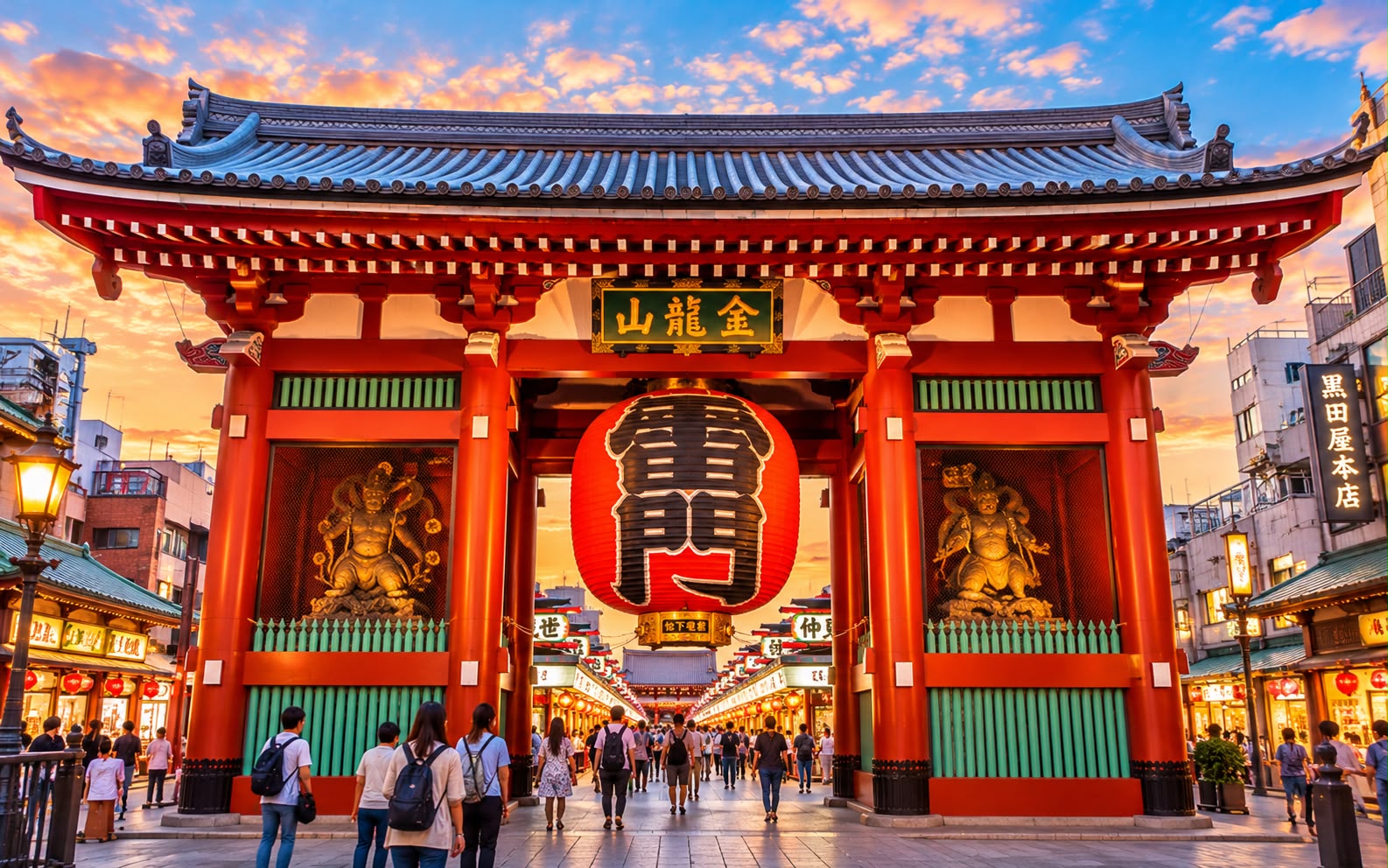
- 07:30 — Senso-ji at Asakusa, before the coaches and before the Nakamise stalls open. The temple at that hour is a working one.
- 09:30 — Nakamise once it opens, which is a souvenir street and is fine as that.
- 10:30 — The Sumida riverbank for the Skytree across the water — the view of it is better than the view from it.
- 12:00 — Tsukiji Outer Market for lunch. The inner wholesale market moved to Toyosu; the outer market stayed and is where you actually want to eat.
- 14:00 — Ueno Park and the Tokyo National Museum — the swords, the screens and the Jomon pottery, and it is the best museum in the country.
- 16:30 — Yanaka, two stops on: the low-rise neighbourhood that survived both the 1923 earthquake and the firebombing, with a cemetery, a shotengai and cats. It is the quietest hour of these three days.
- 19:00 — A standing bar under the Yurakucho tracks, which is cheap, loud and the Tokyo people remember.
Day 3 — The bay, the centre, and whatever you booked
Walking order: teamLab → Toyosu or Odaiba waterfront → train → Ginza (10 min of walking) → Imperial Palace East Gardens (10 min). About 4km.
- 09:30 — teamLab, booked weeks ahead. Borderless in Azabudai and Planets in Toyosu are different shows — Planets has the water rooms and you go barefoot; Borderless has no fixed route. Wear something you can roll up.
- 13:00 — Lunch, then Ginza — the department store food halls in the basements are the best-value eating in the city, and Ginza’s main avenue closes to traffic on weekend afternoons.
- 15:30 — The Imperial Palace East Gardens, free, and the only part of the palace grounds open daily.
- 17:00 — Akihabara if that is your thing, or Shimokitazawa for second-hand shops and small bars, which is the better evening.
- Or a day trip instead: Kamakura is an hour south for the Great Buddha and the coast, and Nikko is two hours north for the Toshogu shrine. Both replace this day rather than fitting inside it.
Costs and practicalities
Getting around, and what it costs
| Suica or Pasmo, per journey | ¥180–320 |
| Narita Express to Shinjuku | ¥3,250 |
| Haneda to the centre | ¥500–650 |
| Airport limousine bus | ¥3,200 |
| Tokyo Metro 24-hour pass | ¥800 |
| Shibuya Sky | ¥2,500 |
| Metropolitan Government observatory | free |
| teamLab | ¥3,800–4,200 |
| Tokyo National Museum | ¥1,000 |
- Do not buy a Japan Rail Pass for a Tokyo-only trip. It covers almost nothing you will use.
- The 24-hour Metro pass pays off only on a heavy day; the IC card is simpler.
Best time to visit
- March–May — cherry blossom in late March and early April, which is extraordinary and books out months ahead.
- October–November — autumn colour, clear skies, and the best weather of the year.
- June–July — the rainy season, then humid heat.
- August — 35°C and humid, and the city empties for Obon.
- December–February — cold, dry and very clear. Fuji is most visible in winter, which matters if you add Hakone.
Travel tips
- Book teamLab and Ghibli weeks ahead. They are the two things people miss.
- Get the IC card in Apple Wallet before you land.
- The free Metropolitan Government observatory beats most paid decks.
- Trains stop around midnight and taxis after that are expensive.
- Carry some cash. Japan is far more card-friendly than it was, but small restaurants and shrines are not.
- Eating while walking is frowned on, and there are almost no public bins — carry your rubbish.
What this trip actually costs
Two people, 2 nights, mid-range comfort, international flights excluded:
| Item | Cost |
|---|---|
| Hotel, 2 nights | JPY 36,000 (≈ AED 835) |
| Food and drink, 3 days | JPY 30,000 (≈ AED 696) |
| teamLab, museums, Shibuya Sky, two people | JPY 18,000 (≈ AED 418) |
| Trains, including the airport both ways | JPY 12,000 (≈ AED 278) |
| Incidentals | JPY 4,000 (≈ AED 92.78) |
| Total for two | JPY 100,000 (≈ AED 2,320) |
- Roughly JPY 50,000 (≈ AED 1,160) per person. Tokyo is cheaper than visitors expect — a good lunch is ¥1,200 and the trains cost almost nothing.
- Hotel rooms are small. Paying more buys space, not much else.
- Hotel picks here are chosen on location, not on commission — always check prices and recent reviews before booking.
What to pack
- Shoes you can walk 5km a day in, and that come off easily — you will take them off at temples and some restaurants.
- A layer; the subway is over-heated in winter and over-conditioned in summer.
- A small bag for rubbish, genuinely.
- A Type A adapter, 100V — the lowest mains voltage in the world, so some appliances charge slowly.
Part of a bigger trip?
- Japan in 7 days adds Hakone, Kyoto and Osaka.
- Japan in 14 days adds Hiroshima and the Alps.
- Tokyo in 5 days adds a day trip and more depth in each quarter.
- Kyoto in 2 days is two and a quarter hours away by Shinkansen.
FAQ
Is three days enough for Tokyo? For the three main geographies, yes. It is not enough to add Kamakura or Nikko without dropping something, which is what the five-day plan is for.
Do I need a Japan Rail Pass? Not for Tokyo. It covers the Shinkansen and JR lines, not the subway, and only pays off on long-distance travel.
Narita or Haneda? Haneda, every time — 30 minutes to the centre against 60–90.
What sells out? teamLab, the Ghibli Museum (monthly lottery), and sunset slots at Shibuya Sky. Book all three before you fly.
Is Tokyo expensive? Less than its reputation. Accommodation is the cost; food and transport are both cheaper than most Western capitals.
Prices and entry rules change, and what you need depends on your passport; last checked 30 October 2026, so confirm with the embassy or your airline before booking.


