 The Itinerary
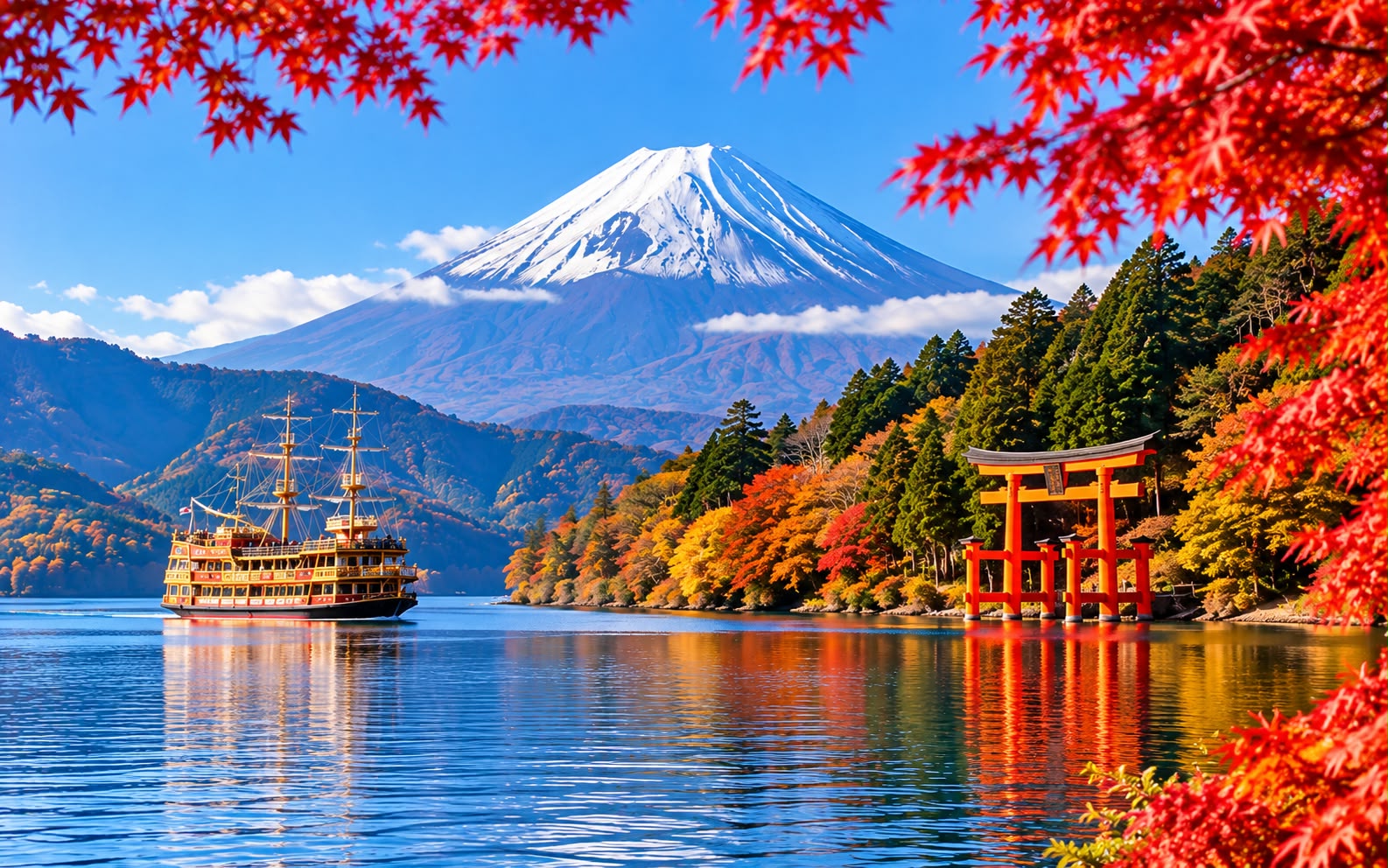
Tokyo in 5 days: the city, plus Kamakura and Nikko
The same geography-first plan as three days, with room to go deeper — plus Kamakura's Great Buddha and Nikko's Toshogu, which are the two day trips that actually earn a day. Which to pick if you only want one.
- East Asia
- 5 days
- ≈ AED 2,100 / person
- Three days of city done properly, and two day trips that are worth the train
Before you go
Five days is the length at which Tokyo stops being a checklist. The three-day plan covers the city’s geographies; five lets you go deeper in each and adds the two day trips that genuinely deserve a day — Kamakura and Nikko.
The structure is the same: west, east, bay, then out. Nothing doubles back, and the two excursions sit at the end so a rainy forecast can swap them.
If you only want one day trip: Kamakura for the coast, temples and an easy hour on the train; Nikko for the single most extravagant shrine complex in Japan and a harder two-hour journey.
Part of a Japan trip? See Japan in 14 days.
Figure the budget below. March–May and October–November.
Before you go: the short version
Entry
- Most Western nationalities enter visa-free for 90 days.
- Fill in Visit Japan Web before arrival for the immigration and customs QR codes.
Getting in and around
- Haneda (HND) is 30 minutes from the centre; Narita (NRT) is 60–90.
- Get a Suica or Pasmo, ideally in Apple Wallet before you land.
- A Japan Rail Pass is not worth it for this trip. It covers JR lines and the Shinkansen, not the subway. The Nikko day is the one exception worth checking — Tobu sells its own Nikko passes which are better value than JR for that route.
What to book before you fly
- teamLab and the Ghibli Museum — Ghibli by monthly lottery, and it genuinely sells out.
- Shibuya Sky sunset slots.
- A sumo tournament if your dates hit a Tokyo basho — January, May or September.
Day by day
Day 1 — The west: Shibuya, Harajuku, Shinjuku
Walking order: Meiji Jingu → Takeshita Street (5 min) → Omotesando (10 min) → train → Shibuya Crossing → train → Shinjuku. About 5km, flat.
- 09:00 — Meiji Jingu, a forest shrine in the middle of the city — the forest was planted in the 1920s from 100,000 donated trees. Go before ten.
- 10:30 — Takeshita Street, then Omotesando, which is the best modern architecture in Tokyo — Herzog & de Meuron, SANAA, Tadao Ando within a kilometre.
- 13:00 — Lunch, then the Nezu Museum ten minutes away — a Kengo Kuma building around a hillside garden that almost no visitor finds.
- 15:30 — Shibuya Crossing, and Shibuya Sky if you booked the sunset slot.
- 18:00 — Shinjuku, and the Tokyo Metropolitan Government observatory, which is free and open late.
- 20:00 — Omoide Yokocho or Golden Gai. Some bars have a cover charge and some do not want tourists; the ones that do are clearly marked.
Day 2 — The east: Asakusa, Ueno, Yanaka
Walking order: Senso-ji → Sumida riverbank (10 min) → train → Ueno Park (5 min) → one stop → Yanaka (10 min). About 5km.
- 07:30 — Senso-ji at Asakusa, before the coaches and before the Nakamise stalls open.
- 10:00 — The Sumida riverbank, with the Skytree across the water — the view of it beats the view from it.
- 11:30 — Tsukiji Outer Market for an early lunch. The inner wholesale market moved to Toyosu; the outer one stayed.
- 14:00 — The Tokyo National Museum at Ueno — swords, screens and Jomon pottery, and the best museum in the country. Two hours.
- 16:30 — Yanaka, which survived both the 1923 earthquake and the firebombing — a cemetery, a shotengai, and the quietest hour of the week.
- 19:00 — A standing bar under the Yurakucho tracks.
Day 3 — The bay, Ginza and the palace
Walking order: teamLab → waterfront → train → Ginza → Imperial Palace East Gardens (10 min). About 4km.
- 09:30 — teamLab, booked. Planets in Toyosu has the water rooms and you go barefoot; Borderless in Azabudai has no fixed route. Wear something you can roll up.
- 13:00 — Ginza, and the department store basement food halls are the best-value eating in the city. The main avenue closes to traffic on weekend afternoons.
- 15:30 — The Imperial Palace East Gardens, free, and the only part of the grounds open daily.
- 17:00 — Akihabara, or Shimokitazawa for second-hand shops and small bars, which is the better evening.
- 20:00 — Ebisu or Nakameguro for dinner — where Tokyo eats rather than where it takes visitors.
Day 4 — Kamakura
Walking order: Kamakura station → Komachi-dori (on site) → Tsurugaoka Hachimangu (10 min) → Enoden → Hase: Great Buddha and Hasedera (10 min apart). About 4km, plus the Enoden ride.
- 08:30 — An hour south on the Yokosuka line from Tokyo station.
- 10:00 — Tsurugaoka Hachimangu, at the top of the main avenue that runs straight from the sea.
- 11:30 — Komachi-dori for lunch — shirasu, the local whitebait, served raw or boiled over rice.
- 13:00 — The Great Buddha at Kotoku-in — 13.35m of bronze, cast in 1252, sitting outdoors since a tsunami took the building in 1498. You can go inside him for ¥50.
- 14:00 — Hasedera below it, with a hydrangea path and a view over the bay — the hydrangeas are a June queue and a pleasant walk the rest of the year.
- 15:30 — The Enoden line along the coast to Enoshima — the local train everybody photographs, running between houses and then beside the sea.
- 18:00 — Back to Tokyo.
Day 5 — Nikko
Walking order: Tobu Nikko station → bus → Toshogu complex, all on foot within the grounds (about 2km, with steps). Kegon Falls is a further bus up the hairpins.
- 07:30 — Two hours north on the Tobu line from Asakusa. The Tobu Nikko passes are better value than JR for this route.
- 09:30 — Toshogu, the mausoleum of Tokugawa Ieyasu — UNESCO-listed, and the most lavishly decorated shrine complex in Japan, which is startling in a culture that prizes restraint. The sleeping cat, the three wise monkeys and the Yomeimon gate are the three things everyone photographs.
- 12:00 — Rinnoji and Futarasan, both in the same cedar-forested grounds and both included on the combined ticket.
- 13:30 — Lunch, and yuba — tofu skin — is the Nikko dish.
- 15:00 — Lake Chuzenji and Kegon Falls, up the Irohazaka hairpins — 48 bends, numbered after the old Japanese syllabary. The autumn colour here is among the best in Japan and the traffic in late October is correspondingly bad.
- 18:30 — Back to Tokyo, which is a long evening on the train.
If it rains
- Swap Nikko for the Edo-Tokyo Museum, the Nezu, or a full day at Ueno’s cluster — the National Museum, the Science Museum and the Western Art Museum are all in the same park.
Costs and practicalities
Getting around, and what it costs
| Suica or Pasmo, per journey | ¥180–320 |
| Haneda to the centre | ¥500–650 |
| Narita Express to Shinjuku | ¥3,250 |
| Kamakura return from Tokyo | ¥1,900 |
| Nikko return on the Tobu line | ¥2,900–3,100 |
| teamLab | ¥3,800–4,200 |
| Toshogu combined ticket | ¥1,300 |
| Tokyo National Museum | ¥1,000 |
| Metropolitan Government observatory | free |
- Do not buy a Japan Rail Pass for this itinerary — it covers neither the subway nor the Tobu line to Nikko.
Best time to visit
- Late March to early April — cherry blossom, which books out months ahead and is worth it.
- October–November — autumn colour, clear skies, and Nikko at its best in the last week of October.
- June–July — rainy season, then humidity. Kamakura’s hydrangeas are the June compensation.
- August — 35°C and humid; the city empties for Obon.
- December–February — cold, dry and very clear.
Travel tips
- Book teamLab and Ghibli before you fly.
- Haneda over Narita wherever the fare allows.
- Buy the Tobu pass for Nikko, not a JR ticket.
- Nikko is a long day — leave by half seven or it does not work.
- Trains stop around midnight.
- Carry cash for shrines, small restaurants and the Enoden.
- No public bins. Carry your rubbish.
What this trip actually costs
Two people, 4 nights, mid-range comfort, international flights excluded:
| Item | Cost |
|---|---|
| Hotel, 4 nights | JPY 72,000 (≈ AED 1,670) |
| Food and drink, 5 days | JPY 50,000 (≈ AED 1,160) |
| teamLab, museums, Toshogu, Shibuya Sky, two people | JPY 26,000 (≈ AED 603) |
| Trains, including both day trips and the airport | JPY 24,000 (≈ AED 557) |
| Incidentals | JPY 8,000 (≈ AED 186) |
| Total for two | JPY 180,000 (≈ AED 4,175) |
- Tokyo is cheaper than visitors expect. A good lunch is ¥1,200 and the subway costs almost nothing; the hotel is the whole cost.
- The two day trips add about ¥12,000 for two in train fares, which is the best value on this page.
- Hotel picks here are chosen on location, not on commission — always check prices and recent reviews before booking.
What to pack
- Shoes for 5km a day that come off easily.
- A layer for over-heated trains and over-cooled shops.
- A small bag for rubbish.
- A Type A adapter, 100V.
Part of a bigger trip?
- Tokyo in 3 days is this plan without the day trips.
- Japan in 7 days adds Hakone and Kyoto.
- Japan in 14 days adds Hiroshima and the Alps.
- Kyoto in 2 days is two and a quarter hours by Shinkansen.
FAQ
Kamakura or Nikko, if I only have one day? Kamakura if you want an easy hour on the train, the coast and a relaxed pace. Nikko if you want the single most extraordinary building complex in Japan and will accept four hours of travelling to see it.
Is five days too long for Tokyo? No. Three days covers the geographies; five covers them properly and buys two excursions. Beyond six, start adding Kyoto instead.
Do I need a Japan Rail Pass? Not for this. It covers neither the Tokyo subway nor the Tobu line to Nikko, which is most of your travelling.
When is the cherry blossom? Late March to early April in Tokyo, varying by a week either way each year. Nikko is two to three weeks later, being higher and colder.
Is Tokyo hard to navigate without Japanese? No. Station signage is bilingual, the IC card removes ticket machines, and map apps handle the rest. The subway map looks worse than it is.
Prices and entry rules change, and what you need depends on your passport; last checked 29 October 2026, so confirm with the embassy or your airline before booking.


