 The Itinerary
Kenya in 7 days: Masai Mara and the Rift lakes
The safari the word was invented for: lion prides on the Mara's gold grass, a million wildebeest in migration season, breakfast with orphaned elephants in Nairobi and a walk among giraffes on a lake island — with Kenya's eTA, the new $200 park-fee reality and the camp-location trick that beats it.
- East Africa
- 7 days
- ≈ AED 5,350 / person
- Safari + wildlife
Before you go
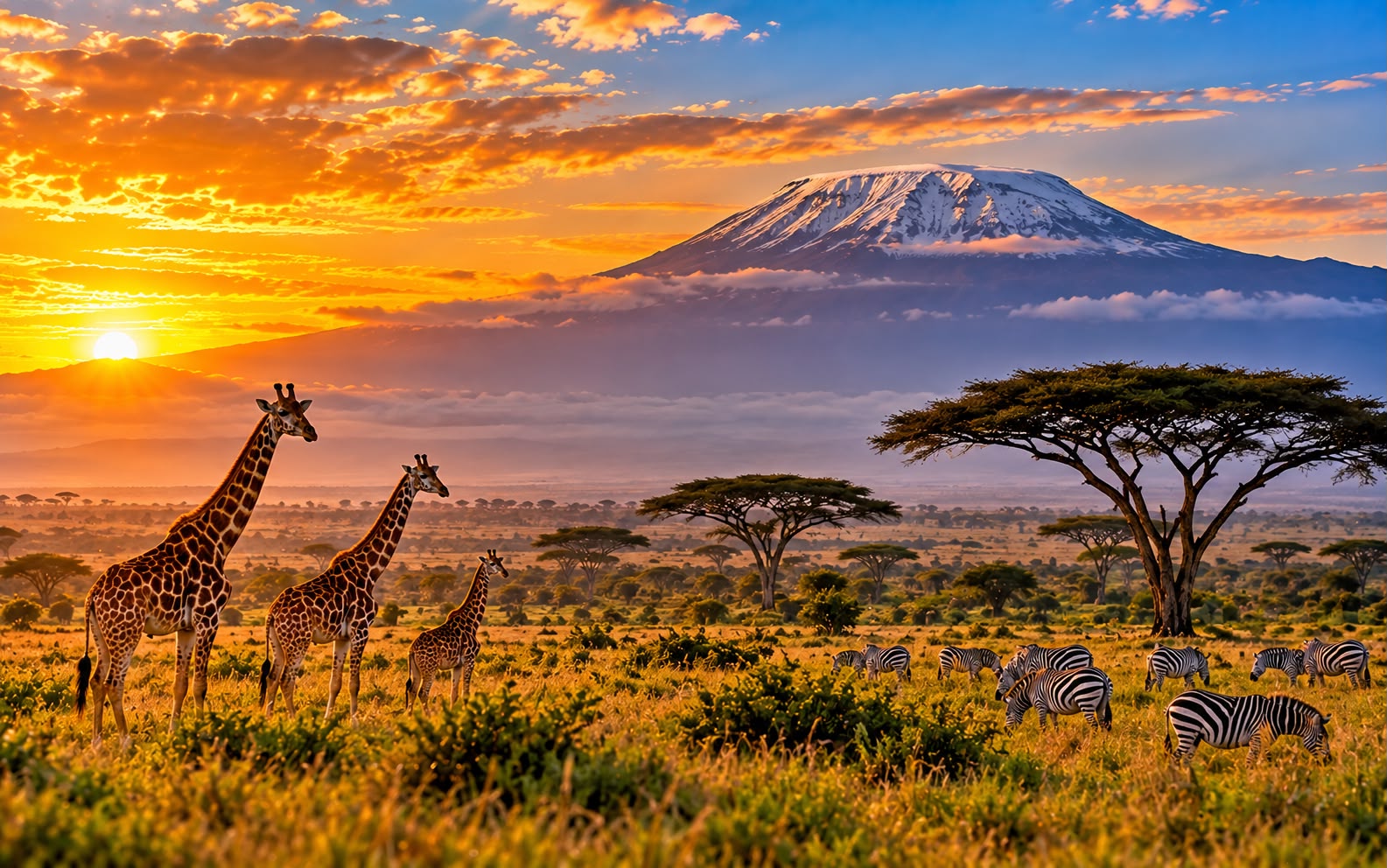
“Safari” is a Swahili word, and the Masai Mara is where it still means what it promised: horizon-wide savannah, flat-top acacias, and more big animals per square kilometre than anywhere on Earth. Between July and October the Great Migration pours a million wildebeest across the Mara river with crocodiles waiting; the rest of the year the resident cast — lion prides, cheetah on termite mounds, elephant families in the light — carries the show without them.
It is also among the most reachable of the world’s great safaris: Nairobi is a 5-hour non-stop from the Gulf and well connected from Europe, the eTA is an online form open to nearly every nationality, and Kenya’s enormous Indian community means the food is a good deal more interesting than lodge buffets suggest. The shape: Nairobi (2 nights) for the gentlest wildlife encounters anywhere, the Masai Mara (3 nights) for the main event, and Lake Naivasha (1 night) to walk — actually walk — among giraffe and zebra on the way back.
Safari economics run in dollars, so this guide does too: figure USD 1,450 (≈ AED 5,325) per person excluding international flights — with the honest note that the Mara’s new fee regime (below) is what moves this number.
Before you go: the admin
The eTA, and the park-fee truth
- eTA for everyone: Kenya scrapped visas and requires an Electronic Travel Authorisation instead — apply at the official etakenya.go.ke (~US$34, processed within 3 working days; every traveller including infants needs one). Passport 6 months valid; upload the hotel booking and return ticket. Beware paid lookalike sites, as ever.
- The park-fee truth (read before booking anything): Masai Mara National Reserve fees are now US$200 per adult in high season (July–December) and US$100 in low season (January–June) — children 9–17 $50, under-9s free — and tickets are 12-hour-validity, so nights INSIDE the reserve can mean paying twice per day. The workarounds this guide uses: stay at camps just outside the Talek/Sekenani gates (one entry per game-drive day) or base in the Mara Triangle side (~$70/24 h). Always confirm whether a safari quote includes park fees — it’s the single biggest hidden-cost trap in Kenya.
Getting there from the UAE and India
- From the UAE: Dubai–Nairobi is a non-stop of about 5–5½ hours, flown by Emirates, Kenya Airways and flydubai with several departures a day — the easiest long-haul safari start anywhere in the Gulf.
- From India: the non-stops leave Mumbai, on Kenya Airways and IndiGo, at about 6¼ hours. From Delhi and elsewhere expect one stop — through Mumbai, or through a Gulf hub such as Dubai.
- Watch the routing on cheap fares. Some go via Addis Ababa, and Ethiopia is a yellow-fever country — see the health note below before you book a long connection there. Flying in direct from India or the UAE, no certificate is asked for.
Health, honestly
- Health, honestly: the Mara is a malaria area — see a travel clinic about prophylaxis (Nairobi’s altitude keeps it low-risk there). Yellow fever vaccination is not required if you fly in direct from a non-endemic country, but IS if you transit an endemic one — carry the certificate if you have one anyway.
Money and the safari vehicle
- Money: Kenya is startlingly cashless — cards and M-Pesa everywhere, park gates card-only. Carry modest USD cash for tips (crisp notes), KES small change from an ATM for markets.
- Safari vehicle truth: quotes come in two species — minivan (pop-up roof, fine, cheaper) and 4x4 Land Cruiser (better views, better off-road reach, ~$100–150 more pp). In green-season mud or for photographers, the Cruiser earns it.
Day by day
Day 1 — Land in Nairobi, meet the giraffes
- Morning — The overnight flight lands early. Check in (Karen/Westlands side), shake off the altitude — Nairobi sits at 1,795 m, which is why the air feels alpine.
- 14:00 — Giraffe Centre (~KSh 1,500 / $12): eye-level with endangered Rothschild giraffes on the raised platform; a pellet on the palm earns you the famous 45-cm-tongue handshake.
- 16:00 — Karen Blixen Museum (~$12) — the Out of Africa farmhouse under the Ngong Hills — or souvenir recon at the Kazuri bead workshop (women’s cooperative, lovely story, fair prices).
- 19:00 — Dinner: Nairobi’s Indian food is genuinely among the world’s best outside India (a century-old community) — book Open House or similar (~$15–25 pp). Early night; elephants at eleven tomorrow.
Where to stay in Nairobi (two nights)
- Luxury: Villa Rosa Kempinski — 4.7/5 on TripAdvisor (~2,400 reviews), the city’s polished flagship. ~$250+. (The bucket-list outlier: Giraffe Manor, 4.9/2,260 — giraffes at the breakfast window, ~$1,000+ pp and booked out a year ahead. Mentioned so you know it’s real.)
- Mid-range: Tamarind Tree Hotel — 4.8/5 (~2,400 reviews), smart rooms + rooftop pool. ~$110–150.
- Value: ibis Styles Westlands — 4.6/5 (~2,400 reviews), bright and safe at ~$60–85.
Day 2 — Elephants at eleven, then the park with a skyline
- 09:30 — Leave early for Karen: the Sheldrick Wildlife Trust elephant orphanage admits the public for one hour only, 11:00–12:00 — ~$45–50 conservation levy, book online weeks ahead. Orphaned elephant calves thunder in for milk bottles, keepers tell each rescue story, and cynics leave sniffling. Adopting a calf ($50/yr) is the souvenir that matters.
- 13:00 — Lunch in Karen (~$12–18).
- 15:00 — Choose the afternoon: Nairobi National Park (~$50–80 via eCitizen — lions and rhino against a skyline of cranes; the only capital on Earth with a national park inside it; 3-hour game drive ~$60–90 extra for the vehicle) — or the free-range version: Karen’s cafés and the giraffe-view terraces.
- 19:00 — Nyama choma (grilled-meat institution) or Swahili coast cooking; brief your safari pickup time. Pack duffel-soft.
Day 3 — Down to the Mara
Book as a 4-day/3-night package — the standard, and this budget’s engine: shared 4x4 with window seat guaranteed, full board at a tented camp outside Talek/Sekenani gate, park fees included — from ~$800–950 pp high season (minivan versions ~$550; fly-in luxury from $2,000). Confirm the fee-inclusion line in writing.
- 07:00 — The Great Rift drive down (5–6 h), with the escarpment viewpoint stop on the way.
- 13:00 — Camp lunch.
- 16:00 — The first game drive at 16:00: within an hour you’ll have stopped counting zebra.
- 18:00 — Sundowner light on the grass is what camera companies dream about.
Where to stay in the Mara (three nights)
- Luxury: Governors’ Camp — 4.9/5 (~1,400 reviews), the river-bend legend inside the reserve (its rates absorb the fee maths). $800+ pp/night. (Angama Mara, 4.9, owns the escarpment view.)
- Mid-range: Ashnil Mara Camp — 4.6/5 (~1,200 reviews), riverside tents with hippo soundtrack. ~$250–400 pp full board.
- Value: PrideInn Mara Camp, Sekenani — 4.8/5 (~1,100 reviews, the reserve’s #1 Best Value) — comfortable tents outside the gate, which is exactly how the fee trick works. ~$120–180 pp full board.
Day 4 — The full Mara day
- 05:30 — Dawn start, picnic breakfast by the hippo pools.
- 06:30 — Lion prides before the heat, which is the whole reason for the early start.
- 09:00 — Cheetah scanning from mounds, elephant crossings.
- In July–October, the migration’s river-crossing drama — your guide reads the herds; patience at the bank is the price of the spectacle. You can wait four hours and see nothing, and that is the deal.
- 13:00 — Back through the heat.
- 16:00 — The afternoon drive, further out.
- 19:00 — Book the balloon tonight if you want it — see tomorrow.
Day 5 — The balloon, and out to Naivasha
- 04:30 — The hot-air balloon safari (~$430–480 pp, champagne breakfast included) — the site’s priciest hour and, by every account, worth saving for.
- 08:00 — A short dawn drive if you skipped the balloon.
- 10:00 — Maasai village visit (~$25–30 pp) — go with your camp’s partner village; ask where the money goes. The honest version funds the school and feels like a welcome, the roadside version feels like a transaction.
- 12:00 — Transfer out to Lake Naivasha (4–5 h) for the soft landing.
- 18:00 — Hippos grunting offshore at sunset.
Day 6 — Naivasha: the walking safari
- 07:30 — Boat ride on Lake Naivasha (~$35–45 per boat/hour): hippo pods, fish eagles diving on cue, papyrus shorelines.
- 09:00 — Land on Crescent Island (~$35 entry): no predators, so you walk — among giraffe, zebra, wildebeest and impala, at their pace, no vehicle between you. After three days of engines, walking with giraffes is the trip’s quiet perfect ending. (Energetic swap: Hell’s Gate NP (~$26) — cycle between the cliffs that inspired the Lion King’s gorge.)
- 13:00 — Lunch at a lakeshore lodge, then the scenic Rift-wall drive back to Nairobi (2.5–3 h).
- 18:00 — Day room / dinner near the airport (Crowne Plaza Airport 4.8/2,300 does this job well) for tonight’s or tomorrow’s flight home.
Day 7 — Fly home
- Morning flight home (or the late-night departure gives you a bonus Nairobi day — the railway museum, Maasai Market by day of week, or one more mall of Kenyan coffee shopping).
Costs and practicalities
Variations: Lake Nakuru or Amboseli instead of Naivasha
Naivasha is on this route because it is the gentle ending — the one place you walk. Two swaps people ask about:
- Lake Nakuru, for rhino. The national park is a rhino sanctuary — black and white rhino both live there — and when the water levels suit them its shores turn pink with flamingos (numbers rise and fall a lot, so don’t book for the flamingos alone). It sits on the same Rift Valley road: about 4–6 hours from the Mara, then 1½–2 hours on to Naivasha. To keep both, add a night and make this 8 days; to swap, spend Day 6 at Nakuru and drive back to Nairobi from there.
- Amboseli, for elephants under Kilimanjaro. Big herds on the swamps with the mountain behind them — when the cloud lifts, which is often only around dawn and not every day. It is about 4 hours south of Nairobi and not on the Mara road at all, so it replaces Naivasha only as a 2-night out-and-back from Nairobi, making this an 8- or 9-day trip. January–February gives the most reliable mountain views.
Best time to visit
July–October for the migration and January–February for the clearest skies and the best general game viewing.
- July–October — the wildebeest are in the Masai Mara and the Mara River crossings happen in this window, usually peaking August to September. It is also the most expensive and the most crowded; a crossing can have fifty vehicles at it.
- January–February — hot, dry, clear, and excellent game viewing with far fewer people. Amboseli’s Kilimanjaro views are at their best.
- March–May — the long rains. Green, cheap, dramatic skies, and some camps close. Roads in the Mara become difficult.
- June — the short dry season begins and the migration starts arriving.
- November–December — the short rains; brief, usually afternoon only, and good value.
The migration is a year-round circuit, not an event. Nobody can guarantee a crossing on a given day.
Travel tips
- Book a private conservancy rather than the main Mara reserve if you can. Vehicle numbers are capped, off-road driving is allowed, and night drives and walking are possible — none of which the national reserve permits.
- Insist on a vehicle that does not crowd a sighting. The ethical operators keep distance and do not block an animal’s path; cheap group trips are the ones you see on the news.
- M-Pesa runs the country. Cards work at lodges and in Nairobi; everywhere else is mobile money or cash.
- A yellow fever certificate is required if arriving from an endemic country. Malaria prophylaxis for the Mara, the coast and Amboseli.
- Pack neutral colours and a warm layer. Dawn game drives are genuinely cold, and black and dark blue attract tsetse flies.
- Nairobi has real street-crime risk. Use arranged transport and do not walk at night in the centre.
- Tipping is expected — guide and camp staff separately, with suggested amounts usually given at check-in.
What this trip actually costs
Two people, 6 nights, mid-range with fees included, excluding international flights (DXB/AUH–NBO non-stops commonly US$440–760 return):
| Item | Cost |
|---|---|
| Kenya eTA ×2 | USD 70 (≈ AED 257) |
| Nairobi hotel, 2 nights | USD 180 (≈ AED 661) |
| Mara safari package: 3N full board, shared 4x4, park fees in | USD 1,700 (≈ AED 6,243) |
| Naivasha night: lodge + boat + Crescent Island | USD 350 (≈ AED 1,285) |
| Nairobi day: Sheldrick + Giraffe Centre + Blixen + taxis | USD 190 (≈ AED 698) |
| Food outside the safari (3 days) | USD 200 (≈ AED 735) |
| Guide + camp tips (the etiquette line) | USD 120 (≈ AED 441) |
| Airport transfers | USD 40 (≈ AED 147) |
| eSIM | USD 10 (≈ AED 36.73) |
| Buffer: curios, coffee kilos | USD 40 (≈ AED 147) |
| Total for two | USD 2,900 (≈ AED 10,650) |
- USD 1,450 (≈ AED 5,325) per person — a genuine Big Five migration-season safari for less than many beach weeks. The two honest levers: season (January–February halves the park fee to $100, keeps superb game viewing, and empties the lodges — the value secret) and the balloon (add $450 pp if the bucket list insists).
- Book in this order: safari package with a named, reviewed operator (confirm park fees + vehicle type in writing; migration-season camps fill 3–6 months out) → flights → Sheldrick’s 11:00 slot (weeks ahead) → eTA (~2 weeks out) → Nairobi hotels → balloon if going → tips in crisp notes at the end.
- Hotel and camp picks are unsponsored — no affiliate links in this article. Chosen on location and current TripAdvisor ratings; check recent reviews and prices before booking.
What to pack
- Neutral colours (khaki, olive, stone) — and the science one: avoid dark blue/black, which attract tsetse flies. No camouflage (illegal for civilians in Kenya).
- Layers: dawn drives at 10°C, noon at 28°C — fleece + windproof over T-shirts. A beanie for the balloon.
- Binoculars (the single biggest upgrade), zoom lens, double the memory cards.
- Soft duffel (hard shells don’t fit safari vehicles), power bank (camp charging is solar-hours).
- DEET repellent + prophylaxis per your clinic; SPF 50 (equatorial altitude sun).
- Dust: a buff/scarf for the roof-open hours and a ziplock for the camera.
FAQ
Is Nairobi safe? And the Mara? The Mara and lakes circuit is as safe as tourism gets — camps are staffed, escorted and remote. Nairobi needs city rules: use Uber/Bolt (cheap, everywhere), don’t walk after dark, keep phones off the street edge — the nickname “Nairobbery” is dated but earned once; hotel areas (Karen, Westlands, Upper Hill) are relaxed by day. Follow the two-city-rules and the week is easy.
When exactly should we go — is the migration overrated? July–October is the migration window (river crossings peak Aug–Sep) — extraordinary, and priced accordingly ($200 fee, peak lodges, vehicle scrums at crossings). The site’s honest alternative: January–February — half the fee, dry golden light, resident cats hunting, calving season on the plains, half the vehicles. If it’s your one safari ever: migration. If you want the better-value superb safari: Jan–Feb.
Halal and vegetarian food? Among Africa’s easiest. Kenya’s coast-rooted Muslim heritage and huge Indian community mean halal butchers and restaurants are common (Nairobi’s Swahili and Somali kitchens especially), and safari camps handle halal/vegetarian with advance notice as routine — many run permanent veg menus for Indian groups. Nairobi’s pure-veg Indian restaurants are destination-grade in their own right.
How much do we really tip? The etiquette line, plainly: $10–15 per traveller per day for your driver-guide, $5–10/day into the camp staff box, a couple of dollars for porters. Hand it over on the last morning, in an envelope, with the thanks said out loud — guides make these trips.
Group van, private 4x4, or fly-in? Shared 4x4 (max 6, window seats) is this guide’s sweet spot. Private 4x4 (~+$400–600 total) buys route freedom — worth it for photographers and families of 4+. Fly-in (45 min vs 5.5 h drive) buys time and the airstrip-to-lions dissolve — worth it on short trips with deep pockets.
What’s Kenya guide #2? Amboseli — elephant herds under Kilimanjaro’s snow — or the bush-and-beach week (Mara + Diani’s white sand). Votes welcome; both on the list.
Prices and entry rules change, and what you need depends on your passport; last checked 9 November 2026, so confirm with the embassy or your airline before booking.


