 The Itinerary
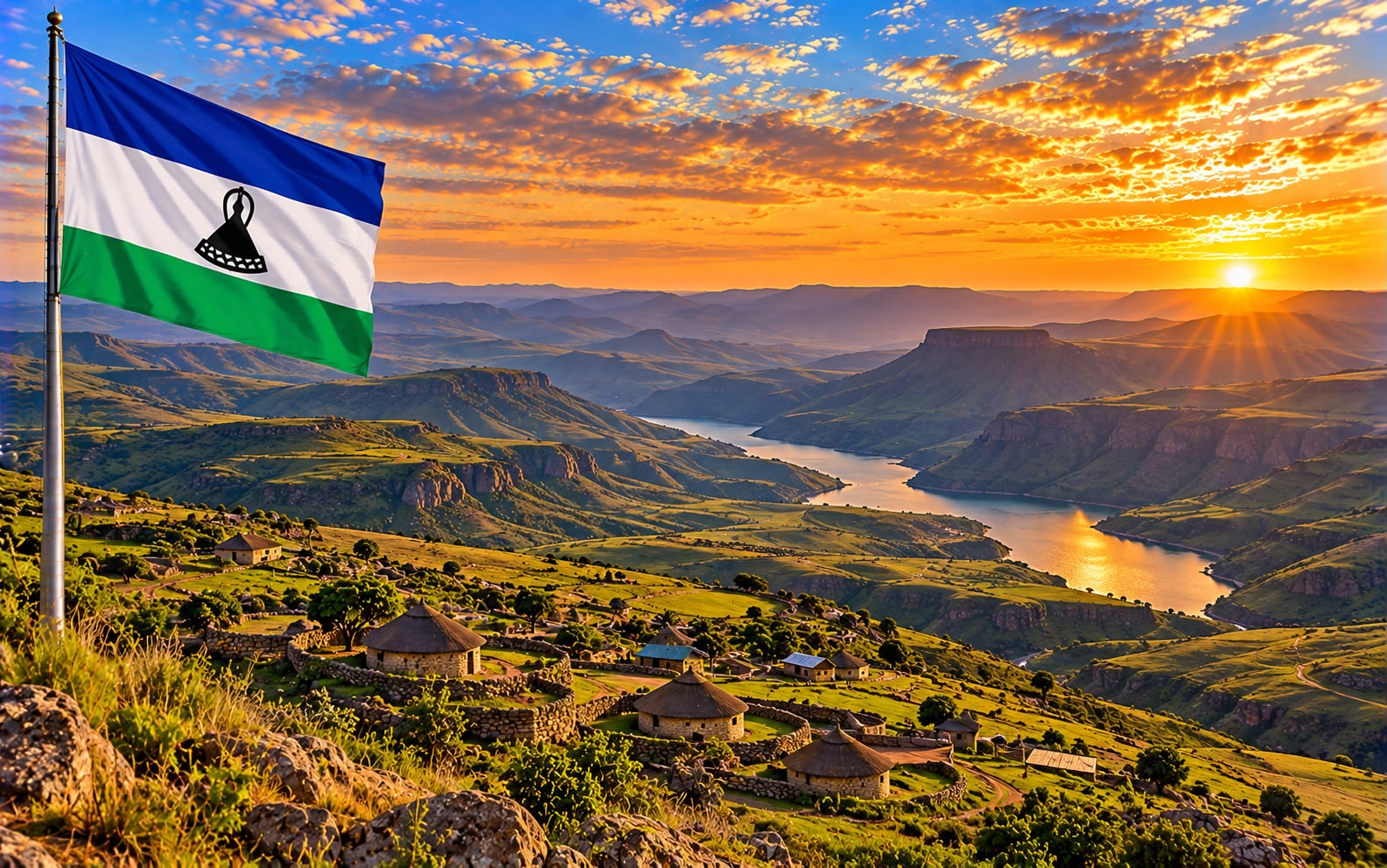
Lesotho in 6 days: Sani Pass, Maletsunyane Falls and the Kingdom in the Sky
A whole country higher than almost anywhere else is at its lowest point, with a 192-metre waterfall you can abseil beside, a mountain pass that needs four-wheel drive to climb, and horses as the sensible way to get around.
- Southern Africa
- 6 days
- ≈ AED 2,950 / person
- The only country entirely above 1,400 metres, on a Basotho pony
Before you go
Lesotho is entirely surrounded by South Africa and entirely above 1,400 metres — the only country on earth whose lowest point is that high. It calls itself the Kingdom in the Sky and for once the slogan is a measurement.
The practical consequence is that everything about travelling here is about altitude and terrain. Roads climb and switchback. Snow falls in winter and there is a ski resort. Horses are not a tourist activity but the way people in the highlands actually move, and the Basotho pony was bred for exactly this ground.
Maletsunyane Falls at Semonkong drops 192 metres in a single fall into a gorge, and beside it runs what has been operated as the world’s longest commercially run single-drop abseil at around 204 metres.
Sani Pass is the famous way in — a 4WD-only track climbing the Drakensberg escarpment from South Africa in a series of hairpins to 2,874 metres, with what is advertised as the highest pub in Africa at the top.
Thaba Bosiu is where the country comes from: the flat- topped mountain Moshoeshoe I fortified in 1824 and successfully defended, which is why Lesotho exists as a country rather than a province.
Six days. Figure USD 800 (≈ AED 2,938) per person excluding flights. Go March–May or September–November; winter brings snow and road closures, and summer brings afternoon thunderstorms.
Before you go: the 15-minute admin
Getting in, and what vehicle you need
- Almost everyone arrives overland from South Africa. Maseru Bridge, opposite Ladybrand, is the main crossing and is open long hours; the mountain posts are not.
- Sani Pass is 4WD only on the Lesotho side and the border post at the top closes in the afternoon. Check the time before committing to the climb — you do not want to arrive at a shut gate at 2,874 metres.
- A hire car from South Africa needs a letter of authority from the rental company to cross, plus the registration papers. Ask when you book.
- Most rental agreements prohibit taking a 2WD on Lesotho’s mountain roads at all. Read the terms; the tar ends sooner than you expect.
- A high-clearance 4WD is the right vehicle for this itinerary. For Sani Pass specifically, many visitors take an organised 4WD day trip from Underberg rather than driving it themselves.
- There are a few flights into Maseru from Johannesburg, and they are not a practical basis for a trip.
Altitude, weather and the roads
- You will be between 1,500 and 3,000 metres the whole time. Mild altitude effects are common on the first day; take it easy.
- The weather changes fast and hard. Snow is possible in the highlands in any month and routine from May to August; summer afternoons bring violent thunderstorms.
- Do not drive mountain roads after dark. Livestock, no barriers, and long drops.
- Fuel is sparse in the highlands. Fill up in Maseru, Semonkong and Thaba-Tseka whenever you pass a working pump.
Visas and money
- Many nationalities enter visa-free for short stays. Check your own case officially.
- The loti (LSL) is pegged 1:1 to the South African rand and rand is accepted everywhere. Maloti are not accepted back in South Africa — spend them.
- Cards work in Maseru and at the larger lodges. Carry cash for village fees, pony guides, fuel and anything in the highlands.
Health
- Lesotho is malaria-free, which is unusual for the region and worth knowing.
- The sun at altitude is strong and the air is dry.
- Medical facilities are limited outside Maseru, and the nearest serious hospitals are in South Africa.
Culture
- The Basotho blanket is worn as everyday dress in the highlands, each pattern meaning something. They are sold everywhere and make the one souvenir worth carrying.
- Ask before photographing people, particularly herdboys, who are often approached badly by visitors.
- Greet people. It matters here more than most places.
Travelling with kids?
- Pony trekking is the obvious draw and works from about eight upwards on the gentler routes.
- The abseil has a minimum age and weight.
- The drives are long, winding and high — motion sickness is a real consideration.
- Malaria-free, which simplifies a family trip considerably.
Day by day
Day 1 — Maseru and Thaba Bosiu
- Morning — Cross at Maseru Bridge and into the capital, which is small, low and functional rather than pretty.
- 12:00 — Lunch, and the craft centres on Kingsway for blankets, mohair and the conical mokorotlo hat that is on the national flag.
- 14:00 — Thaba Bosiu, 25 kilometres east. The flat-topped mountain Moshoeshoe I retreated to in 1824 and held against every attack, including Boer and British. Walk up with a guide from the visitor centre — about forty minutes — for the plateau, the royal graves and the view to the Qiloane pinnacle, the hill the national hat is modelled on.
- 17:00 — Back to Maseru.
Where to stay in Maseru (one night)
- Mid-range: the hotels along Kingsway or by the river.
Day 2 — To Semonkong
- 08:00 — South-east into the mountains. The road climbs hard out of the lowlands and the tar runs out partway.
- 12:00 — Semonkong — “the place of smoke” — at 2,275 metres, a trading-post village with horses tied outside the shops.
- 14:00 — Walk or ride out to Maletsunyane Falls: a 192-metre single drop into a black gorge, with the spray that gives the place its name. The walk to the viewpoint takes under an hour; the path to the base takes most of a day.
Where to stay at Semonkong (two nights)
- The one to pick: the lodge by the river in the village, which runs the ponies, the abseil and the donkey pub crawl, and has fires in the rooms.
Day 3 — Ponies and the abseil
- Morning — Pony trekking, which is the real way to see this country. Half-day and full-day routes go out over the plateau to villages, gorges and smaller falls. Basotho ponies are sure-footed on ground you would not walk down, and no riding experience is needed.
- Afternoon — The abseil beside Maletsunyane, around 204 metres in a single drop, which has been run as the longest commercially operated single-drop abseil in the world. Training takes an hour; the descent takes longer than you expect.
- Not for you? The gorge walk to the base of the falls is a full day and is the better memory for many people.
Day 4 — The highlands to Katse
- 08:00 — North-east over the mountains towards Thaba-Tseka. This is the great drive of the trip — passes above 3,000 metres, villages of stone rondavels, herdboys in blankets, and almost no traffic.
- 13:00 — Katse Dam, the centrepiece of the Highlands Water Project — a 185-metre double-curvature arch dam in a steep valley, selling water to Johannesburg, which is a large part of what the national economy runs on. The visitor centre explains it and the botanical garden nearby holds the alpine species the flooding displaced.
- 16:00 — The dam wall and the reservoir arms, which run back into the mountains for kilometres.
Where to stay at Katse (one night)
- Simple: the lodge above the dam.
Day 5 — East to Sani
- 08:00 — South-east across the roof of the country towards Mokhotlong, the highest town in Lesotho and about as remote as the road network gets.
- 13:00 — On towards Sani Top, at 2,874 metres, on the edge of the Drakensberg escarpment. The highest pub in Africa is up here and makes the most of it; the real reason to stand outside is the drop into KwaZulu- Natal below.
- If the weather closes in, stay. The pass is no place to be in cloud.
Where to stay at Sani Top (one night)
- Simple: the lodge at the top, which has the bar, the view and very cold nights.
Day 6 — Down Sani Pass, and out
- 08:00 — Down Sani Pass. A 4WD-only track of hairpins dropping around 1,300 metres into South Africa in about eight kilometres. Low range, low gear, and no hurry. It is as spectacular from a vehicle as any road in southern Africa.
- 10:00 — The South African border post at the bottom, near Underberg.
- Alternatively, return west to Maseru across the highlands, which is another full day of the same superb driving.
Costs and practicalities
Best time to visit
March–May and September–November are the comfortable shoulders. Lesotho is the only country entirely above 1,400m and the altitude dominates everything.
- March–May — autumn: clear, dry, cold at night, and the best for pony trekking and the Sani Pass.
- June–August — winter, and it snows. Afriski runs from June to August, the only ski resort in southern Africa. Nights drop well below freezing and mountain roads can close.
- September–November — spring, wildflowers, warming days, and the best light.
- December–February — the wet season, with afternoon thunderstorms and the highlands green. Rivers rise and some passes become difficult.
Sehlabathebe and the high Drakensberg are snowbound in winter, and the Sani Pass is 4x4-only in any season.
Travel tips
- The Sani Pass requires a 4x4 and most hire companies prohibit their cars on it. Take an organised trip from Underberg instead.
- You will cross into and out of South Africa — carry your passport, and check border post hours, which are limited at the smaller crossings.
- The loti is pegged to the South African rand and rand is accepted everywhere at par. Maloti cannot be spent outside Lesotho.
- It gets genuinely cold. Pack for winter conditions at any time of year above 2,000m; the Basotho blanket is functional clothing, not a souvenir.
- Pony trekking is the way to see the highlands and is arranged through the lodges at Malealea and Semonkong. Book ahead.
- Fuel stations are sparse in the highlands. Fill up whenever you can.
- Cards work in Maseru and at lodges; carry cash for villages and for the pony handlers.
What this trip actually costs
Two people, 5 nights, mid-range comfort, flights excluded:
| Item | Cost |
|---|---|
| Lodges and guesthouses, 5 nights | USD 450 (≈ AED 1,653) |
| 4WD hire, 6 days, fuel and border fees | USD 600 (≈ AED 2,204) |
| Pony trekking, abseil, guides, entries | USD 350 (≈ AED 1,285) |
| Food and drink, 6 days | USD 200 (≈ AED 735) |
| Total for two | USD 1,600 (≈ AED 5,876) |
- Roughly USD 800 (≈ AED 2,938) per person, and the vehicle is the biggest line. A 2WD cannot do this route and most rental agreements forbid trying.
- An organised Sani Pass day trip from Underberg is a good alternative if you would rather not drive it, and costs far less than hiring a 4WD for the week.
- Pony trekking is inexpensive and is the thing people remember. Do at least a half day.
- Rand works everywhere, so no currency exchange is needed coming from South Africa.
- Hotel picks here are chosen on location, not on commission — always check prices and recent reviews before booking.
What to pack
- Proper warm clothing, in any month. At 3,000 metres a summer evening is cold and a winter one is severe.
- Waterproofs. Weather arrives without warning.
- High-factor sun cream — thin air, strong sun, and snow glare in winter.
- Long trousers for riding, and shoes with a heel if you have them.
- Cash in rand for fuel, guides and village fees.
- A torch, for the highland lodges when the generator stops.
FAQ
Do I really need a 4WD? For this itinerary, yes. The road to Semonkong, the highlands crossing and Sani Pass all require it, and most South African rental agreements specifically exclude taking a 2WD onto Lesotho’s mountain roads.
Can I do Sani Pass without driving it? Yes — organised 4WD day trips run from Underberg in South Africa and are popular. You get the pass and the pub without the hire car.
Is it worth going if I do not ride? Yes, though pony trekking is the most Lesotho thing you can do and needs no experience. The driving, the falls and Thaba Bosiu stand on their own.
Is Lesotho malaria-free? Yes. The altitude sees to it, which makes this an unusually simple country to prepare for medically.
What language do they speak? Sesotho and English, both official. English is widely understood and you will manage easily.
Prices and entry rules change, and what you need depends on your passport; last checked 8 October 2026, so confirm with the embassy or your airline before booking.


