 The Itinerary
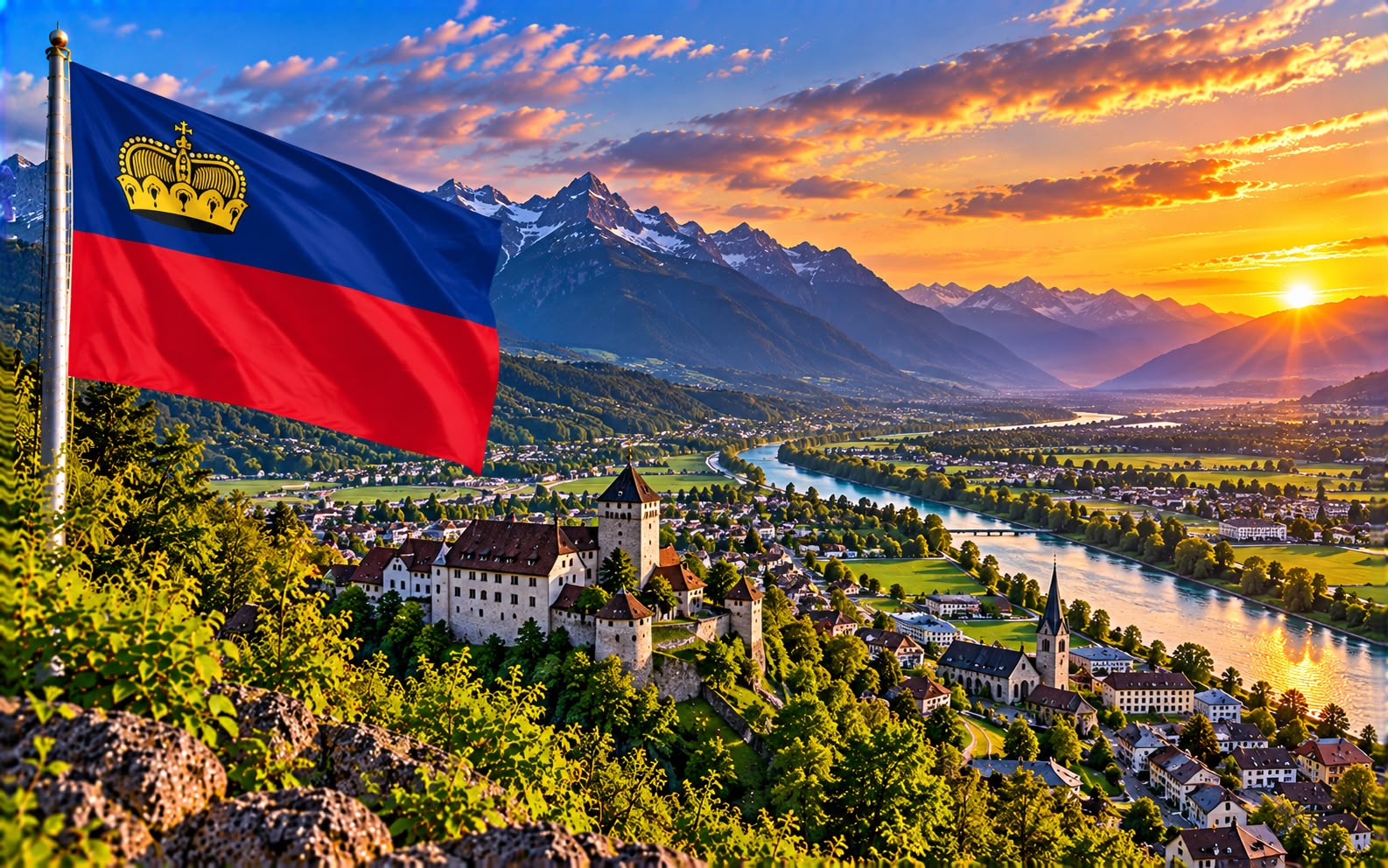
Liechtenstein in 2 days: Vaduz, the Fürstensteig and a passport stamp you pay for
A hundred and sixty square kilometres between Switzerland and Austria, run by a prince who still has real constitutional power, with a vineyard above the capital and a mountain trail cut into a rock face.
- Central Europe
- 2 days
- ≈ AED 900 / person
- An Alpine principality with no airport, no border posts and a cliff path with a chain to hold
Before you go
Liechtenstein is 160 square kilometres wedged between Switzerland and Austria, with about 40,000 people, no airport, and no border controls on either side. It is one of only two doubly landlocked countries in the world — you must cross two borders to reach the sea — the other being Uzbekistan.
It is also not a museum principality. The Prince of Liechtenstein retains genuine constitutional powers — veto over legislation, the ability to dismiss the government — confirmed by a 2003 referendum in which the prince offered to leave the country if the changes were rejected. He is also one of Europe’s wealthiest monarchs, and the family’s art collection is among the most important in private hands.
Vaduz is the capital and has about 5,700 people. Vaduz Castle sits on a crag above it and is the prince’s actual home, so it is closed to visitors — but the path up to the walls is open and is the best half-hour in the country.
The mountains are the real reason to come. The Fürstensteig is the famous one: a trail cut into a cliff face above Malbun, with fixed chains and cables on the exposed sections, opened in 1898 and still a rite of passage for Liechtensteiners.
You sleep in Vaduz or across the border in Switzerland. Two days. Figure CHF 200 (≈ AED 896) per person. Go June–September for the mountains; the Fürstensteig is usually snow-free from about late June.
Before you go: the 15-minute admin
Getting there, with no airport
- There is no airport and no useful railway station. The line that clips the country has a couple of request stops and is not practical.
- Arrive by bus from Sargans or Buchs in Switzerland — about 25 to 30 minutes, frequent, and part of the Swiss timetable — or from Feldkirch in Austria.
- Zurich airport is about 90 minutes away and is the usual arrival point.
- There are no border controls. Liechtenstein is in Schengen and in a customs and currency union with Switzerland.
Money and the Swiss connection
- The currency is the Swiss franc (CHF).
- Liechtenstein uses the Swiss customs union, Swiss postal agreements and Swiss telephony — your Swiss SIM works, and so does a Swiss travel pass on the LIEmobil buses in most cases.
- It is expensive, at Swiss prices, which is the main budgetary fact.
- Cards work everywhere.
The passport stamp
- You will not get one at a border, because there is no border post.
- The Vaduz tourist office sells a souvenir stamp for a few francs, and it is the single most common reason people stop in the capital. It is a novelty, not a travel document.
The Fürstensteig, honestly
- It is a mountain trail, not a walk. The exposed sections have fixed chains and cables, there are drops, and people are injured on it most years.
- Proper boots and a head for heights are required. It is not a via ferrata needing a harness, but it is closer to that than to a path.
- Check conditions. Snow lingers into June and the route closes when it is wet or icy.
- The alternative is the gentler Malbun–Sareis chairlift and ridge walk, which gives you the same views without the exposure.
Travelling with kids?
- Malbun has a chairlift, a small ski area in winter and easy walking in summer.
- The castle path and the Walser museum at Triesenberg are short.
- The Fürstensteig is not for children.
Day by day
Day 1 — Vaduz
- Morning — Arrive by bus from Sargans or Buchs.
- 10:00 — Vaduz Castle path. The climb from the town takes about twenty-five minutes through vineyard and woodland to the castle walls. The castle is the prince’s residence and is not open, but the terrace below it looks out over the Rhine valley to the Swiss Alps, and nobody stops you walking up.
- 11:30 — The Kunstmuseum Liechtenstein, a black cube of tinted concrete and basalt on the main street, holding the state art collection and rotating selections from the Princely Collections — which include Rubens, Rembrandt and Van Dyck, and are usually shown in Vienna.
- 13:00 — Lunch on the Städtle, the pedestrian main street, which is essentially the whole of central Vaduz.
- 14:30 — The National Museum for the country’s history, and the Postal Museum, which is free and better than it sounds — Liechtenstein’s stamps were a serious export for decades.
- 16:00 — The Hofkellerei, the prince’s own winery on the slope below the castle, which does tastings of the estate’s Pinot Noir.
- 17:30 — The Rhine at the edge of town, where you can stand with Switzerland on the far bank.
Where to stay (one night)
- Mid-range: Vaduz itself, which has a handful of hotels and empties in the evening.
- Cheaper: Buchs or Sargans across the Swiss border, 25 minutes by bus.
Day 2 — The mountains
- 08:30 — Bus up to Triesenberg, a village founded by Walser migrants from the Valais in the thirteenth century, who kept their own dialect — which is still spoken and still distinct from the rest of the country. The Walser Museum explains it in half an hour.
- 09:30 — On to Malbun, the only real mountain resort, at 1,600 metres in a bowl near the Austrian border.
- 10:00 — Either: the Fürstensteig, starting from the Bergbahn at Sareis or from Gaflei, a three- to four-hour circuit with chains and cables on the exposed traverses and views down the whole Rhine valley. Boots, head for heights, dry conditions.
- Or: the Sareis chairlift and the ridge walk to Augstenberg or the gentler traverse towards Pfälzerhütte, which gives you the same ridge at a fraction of the exposure.
- 15:00 — Down and, if time allows, Balzers at the southern end of the country for Gutenberg Castle, which unlike Vaduz is open — a restored fortress on a knoll with an open-air stage in the courtyard.
- 17:00 — Bus to Sargans and onwards.
Costs and practicalities
Best time to visit
June–September is the only season with much to do outdoors, and the country is small enough that the weather is the whole variable.
- June–September — the Fürstensteig and the high trails above Malbun are clear, the alpine flowers are out, and the valley is warm.
- 15 August — the National Day, when the Prince opens the castle gardens to everyone and the whole country turns up for a drink. It is the single best day to be here.
- October–November — autumn colour in the Rhine valley, most mountain lifts closed.
- December–March — Malbun skis, small but genuine, and the valley is cold and often fogged in.
- April–May — the quietest gap: snow gone, trails not yet dry.
Travel tips
- There is no airport and no passport check. Arrive by bus from Sargans or Buchs in Switzerland, or by train to Schaan-Vaduz. The border is open.
- It uses the Swiss franc and Swiss prices. Cards work everywhere.
- The passport stamp at the Vaduz tourist office is a souvenir you pay for — there is no actual immigration control.
- Vaduz Castle is the Prince’s home and is closed to the public. The walk up to it is the attraction; the gardens open only on National Day.
- The Fürstensteig is not a casual walk. It is an exposed cliff path with fixed cables and a real drop; it is the country’s classic route and it has a head for heights as a prerequisite.
- Buses are the entire public transport system and they are frequent, punctual and cheap.
- Two days is plenty. Most people combine it with Switzerland or Austria rather than making it the trip.
What this trip actually costs
Two people, 1 night, mid-range comfort, excluding travel to Switzerland:
| Item | Cost |
|---|---|
| Hotel, 1 night | CHF 180 (≈ AED 806) |
| Buses and the Sareis chairlift, two | CHF 60 (≈ AED 269) |
| Kunstmuseum and National Museum, two | CHF 40 (≈ AED 179) |
| Passport stamp and wine tasting | CHF 30 (≈ AED 134) |
| Food and drink, 2 days | CHF 90 (≈ AED 403) |
| Total for two | CHF 400 (≈ AED 1,792) |
- Roughly CHF 200 (≈ AED 896) per person, and the prices are Swiss, which is the thing to budget for.
- Sleeping in Buchs or Sargans is noticeably cheaper and is 25 minutes away.
- The castle path, the Rhine and most of the walking are free, and they are the best of it.
- A Swiss travel pass generally covers the LIEmobil buses, which makes a day trip from Zurich or Chur cheap.
- Hotel picks here are chosen on location, not on commission — always check prices and recent reviews before booking.
What to pack
- Proper hiking boots if the Fürstensteig is on the plan. Trainers are not adequate on the chained sections.
- A warm layer — Malbun is at 1,600 metres and the weather changes.
- Sun protection for the ridge.
- A few francs in cash for the stamp and the smaller buses.
FAQ
Can I visit Vaduz Castle? No — it is the prince’s home and is closed to the public. The path up to the walls is open and worth the climb, and the castle opens its grounds to citizens once a year on the national day, 15 August.
Is the Fürstensteig dangerous? It is exposed, with fixed chains on the traverses, and people are injured on it most years. It needs boots, dry conditions and a head for heights. The Sareis chairlift and ridge walk is the gentler alternative.
Do I get a passport stamp? Not at a border — there are none. The Vaduz tourist office sells a souvenir stamp for a few francs.
Is two days enough? Comfortably. One day covers Vaduz; the second is for the mountains, which is the better half.
What language do they speak? German, in an Alemannic dialect close to Swiss German. Standard German is universally understood and English is widely spoken.
Prices and entry rules change, and what you need depends on your passport; last checked 8 October 2026, so confirm with the embassy or your airline before booking.


