 The Itinerary
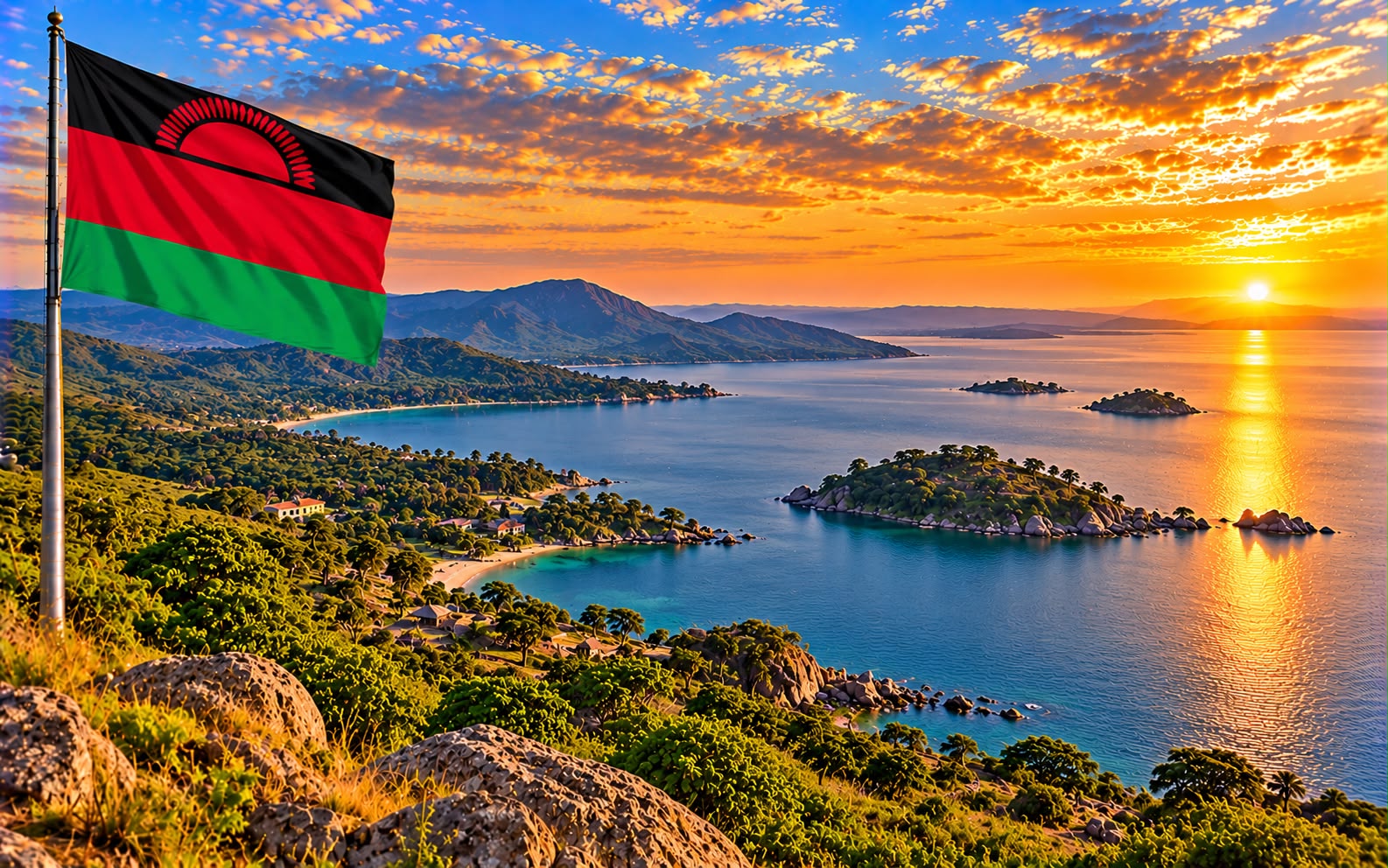
Malawi in 9 days: Liwonde's elephants, Mount Mulanje and the lake
A lake holding more species of fish than any other on earth, two national parks rebuilt from near-empty within a decade, and a granite massif rising three thousand metres straight off the plain — in the country that calls itself the warm heart of Africa and largely earns it.
- Southern Africa
- 9 days
- ≈ AED 5,500 / person
- A freshwater lake with more fish species than any other, and parks brought back from nothing
Before you go
Malawi is long, narrow, and a fifth lake. It has no wilderness on the scale of Tanzania’s and no mountains on the scale of Ethiopia’s, and it is one of the most rewarding countries in the region anyway — partly because of what has happened to its parks in the last fifteen years, and partly because of the lake.
Lake Malawi is 580 kilometres long, up to 700 metres deep, and holds more species of fish than any other lake on earth — somewhere around a thousand, most of them cichlids, and almost all of them found nowhere else. Snorkelling here is unlike snorkelling anywhere in fresh water: the rocks are covered in small, brilliantly coloured fish, and you can see for twenty metres.
Liwonde and Majete are the other reason. Both were reduced to almost nothing by poaching, both were handed to a conservation organisation to run, and both now hold elephant, buffalo, black rhino, lion, leopard and cheetah. Majete has been a Big Five park since 2012. Liwonde’s boat safaris on the Shire River, with elephants on the bank and hippos in the channel, are the best game viewing in the country.
Mount Mulanje rises from the tea estates of the south to 3,002 metres in a single granite massif, with huts on the plateau and a trekking network over it.
Nine days. Figure USD 1,500 (≈ AED 5,509) per person excluding flights. Go May–October, the dry season — September and October for game, cooler earlier.
Before you go: the 15-minute admin
Visas, health and the lake
- An e-visa is applied for online, and visas on arrival have also been available. Check the official portal; this has changed more than once.
- Yellow fever certificate is required if arriving from an endemic country.
- Malaria is present year-round and the risk is real, including on the lake shore. Prophylaxis is essential.
- Bilharzia is present in Lake Malawi. This is the one
people get wrong. The risk is lower in deep, clear,
moving water off rocky shores — where you will mostly be
snorkelling — and higher in shallow, reedy, still water
near villages.
- Swim off rocks and boats, not reed beds.
- Dry off thoroughly and briskly afterwards.
- Get tested six to twelve weeks after you get home, whatever precautions you took. Treatment is a single simple course; the point is to take it.
Money
- The Malawian kwacha (MWK), which has been devalued sharply and repeatedly in recent years — check the rate close to travel, because figures in older guides are badly out of date.
- Bring US dollars in cash to change. Cards work at lodges and in Lilongwe and Blantyre; ATMs are reasonable in the cities and absent elsewhere.
- Fuel shortages happen. If you are self-driving, fill up whenever you find a station with supply.
Getting around
- Self-driving is realistic here, which is unusual for the region. Main roads are tarred and in reasonable condition, driving is on the left, and distances are moderate.
- A 4WD is wanted for park tracks and the Zomba and Mulanje approaches; a saloon manages the main routes.
- Transfers and a driver cost roughly $100–130 a day and remove the fuel-queue problem.
- Lilongwe to Liwonde is about four hours; Liwonde to Mulanje about three; Cape Maclear to Lilongwe about four.
- Do not drive at night. Pedestrians, bicycles and livestock on unlit roads are the main hazard.
- The Ilala ferry still runs the length of the lake and is an experience in itself — slow, unreliable and wonderful. It needs a week of its own.
Travelling with kids?
- Cape Maclear is an easy, shallow, warm-water beach base with snorkelling straight off the rocks.
- Liwonde’s boat safaris are better with children than a game drive — shorter, cooler and full of hippos.
- Malaria precautions and the bilharzia routine both matter and are manageable.
- Mulanje is a serious trek, not a family walk.
Day by day
Day 1 — Lilongwe
- Afternoon — Arrive. The airport is 25 minutes from the city.
- 16:00 — The Lilongwe Wildlife Centre, a sanctuary for rescued animals in a patch of forest in the city — the best introduction to what the country’s conservation problem actually looks like.
- 18:00 — Old Town for dinner and the craft market on the river.
Where to stay in Lilongwe (one night)
- Mid-range: Area 10 or Old Town.
Day 2 — South to Liwonde
- 08:00 — South-east, about four hours.
- 13:00 — Liwonde National Park, on the Shire River. It was almost emptied by snaring; it now holds elephant, black rhino, buffalo, cheetah and lion, most of them reintroduced within the last decade, and the snare-removal effort here has been enormous.
- 16:00 — A boat safari on the Shire. Elephants come down to drink, hippo pods sit in the channel, crocodiles line the banks and the birdlife is extraordinary. This is the single best activity in Malawi.
Where to stay at Liwonde (two nights)
- Mid-range: the camps inside the park or along the river, most with boat and drive packages.
Day 3 — Liwonde
- 06:00 — Morning game drive, when the cats are moving.
- 10:00 — Back for breakfast, then a walking safari — Liwonde is one of the better parks in the region for being on foot with an armed guide.
- 16:00 — A second boat trip, which is never the same twice.
Day 4 — Zomba Plateau
- 08:00 — South to Zomba, the colonial capital until 1975, about an hour and a half.
- 11:00 — Up onto the Zomba Plateau, a steep road climbing to around 1,800 metres onto a tableland of pine, streams and viewpoints — Queen’s View and Emperor’s View, named for the visitors who stood at them.
- Afternoon — Walk or ride on the plateau, or the Mulunguzi dam circuit. The trout streams and the cedar forest up here are a different climate from the plain below.
Where to stay on Zomba (one night)
- Character: the hotel on the plateau edge, with the view down over the Shire valley.
Day 5 — Mulanje
- 08:00 — South-east to Mulanje, about two hours, through the tea estates — this is the best tea country in Africa and the plantations run right up to the mountain’s foot.
- 11:00 — Mount Mulanje rises to 3,002 metres at Sapitwa straight off a 700-metre plain, which makes it look impossible from the road.
- Afternoon — A day walk: Likhubula and the Dziwe la Nkhalamba pools, or the start of the Chambe path for the view.
- A proper traverse takes three to five days, staying in the mountain huts, and needs a guide and porters arranged through the Mountain Club or the forestry office. If you want that, build the trip around it — this itinerary gives you a taste.
Where to stay at Mulanje (one night)
- Simple: the lodges at Likhubula, at the foot of the mountain.
Day 6 — North to the lake
- 07:00 — The long drive north-west to the lake, five to six hours, back past Liwonde and up to the southern shore.
- 14:00 — Cape Maclear, in Lake Malawi National Park — the world’s first freshwater national park, on the UNESCO list for the cichlids.
- 16:00 — Into the water. Snorkelling off the rocks here is the reason the park exists: mbuna cichlids in blues, yellows and stripes, in numbers, in water clear enough to see the bottom at twenty metres.
Where to stay at Cape Maclear (three nights)
- Mid-range: the lodges strung along the beach at Chembe village.
- Quieter: the island and headland lodges reached by boat.
Day 7 — The islands
- Morning — By boat to Thumbi West or Domwe island: snorkelling, fish eagles taking fish thrown from the boat, and a beach barbecue.
- Afternoon — Kayak, or walk up to the Mwala wa Mphini — the “rock of tribal scars”, a boulder with natural markings that look carved.
- Evening — The village at Chembe, which is a working fishing community that the lodges sit among rather than apart from.
Day 8 — The lake, slowly
- A day with no plan. Dive if you are certified — freshwater diving among the cichlids is unusual and cheap, and Cape Maclear is one of the cheapest places in the world to get certified.
- Or take a boat north to Senga Bay or out to Mumbo Island for the day.
- Sunset over the lake from the beach is the thing people remember.
Day 9 — Back to Lilongwe, and out
- 08:00 — North-west, about four hours.
- 13:00 — Lilongwe, the craft market for chief’s chairs and carved wood, and the airport.
Costs and practicalities
Best time to visit
May–October is the dry season and the best window for both the lake and the parks.
- May–August — dry, cool, and the best of the year. Nights in the highlands at Nyika and Zomba are genuinely cold. Excellent lake visibility for snorkelling and diving.
- September–October — hot and dry, and the best game viewing in Liwonde and Majete as animals concentrate on the Shire River.
- November–April — the rains. Green, dramatic, and the Nyika plateau wildflowers are at their best in January and February. Some roads become difficult and lake visibility drops.
- The lake is warm year-round, around 24–28°C.
Mount Mulanje is climbable in the dry months; the chiperoni — a cold wet mist off the mountain — can arrive at any time and has caught out walkers.
Travel tips
- Lake Malawi has bilharzia. The risk is real throughout; it is treatable with a single dose of praziquantel, and the sensible approach is to swim where locals do, avoid reedy shallows, and get tested afterwards rather than not swim at all.
- Malawi is called the warm heart of Africa and the reputation is earned — it is one of the easiest and friendliest countries in the region to travel.
- Bring US dollars to change. The kwacha has been volatile; cards work in Lilongwe and Blantyre and at lodges only.
- The Ilala ferry up the lake is an institution — slow, unreliable, and a genuinely good way to see the country if you have the days to lose.
- Malaria prophylaxis is essential and the risk is year-round, highest by the lake.
- Driving is on the left and rural roads have pedestrians, bicycles and goats on them. Avoid night driving entirely.
- Fuel shortages recur. Fill up whenever you pass a station with supply.
What this trip actually costs
Two people, 8 nights, mid-range comfort, flights excluded:
| Item | Cost |
|---|---|
| Lodges and camps, 8 nights | USD 1,200 (≈ AED 4,407) |
| Car hire or driver, 7 days, and fuel | USD 800 (≈ AED 2,938) |
| Park fees, boat safaris, snorkelling, guides | USD 600 (≈ AED 2,204) |
| Food and drink, 9 days | USD 400 (≈ AED 1,469) |
| Total for two | USD 3,000 (≈ AED 11,018) |
- Roughly USD 1,500 (≈ AED 5,509) per person. Liwonde is the expensive stretch and Cape Maclear is cheap — a lake lodge costs a fraction of a park camp.
- Adding Majete instead of Zomba gives you the Big Five and adds perhaps 20% to the budget.
- Self-driving saves significantly over a driver if you are comfortable with it, which here is a reasonable proposition.
- Check the kwacha rate close to travel. It has moved a very long way in recent years and older figures mislead.
- Hotel picks here are chosen on location, not on commission — always check prices and recent reviews before booking.
What to pack
- Malaria prophylaxis, repellent and long sleeves for dusk.
- A quick-dry towel — for the bilharzia routine as much as for swimming.
- Your own mask and snorkel if you have them; rental at the lake is tired.
- Warm layers for Zomba and Mulanje, which are cold at altitude, and for early game drives.
- Walking boots if you are going onto Mulanje.
- US dollars in cash to change, plus small kwacha.
FAQ
Can I swim in Lake Malawi? Yes, and almost everyone does. Bilharzia is present, the risk is lower off rocky shores in deep clear water, and the sensible approach is to swim there, dry off briskly, and get tested when you are home. The treatment is simple.
Is the snorkelling really that good? Yes — it is the best freshwater snorkelling in the world, because the lake’s cichlids evolved into roughly a thousand species found nowhere else and many of them live on the rocks in a few metres of water.
Liwonde or Majete? Liwonde for the river and the boat safaris, Majete for the Big Five. Both are run by the same conservation organisation and both are restoration successes; Liwonde is closer to everything else on this route.
Is Mount Mulanje a day walk? The lower paths and pools are. The massif itself is a multi-day trek with huts, a guide and porters, and deserves its own trip.
What language do they speak? English and Chichewa, both official. English is widely spoken and this is an easy country to travel in.
Prices and entry rules change, and what you need depends on your passport; last checked 8 October 2026, so confirm with the embassy or your airline before booking.


