 The Itinerary
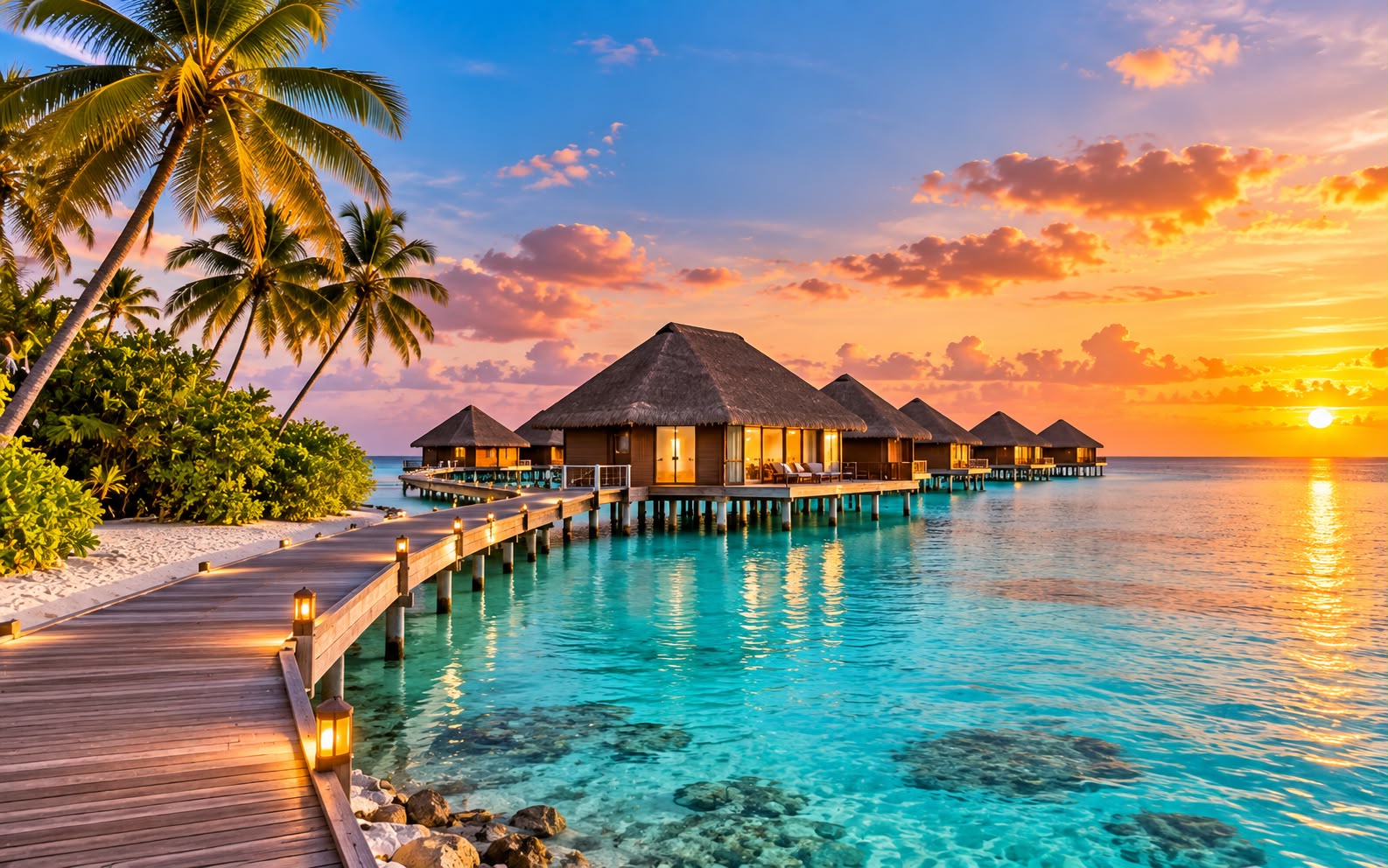
Maldives in 7 days: the split-stay that beats the price myth
The Maldives on real money: three local-island days of whale sharks, sandbanks and $80 guesthouse nights — then three water-villa days with the glass floor and the floating breakfast. Free visa for every passport, the ++ resort-bill decoder, the transfer trap after 3pm, and the dress-and-alcohol rules nobody explains until you land.
- South Asia
- 7 days
- ≈ AED 6,450 / person
- Three nights in a local guesthouse and three in a water villa, which is why a week costs less than the resort five
Before you go
The Maldives has a price myth and a geography fact. The myth: it costs $5,000 a person. The fact: 1,192 islands include ~200 inhabited local islands where Maldivians actually live — and since guesthouses were legalised, you can sleep 40 metres from that same turquoise for $70–100 a night, eat grilled reef fish for $8, and day-trip to sandbanks and whale sharks for less than a resort breakfast.
This guide runs the smart split: three local-island days (Maafushi — the budget-Maldives capital) for the ocean adventures, then three resort days for the thing you came to photograph — the water villa, the glass floor, the nothing-but-blue. You get both Maldives, and the bill stays earthbound.
Go December–April for the dry-season postcard (premium prices, booked-out February). May–October is the southwest monsoon: 30–40% cheaper, whale sharks still on duty, greener skies with dramatic squalls between sun — the honest-value window this budget assumes shoulder edges of. All costs are in US dollars — the Maldives’ second currency in practice.
Before you go: the free visa and the two decoders
The free visa on arrival
- Every passport gets a free 30-day visa on arrival — India, UAE, everyone — with a confirmed accommodation booking and onward ticket. The one task: the IMUGA Traveller Declaration, filed free at imuga.immigration.gov.mv within 96 hours before arrival (airlines check it; any site charging for it is a scam). File the departure one on the way out too.
Decoder 1 — the ”++” bill
- Decoder #1 — the resort ”++” bill: quoted room rates sprout 10% service charge + 17% TGST (that’s the ”++”), plus the Green Tax — now ~$12 per person per night at resorts, ~$6 at guesthouses — a family’s “cheap” villa quote can grow ~30% at checkout. This guide’s numbers include the reality; when comparing resorts, compare total-with-taxes, always.
Decoder 2 — the transfer trap
- Decoder #2 — the transfer trap: resorts control their own transfers and bill them separately: shared speedboats ~$100–250+ round trip per person (South/North Malé atolls), seaplanes ~$400–800 (farther atolls) — and seaplanes stop flying ~4 pm, so an international arrival after ~3 pm means a forced airport-hotel night ($80–150). This itinerary’s resort choice (speedboat range) exists to dodge the whole trap. Maafushi’s shared speedboat, by contrast: ~$25–30.
The rules that surprise people
- The rules that surprise people, told now: local islands are ordinary Muslim communities — bikinis only on the designated “bikini beach”, shoulders/knees covered on village streets, and zero alcohol anywhere on local islands (resorts are licensed; Maafushi’s workaround is a floating bar anchored offshore — that’s the whole loophole). Friday is the quiet holy day; excursion schedules bend around prayers.
Day by day
Day 1 — Land, speedboat, sunset jetty
- Afternoon — Land MLE (a mercy of a flight: ~4 h from the Gulf, under 2 h from South India). IMUGA already filed; visa stamp in minutes.
- 15:30 — Shared speedboat to Maafushi (~$25–30, 45 min, several daily — your guesthouse books it; the $2 public ferry exists for the patient). Arrive on an island you can walk end-to-end in 20 minutes.
- 17:00 — Orientation stroll: the bikini beach (the roped, tourist-designated stretch — swimwear lives here and only here), the harbour, tomorrow’s excursion desks.
- 18:15 — Sunset from the jetty — the first of seven progressively more absurd ones.
- 19:30 — Grilled reef fish, coconut rice and a fresh juice at a beachside grill (~$10–15 pp). Book Day 2’s whale-shark trip before bed.
Where to stay on Maafushi (three nights)
- Top of the island: Kaani Palm Beach — 4-star guesthouse-hotel with pool and bikini-beach frontage. ~$120–170.
- The sweet spot: Kaani Grand Seaview / Triton Beach Hotel tier — sea-view rooms, rooftop breakfasts, excursion desks in-house. ~$80–120.
- Value: Maafushi’s family guesthouses (Crystal Sands class) — clean AC rooms two lanes from the beach. ~$55–80. (Pick by recent reviews; the island’s standard is high and honest.)
Day 2 — Whale sharks: the big blue day
- 07:30 — Full-day South Ari whale-shark trip (~$60–75 pp, shared boat, lunch + gear included): the Dhigurah–Maamigili channel hosts year-round whale sharks — the only reliable resident aggregation on earth.
- 10:30 — The drill: spotter sees the shadow, boat positions ahead, you slip in and swim beside a 6–8 metre filter-feeding bus. The ethics that matter: no touching, no flash, 3–4 m distance, never block its path — choose operators who brief this and cap swimmers; crowding on busy days is the honest downside.
- 13:00 — Reef stops on the return: turtles at the coral gardens, a manta if the plankton gods say so.
- 17:00 — Back; shower off the salt; the floating bar dinghy shuttle for those so inclined.
- 19:30 — Maldivian night: mas huni (tuna-coconut- chilli, the national breakfast worth eating at every meal) and garudhiya fish broth (~$8–14 pp).
Day 3 — Sandbank morning, dolphin evening
- 09:00 — Sandbank + snorkel half-day (~$40–50 pp): a white comma of sand in open turquoise — the Maldives logo made real — with fruit, photos and nothing else; then two reef stops (nurse sharks and stingrays at the famous points, turtles at the grass beds).
- 13:00 — Lazy lunch; nap in the AC like a local.
- 16:30 — Sunset dolphin cruise (~$25–35 pp): spinner-dolphin superpods — fifty, sometimes hundreds — doing corkscrews off the bow as the sky goes tangerine. Kids’ single best hour in the country.
- 19:30 — Last local-island dinner; settle the guesthouse bill in the morning (cards fine, small USD cash smooths everything).
Day 4 — The upgrade: water-villa check-in
- 10:30 — Transfer to your resort (Maafushi sits in South Malé Atoll — several resorts run direct speedboat pickups; otherwise back via the airport jetty; ~$100–150 pp round trip at this range).
- 12:30 — The arrival ritual: cold towel, coconut, golf-buggy past the spa, and then — the water villa: steps into your own lagoon, the glass floor panel, the deck net if you chose well.
- The board decoder, once: all-inclusive wins for most couples the moment you’d order two drinks (mocktails count — AI covers them) and lunch daily — resort à-la-carte prices are engineered against you ($25 pizzas, $9 juices). Half-board suits villa-hermits; confirm what AI includes in writing (house wine vs labels, minibar, snorkel gear, one excursion).
- 15:00 — House-reef orientation snorkel — the drop-off 30 m from your steps is the resort’s real crown jewel.
- 18:15 — Sunset on your own deck. Nobody speaks.
- 20:00 — First AI dinner; walk the lit jetty home over black-tip reef sharks patrolling the shallows.
Choosing the resort (three nights — book by category, not brochure): at this budget’s tier (~$550–700/night all-in for two, speedboat range) live the honest water-villa classics — Adaaran Club Rannalhi, Fihalhohi Island, Centara Ras Fushi (adults-only) class. One tier up (~$900+) buys bigger villas and finer dining (Sun Siyam, OZEN’s all-inclusive-everything). Check three things always: house reef quality (reviews say), transfer type/price, and adults-only vs family policy — some villas ban under-12s for safety.
Day 5 — The full resort day
- 07:00 — House reef at first light — best visibility, turtles commuting, the reef to yourself.
- 09:30 — The long breakfast; then included toys: kayak or SUP across the lagoon glass.
- 14:00 — Spa hour (~$90–150 — the overwater treatment rooms with glass floors justify one splurge) or the dive centre’s intro dive (~$90–120, no licence needed, house-reef gentle).
- 17:30 — Golden-hour photo lap of the villa jetty — the pictures that launched this whole trip.
- 21:30 — Walk the beach with the lights off: bioluminescent plankton sparks underfoot on lucky nights (no schedule; monsoon months oblige more often).
Day 6 — The clichés, performed sincerely
- 08:00 — The floating breakfast (~$50–90/villa): yes it’s for the photo; yes the croissants get damp; yes, do it once — the tray, the lagoon, the grin.
- 10:30 — Resort snorkel excursion or the sandbank- for-two drop-off if offered; alternatively: aggressive hammock research.
- 16:00 — Last swim inventory: glass floor ✓, net ✓, ladder into lagoon ✓, one more turtle ✓.
- 19:30 — Farewell dinner — if the resort (or a neighbouring one) runs an underwater restaurant, that’s the anniversary-grade splurge ($150–250 pp); the beach-BBQ under torches is the classic otherwise.
Day 7 — Home, salt-cured
- Morning — Speedboat to MLE timed by the resort to your flight (file the IMUGA departure declaration). With hours to spare, Malé city offers the Grand Friday Mosque and fish market — pleasant, skippable honesty. Four hours later you’re home, phone full of blue.
Costs and practicalities
Best time to visit
December–April is the dry northeast monsoon and the high season; the rest of the year is wetter, cheaper and better for some of the diving.
- December–April — dry, sunny, calm seas, and the best visibility. Peak is Christmas to mid-January, when rates can double or more.
- May–November — the southwest monsoon: more rain, usually in short bursts, and rougher seas. Rates fall substantially and the islands are quieter.
- Manta and whale shark seasons follow the plankton, which moves with the monsoon: Hanifaru Bay in Baa Atoll is best May to November, and the western atolls are better in the northeast monsoon.
- Surf season is May to September, on the eastern atolls.
The weather is not uniform across 800km of atolls — the north and the south can be having different seasons on the same day.
Travel tips
- Decide between a resort island and a local island early — they are completely different holidays. Local islands (Maafushi, Thulusdhoo, Dhigurah) cost a fraction and have guesthouses; resorts are private and all-inclusive.
- On local islands, Maldivian law applies: modest dress away from the designated “bikini beach”, and no alcohol at all. Resorts are exempt.
- Transfers are the hidden cost. A seaplane transfer can be several hundred dollars per person and only flies in daylight. Check it before booking a far atoll.
- Hanifaru Bay is a protected marine area — snorkelling only, no diving, no touching, and a permit through a licensed operator.
- Reef-safe sunscreen matters and several resorts require it.
- Cards work at resorts; carry dollars or rufiyaa on local islands.
- Ramadan affects local islands — restaurants closed in daylight, and a more conservative atmosphere. Resorts are unaffected.
What this trip actually costs
Two people, 6 nights (3 + 3), monsoon-shoulder pricing, international flights excluded — visa cost: zero:
| Item | Cost |
|---|---|
| Maafushi guesthouse, 3 nights (sea-view tier) | USD 260 (≈ AED 955) |
| Resort water villa, 3 nights all-inclusive (++ and service included) | USD 1,950 (≈ AED 7,161) |
| Green Tax, both stays (guesthouse $6 / resort $12 pp/night) | USD 110 (≈ AED 404) |
| Speedboats: airport↔Maafushi + resort transfers | USD 300 (≈ AED 1,102) |
| Excursions: whale-shark day, sandbank + snorkel, dolphin sunset | USD 280 (≈ AED 1,028) |
| Food on Maafushi + Malé transit (resort days covered by AI) | USD 250 (≈ AED 918) |
| eSIM, extras | USD 40 (≈ AED 147) |
| Buffer: the floating breakfast, a spa hour, an intro dive | USD 310 (≈ AED 1,138) |
| Total for two | USD 3,500 (≈ AED 12,854) |
- Roughly USD 1,750 (≈ AED 6,427) per person — the $5,000 myth, halved with the good parts kept. The levers: monsoon months and booking the resort’s own website/flash sales (frequently 30–40% under peak); a local-islands-only week runs ~$700–900 pp, while swapping our resort tier for a seaplane-atoll name adds $700+ pp before the villa upgrades begin.
- Book in this order: flights (MLE; land before 3 pm if a seaplane resort ever tempts you) → the resort (villa categories sell out; confirm AI inclusions + transfer price in writing) → Maafushi guesthouse → IMUGA in the 96 hours before flying (free, official site only) → whale-shark and dolphin trips on-island the evening before → the hammock requires no reservation.
- Hotel and restaurant picks here are unsponsored — no affiliate links in this article. Chosen on location and current ratings; always check prices and recent reviews before booking.
What to pack
- Reef-safe sunscreen (double supply — resort shops charge $30), SPF lip balm, after-sun.
- Rash vest + leggings for the whale-shark day (sun beats sunscreen at hour three), your own snorkel mask if you’re particular.
- Modest layer for local-island lanes (sarong/kaftan, shoulders-knees) — swimwear stays at bikini beach.
- Dry bag, waterproof phone pouch, GoPro-or-equivalent — this is the trip it was invented for.
- A power bank and book for boat days; motion tablets for the speedboat chop.
- Cash: small USD notes tip cleanly everywhere; cards cover the rest.
FAQ
Is the Maldives really doable on this budget? Yes — that’s the split-stay’s whole point: the ocean (whale sharks, sandbanks, dolphins) lives on the cheap half, the villa fantasy on the splurge half. Skip the resort and it’s a $700–900 pp week; skip the local island and you’re back at the myth. Together they’re the best-of-both at USD 1,750 (≈ AED 6,427).
Local island or resort — which “is” the real Maldives? Both, differently: Maafushi is the country (school runs, mosques, fishermen, the actual culture) with world-class water; resorts are the invention (one island, one hotel, licensed bars, silence money). Honeymooners who skip the local leg miss the whale sharks and the context; budgeteers who skip the villa miss the image they came for. Hence: split.
Dry season or monsoon? December–April: postcard skies, glassy lagoons, peak prices (February books out months ahead). May–October: squalls that pass in an hour, 30–40% off, whale sharks unchanged, better bioluminescence and surf. Verdict: honeymoon-perfectionists go dry; value-hunters go May–June or September–October and rarely regret it.
Alcohol and dress — what exactly are the rules? Resorts: licensed and liberal — bars, wine lists, bikinis anywhere. Local islands: none, anywhere, ever (Maafushi’s offshore floating bar is the tolerated loophole), and swimwear only inside the roped bikini beach; on village lanes cover shoulders and knees. It’s a courtesy the islands are open about, and visitors who honour it are warmly hosted.
Halal and vegetarian food? The easiest halal answer on the site: a 100% Muslim nation — local islands are halal by default (resorts import pork/alcohol for tourists but label clearly and always offer halal mains). Vegetarians do fine — dhal, curries, rotis and the coconut-everything kitchen — though menus lean tuna; resorts’ AI buffets solve it entirely.
With kids? Brilliant — with two checks: some adults-only resorts (and many water villas’ unfenced decks) exclude or age-limit children — beach villas or netted decks for under-8s — and the dolphin cruise + sandbank beat the whale-shark day (long, deep water) for little ones. Maafushi itself is stroller-simple.
What’s the Maldives guide #2? The local-islands-only ferry route (Maafushi → Fulidhoo → Dhigurah — whale sharks and mantas on backpacker money) or the liveaboard diving special. Divers are currently outvoting backpackers.
Prices and entry rules change, and what you need depends on your passport; last checked 30 October 2026, so confirm with the embassy or your airline before booking.


