 The Itinerary
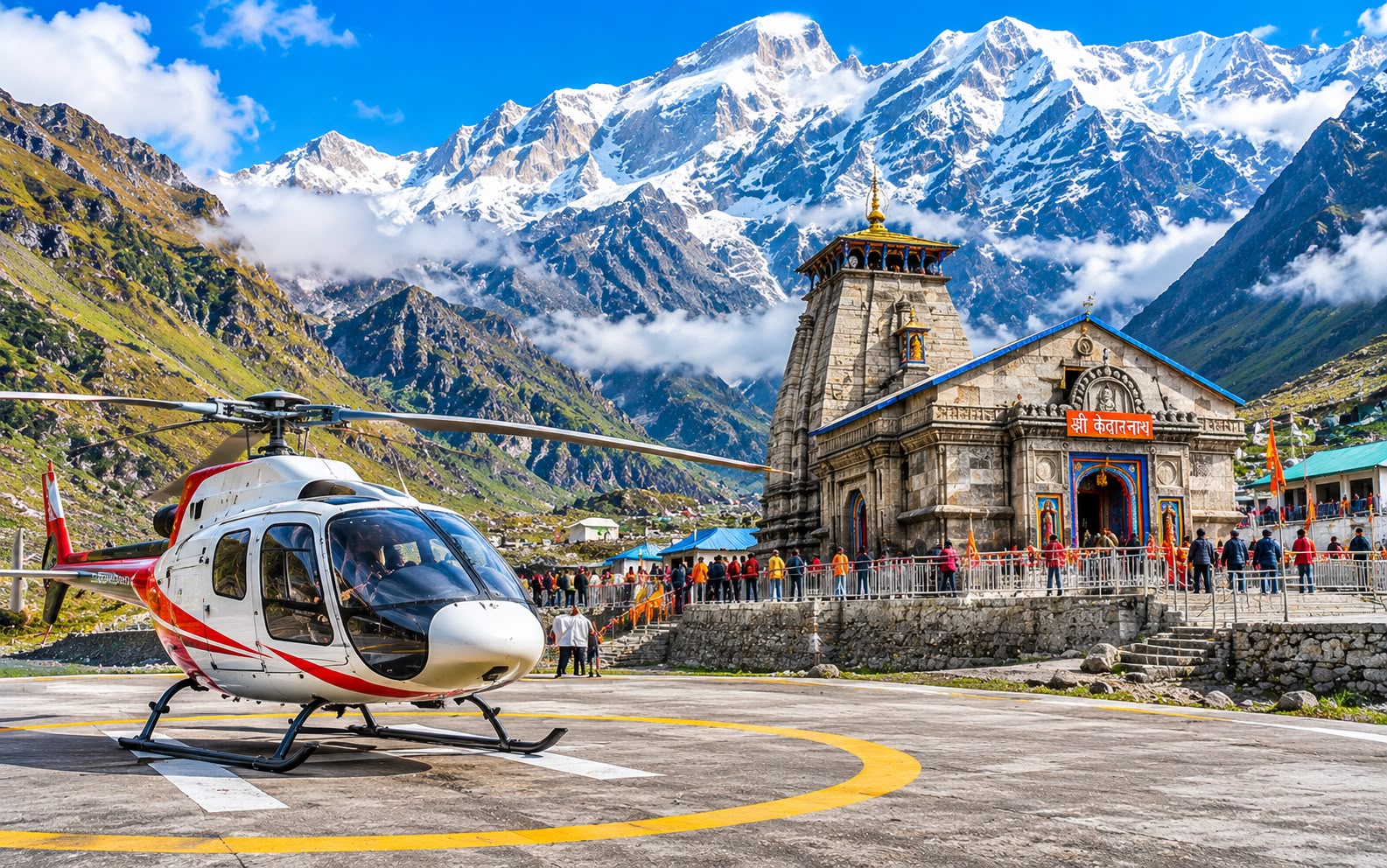
Char Dham by helicopter in 5 days: the four shrines without the trek
The circuit that takes ten days by road done in five by air, which is why it exists: for pilgrims who cannot walk it. What the operators are licensed to do, the weight limits, the walk at Kedarnath that no helicopter removes, and the weather that cancels flights without refunding days.
- South Asia
- 5 days
- ≈ AED 7,400 / person
- Completing the yatra in five days when the ten-day road version is not physically possible
Before you go
The Char Dham helicopter circuit is expensive and it is not a luxury product. It exists because the road and trekking version takes ten days, climbs to 3,580m, and includes walks that a great many devotees — particularly older ones — simply cannot do.
The ten-day road yatra is the traditional version and the cheaper one by a long way. This page is the five-day air version, and the honest framing is that you are buying days and physical access, not comfort.
Four shrines: Yamunotri, Gangotri, Kedarnath and Badrinath, flown from Dehradun in sequence. Figure INR 190,000 (≈ AED 7,419) per person. May to June and September to October, because the shrines are closed the rest of the year.
Before you go: the things that actually govern this trip
The season, which is fixed by the shrines
- The four temples open around Akshaya Tritiya in late April or early May and close around Diwali in late October or November. The exact dates are announced each year by the temple committees.
- The monsoon, roughly July to mid-September, is the dangerous window. Landslides and cloudbursts are routine and the 2013 Kedarnath disaster happened in June.
- May to mid-June and mid-September to October are the flying months.
- Confirm the opening and closing dates for your year before booking anything.
Registration and permits
- Registration for the Char Dham Yatra is mandatory and is done through the Uttarakhand government’s portal or at designated counters.
- Helicopter operators are licensed and regulated by the state civil aviation authority, and the number of sorties is capped.
- Book only with a licensed operator. Unofficial agents reselling seats have been a recurring problem and the authorities have cracked down more than once.
- Last checked: 30 October 2026. Rules here change between seasons — confirm against the official portal.
The weight limit, which surprises people
- Helicopters operating at this altitude have strict payload limits. Passengers are weighed, and a surcharge above a stated weight is standard.
- Baggage is limited to a small bag per person — often around 5kg. Main luggage stays in Dehradun.
- Declare weights honestly at booking. A reshuffle on the helipad delays everyone.
The walk nobody mentions
- Kedarnath is the one the helicopter does not fully solve. The helipad is below the temple and there is still a walk of several hundred metres uphill at 3,580m.
- Palki (palanquin) and pony are available and are an extra cost, paid locally.
- Yamunotri also involves a short pony or palki stretch from the helipad area in most packages.
- If walking even a few hundred metres at altitude is not possible, confirm with the operator exactly what is included before booking.
Weather, and what a cancelled day costs
- Flights are cancelled for cloud and rain, frequently.
- A cancelled sector is usually rescheduled within the package if there is time, and refunded only in part if there is not.
- Read the cancellation terms before paying. This is the single most common complaint about these packages.
- Build a spare day at the end in Dehradun rather than booking a tight onward flight.
Altitude
- Kedarnath is 3,580m and Badrinath 3,133m. You ascend fast, by air, with no acclimatisation.
- Breathlessness is normal; a severe headache, vomiting or confusion is not — those mean descend.
- Carry any prescribed medication, and discuss the trip with a doctor if there is a cardiac or respiratory history.
- Oxygen is available at the shrines and at most helipads.
Day by day
Day 1 — Dehradun
- Arrive in Dehradun and stay the night. Flights leave at first light and briefings are the evening before.
- Weigh-in and documentation happen now.
- Pack the small bag. Everything else stays at the hotel.
- An early night. The pickup is before dawn.
Day 2 — Yamunotri and Gangotri
- Pre-dawn departure from Sahastradhara helipad.
- Yamunotri first — the source shrine of the Yamuna, at about 3,290m. A pony or palki stretch from the landing area to the temple in most packages.
- The Surya Kund hot spring beside the temple is where rice is traditionally cooked in the water as prasad.
- Midday — Gangotri, at about 3,100m on the Bhagirathi. The helipad is close to the temple here and this is the easiest of the four.
- Overnight at the package’s lodge, usually near Harsil or Gangotri.
Day 3 — Kedarnath
- The one everyone comes for. 3,580m, in a bowl under the Kedarnath peak, one of the twelve Jyotirlingas.
- The helipad is below the temple and the last stretch is on foot, by pony or by palki. Arrange this at the helipad, not in advance.
- The temple survived the 2013 floods when much of the settlement around it did not; the rebuilt approach and the Adi Shankaracharya samadhi are part of what you see now.
- VIP darshan arrangements are part of most packages and are what makes a five-day circuit possible at all.
- It is cold. Single figures in daytime and below freezing at night, in June.
- Overnight nearby, usually Sersi, Guptkashi or Phata.
Day 4 — Badrinath
- Badrinath, 3,133m, the largest and most accessible of the four, with the Neelkanth peak behind it.
- The Tapt Kund hot spring below the temple, where pilgrims bathe before darshan.
- Mana village, a few kilometres on and often described as the last village before the Tibetan border — Vyas Gufa and Bheem Pul are a short walk.
- Afternoon — fly back to Dehradun, weather permitting.
Day 5 — The spare day, and out
- This day exists because the weather takes one. If all four flew on schedule, it is free.
- Haridwar and Rishikesh are two hours from Dehradun — the Ganga Aarti at Har Ki Pauri in the evening is the natural end to a yatra.
- If a sector was cancelled, this is when it is flown.
- Do not book a tight onward connection.
Costs and practicalities
Best time to visit
May to mid-June and mid-September to October.
- Late April or early May — the shrines open on dates set each year. Cold, snow still on the approaches, and the first weeks are heavily booked.
- May to mid-June — the main season. Clear mornings, cold nights, and the highest demand. Book months ahead.
- Mid-June to mid-September — the monsoon. Flying is heavily disrupted and landslides are routine. Most operators suspend.
- Mid-September to October — the second window. Clear air, fewer pilgrims, cold. Arguably the better of the two.
- Late October or November — the shrines close for winter and the deities move to their winter seats at Ukhimath and Joshimath.
Travel tips
- Confirm this year’s opening and closing dates before booking anything.
- Register on the official Uttarakhand portal. It is mandatory.
- Book a licensed operator only, not an agent reselling seats.
- Declare weights honestly. The limits are real and enforced.
- One small bag. The rest stays in Dehradun.
- Ask exactly what the Kedarnath transfer includes. The helicopter does not land at the temple.
- Read the weather-cancellation terms before paying.
- Build a spare day. Do not book a tight onward flight.
- Take altitude seriously — this is a fast ascent with no acclimatisation, and the pilgrims on these flights are often the least able to tolerate it.
- Cash for pony, palki and prasad, which are paid locally.
What this trip actually costs
Two people, 4 nights, licensed helicopter package, flights to Dehradun excluded:
| Item | Cost |
|---|---|
| Helicopter package, two seats, Dehradun circuit | INR 300,000 (≈ AED 11,715) |
| Hotels and lodges, 4 nights | INR 44,000 (≈ AED 1,718) |
| Meals through the circuit | INR 16,000 (≈ AED 625) |
| Dehradun transfers and the night before | INR 12,000 (≈ AED 469) |
| Pony or palki at Kedarnath, prasad and offerings | INR 8,000 (≈ AED 312) |
| Total for two | INR 380,000 (≈ AED 14,839) |
- Roughly INR 190,000 (≈ AED 7,419) per person, against about 58,000 for the ten-day road yatra.
- The helicopter is four-fifths of the total and there is no version of this trip where it is not.
- What you are buying is five days instead of ten, and physical access — not comfort. The lodges are basic by any standard.
- Pony and palki at Kedarnath are paid locally and are not in most package prices. Budget for them.
- A weight surcharge applies above a stated limit and is standard across operators.
- Travel insurance is not in this figure and should be, and check that it covers helicopter travel, which several policies exclude.
- Hotel picks here are chosen on location, not on commission — always check prices and recent reviews before booking.
What to pack
- One small bag, around 5kg. This is a hard limit.
- Proper warm layers. Single figures in daytime and below freezing at night at Kedarnath, in June.
- A windproof outer layer. Helipads are exposed.
- Walking shoes with grip for the last stretch at Kedarnath.
- All prescribed medication, with a printed list.
- Cash in rupees for pony, palki, prasad and offerings.
- Sun protection. At 3,500m the sun burns through cloud.
Part of a bigger trip?
- The Char Dham yatra in 10 days is the road and trekking version.
- Himachal in 8 days is the neighbouring Himalayan state.
- Ladakh in 7 days is the high-desert route further north.
- Varanasi in 5 days is the other great pilgrimage city.
- Rishikesh is on the way back if you are continuing.
FAQ
Why is the helicopter version so much more expensive? Because the helicopter is four-fifths of the cost and there is no way around it. What you are buying is five days instead of ten and physical access to shrines at 3,580m — not comfort. The lodges on this circuit are basic.
Does the helicopter land at the temples? Not at Kedarnath, which is the one that matters. The helipad is below the shrine and there is still a walk of several hundred metres uphill at 3,580m, with pony and palki available locally at extra cost. Yamunotri also involves a short pony or palki stretch in most packages. Gangotri and Badrinath are the easy two.
What happens if the weather cancels a flight? It is usually rescheduled within the package if there is time, and only partly refunded if there is not. This is the commonest complaint about these trips. Read the cancellation terms before paying and build a spare day at the end rather than booking a tight onward connection.
Is there a weight limit? Yes, and it is enforced. Passengers are weighed and a surcharge applies above a stated limit, because helicopters operating at this altitude have strict payload margins. Baggage is limited to one small bag, usually around 5kg, with the rest left in Dehradun.
When are the shrines actually open? Roughly late April or early May until late October or November, with the exact dates announced each year by the temple committees. The monsoon between mid-June and mid-September disrupts flying heavily and most operators suspend. Confirm your year’s dates before booking.
Prices and entry rules change, and what you need depends on your passport; last checked 2 November 2026, so confirm with the embassy or your airline before booking.


