 The Itinerary
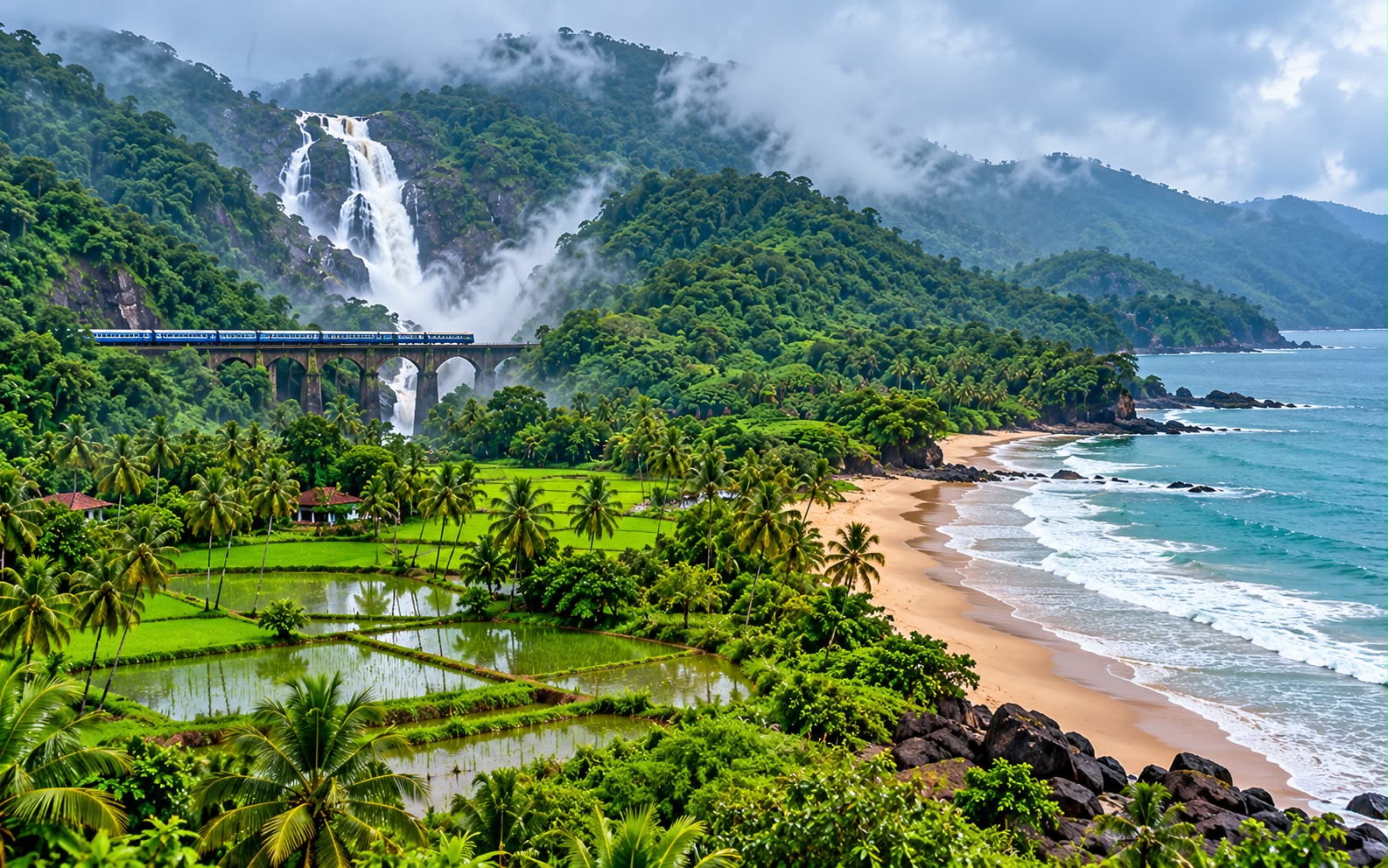
Goa in the monsoon: waterfalls, spice farms and an empty coast
The green season turns Goa inside out: the beach shacks come down, the interior comes alive, and Dudhsagar runs at full volume. What closes, what opens, why swimming is genuinely dangerous, and how the state looks when nobody is in it.
- South Asia
- 4 days
- ≈ AED 550 / person
- Half-price rooms, a waterfall that only exists now, and beaches you have to yourself
Before you go
Almost everything people associate with Goa shuts in the monsoon. The beach shacks are dismantled by law before the season, most water sports stop, and the party coast goes quiet.
What opens instead is the interior. Dudhsagar — a 310m waterfall on the Mandovi — only runs properly now. The spice plantations are at their most fragrant. The paddy is flooded and green. And rooms cost a third of what they do in December.
The four-day Goa route is the dry-season version. This one swaps the beach days for the inland ones and treats the coast as something to look at rather than swim in.
Figure INR 14,000 (≈ AED 547) per person. June to September.
Before you go: what is open and what is not
- Beach shacks: taken down for the season and rebuilt afterwards. A few permanent restaurants stay open.
- Water sports, dolphin trips and most boat hire: suspended.
- Swimming: often prohibited, and genuinely dangerous. The Arabian Sea in monsoon has powerful rips and the lifeguard service posts red flags for weeks at a time. Drownings happen every season. Treat a red flag as absolute.
- Dudhsagar Falls: at its best, and the jeep safari to it is frequently suspended in heavy rain — the river crossings become impassable. Check on the day.
- Spice farms, churches, Old Goa, the Latin Quarter, markets: all open, and much better without the crowds.
- Many hotels close entirely for June and July. The ones that stay open discount heavily.
Before you go: the admin
Entry
- A domestic trip for Indian nationals.
- Foreign nationals need an Indian visa; an e-visa covers tourism for most nationalities.
- Last checked: 30 October 2026.
Getting around
- Scooters are how Goa moves and monsoon roads are slick, potholed and have standing water. If you are not a confident rider, do not learn here.
- Helmets are required and enforced.
- Taxis and app-based rides exist but Goa’s taxi arrangements are notoriously inflexible; agree fares in advance.
- A car with a driver for the Dudhsagar and Ponda day is the sensible option.
Health
- Leptospirosis risk rises with standing water — avoid wading through floodwater with open cuts.
- Mosquitoes and dengue. Repellent.
- Humidity is close to total. Everything stays damp.
Day by day
Day 1 — The north coast, empty
- Arrive and stay north — Anjuna, Vagator or Ashwem.
- Afternoon — walk the beach. Vagator and Anjuna in July are long, grey-green, wind-blown and almost completely empty, which is a version of Goa most people never see.
- Chapora Fort above the river — a short climb, red laterite walls, and the view down the coast with the sea in white lines.
- Do not swim. Check the flags and believe them.
- Evening — one of the permanent restaurants that stays open through the season. Ask the hotel which are running.
Day 2 — Dudhsagar, if it is running
- 06:30 — Early start. The falls are inside Bhagwan Mahaveer sanctuary and access is by authorised jeep from Kulem, not by private car.
- 310m in four tiers, named “sea of milk”, and in monsoon it is a wall of white water rather than the thin dry-season ribbon.
- The jeep safari suspends in heavy rain when the river crossings flood. Confirm the morning you go, and have a plan B.
- Swimming at the base is restricted and conditions can be dangerous.
- 13:00 — Back toward Ponda.
- 15:00 — A spice plantation. Cardamom, pepper, vanilla, nutmeg and betel, usually with a Goan thali lunch on a leaf. In the wet the whole place smells extraordinary.
- 17:00 — The Ponda temples — Shanta Durga and Mangeshi, lamp towers and Goan-Hindu architecture that looks like nothing else in India.
Day 3 — Old Goa and the Latin Quarter
- 09:00 — Old Goa. The Basilica of Bom Jesus, which holds the remains of St Francis Xavier, and Se Cathedral, one of the largest churches in Asia. UNESCO-listed, and entirely indoor — which makes this the right wet-day plan.
- 12:00 — Divar Island by ferry — a free car ferry across the Mandovi to an island of paddy fields, old houses and almost no traffic. Twenty minutes and almost nobody does it.
- 14:00 — Panjim, and Fontainhas — the Latin Quarter, narrow streets of ochre, blue and green Portuguese houses with overhanging balconies. Small and walkable, and the colours are better in the wet.
- 17:00 — A feni and a Goan dinner. Xacuti, vindaloo as it is actually made, and bebinca.
Day 4 — South, or out
- If the flight is late, the south coast — Palolem and Agonda — is quieter and greener than the north, about two hours away. The same swimming rules apply.
- Or the Saturday night market if your dates catch one — the big Anjuna flea market is a dry-season institution and does not run in monsoon, so check before planning around any market.
- Goa has two airports — Dabolim and the newer Mopa in the north. Check which one you are flying from; they are an hour and a half apart.
Costs and practicalities
Best time to visit
June to September for this version.
- June — the monsoon breaks. The most dramatic month, the emptiest, and the cheapest. Many places still closed.
- July and August — heavy, consistent rain. Dudhsagar at full volume. São João, in late June, is a village festival where young men jump into wells and ponds — local, loud and worth catching if the dates land.
- September — the rain easing, everything still green, and the shacks starting to go back up at the end of the month. Arguably the best value of the year.
- October — the transition. Humid, clearing, prices rising.
- November to February — the dry season, which is what the four-day route covers, at three times the room rate.
Travel tips
- Do not swim. The rips are serious, the shacks and lifeguard cover are reduced, and red flags are not advisory.
- Confirm the Dudhsagar jeep safari on the morning, and have a plan B.
- Check which hotels are actually open before booking a neighbourhood.
- Do not learn to ride a scooter in the monsoon.
- Old Goa and Fontainhas are the wet-day plans and are better without crowds.
- Divar Island is free and almost nobody goes.
- Avoid wading through floodwater with open cuts.
- Check which airport you fly from — Dabolim and Mopa are a long way apart.
- Everything stays damp. Pack accordingly.
What this trip actually costs
Two people, 3 nights, mid-range at monsoon rates, flights excluded:
| Item | Cost |
|---|---|
| Hotel, 3 nights at green-season rates | INR 9,000 (≈ AED 351) |
| Car and driver for the Dudhsagar and Ponda day, and taxis | INR 4,000 (≈ AED 156) |
| Dudhsagar jeep safari, spice farm and entries | INR 6,000 (≈ AED 234) |
| Food and drink, 4 days | INR 9,000 (≈ AED 351) |
| Total for two | INR 28,000 (≈ AED 1,093) |
- Roughly INR 14,000 (≈ AED 547) per person, against about 22,000 for the dry-season version. The rooms are the whole difference — monsoon rates run around a third of December.
- The waterfall is the one thing you cannot buy in season, and the jeep safari is the main paid activity here.
- Food and drink is the largest line precisely because everything else is so cheap.
- Hotel picks here are chosen on location, not on commission — always check prices and recent reviews before booking.
What to pack
- A rain jacket, not an umbrella.
- Two pairs of shoes and quick-dry clothes. One pair will always be wet.
- A dry bag for phones and cameras.
- Mosquito repellent.
- Flip-flops you do not mind ruining.
- A Type D/M adapter, 230V.
Part of a bigger trip?
- Goa in 4 days is the dry-season version.
- Kerala in the monsoon is the same season down the coast, with Ayurveda.
- Goa in 10 days is the long version.
- South India in 14 days runs the whole region.
FAQ
Can you swim in Goa during the monsoon? Usually not, and you should not try. The Arabian Sea develops powerful rip currents, red flags go up for weeks at a time, and lifeguard cover is reduced along with the shacks. Drownings happen every season. Treat the flags as absolute.
Is Dudhsagar worth it in monsoon? It is the best time to see it and the hardest time to reach it. The falls run at full volume, and the authorised jeep safari from Kulem suspends in heavy rain when the river crossings flood. Confirm on the morning and have an alternative plan.
What is actually open? The interior. Spice plantations, the Ponda temples, Old Goa’s churches, Fontainhas in Panjim, Divar Island and the markets in Mapusa and Panjim all run normally. The beach shacks, water sports and most boat trips do not.
How much cheaper is it? Rooms run around a third of December rates, and many hotels that stay open discount further. It is comfortably the cheapest time to visit, and the emptiest.
Is it worth going at all? If you want beach-and-shack Goa, no — go in December. If you want green paddy, a full-volume waterfall, empty beaches to walk on and Portuguese Goa without the crowds, it is the better trip and a third of the price.
Prices and entry rules change, and what you need depends on your passport; last checked 30 October 2026, so confirm with the embassy or your airline before booking.


